
Judith Kinghorn
Author of The Last Summer
Works by Judith Kinghorn
Tagged
Common Knowledge
- Gender
- female
- Nationality
- UK
- Birthplace
- Northumberland, England, UK
- Associated Place (for map)
- England, UK
Members
Reviews
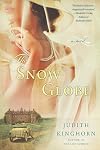
Snow globes are pretty and peaceful. They capture an idealized miniature scene of perfection within their glass orbs. But they aren't reality, no matter how much the world looks like them, especially when snow is drifting down outside the windows. Reality, unlike the inside of a snow globe, has imperfections, secrets, and disappointments. Judith Kinghorn's newest novel, The Snow Globe, shows just how unlike the quiet, encapsulated scene, life can be.
It is Christmas 1926, that exciting time show more between the World Wars, and Daisy Forbes is looking forward to celebrating with her family, especially the father she reveres. She is on the verge of adulthood and only hopes that she can find a man as worthy as her father when she comes to marry. But when she overhears a conversation about her father Howard's not so secret indiscretions, her faith in his integrity shatters. Not only does she have to process her father's fallibility, but she is horrified to find that her mother, Mabel, has invited her father's mistress and his mistress' son Valentine, in the guise of Margot Vincent's longstanding friendship with the family, to join the family at Eden Hall this Christmas time. As Daisy grapples with this newfound knowledge of her father, she is also faced with three very different men in her life: the steady and rather stodgy Ben, who works with her father; the dashing and fast Valentine, for whom she should feel only disdain given his mother's role in her father's life; and Stephen, the family chauffeur who is the companion of her childhood and still her best friend. Daisy, like the time in which she is growing up, is being bombarded with change. Her family and her life both move in ways she never could have predicted before Christmas.
Kinghorn has used many of her characters to reflect the way in which the world was speeding through change in the interlude between the wars. Women, like Daisy's older sister Iris, had secured far more freedoms than the generation before them. Social classes were more fluid and there was far more opportunity to better oneself for a person willing to work. But there were still those who hewed to the old traditions as well. Daisy is torn between the two options, trying both on for size as she comes of age and she is an endearing character even as she makes mistakes. In fact, it is her recognition and acceptance of imperfections in others that show how she's changed and matured over the span of the novel. This has a sweeping, elegant feel to it. It is realistically romantic, tapping into the concepts of both love and loyalty in a well-researched and authentic historical setting. show less
It is Christmas 1926, that exciting time show more between the World Wars, and Daisy Forbes is looking forward to celebrating with her family, especially the father she reveres. She is on the verge of adulthood and only hopes that she can find a man as worthy as her father when she comes to marry. But when she overhears a conversation about her father Howard's not so secret indiscretions, her faith in his integrity shatters. Not only does she have to process her father's fallibility, but she is horrified to find that her mother, Mabel, has invited her father's mistress and his mistress' son Valentine, in the guise of Margot Vincent's longstanding friendship with the family, to join the family at Eden Hall this Christmas time. As Daisy grapples with this newfound knowledge of her father, she is also faced with three very different men in her life: the steady and rather stodgy Ben, who works with her father; the dashing and fast Valentine, for whom she should feel only disdain given his mother's role in her father's life; and Stephen, the family chauffeur who is the companion of her childhood and still her best friend. Daisy, like the time in which she is growing up, is being bombarded with change. Her family and her life both move in ways she never could have predicted before Christmas.
Kinghorn has used many of her characters to reflect the way in which the world was speeding through change in the interlude between the wars. Women, like Daisy's older sister Iris, had secured far more freedoms than the generation before them. Social classes were more fluid and there was far more opportunity to better oneself for a person willing to work. But there were still those who hewed to the old traditions as well. Daisy is torn between the two options, trying both on for size as she comes of age and she is an endearing character even as she makes mistakes. In fact, it is her recognition and acceptance of imperfections in others that show how she's changed and matured over the span of the novel. This has a sweeping, elegant feel to it. It is realistically romantic, tapping into the concepts of both love and loyalty in a well-researched and authentic historical setting. show less

Kinghorn's writing style was adroit in setting the 'stage' and developing her characters. The narrative era is 'between wars' of the early- to mid-1900's in rural England with some forays into pre-WWII London. Social change after WWI had moved rapidly and caused rifts between the older generations raised in Victorian and Edwardian behaviour versus the giddy Young Things of the Roaring 20's and eventually, The Great Depression of the 1930's.
Daisy and Mabel are the best characterized of the show more Forbes family, with many brilliantly-portrayed supporting members which fit well in those changing times. I especially admired the scenes with the household staff gossiping away in the kitchen and the ease in which the author filled in the various backstories of the family they served.
The plot was slow in the beginning but fleshed out nicely as readers become acquainted with the Forbes family and their hangers-on. A few chapters were somewhat repetitive and dragged out what was becoming a very evident story arc, so the progression to the end was rather drawn out and invited much skimming. A romance novel is normally not my choice in genre, however, a Little Free Library yielded up a surprise for me: despite my misgiving in choosing an escapist read in an obvious romance genre. Those who love the drama in such sagas epitomised by Julia Quinn will likely enjoy Judith Kinghorn's novel. show less
Daisy and Mabel are the best characterized of the show more Forbes family, with many brilliantly-portrayed supporting members which fit well in those changing times. I especially admired the scenes with the household staff gossiping away in the kitchen and the ease in which the author filled in the various backstories of the family they served.
The plot was slow in the beginning but fleshed out nicely as readers become acquainted with the Forbes family and their hangers-on. A few chapters were somewhat repetitive and dragged out what was becoming a very evident story arc, so the progression to the end was rather drawn out and invited much skimming. A romance novel is normally not my choice in genre, however, a Little Free Library yielded up a surprise for me: despite my misgiving in choosing an escapist read in an obvious romance genre. Those who love the drama in such sagas epitomised by Julia Quinn will likely enjoy Judith Kinghorn's novel. show less
'I watched you, and I'd never seen anything or anyone as beautiful.'
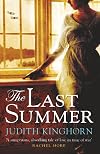
This novel takes us into the world of Clarissa Granville, a young woman approaching her seventeenth birthday, living a happy and privileged existence with her family at their wonderful country house, Deyning Park. The house itself, and the landscape around Deyning are vividly described, the lush gardens, the expansive grounds, the lake. We meet Clarissa at the start of the summer of 1914, enjoying lovely summer days with her show more three brothers and the rest of her family and friends. She is introduced to handsome, clever Tom Cuthbert, who is the son of the housekeeper at Deyning. He is recently returned from University, and is back staying with his mother. Tom is invited to a party at the main house and there Clarissa meets and is spellbound by him, and he by her. Their time together during that summer ignites a love and burning need for each other that will be with them forever. Then the world begins to change, and the impending war will alter all their lives permanently.
The author has crafted a mesmerizing love story, and totally captured a time and an age now gone forever. And she has portrayed in period detail the times as they were, and then how the war changed everything, shattered lives, destroyed families, and changed society. The generation who lost so many brothers, cousins, friends; irreplacable. There is such deep sadness and loss.
'The intoxication of youth, snuffed out, extinguished in a matter of months, left in its place only a numbing sobriety. Far too many young souls had alread been sacrificed, too many lives shattered. And to those of us left standing, impotent, on the sideline, with splintered hearts and broken dreams, light had all but vanished from our lives.'
Judith Kinghorn captures the way the world has changed for Clarissa's mother, accustomed to the fineries of life at Deyning, then experiencing how life alters and she is forced to adapt to new circumstances. For others, the world offers new opportunities.
The luxurious life and situation Clarissa is born into dictates the route her life is expected to take. There is little chance for her to take any decisions of her own. 'None of us, no matter our situation or circumstances, could pick up the pieces of life as it had once been, before the war. We had all been changed, and our lives as we'd known them had gone, and gone for ever.'
But in the years after the War, things begin to change. It seems it may be possible, as society changes and the constraints of tradition and history are being broken, for a woman such as her to shed her background and become independent, to work, to live freely; something she could never have contemplated before: 'Had I ever been free? I'd never, not once, had any say in my life, in my destiny. It had all been decided long ago, by my parents, and then by Mama...I'd always been owned, but never by me.'
There is another love story hidden within the pages, with short extracts from letters scattered throughout the main narrative; another love story, which is revealed at the end of the novel.
I didn't know this story would take such a strong hold on my heart.
I genuinely loved this book. It is an absolutely wonderful romantic novel. It gripped me completely from start to finish, it wrung my heart out. Clarissa is a wonderful first-person narrative voice, we are with her as she grows up and close by her side as she makes her way through life, making mistakes, gaining experience, learning about herself, and Tom is a marvellous romantic leading man, who finds, after the horrors of war, that a changing society offers new advantages to someone like him, but will he ever be good enough to be accepted by Clarissa's Mama?
I thought about the characters. I became wrapped up in the love story of Clarissa and Tom. Theirs is an all-consuming love. Neither of them could ever love anyone else. For them, in their hearts and souls, there is only each other. They implore each other, 'don't let me go. Never let me go.' But they seem destined never to be together. The time and place is wrong, or the circumstances. I had to know how this would end. The passion and the pain of separation of these two people seemed to live beyond the words on the page, to have jumped from the page and become real to me; I cared deeply as to the outcome.
Tom is so handsome, I could picture him. 'He shone. For there was a light that emanated from him, his soul, his substance.' This idea of him as a brilliant light that disarms Clarissa, a potency strong enough to overwhelm her. 'For there was something about him - his face - that dazzled me, quite literally dazzled me: as though he were a light much too bright to gaze upon directly. And in that light I was naked; every sensation amplified; each thought audible. I think I fell quite in love with him too myself whilst reading!
I read the penultimate chapter through tears. I was bereft on finishing this story. It reminded me that we have to grasp happiness where and when we can.
A beautifully written and utterly lovely romantic novel that is certainly amongst my favourite reads this year so far. show less
This novel takes us into the world of Clarissa Granville, a young woman approaching her seventeenth birthday, living a happy and privileged existence with her family at their wonderful country house, Deyning Park. The house itself, and the landscape around Deyning are vividly described, the lush gardens, the expansive grounds, the lake. We meet Clarissa at the start of the summer of 1914, enjoying lovely summer days with her show more three brothers and the rest of her family and friends. She is introduced to handsome, clever Tom Cuthbert, who is the son of the housekeeper at Deyning. He is recently returned from University, and is back staying with his mother. Tom is invited to a party at the main house and there Clarissa meets and is spellbound by him, and he by her. Their time together during that summer ignites a love and burning need for each other that will be with them forever. Then the world begins to change, and the impending war will alter all their lives permanently.
The author has crafted a mesmerizing love story, and totally captured a time and an age now gone forever. And she has portrayed in period detail the times as they were, and then how the war changed everything, shattered lives, destroyed families, and changed society. The generation who lost so many brothers, cousins, friends; irreplacable. There is such deep sadness and loss.
'The intoxication of youth, snuffed out, extinguished in a matter of months, left in its place only a numbing sobriety. Far too many young souls had alread been sacrificed, too many lives shattered. And to those of us left standing, impotent, on the sideline, with splintered hearts and broken dreams, light had all but vanished from our lives.'
Judith Kinghorn captures the way the world has changed for Clarissa's mother, accustomed to the fineries of life at Deyning, then experiencing how life alters and she is forced to adapt to new circumstances. For others, the world offers new opportunities.
The luxurious life and situation Clarissa is born into dictates the route her life is expected to take. There is little chance for her to take any decisions of her own. 'None of us, no matter our situation or circumstances, could pick up the pieces of life as it had once been, before the war. We had all been changed, and our lives as we'd known them had gone, and gone for ever.'
But in the years after the War, things begin to change. It seems it may be possible, as society changes and the constraints of tradition and history are being broken, for a woman such as her to shed her background and become independent, to work, to live freely; something she could never have contemplated before: 'Had I ever been free? I'd never, not once, had any say in my life, in my destiny. It had all been decided long ago, by my parents, and then by Mama...I'd always been owned, but never by me.'
There is another love story hidden within the pages, with short extracts from letters scattered throughout the main narrative; another love story, which is revealed at the end of the novel.
I didn't know this story would take such a strong hold on my heart.
I genuinely loved this book. It is an absolutely wonderful romantic novel. It gripped me completely from start to finish, it wrung my heart out. Clarissa is a wonderful first-person narrative voice, we are with her as she grows up and close by her side as she makes her way through life, making mistakes, gaining experience, learning about herself, and Tom is a marvellous romantic leading man, who finds, after the horrors of war, that a changing society offers new advantages to someone like him, but will he ever be good enough to be accepted by Clarissa's Mama?
I thought about the characters. I became wrapped up in the love story of Clarissa and Tom. Theirs is an all-consuming love. Neither of them could ever love anyone else. For them, in their hearts and souls, there is only each other. They implore each other, 'don't let me go. Never let me go.' But they seem destined never to be together. The time and place is wrong, or the circumstances. I had to know how this would end. The passion and the pain of separation of these two people seemed to live beyond the words on the page, to have jumped from the page and become real to me; I cared deeply as to the outcome.
Tom is so handsome, I could picture him. 'He shone. For there was a light that emanated from him, his soul, his substance.' This idea of him as a brilliant light that disarms Clarissa, a potency strong enough to overwhelm her. 'For there was something about him - his face - that dazzled me, quite literally dazzled me: as though he were a light much too bright to gaze upon directly. And in that light I was naked; every sensation amplified; each thought audible. I think I fell quite in love with him too myself whilst reading!
I read the penultimate chapter through tears. I was bereft on finishing this story. It reminded me that we have to grasp happiness where and when we can.
A beautifully written and utterly lovely romantic novel that is certainly amongst my favourite reads this year so far. show less
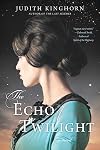
In London in the months leading up to the start of World War One, Pearl Gibson is a young woman with ambition--ambition to be a lady's maid, the most genteel occupation available to a young woman of her background. Her great-aunt Kitty taught her everything she could, and told her that it took "a very superior sort of girl" to be a lady's maid, and after years of work, moving repeatedly to advance herself, Pearl is interviewing with Lady Ottoline Campbell, who is looking for a new lady's show more maid.
It's the start of a new life for Pearl, and she has no idea just how much change this position, this particular lady, and the war will bring into her life. We see the strains and cracks already appearing in the old class system, and the hard rock it runs into with the war and all its death and destruction. But this is also a deeply romantic story. Pearl works out an unexpected friendship with Lady Ottoline, uncovers secrets of her own past, and finds love someplace wholly unexpected.
It's a beautifully developed story, with a richness of color, texture, and feeling. The cracking of the old order, the deaths and losses of the war, alongside the gains made by some as the cracks and losses created new opportunities for some, are all painfully present. At the same time, while acknowledging the costs, this is a strong, hopeful story.
Pearl and Ottoline, and those around them, are very nicely developed as characters, and our understanding of those around Pearl grows and changes as hers does. It's engrossing and satisfying.
Recommended.
I received a free electronic galley of this book from the publisher via NetGalley. show less
It's the start of a new life for Pearl, and she has no idea just how much change this position, this particular lady, and the war will bring into her life. We see the strains and cracks already appearing in the old class system, and the hard rock it runs into with the war and all its death and destruction. But this is also a deeply romantic story. Pearl works out an unexpected friendship with Lady Ottoline, uncovers secrets of her own past, and finds love someplace wholly unexpected.
It's a beautifully developed story, with a richness of color, texture, and feeling. The cracking of the old order, the deaths and losses of the war, alongside the gains made by some as the cracks and losses created new opportunities for some, are all painfully present. At the same time, while acknowledging the costs, this is a strong, hopeful story.
Pearl and Ottoline, and those around them, are very nicely developed as characters, and our understanding of those around Pearl grows and changes as hers does. It's engrossing and satisfying.
Recommended.
I received a free electronic galley of this book from the publisher via NetGalley. show less
Awards

You May Also Like


Statistics
- Works
- 7
- Members
- 399
- Popularity
- #60,804
- Rating
- 3.8
- Reviews
- 22
- ISBNs
- 48
- Languages
- 3