
George S. Clason (1874–1957)
Author of The Richest Man in Babylon
About the Author
In the 1920's George S. Clason distributed pamphlets containing financial advice in the form of parables set in Babylon to many financial institutions. From there, his pamphlets were compiled and published in the book, The Richest Man in Babylon. (Bowker Author Biography)
Works by George S. Clason
Melhores Praticas Para a Prosperidades Extraidas De, As: O Homem Mais Rico da Babilonia (2016) 3 copies
The Richest Man in Babylon in Ten Minutes a Day: Daily Wisdom to Build Wealth and Financial Freedom 2 copies
De rijkste man van Babylon: de eeuwenoude regels voor financiële vrijheid en welvaart (2007) 2 copies
Babylon In Action 1 copy
Gold Ahead: A Book of Financial Insight for Those Who Desire Personal Financial Success (2012) 1 copy
The Richest Man in Babylon (Punjabi) ਦ ਰਿਚੈਸਟ ਮੈਨ ਇਨ ਬੇਬੀਲੋਨ - [PAPERBACK EDITION] (Punjabi Edition) 1 copy
Babil'in Kervan Taciri 1 copy
Clason's No. Dakota green guide: State and city maps, auto road logs, railroads, commercial index of towns giving hotels (2000) 1 copy
Success! (Original Classic Edition): The Richest Man in Babylon; The Magic of Believing; The Power of Your Subconscious Mind (2019) 1 copy
Associated Works
Your Money or Your Life, Richest Man in Babylon, and Mindset with Muscle (2018) — Contributor — 6 copies
Tagged
Common Knowledge
- Canonical name
- Clason, George S.
- Legal name
- Clason, George Samuel
- Birthdate
- 1874-11-07
- Date of death
- 1957-04-07
- Gender
- male
- Education
- University of Nebraska
- Occupations
- soldier
businessman
writer - Organizations
- U.S. Army
- Relationships
- Clason, Clyde B. (son)
McKown, Robin (daughter) - Short biography
- Started two companies - the Clason Map Company of Denver Colorado and the Clason Publishing Company. Best known for, starting in 1926, writing a series of pamphlets about thrift and financial success.
- Nationality
- USA
- Birthplace
- Louisiana, Missouri, USA
- Places of residence
- Louisiana, Missiouri, USA (birth)
Napa, California, USA (death)
Denver, Colorado, USA - Place of death
- Napa, California, USA
- Associated Place (for map)
- USA
Members
Reviews
The Richest Man in Babylon - The Original 1926 Classic (Hardcover Book | 9388118359) by George S. Clason

George S. Clason's The Richest Man in Babylon is a timeless masterpiece that distills foundational financial wisdom into a series of engaging parables. Far from a dry financial guide, the book presents its advice through the fables of Arkad, the richest man in ancient Babylon, and his circle of friends. This narrative approach makes complex concepts highly accessible and memorable, proving that the principles of wealth-building are as relevant today as they were thousands of years ago.
The show more book's core message is centered around a set of "seven cures for a lean purse" and the "five laws of gold." These simple yet profound rules advocate for practical habits such as saving at least 10% of your earnings, controlling your expenditures, and making your money work for you. Clason's emphasis on starting small and being consistent is particularly powerful, offering a realistic path to financial freedom rather than a promise of overnight riches.
What truly sets this book apart is its ability to demystify wealth. It posits that true wealth is not about luck, but about understanding and applying universal laws of finance. The stories serve as powerful metaphors, illustrating the pitfalls of seeking quick gains and the rewards of patience and diligence. For anyone feeling overwhelmed by personal finance, Clason’s work is a breath of fresh air—a clear, concise, and motivational starting point. It’s a classic for a reason and an essential read for anyone looking to build a secure financial foundation. show less
The show more book's core message is centered around a set of "seven cures for a lean purse" and the "five laws of gold." These simple yet profound rules advocate for practical habits such as saving at least 10% of your earnings, controlling your expenditures, and making your money work for you. Clason's emphasis on starting small and being consistent is particularly powerful, offering a realistic path to financial freedom rather than a promise of overnight riches.
What truly sets this book apart is its ability to demystify wealth. It posits that true wealth is not about luck, but about understanding and applying universal laws of finance. The stories serve as powerful metaphors, illustrating the pitfalls of seeking quick gains and the rewards of patience and diligence. For anyone feeling overwhelmed by personal finance, Clason’s work is a breath of fresh air—a clear, concise, and motivational starting point. It’s a classic for a reason and an essential read for anyone looking to build a secure financial foundation. show less
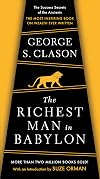
For a long time, I didn't understand this book; and I bet many of you didn't either.
Stylistically speaking this book is influenced, in a weird way, by Voltaire. Why you might ask?
The book, with its parables, captures something which is seldom caught in this kind of books: The human spirit.
This book doesn't talk only about money, this book also talks about advice, whom to trust and not trust, the value of work, how a man looks upon himself, various kinds of workers and father-child show more relationships.
Why is this, one might ask?
Well, it's because the author understood something that it's seldom understood: Being successful with gold and, what many call today, "philosophical Jimbo talk" about the value of work and man are strongly tied together.
My favourite story is near the end of a book, it's The Ca,eò Trader of Babylon.
"Where the determination is, the way can be found" this phrase doesn't capture the story.
Imagine being a slave in a desert, without water or food, you don't know where you are. Your master, if he finds you, will kill you. If you return to your hometown you will be assaulted by debt, this is if you can even find it.
In those desert sands, that slave saw the world through a different lens, a more active and abstract one.
When he returned to Babylon he was a changed man, he repaid all his debt (with time) and managed to become a wealthy merchant.
If there is but one thing that you can carry away from this book, be it this: Your problems don't matter, your attitude toward them matter. If you go through life with a slave soul, over-indulging in pleasures and running away from challenges your problems will devour you. If by contrast, you go through life with a free man soul, never overindulge or shrink from work, then your problem will go away. With time. It might take a whole, but you will get there, eventually. show less
Stylistically speaking this book is influenced, in a weird way, by Voltaire. Why you might ask?
The book, with its parables, captures something which is seldom caught in this kind of books: The human spirit.
This book doesn't talk only about money, this book also talks about advice, whom to trust and not trust, the value of work, how a man looks upon himself, various kinds of workers and father-child show more relationships.
Why is this, one might ask?
Well, it's because the author understood something that it's seldom understood: Being successful with gold and, what many call today, "philosophical Jimbo talk" about the value of work and man are strongly tied together.
My favourite story is near the end of a book, it's The Ca,eò Trader of Babylon.
"Where the determination is, the way can be found" this phrase doesn't capture the story.
Imagine being a slave in a desert, without water or food, you don't know where you are. Your master, if he finds you, will kill you. If you return to your hometown you will be assaulted by debt, this is if you can even find it.
In those desert sands, that slave saw the world through a different lens, a more active and abstract one.
When he returned to Babylon he was a changed man, he repaid all his debt (with time) and managed to become a wealthy merchant.
If there is but one thing that you can carry away from this book, be it this: Your problems don't matter, your attitude toward them matter. If you go through life with a slave soul, over-indulging in pleasures and running away from challenges your problems will devour you. If by contrast, you go through life with a free man soul, never overindulge or shrink from work, then your problem will go away. With time. It might take a whole, but you will get there, eventually. show less
Book title and author: The Riches Man in Babylon George S. Clason Review date 1-8-26
Why I picked this book up: I listened to audiobook with interest in this classic book to see what messages he puts out.
Thoughts: This interesting classic book of financial advice written in the 1920s had sound financial material. He recommends saving 10% and living off the rest. This book as timeless principles for managing money in the form of “Seven Cures for a Lean Purse” (how to acquire wealth) and show more “Five Laws of Gold” (how to preserve and grow wealth). They are laid out in parables from thousands of years ago in the wealthy city of Babylon.
Clason’s message is that if you work hard, save, live within your means, and invest wisely, you can become wealthy. He’s credited by some with being the first person to articulate the principle, “Pay yourself first.”
The financial principles in the book are delivered by the fictional character of Arkad, the richest man in Babylon, who imparts the secrets of wealth to a group of local citizens who want to learn to become rich and stop struggling financially.
Arkad, who started his working life as a lowly scribe in Babylon’s hall of records, noticed that the scribes who produced more work received more pay. He worked to increase his speed and received more money himself.
Upon the advice of a money lender, Arkad began saving 10% of everything he earned. To his surprise, he didn’t miss having it available for spending. He created a budget and lived within his means. At first, he spent the interest earned on his savings—however, he later learned to put his money to work by earning more interest on his interest. He also looked for ways to invest. Except for the mistake of investing in the jewels that turned out to be fake, he increased his wealth gradually through wise investments.
Arkad became wealthy because he learned to:
Pay himself
Live below his means
Put his money to work
Get competent financial advice
Seven Principles for Acquiring Wealth:
Arkad explains to the group of Babylon citizens who questioned him that he became wealthy by implementing “Seven Cures for a Lean Purse.” The cures or principles for acquiring wealth are:
1) Pay yourself first. Save 10 percent of everything you earn, even if you’re in debt, to start building wealth. You’ll find that you get along just fine on 90% of what you earn and in 10 years, you’ll have saved a year’s earnings. Arkad teaches that you may think all of your earnings belong to you, but most of them actually end up going to your grocer, your landlord, and your shoemaker. Only your savings are truly yours. Although you’ll be tempted to spend your savings at times, remember that spending brings only temporary gratification, while saving builds long-term wealth and security. And the person who saves part of his earnings will find it easier to acquire more money.
2) Control your spending. After you save a tenth of your earnings, determine your necessities and create a budget to cover them, plus a few worthwhile things you enjoy, not exceeding the remaining 90% of your income. When distinguishing necessities from desires, remember that if a pack animal got to choose his burden for a long trip, he’d choose to carry grain, hay and water—necessities—rather than gold and jewels. Additionally, live within your means or, better yet, live below your means.
Why I finished this read: This was a quick, simple, well-reasoned and useful. It was easy to finish.
Stars rating: I enjoyed this simple book I rated it 4 of 5 stars even though it was not rocket science to was sound and useful for me. show less
Why I picked this book up: I listened to audiobook with interest in this classic book to see what messages he puts out.
Thoughts: This interesting classic book of financial advice written in the 1920s had sound financial material. He recommends saving 10% and living off the rest. This book as timeless principles for managing money in the form of “Seven Cures for a Lean Purse” (how to acquire wealth) and show more “Five Laws of Gold” (how to preserve and grow wealth). They are laid out in parables from thousands of years ago in the wealthy city of Babylon.
Clason’s message is that if you work hard, save, live within your means, and invest wisely, you can become wealthy. He’s credited by some with being the first person to articulate the principle, “Pay yourself first.”
The financial principles in the book are delivered by the fictional character of Arkad, the richest man in Babylon, who imparts the secrets of wealth to a group of local citizens who want to learn to become rich and stop struggling financially.
Arkad, who started his working life as a lowly scribe in Babylon’s hall of records, noticed that the scribes who produced more work received more pay. He worked to increase his speed and received more money himself.
Upon the advice of a money lender, Arkad began saving 10% of everything he earned. To his surprise, he didn’t miss having it available for spending. He created a budget and lived within his means. At first, he spent the interest earned on his savings—however, he later learned to put his money to work by earning more interest on his interest. He also looked for ways to invest. Except for the mistake of investing in the jewels that turned out to be fake, he increased his wealth gradually through wise investments.
Arkad became wealthy because he learned to:
Pay himself
Live below his means
Put his money to work
Get competent financial advice
Seven Principles for Acquiring Wealth:
Arkad explains to the group of Babylon citizens who questioned him that he became wealthy by implementing “Seven Cures for a Lean Purse.” The cures or principles for acquiring wealth are:
1) Pay yourself first. Save 10 percent of everything you earn, even if you’re in debt, to start building wealth. You’ll find that you get along just fine on 90% of what you earn and in 10 years, you’ll have saved a year’s earnings. Arkad teaches that you may think all of your earnings belong to you, but most of them actually end up going to your grocer, your landlord, and your shoemaker. Only your savings are truly yours. Although you’ll be tempted to spend your savings at times, remember that spending brings only temporary gratification, while saving builds long-term wealth and security. And the person who saves part of his earnings will find it easier to acquire more money.
2) Control your spending. After you save a tenth of your earnings, determine your necessities and create a budget to cover them, plus a few worthwhile things you enjoy, not exceeding the remaining 90% of your income. When distinguishing necessities from desires, remember that if a pack animal got to choose his burden for a long trip, he’d choose to carry grain, hay and water—necessities—rather than gold and jewels. Additionally, live within your means or, better yet, live below your means.
Why I finished this read: This was a quick, simple, well-reasoned and useful. It was easy to finish.
Stars rating: I enjoyed this simple book I rated it 4 of 5 stars even though it was not rocket science to was sound and useful for me. show less

Ky libër synon që të zgjidhë problemet personale që lidhen me paranë, falë rishikimit të parabolave antike babilonase. Clason i rikthehet Babilonisë, ku nënvizon se janë ndërtuar themelet e sistemeve tona dhe besimet monetare. Duke studiuar së bashku me të anekdotat antike (si të ishim qytetarë të atij civilizimi) mund të vlerësojmë paranë, të mësojmë si të blejmë në mënyrë të shëndoshë, si të ndërmarrim veprime financiare të shëndosha dhe të fitojmë më show more shumë show less
Lists
You May Also Like


Associated Authors
Statistics
- Works
- 27
- Also by
- 1
- Members
- 4,726
- Popularity
- #5,328
- Rating
- 4.0
- Reviews
- 67
- ISBNs
- 275
- Languages
- 20
- Favorited
- 4