
Yannis Ritsos (1909–1990)
Author of Selected Poems 1938-1988
About the Author
Ritsos, imprisoned by the Greek dictatorship, has repeatedly suffered from his strong revolutionary sentiments: "Haunted by death, driven at times to the edge of madness and suicide, Ritsos throughout his life has been upheld by his obstinate faith in poetry as redemption, and in the revolutionary show more ideal" (Friar, Modern Greek Poetry). Initially a follower of the demotic tradition, Ritsos went through a phase of militant, doctrinaire poetry. Eventually, however, his work became free of anger and recrimination. In long poems, such as Romiosyne (1947), he writes compassionately, celebrating life in an unadorned style. He has produced dozens of volumes of poems, drama, and translations. (Bowker Author Biography) show less
Works by Yannis Ritsos
Ποιήματα 15 copies
Εικονοστάσιο επώνυμων Αγίων 5 copies
Γιάννης Ρίτσος, Ποιήματα, τ. 1 4 copies
Yannis Ritsos: A Voice of Resilience and Hope in a World of Turmoil and Suffering: Selected Poems (1935-1989) (English, Greek and Greek Edition) (2001) 3 copies
Els Atrides: Sota l'ombra de la muntanya/Orestes/Agamèmnon (D'ací i d'allà) (Catalan and Greek Edition) (2014) 3 copies
Η Ελένη 3 copies
Antologia 2 copies
Τα ερωτικά 2 copies
Le mur dans le miroir ; suivi de Ismène : poemes / Yannis Ritsos ; traduit du grec par Dominique Grandmont (1973) 2 copies
Ē geitonies tou kosmou, 1949–1951 2 copies
Ημερολόγια εξορίας 2 copies
Καπνισμένο τσουκάλι 1 copy
Ανθολογία Γιάννη Ρίτσου 1 copy
Αγρύπνια 1 copy
Επιτομή 1 copy
Επινίκια 1 copy
Γλυκειά μου Λούλα 1 copy
Χρυσόθεμις 1 copy
Καπνισμένο τσουκάλι 1 copy
Ποιήματα (Β' Τόμος) 1 copy
Σφυρίγματα Τραίνων 1 copy
Ποιήματα (Α' Τόμος) 1 copy
Δοκιμασία 1 copy
Τό Ἐμβατήριο τοῦ Ὠκεανοῦ 1 copy
Πυραμίδες 1 copy
Τρακτέρ 1 copy
Τὸ Τραγούδι τῆς Ἀδελφῆς Μου 1 copy
Quand vient l'étranger et autres poèmes / Yannis Ritsos ; traduction de Gérard Pierrat (1985) 1 copy
Astro mattutino 1 copy
Ποιήματα Τόμος Β' 1 copy
Ίσως νά'ναι κι έτσι 1 copy
Τα Ερωτικά 1 copy
Μαρτυρίες 1 copy
Αγρυπνία : 1941-1953 1 copy
Με το σκούντημα του αγκώνα 1 copy
Quattro poemetti 1 copy
Διάδρομος και σκάλα 1 copy
Ο τοίχος μέσα στον καθρέφτη 1 copy
Φιλοκτήτης 1 copy
Lotteria: 1977 1 copy
Οι γειτονιές του κόσμου 1 copy
Umarsız Penelope 1 copy
Χάρτινα 1 copy
Romiossini & Other Poems 1 copy
Ölü Ev 1 copy
Alışkanlıklar da Değişir 1 copy
Helena ve Nöbetçi 1 copy
Ritsos 1 copy
Milos geschleift. Poeme und Gedichte. Mit elf Federzeichnungen und einer Radierung von Giacomo Manzú (1979) 1 copy
12 ποιήματα γιά τον Καβάφη 1 copy
Laat me met je meegaan 1 copy
El Muro en el Espejo 1 copy
Meletemata 1 copy
Então? 1 copy
Persefone 1 copy
Epitaffio a Makronissos 1 copy
Martyríes - Zeugenaussagen: Drei Gedichtreihen. Griechisch - Deutsch (Kleine Griechische Bibliothek) (2009) 1 copy
Prima dell'uomo 1 copy
Trojan women. -- 1 copy
Sonata del claro de Luna 1 copy
リッツォス詩集 括弧 1 copy
Associated Works
World Poetry: An Anthology of Verse from Antiquity to Our Time (1998) — Contributor — 496 copies, 2 reviews
Against Forgetting: Twentieth-Century Poetry of Witness (1993) — Contributor — 375 copies, 2 reviews
Van Homerus tot Van Lennep : Griekse en Latijnse literatuur in Nederlandse vertaling (1992) — Author — 7 copies
Tagged
Common Knowledge
- Legal name
- Ρίτσος, Γιάννης
- Birthdate
- 1909-05-10
- Date of death
- 1990-11-11
- Gender
- male
- Education
- Athens Law School
- Occupations
- poet
playwright
essayist - Organizations
- Greek Communist Party
- Awards and honors
- Lenin Peace Prize (1975)
- Nationality
- Greece
- Birthplace
- Monemvasia, Greece
- Place of death
- Athens, Greece
- Associated Place (for map)
- Greece
Members
Reviews
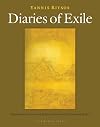
I think a taste of the book tells you all you have to know about this wonderful poet, who wrote these poems while living in harrowing conditions in several prisoner and work camps during the Greek Civil War.
This poem is one of the last of the book:
May 30
The soldiers on the low wall
unshaven
a sorrow yawns in their eyes
they listen to the loudspeakers to the sea
they don’t hear a thing
perhaps they would like to forget.
At sunset
they go slowly to the gully to do their business
as they button up show more their pants
the new moon catches their eye.
The world could have been beautiful.
Details of the poem tell us much. The low wall would seem little of an impediment to a prisoner, but their weakened conditions, not to mention there being no where to run on the harsh island of Makronisos. The guards are disengaged with decorum (unshaven--and wanting to "forget" their roles--and existentially empty in contrast to how beautiful the world might have been under different historical and political realities. The image of the mundane activity of shitting and pissing is juxtaposed against the potentially romantic moon, except this is a new moon--not visible at all--yet under their surveillance of the guards, it too under scrutiny. There is brilliant ambiguity here in "catch their eye" as the translation--almost romantic--in Karen Emmerich's beautiful carrying across of the poem into English. I look for everything she translates. show less
This poem is one of the last of the book:
May 30
The soldiers on the low wall
unshaven
a sorrow yawns in their eyes
they listen to the loudspeakers to the sea
they don’t hear a thing
perhaps they would like to forget.
At sunset
they go slowly to the gully to do their business
as they button up show more their pants
the new moon catches their eye.
The world could have been beautiful.
Details of the poem tell us much. The low wall would seem little of an impediment to a prisoner, but their weakened conditions, not to mention there being no where to run on the harsh island of Makronisos. The guards are disengaged with decorum (unshaven--and wanting to "forget" their roles--and existentially empty in contrast to how beautiful the world might have been under different historical and political realities. The image of the mundane activity of shitting and pissing is juxtaposed against the potentially romantic moon, except this is a new moon--not visible at all--yet under their surveillance of the guards, it too under scrutiny. There is brilliant ambiguity here in "catch their eye" as the translation--almost romantic--in Karen Emmerich's beautiful carrying across of the poem into English. I look for everything she translates. show less
 This review was written for LibraryThing Early Reviewers.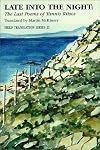
Cover image, a painting by the poet, contemporary to the poetry.
Two poems side by side close to middle of the book define this collection. The metaphors and images of age and loss and the animation of the special landscape surrounding the poet.
The Statues and Us
The statues are so calm. The ravages of time
don't concern them. There go their hands,
their feet, their head - but they
persevere in their original uprightness.
Even flat on their backs they smile,
or face down in the mud they turn
their show more backs on us, and on Time as if
surrendering themselves to some infinite
act of love-making, while we look on,
unaccountably tired and depressed. Later,
we go back to our shabby hotel, draw
the blinds against the afternoon glare,
and sprawl naked on the lumpy bed, emulating
the placid immobility of the statues.
Depletion
The horses with their handsome riders are gone.
The houses in the village are empty. A few old men
sit on the low wall and watch the sunset.
What's there to say? The wine-jars and the moon
have been empty for years. The old men have forgotten
their olive trees, their vines, their grandchildren.
But something at daybreak, in their sleep, they hear
the stars scratching on the wall with their nails,
searching for a treasure that's never been found.
When the old men wake up, they're more tired than ever.
They grasp their canes as if for support, or as if
to strike at some ancient enemy they can't see.
___
Ritsos was very old when he wrote these works. He died a few years later. They stare into the abyss, accept the limits of life, the little part we all play in it. They are not scared: stare back at the abyss, and accept the life lived.
The publisher is a little college in Ohio called Oberlin. Hard to find outside of USA, unless you pay extortionist postage. show less
Two poems side by side close to middle of the book define this collection. The metaphors and images of age and loss and the animation of the special landscape surrounding the poet.
The Statues and Us
The statues are so calm. The ravages of time
don't concern them. There go their hands,
their feet, their head - but they
persevere in their original uprightness.
Even flat on their backs they smile,
or face down in the mud they turn
their show more backs on us, and on Time as if
surrendering themselves to some infinite
act of love-making, while we look on,
unaccountably tired and depressed. Later,
we go back to our shabby hotel, draw
the blinds against the afternoon glare,
and sprawl naked on the lumpy bed, emulating
the placid immobility of the statues.
Depletion
The horses with their handsome riders are gone.
The houses in the village are empty. A few old men
sit on the low wall and watch the sunset.
What's there to say? The wine-jars and the moon
have been empty for years. The old men have forgotten
their olive trees, their vines, their grandchildren.
But something at daybreak, in their sleep, they hear
the stars scratching on the wall with their nails,
searching for a treasure that's never been found.
When the old men wake up, they're more tired than ever.
They grasp their canes as if for support, or as if
to strike at some ancient enemy they can't see.
___
Ritsos was very old when he wrote these works. He died a few years later. They stare into the abyss, accept the limits of life, the little part we all play in it. They are not scared: stare back at the abyss, and accept the life lived.
The publisher is a little college in Ohio called Oberlin. Hard to find outside of USA, unless you pay extortionist postage. show less
Diaries in Exile is actually three diaries, the first two written from The Kontopouli camp on the island of Limnos. Kontopouli was a makeshift detainment centre, originally used by the Germans as warehouses during the occupation of Greece. They housed around a 150 men, many of whom would be transferred to Yaros & Makronosis, where life would be a lot harsher. By the time Ritsos began the second diary he had been detained for over a year, having faced beatings and forced labour whilst living show more on meagre rations, this would impact on his writing, which became sparser, focusing on the relentless sameness of his existence. The last Diary was written on Makronosis, where he had been sent in 1949 - a desert island, entirely cut off from the mainland and inhabited only by guards and prisoners. This wasn't just a detention facility it was a re-education centre, which at it's height held around 20,000 men, women & children, its sole aim was to transform the prisoners into loyal citizens, having to sign "Declarations of repentance". On Makronosis prisoners were crammed into already overcrowded tents and were made to carry stones from one spot to another without reason for hours on end, regardless of the time of day or year, without water or footwear and letters were reduced to postcards being highly censored. On Makronosis prisoners were routinely tortured, driven mad and executed.
The poetry in these diaries weren't the only poems Yannis Ritsos wrote whilst in exile, regardless of the harshness of his detention, he constantly wrote. In fact even under the unremitting hell of Makronosis, he found a means to write on whatever scrap of paper he could lay his hands on, including the linings of cigarette packs, which he then hid or buried in bottles in the ground. What stands the Diaries apart from his other works are their nature, part poem, part diary, part letter to the outside world, all normal correspondence from camp were never wholly private, having to pass through the censors scrutiny. With the poetry Ritsos could write as he pleased, although he could be never certain if they'd ever be seen by others.
This would remain so for quite a while as his books were banned until 1954 and in 1967, when army colonels staged a coup and took over Greece, he was again deported, then held under house arrest until 1970. His works were again banned - despite being banned from publication until 1972, he continued to write and paint. He died in Athens on the 1th November 1990. During his lifetime, he published 117 collections of poetry, novels and theatre plays and is said to be Greece's most widely translated poet. He was unsuccessfully proposed nine times for the Nobel Prize for Literature and in 1975 was awarded the Lenin Prize for Peace.
Nowadays Yannis Ritsos's name is amongst the five great Greek poets of the twentieth century, sharing that title with Konstantinos Kavafis, Kostas Kariotakis, Giorgos Seferis, and Odysseus Elytis, and this volume translated by Karen Emmerich and Edmund Keeley and published by Archipelago books justifies his inclusion, and as Peter Levi said:
"in their directness and with their sense of anguish, are moving, and testify to the courage of at least one human soul in conditions which few of us have faced or would have triumphed over had we faced them," show less
The poetry in these diaries weren't the only poems Yannis Ritsos wrote whilst in exile, regardless of the harshness of his detention, he constantly wrote. In fact even under the unremitting hell of Makronosis, he found a means to write on whatever scrap of paper he could lay his hands on, including the linings of cigarette packs, which he then hid or buried in bottles in the ground. What stands the Diaries apart from his other works are their nature, part poem, part diary, part letter to the outside world, all normal correspondence from camp were never wholly private, having to pass through the censors scrutiny. With the poetry Ritsos could write as he pleased, although he could be never certain if they'd ever be seen by others.
This would remain so for quite a while as his books were banned until 1954 and in 1967, when army colonels staged a coup and took over Greece, he was again deported, then held under house arrest until 1970. His works were again banned - despite being banned from publication until 1972, he continued to write and paint. He died in Athens on the 1th November 1990. During his lifetime, he published 117 collections of poetry, novels and theatre plays and is said to be Greece's most widely translated poet. He was unsuccessfully proposed nine times for the Nobel Prize for Literature and in 1975 was awarded the Lenin Prize for Peace.
Nowadays Yannis Ritsos's name is amongst the five great Greek poets of the twentieth century, sharing that title with Konstantinos Kavafis, Kostas Kariotakis, Giorgos Seferis, and Odysseus Elytis, and this volume translated by Karen Emmerich and Edmund Keeley and published by Archipelago books justifies his inclusion, and as Peter Levi said:
"in their directness and with their sense of anguish, are moving, and testify to the courage of at least one human soul in conditions which few of us have faced or would have triumphed over had we faced them," show less
This review was written for LibraryThing Early Reviewers.***who sucked me in***
Jen of Remembered Reads on YouTube in their Recent Reads: Nonfiction & Poetry published on do 8 juli 2021
It's a collection of poetry over a big amount of time and she pointed out how it changed. Which sounds fascinating. Also I didn't know Greece had a civil war
Jen of Remembered Reads on YouTube in their Recent Reads: Nonfiction & Poetry published on do 8 juli 2021
It's a collection of poetry over a big amount of time and she pointed out how it changed. Which sounds fascinating. Also I didn't know Greece had a civil war
Lists
Awards


You May Also Like


Associated Authors
Statistics
- Works
- 193
- Also by
- 11
- Members
- 770
- Popularity
- #33,050
- Rating
- 4.1
- Reviews
- 10
- ISBNs
- 170
- Languages
- 13
- Favorited
- 5

