
Constantine P. Cavafy (1863–1933)
Author of Complete Poems
About the Author
Image credit: From Wikipedia, portrait of Cavafy taken around 1900.
Works by Constantine P. Cavafy
The Complete Poems of Cavafy: Translated by Rae Dalven, with an Introduction by W.H. Auden (1976) 324 copies, 5 reviews
Before Time Could Change Them: The Complete Poems of Constantine P. Cavafy (2001) 92 copies, 1 review
Cavafis. Recuerda, cuerpo / Remember, Body (POESÍA PORTÁTIL / Flash Poetry) (Spanish Edition) (2018) 10 copies
C. P. Cavafy: Collected Poems, Revised Edition (The Lockert Library of Poetry in Translation) (2024) 8 copies
The splendour of a morning : early poems of C.P. Cavafy = Hē ena prōi tēs pheggero : proima pōiemata tou K. P. Kavaphē (2016) 8 copies, 1 review
La memoria e la passione 7 copies
Voices of Modern Greece: Selected Poems by C.P. Cavafy, Angelos Sikelianos, George Seferis, Odysseus Elytis, Nikos Gatso (1982) 6 copies
Ποιήματα : Α - Β 5 copies
ΠΟΙΗΜΑΤΑ 5 copies
Four Poems 4 copies
A Tribute to Cavafy 3 copies
Poemas 1913-1956 2 copies
Reflexões sobre poesia e ética 2 copies
Che siano tanti i mattini d'estate. Il Canone: poesie 1897-1933. Testo greco a fronte (2013) 2 copies
Dikter 2 copies
Veinticinco poemas de Cavafis 2 copies
Honderd gedichten 2 copies
The poems of C. P. Cavafy 2 copies
Ποιήματα (1896 - 1918) 2 copies
Τά ποιήματα 2 copies
Le Solitaire d'Alexandrie 2 copies
Recuerda, cuerpo 2 copies
Konstantinos Kavafis 2 copies
Poemas completos 2 copies
Poemes de Kavafis (edició grega) 2 copies
25 Poemas 1 copy
Poesía completa 1 copy
Sabrane pjesme 1 copy
La memoria e la passione 1 copy
Ἡ Πόλις 1 copy
Poesie 1 copy
Pesme 1 copy
Selected Poems 1 copy
Costantino Kavafis 1 copy
Páginas Íntimas 1 copy
Poemas esenciales 1 copy
ΠΟΙΗΜΑΤΑ (1896-1918) 1 copy
Ta Poiēmata: Dēmosieumena : Anagnōrismena Kai Apokērygmena ; Adēmosieuta : Holoklērōmena Kai Anoloklērōta (2015) 1 copy
Ποιήματα: 1897-1933 1 copy
Ποιήματα, τόμος 1 1 copy
ΠΟΙΗΜΑΤΑ (1919-1933) 1 copy
Kpymmena. Segredos 1 copy
145 Poemas 1 copy
Poesía erótica 1892-1931 1 copy
Tra queste stanze buie 1 copy
Kavafis íntegro 1 copy
Poesie 1 copy
26 αποκηρυγμένα ποιήματα 1 copy
Ἃπαντα ποιητικά 1 copy
Pomes 1 copy
[Remember, Body... (Penguin Little Black Classics)] [Author: Cavafy, C. P.] [February, 2015] (2015) 1 copy
Works (in Greek) 1 copy
Cien poemas 1 copy
ΠΟΙΗΜΑΤΑ 1897-1933 1 copy
Poesía completa 1 copy
Passions and Ancient Days. New Poems Translated and Introduced By Edmund Keeley and George Savidis 1 copy
Vijftig gedichten 1 copy
Kärleksdikter 1 copy
Kavafis'ten Kırk Şiir 1 copy
Erotika Poemata 1 copy
Πεζά 1 copy
Poesie Erotiche 1 copy
Poèmes anciens ou retrouvés : 52 poèmes du premier recueil posthume, suivis de 22 poèmes retrouvés 1 copy
"Waiting for the Barbarians" 1 copy
Poems of Constantine Cavafy 1 copy
Poems of C. P. Cavafy 1 copy
Poemas Completos 1 copy
Poiemata 1 copy
Vijftig gedichten 1 copy
50 poemas 1 copy
La grande poesia 1 copy
De kat : twee gedichten 1 copy
100 Gedichten 1 copy
Konstantinos Kavafis 1 copy
POEZI TË ZGJEDHURA 1 copy
Proza 1 copy
O Kavafis tou Seferi 1 copy
Poesie complete 1 copy
Kavafis 1 copy
Kärleksdikter 1 copy
Poesie segrete 1 copy
Le più belle poesie 1 copy
Το Ποιητικό Αλφαβητάριο 1 copy
44 poesie 1 copy
Associated Works
A Book of Luminous Things: An International Anthology of Poetry (1996) — Contributor — 945 copies, 12 reviews
World Poetry: An Anthology of Verse from Antiquity to Our Time (1998) — Contributor — 499 copies, 2 reviews
Against Forgetting: Twentieth-Century Poetry of Witness (1993) — Contributor — 376 copies, 2 reviews
Answering Back: Living Poets Reply to the Poetry of the Past (2007) — Contributor — 119 copies, 1 review
Queer: A Collection of LGBTQ Writing from Ancient Times to Yesterday (2021) — Contributor, some editions — 65 copies
The Dedalus Book of Greek Fantasy (Dedalus Literary Fantasy Anthologies) (2004) — Contributor — 29 copies, 1 review
Ingeborg Bachmann in Ägypten. 'Landschaft, für die Augen gemacht sind.' (1996) — Contributor — 2 copies
Tagged
Common Knowledge
- Canonical name
- Cavafy, Constantine P.
- Legal name
- Καβάφης, Κωνσταντίνος Πέτρου
Kavafis, Konstantinos Petrou - Other names
- Cavafy, Constantine Petrou
- Birthdate
- 1863-04-29
- Date of death
- 1933-04-29
- Gender
- male
- Occupations
- poet
civil servant
journalist - Nationality
- Greece
- Birthplace
- Alexandria, Egypt
- Places of residence
- Liverpool, Merseyside, England, UK
Istanbul, Ottoman Turkey - Place of death
- Alexandria, Egypt
- Map Location
- Greece
Members
Reviews
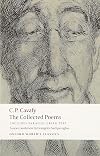
I was required to learn a little Cavafy when I took Modern Greek in school, but he only made a partial impression on me at the time. It was this book which made me fall in love. When I read it, I have the sensation of finding a book I had written myself but somehow never read... I don't have the poetic skill in English or Greek, but the thoughts fit with my thoughts. I'm concerned that if I learned Cavafy's works too well, that feeling might slip away and never be recovered. And so Cavafy show more became my favorite poet, but I also carefully refrain from becoming too much of an expert. It is a book I pick up again once a year or so, especially if I start to think that I don't enjoy poetry after all. Highly recommended. show less
Cavafy: Poems: Edited and Translated with notes by Daniel Mendelsohn (Everyman's Library Pocket Poets Series) by C.P. Cavafy
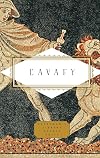
So, to be clear, I'm not giving Cavafy's poems 2 stars; my opprobrium is reserved for Daniel Mendelsohn's dishearteningly dead translations. Yes, Cavafy was writing free verse in the modernist vein. Yes, his poetic tone often borders on conversational. But Mendelsohn has decided to ignore the rhythmic torrents of the great poet's work, to select the most mundane word in any situation, to replace the feeling with the cerebral, rather than let the two walk hand in hand. The conversational, show more perhaps, has become colloquial.
It is certainly impressive for Mendelsohn to have translated all of Cavafy's poems (this edition is a "highlights reel" from the full two-volume collection). This should not be taken as a slight on his lifetime of work or his command of Greek! (Who am I to make such judgments?) Yet dedication alone, however admirable, is not achievement. Perhaps it's an American thing - or a generational one! Mendelsohn's collection has been rapturously received by American institutions, and I suspect there is something appealing, to those soaked in the American literary tradition, in the understated ordinariness of this verse.
As one who does not have Greek, it would be folly to discuss the art of translation in this context. So allow me to compare just two lines from Cavafy's most famous poem The City to try and express the intangible something which I find to be missing from DM's translation.
Here is DM:
"You'll always end up in this city. Don't bother to hope
for a ship, a route, to take you somewhere else;
they don't exist."
Here Edmund Keeley:
" You’ll always end up in this city. Don’t hope for things elsewhere:
there’s no ship for you, there’s no road."
Rae Delven:
"Always you will arrive in this city. Do not hope for any other–
There is no ship for you, there is no road."
Theoharis C. Theoharis:
"Always you will end up in this city.
For you there is no boat - abandon hope of that -
no road to other things."
And finally Lawrence Durrell, consciously "transplanting" rather than "translating", in a version from the appendices to his Justine:
"The city is a cage.
No other places, always this
Your earthly landfall, and no ship exists
To take you from yourself."
Four versions of Cavafy I would enjoy reading. And none of them Mendelsohn's. show less
It is certainly impressive for Mendelsohn to have translated all of Cavafy's poems (this edition is a "highlights reel" from the full two-volume collection). This should not be taken as a slight on his lifetime of work or his command of Greek! (Who am I to make such judgments?) Yet dedication alone, however admirable, is not achievement. Perhaps it's an American thing - or a generational one! Mendelsohn's collection has been rapturously received by American institutions, and I suspect there is something appealing, to those soaked in the American literary tradition, in the understated ordinariness of this verse.
As one who does not have Greek, it would be folly to discuss the art of translation in this context. So allow me to compare just two lines from Cavafy's most famous poem The City to try and express the intangible something which I find to be missing from DM's translation.
Here is DM:
"You'll always end up in this city. Don't bother to hope
for a ship, a route, to take you somewhere else;
they don't exist."
Here Edmund Keeley:
" You’ll always end up in this city. Don’t hope for things elsewhere:
there’s no ship for you, there’s no road."
Rae Delven:
"Always you will arrive in this city. Do not hope for any other–
There is no ship for you, there is no road."
Theoharis C. Theoharis:
"Always you will end up in this city.
For you there is no boat - abandon hope of that -
no road to other things."
And finally Lawrence Durrell, consciously "transplanting" rather than "translating", in a version from the appendices to his Justine:
"The city is a cage.
No other places, always this
Your earthly landfall, and no ship exists
To take you from yourself."
Four versions of Cavafy I would enjoy reading. And none of them Mendelsohn's. show less

In preparing for this review, I realized that Splendour of a Morning is the ONLY modern Greek literature I have in my possession and I believe it might be the only modern Greek book I have read. The other twenty or so Greek books I do have were written millennia ago. After reading this delightful edition of Cavafy’s poems, I will be remedying that situation quickly, both with more of his writing and by finding some works in translation from the modern Greek. Coincidentally, I just got a show more recommendation for The Scapegoat by Sophia Nikolaidou when checking out a new podcast today, called Reading Women.
So leave it to those two delightful Barbarians, Jan and Crispin, to introduce me yet again to an author and poet I was not familiar with. And to do it in a lovely edition that is a pleasure to read, hold, and just see on the shelf. They’ve moved my Greek reading up thousands of years and now at least I am in the 20th century. To steal a line from one of the poems in this collection, these Barbarians are a kind of solution!
This book had an interesting gestation and was the product of many people that wanted to see Cavafy presented in this manner. Originally, it was a project of Paul Razzell’s Inferno Press and Peter Lazarov had already done the illustrations before the press shut down. The manuscript was passed to Jan & Crispin to publish with generous help from others in the bookmaking community. David Smulders, whose translations of these poems originated from a trip he took to Greece to further his classical studies of and see a part of the world he (like me) had only seen through the lens of the ancient poets and writers. For this edition, he added the Introduction and a new translation of the poem Ithaka.
In the Introduction, Smulders notes that his youthful boondoggle to Greece seemed to reflect the joy of life he would soon discover in Cavafy’s poetry:
"As I recall, the hardest part about travelling was getting up the gumption to purchase that plane ticket. The rest was
easy. This turns out to be a very Cavafyesque idea--that is, the sheer joy of going for it, ignoring all those voices of
caution & fear that hold us back and stepping forward without regret."
That “Cavafyesque idea” resonated with me not in regards to a trip but in recently selling our home of 13 years and moving out of the town I have lived in for 28 years. A short jump a town over but one that caused one of the first poems in the book, 'The Morning Sea', to immediately catch my attention. In keeping with our dreams, we now can see the sea/ocean from our windows and I drive the coast highway a stones throw from the surf line multiple times a day. I’ve always thought of myself as a water spirit but now it’s confirmed in the way that daily and ever-changing sight affects me. Here are a few lines from the poem:
"Here let me stand. And let me look on Nature awhile--
seas of the morning and the deep blue
of the cloudless sky and the golden shores, all
beautiful and ever brightening."
Along with a couple of other sea poems, I find myself reciting these lines as I drive, ride, and walk along the Pacific Coast.
Cavafy’s poetry is varied in its subjects and its language. Here’s Smulders, again from the Introduction:
"One thing that appealed about Cavafy was that, in so many ways, he represented transition, the passing from one
age to the next. His work was hard to pin down…His writing seems to employ what it needs of both formal & informal
styles of the language to make his voice stand out. He is notorious for inserting classical or katharevousa [literary]
Greek into his usual demotic style. Nor are his themes of any definite era: in one poem we might meet a character
out of Homer or classical Greek history; the next moment we are in the Hellenistic period, and further on we might
encounter Cavafy in his own time, savouring the memory of an old experience.
In his poem 'Very Seldom', Cavafy seems to nod to the ancient poets, maybe also to his contemporary favorites that were reaching the end of their genius, and maybe even unknowingly predict how some might feel about him one day. He writes:
"Now youngsters repeat his verses;
before their flashing eyes his visions pass;
their vigorous, passionate minds,
their tender, rippling bodies
are moved by his impression of the beautiful. "
Then he’s off into his own mind, nostalgically remembering a lover or friend from long ago:
"O Memory, keep those grey eyes as they were,
and, Memory, whatever you can from that passion,
whatever you can, bring back to me this night."
Some of the poems that struck me the deepest have that flavor of Eastern mysticism and philosophy, rivaling what you see in various forms in various motivational, psychological, and self-help best-sellers these days. In 'As Much As You Can', he advises us:
"And if you can't live your life as you wish,
try this at least
as much as you can: don't degrade it
with too much mingling with company, with too much activity and talk.
Don't degrade it by dragging it around
from one place to another, exposing it often
to the everyday silliness
of social scenes and engagements
so that it comes to seem an impertinent nuisance."
These are ten lines that you could read and meditate on all your life before hopefully finally incorporating the wisdom within them.
And in perhaps his most famous poem, and the one that was translated specifically for this book because Crispin couldn’t bear for it not to be here, he imparts even more wisdom from his experience of life:
"Keep Ithaka always in your mind;
arriving there is your destiny,
but do not hurry the journey at all.
Better to take many years,
so that you reach the island an old man,
rich with all you have gained along the way,
not expecting Ithaka to give you riches.
Ithaka gave you the beautiful journey.
Without her, you would not have found your way.
But she has nothing left to give you.
And if you find her poor, Ithaka will not have fooled you.
Wise as you have become, with such experience,
by now you will have understood what all these Ithakas mean.
Substitute the word Ithaka for your dharma, your life’s destination or destiny, and there is much wisdom there. The full poem is wonderful and will be a regular source of meditation and contemplation for me in my life going forward.
And finally, I’ve read his poem 'Waiting for the Barbarians', over and over. I’ve already succumbed to punning on it with respect to the press’ name above. And it is just too apropos of the politics in the United States of America over the last several years:
"Why is it all quiet in the Senate?
Why are the Senators not legislating?
Because the Barbarians are coming today.
What need is there for new laws from the Senate now?
When the Barbarians come they will make the laws.
Sorry. I couldn’t resist.
Coming back to Smulders’ Introduction, he hits on what makes these poems so accessible here:
"...I confess that there is little method in my translation regarding fidelity to the technical aspects of Cavafy's poetry.
As a reader I am drawn to the simplicity of his ideas & the beautiful wisdom of his voice, whether he is writing about a
Persian prince or a former lover or just dwelling on the meaning of life.
As I’ve come to expect from the Barbarian Press, this book is well thought out in all respects. The combination of Jan’s impeccable printing of the illustrations with Crispin’s eye for laying out a page and book design in general, make to most of the beauty of Cavafy’s lines and Lazarov’s engravings. I love that both the Greek and the translation are included, sometimes en face and sometimes on the same page, depending on the text and illustrations. Again, that eye for details and aesthetics that make the books from this press so good. And I can’t love the illustrations enough in this one. Peter Lazarov is an amazing artist and illustrator. For more on him check out the Endgrains Edition Three the press published in 2003, if you are lucky enough to come across one. This is one of the BP books I was fortunate to find at a rare bookseller for a reasonable price. It is absolutely beautiful but not sure a review of it would be appropriate on this blog. In these particular illustrations, I really like how he’s integrated book images into the likeness of Cavafy and other illustrations that were inspired by the poems.
So, as they have done for me so many times in the past, the Barbarian Press has introduced me to a new writer or artist in the trappings of a beautiful hand-crafted and immaculate book form. A perfect melding of literature, art, and craft, that for me, is what fine and private printing is all about.
AVAILABILITY: The book was produced in an edition of 100, with 50 regular and 50 deluxe copies for sale. It looks to be sold out on the website although it might be worth contacting the press to see if any last copies are knocking about. Otherwise, I have seen an occasional book from the press on the second hand market.
For more book reviews, including photos of the physical books and overall reading experience, visit my blog The Whole Book Experience at http://www.thewholebookexperience.com/ show less
So leave it to those two delightful Barbarians, Jan and Crispin, to introduce me yet again to an author and poet I was not familiar with. And to do it in a lovely edition that is a pleasure to read, hold, and just see on the shelf. They’ve moved my Greek reading up thousands of years and now at least I am in the 20th century. To steal a line from one of the poems in this collection, these Barbarians are a kind of solution!
This book had an interesting gestation and was the product of many people that wanted to see Cavafy presented in this manner. Originally, it was a project of Paul Razzell’s Inferno Press and Peter Lazarov had already done the illustrations before the press shut down. The manuscript was passed to Jan & Crispin to publish with generous help from others in the bookmaking community. David Smulders, whose translations of these poems originated from a trip he took to Greece to further his classical studies of and see a part of the world he (like me) had only seen through the lens of the ancient poets and writers. For this edition, he added the Introduction and a new translation of the poem Ithaka.
In the Introduction, Smulders notes that his youthful boondoggle to Greece seemed to reflect the joy of life he would soon discover in Cavafy’s poetry:
"As I recall, the hardest part about travelling was getting up the gumption to purchase that plane ticket. The rest was
easy. This turns out to be a very Cavafyesque idea--that is, the sheer joy of going for it, ignoring all those voices of
caution & fear that hold us back and stepping forward without regret."
That “Cavafyesque idea” resonated with me not in regards to a trip but in recently selling our home of 13 years and moving out of the town I have lived in for 28 years. A short jump a town over but one that caused one of the first poems in the book, 'The Morning Sea', to immediately catch my attention. In keeping with our dreams, we now can see the sea/ocean from our windows and I drive the coast highway a stones throw from the surf line multiple times a day. I’ve always thought of myself as a water spirit but now it’s confirmed in the way that daily and ever-changing sight affects me. Here are a few lines from the poem:
"Here let me stand. And let me look on Nature awhile--
seas of the morning and the deep blue
of the cloudless sky and the golden shores, all
beautiful and ever brightening."
Along with a couple of other sea poems, I find myself reciting these lines as I drive, ride, and walk along the Pacific Coast.
Cavafy’s poetry is varied in its subjects and its language. Here’s Smulders, again from the Introduction:
"One thing that appealed about Cavafy was that, in so many ways, he represented transition, the passing from one
age to the next. His work was hard to pin down…His writing seems to employ what it needs of both formal & informal
styles of the language to make his voice stand out. He is notorious for inserting classical or katharevousa [literary]
Greek into his usual demotic style. Nor are his themes of any definite era: in one poem we might meet a character
out of Homer or classical Greek history; the next moment we are in the Hellenistic period, and further on we might
encounter Cavafy in his own time, savouring the memory of an old experience.
In his poem 'Very Seldom', Cavafy seems to nod to the ancient poets, maybe also to his contemporary favorites that were reaching the end of their genius, and maybe even unknowingly predict how some might feel about him one day. He writes:
"Now youngsters repeat his verses;
before their flashing eyes his visions pass;
their vigorous, passionate minds,
their tender, rippling bodies
are moved by his impression of the beautiful. "
Then he’s off into his own mind, nostalgically remembering a lover or friend from long ago:
"O Memory, keep those grey eyes as they were,
and, Memory, whatever you can from that passion,
whatever you can, bring back to me this night."
Some of the poems that struck me the deepest have that flavor of Eastern mysticism and philosophy, rivaling what you see in various forms in various motivational, psychological, and self-help best-sellers these days. In 'As Much As You Can', he advises us:
"And if you can't live your life as you wish,
try this at least
as much as you can: don't degrade it
with too much mingling with company, with too much activity and talk.
Don't degrade it by dragging it around
from one place to another, exposing it often
to the everyday silliness
of social scenes and engagements
so that it comes to seem an impertinent nuisance."
These are ten lines that you could read and meditate on all your life before hopefully finally incorporating the wisdom within them.
And in perhaps his most famous poem, and the one that was translated specifically for this book because Crispin couldn’t bear for it not to be here, he imparts even more wisdom from his experience of life:
"Keep Ithaka always in your mind;
arriving there is your destiny,
but do not hurry the journey at all.
Better to take many years,
so that you reach the island an old man,
rich with all you have gained along the way,
not expecting Ithaka to give you riches.
Ithaka gave you the beautiful journey.
Without her, you would not have found your way.
But she has nothing left to give you.
And if you find her poor, Ithaka will not have fooled you.
Wise as you have become, with such experience,
by now you will have understood what all these Ithakas mean.
Substitute the word Ithaka for your dharma, your life’s destination or destiny, and there is much wisdom there. The full poem is wonderful and will be a regular source of meditation and contemplation for me in my life going forward.
And finally, I’ve read his poem 'Waiting for the Barbarians', over and over. I’ve already succumbed to punning on it with respect to the press’ name above. And it is just too apropos of the politics in the United States of America over the last several years:
"Why is it all quiet in the Senate?
Why are the Senators not legislating?
Because the Barbarians are coming today.
What need is there for new laws from the Senate now?
When the Barbarians come they will make the laws.
Sorry. I couldn’t resist.
Coming back to Smulders’ Introduction, he hits on what makes these poems so accessible here:
"...I confess that there is little method in my translation regarding fidelity to the technical aspects of Cavafy's poetry.
As a reader I am drawn to the simplicity of his ideas & the beautiful wisdom of his voice, whether he is writing about a
Persian prince or a former lover or just dwelling on the meaning of life.
As I’ve come to expect from the Barbarian Press, this book is well thought out in all respects. The combination of Jan’s impeccable printing of the illustrations with Crispin’s eye for laying out a page and book design in general, make to most of the beauty of Cavafy’s lines and Lazarov’s engravings. I love that both the Greek and the translation are included, sometimes en face and sometimes on the same page, depending on the text and illustrations. Again, that eye for details and aesthetics that make the books from this press so good. And I can’t love the illustrations enough in this one. Peter Lazarov is an amazing artist and illustrator. For more on him check out the Endgrains Edition Three the press published in 2003, if you are lucky enough to come across one. This is one of the BP books I was fortunate to find at a rare bookseller for a reasonable price. It is absolutely beautiful but not sure a review of it would be appropriate on this blog. In these particular illustrations, I really like how he’s integrated book images into the likeness of Cavafy and other illustrations that were inspired by the poems.
So, as they have done for me so many times in the past, the Barbarian Press has introduced me to a new writer or artist in the trappings of a beautiful hand-crafted and immaculate book form. A perfect melding of literature, art, and craft, that for me, is what fine and private printing is all about.
AVAILABILITY: The book was produced in an edition of 100, with 50 regular and 50 deluxe copies for sale. It looks to be sold out on the website although it might be worth contacting the press to see if any last copies are knocking about. Otherwise, I have seen an occasional book from the press on the second hand market.
For more book reviews, including photos of the physical books and overall reading experience, visit my blog The Whole Book Experience at http://www.thewholebookexperience.com/ show less
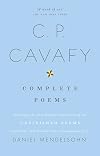
A compelling collection of all the poetry of the early 20th-century Greek 'poet-historian' C. P. Cavafy. Whilst that moniker might sound pretentious at first, it is an accurate description of the Alexandrian; his poems draw on Classical history, both well-known and obscure, and his research is meticulous and comprehensive. This can make some of Cavafy's poetry difficult to approach, as one requires the historical background for many of these poems in order to try and understand the main show more thrust of the poem. (To this end, editor Daniel Mendelsohn's excellent and exhaustive Notes – which comprise of approximately half of the entire book – are essential in navigating the poetry, rather than just a boon for more scholarly readers.)
This may deny the pleasure of Cavafy to many prospective readers, but in my opinion it was well-worth the mental effort it required. There's no poet quite like Cavafy; the muse he taps into is quite different from any other poet's, and consequently has an unspoilt richness that indeed makes it seem, to paraphrase his most famous poem 'Ithaca', like first putting into harbours new to your eyes. It's like entering a whole new world, and unfortunately Cavafy's pioneering work forged a path that has not been entirely explored by subsequent poets. Cavafy just gets the romantic undertones inherent in the study of history: the idea that, as Mendelsohn notes, "the backward glance can, in the end, be a glimpse into the future" (pg. lxxii) and, even more significantly, the idea that problems of emotion and of history both require the same remedy: the realisation that our understanding of events whether personal or historical can only come with the passage of time. For, as Mendelsohn further notes, Cavafy's poetry is:
"… richly coloured by a profound sympathy for human striving in the face of impossible obstacles. (Which could be the armies of Octavian or taboos against forbidden desires.)… That appreciation, that sympathy, that understanding are, of course, made possible only by Time – the medium that makes History possible, too… His poetry returns obsessively to a question that is, essentially, a historian's question: how the passage of time affects our understanding of events – whether the time in question is the millennia that have elapsed since 31 B.C., when the Hellenophile Marc Antony's dreams of an Eastern Empire were pulverized by Rome (the subject of seven poems), or the mere years that, in the poem 'Since Nine –', have passed since those long-ago nights that the narrator spent in bustling cafés and crowded city streets: a space of time that has since been filled with the deaths of loved ones whose value he only now appreciates…" (pg. xxxv – xxxvi)
It is this awareness of the immediacy of history, allowing "the blurring of the ancient and the modern" (pg. xx), which gives Cavafy his durability and integrity. I confess that I was drawn to read Cavafy due to my love of Greek mythology (I was already aware of and impressed by 'Ithaca'), but I found a body of work even more satisfying than just an indulgence of my own pet interests.
Favourites include: 'The God Abandons Antony', 'Ithaca', 'Trojans', 'Far Off', 'Gray', 'The Mirror in the Entrance', 'Candles', 'Thermopylae', 'The Windows', 'Walls', 'Oedipus', 'Azure Eyes', 'Hidden', 'The Rest I Shall Tell in Hades to Those Below', 'That's How', 'Half an Hour' and the prose poem 'Ships'. show less
This may deny the pleasure of Cavafy to many prospective readers, but in my opinion it was well-worth the mental effort it required. There's no poet quite like Cavafy; the muse he taps into is quite different from any other poet's, and consequently has an unspoilt richness that indeed makes it seem, to paraphrase his most famous poem 'Ithaca', like first putting into harbours new to your eyes. It's like entering a whole new world, and unfortunately Cavafy's pioneering work forged a path that has not been entirely explored by subsequent poets. Cavafy just gets the romantic undertones inherent in the study of history: the idea that, as Mendelsohn notes, "the backward glance can, in the end, be a glimpse into the future" (pg. lxxii) and, even more significantly, the idea that problems of emotion and of history both require the same remedy: the realisation that our understanding of events whether personal or historical can only come with the passage of time. For, as Mendelsohn further notes, Cavafy's poetry is:
"… richly coloured by a profound sympathy for human striving in the face of impossible obstacles. (Which could be the armies of Octavian or taboos against forbidden desires.)… That appreciation, that sympathy, that understanding are, of course, made possible only by Time – the medium that makes History possible, too… His poetry returns obsessively to a question that is, essentially, a historian's question: how the passage of time affects our understanding of events – whether the time in question is the millennia that have elapsed since 31 B.C., when the Hellenophile Marc Antony's dreams of an Eastern Empire were pulverized by Rome (the subject of seven poems), or the mere years that, in the poem 'Since Nine –', have passed since those long-ago nights that the narrator spent in bustling cafés and crowded city streets: a space of time that has since been filled with the deaths of loved ones whose value he only now appreciates…" (pg. xxxv – xxxvi)
It is this awareness of the immediacy of history, allowing "the blurring of the ancient and the modern" (pg. xx), which gives Cavafy his durability and integrity. I confess that I was drawn to read Cavafy due to my love of Greek mythology (I was already aware of and impressed by 'Ithaca'), but I found a body of work even more satisfying than just an indulgence of my own pet interests.
Favourites include: 'The God Abandons Antony', 'Ithaca', 'Trojans', 'Far Off', 'Gray', 'The Mirror in the Entrance', 'Candles', 'Thermopylae', 'The Windows', 'Walls', 'Oedipus', 'Azure Eyes', 'Hidden', 'The Rest I Shall Tell in Hades to Those Below', 'That's How', 'Half an Hour' and the prose poem 'Ships'. show less
Lists
Awards


You May Also Like


Associated Authors
Statistics
- Works
- 282
- Also by
- 16
- Members
- 3,793
- Popularity
- #6,678
- Rating
- 4.2
- Reviews
- 59
- ISBNs
- 286
- Languages
- 22
- Favorited
- 41