
Sandra Neil Wallace
Author of Between the Lines: How Ernie Barnes Went from the Football Field to the Art Gallery
About the Author
Image credit: via Penguin Random House
Works by Sandra Neil Wallace
Between the Lines: How Ernie Barnes Went from the Football Field to the Art Gallery (2018) 140 copies, 10 reviews
First Generation: 36 Trailblazing Immigrants and Refugees Who Make America Great (2018) 113 copies, 1 review
Race Against Time: The Untold Story of Scipio Jones and the Battle to Save Twelve Innocent Men (2021) 37 copies, 2 reviews
Tagged
Common Knowledge
- Gender
- female
- Occupations
- news anchor
sports
author - Organizations
- Daily Good (Keene New Hampshire)
- Awards and honors
- Outstanding Women of New Hampshire Award for peace & nonviolence
Keene Sentinel's Extraordinary Women Award
New Hampshire's Granite State Award - Agent
- Liza Voges
- Relationships
- Wallace, Rich (huaband)
- Short biography
- Sandra Neil Wallace is an award-winning author of books for young readers. The first generation in her family to attend university, she became a journalist. Known for her investigative journalism and original narrative style, she writes stories about people who break barriers and change the world. Her titles have won national awards including NCTE's Orbis Pictus Award for Outstanding Nonfiction, the NCSS Carter G. Woodson Book Award, SCBWI's Golden Kite Honor Award, ILA's Social Justice Literature Award, and been selected as ALA Notable books, the Chicago Public Library's “Best of the Best”, Booklist's Editors' Choice, Bank Street College's Best Children's Books of the Year, and earned YALSA's Award Nomination for Excellence in Nonfiction.
Before becoming an author, Sandra was a network news anchor and ESPN sportscaster. She broke a gender barrier in sports by becoming the first woman to anchor an NHL broadcast on national TV. As the daughter of a refugee and concentration camp survivor, Sandra became a changemaker herself. Sandra continues to break barriers and create change in her community as co-founder of the DailyGoodNH.org. She lives in New Hampshire with her husband and frequent book collaborator, author Rich Wallace. [from Amazon.com and website, retrieved 7/14/2024] - Nationality
- USA
- Places of residence
- New Hampshire, USA
- Associated Place (for map)
- New Hampshire, USA
Members
Reviews
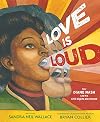
With original flair, this book brings Diane Nash up close and personal to young readers.
First off, this book does have lovely illustrations. The bold painted scenes hold quite a bit of emotion, and then, eye-catching paste-ons add depth, texture, and a touch of original design. These are enjoyable to flip through and discover.
The text, surprisingly, is written in second person. Yes, second. The reader is pulled into this story as if they were Diane. Starting with her very young years and show more baptism, the time quickly runs forward, allowing the reader to catch a general overview of her life as if it were their own. This, actually, works well and is definitely a new take. The phrases also hold a bit of poetic flow as they try to keep to the audience's level with hints of things readers might enjoy (candy apple sweetness, etc.), while weaving it metaphorically into the happenings. It is interesting and masterfully woven...and I do believe adults, who enjoy well crafted words, will especially appreciate that flow.
The story goes through Diane's life, more quickly during her younger years until it reaches the point where she faces segregation and takes her stand. Even then, the plot speeds steadily along to keep boredom at bay. The story, while suggested for ages 4 to 8, might, however, be better for a slightly older age group. Not only are some terms not quite as sure for some readers at that level, but the mix of the poetic tones with the information isn't something all will be able to appreciate. It might even leave some a little confused. But I do love how this is done and enjoy the unique and interesting way it's put together, and believe slightly older readers will simply get more from it. I received a DRC and really enjoyed how this one is done. show less
First off, this book does have lovely illustrations. The bold painted scenes hold quite a bit of emotion, and then, eye-catching paste-ons add depth, texture, and a touch of original design. These are enjoyable to flip through and discover.
The text, surprisingly, is written in second person. Yes, second. The reader is pulled into this story as if they were Diane. Starting with her very young years and show more baptism, the time quickly runs forward, allowing the reader to catch a general overview of her life as if it were their own. This, actually, works well and is definitely a new take. The phrases also hold a bit of poetic flow as they try to keep to the audience's level with hints of things readers might enjoy (candy apple sweetness, etc.), while weaving it metaphorically into the happenings. It is interesting and masterfully woven...and I do believe adults, who enjoy well crafted words, will especially appreciate that flow.
The story goes through Diane's life, more quickly during her younger years until it reaches the point where she faces segregation and takes her stand. Even then, the plot speeds steadily along to keep boredom at bay. The story, while suggested for ages 4 to 8, might, however, be better for a slightly older age group. Not only are some terms not quite as sure for some readers at that level, but the mix of the poetic tones with the information isn't something all will be able to appreciate. It might even leave some a little confused. But I do love how this is done and enjoy the unique and interesting way it's put together, and believe slightly older readers will simply get more from it. I received a DRC and really enjoyed how this one is done. show less
Between the Lines: How Ernie Barnes Went from the Football Field to the Art Gallery by Sandra Neil Wallace
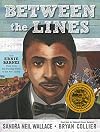
Even as a small child, Ernie Barnes is captivated by looking at and making art. However, he doesn't see how this can be a viable future and is lead instead to a career in professional football. Over time, he comes to realize that his first love is still his true love.
This is an interesting picture book biography of a person who is probably often overlooked by history. (I am by no means an expert, but I know a little art history and I had not previously heard of Barnes.) Faced with show more segregation and a background of limited income, Barnes pursues the only path to success that he and his community can see for him. However, he ultimately decides to return to his love of art and paves a successful road for himself as an artist. This is an inspiring story that can be useful when talking with children about following their dreams, perseverance, and of course civil rights and Black History Month.
Although this is a picture book, the text is rather wordy so I would recommend it for older elementary school ages. Back matter includes notes with additional history and resources to find out more. In an illustrator's note, Collier notes how he chose not to do his illustrations in Barnes's style as he felt "it is so original and unique that it shines so proudly on its own." I'm not sure if the book being illustrated in Barnes's style might have been even more impactful, but we'll never know. As it was, Collier's illustrations didn't stand out to me much one way or the other. show less
This is an interesting picture book biography of a person who is probably often overlooked by history. (I am by no means an expert, but I know a little art history and I had not previously heard of Barnes.) Faced with show more segregation and a background of limited income, Barnes pursues the only path to success that he and his community can see for him. However, he ultimately decides to return to his love of art and paves a successful road for himself as an artist. This is an inspiring story that can be useful when talking with children about following their dreams, perseverance, and of course civil rights and Black History Month.
Although this is a picture book, the text is rather wordy so I would recommend it for older elementary school ages. Back matter includes notes with additional history and resources to find out more. In an illustrator's note, Collier notes how he chose not to do his illustrations in Barnes's style as he felt "it is so original and unique that it shines so proudly on its own." I'm not sure if the book being illustrated in Barnes's style might have been even more impactful, but we'll never know. As it was, Collier's illustrations didn't stand out to me much one way or the other. show less
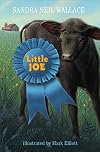
I had no idea I'd like this so much. I admire the courage of the author to write something that's not Wimpy Kid or Percy Jackson. This story is *true* - it's real to the heart and soul of small modern farms. It reveals why books for toddlers are still about pigs oinking and cows mooing. Farms are our heritage. And yet: Farmers are torn up when they name livestock. Their wives do have to,nowadays, get a paying job. Children don't always understand what's going on, for example why dad is so show more cold to the animals, or why the neighbor boy is almost a bully.
A rich story, worth a slow & careful read, told so simply (yet beautifully and carefully) that even a seven year old city girl will get a lot out of it. If I were a third or fourth grade teacher this is the book I'd choose to read to the kids in a chapter-a-day setting - that way they'd have lots of time to think about all the ideas. We might even make time to discuss it, if they seem interested - and it would be interesting to see how different the discussion ideas would be from farm kids vs. town kids.
What made it a five star book, to me, was the bonus message about living in nature. If you can read only one chapter, read Big Night. Also I love the line Crows were the only birds who bothered to make noise this late in the season." Does the young child in your life know why that's true?" show less
A rich story, worth a slow & careful read, told so simply (yet beautifully and carefully) that even a seven year old city girl will get a lot out of it. If I were a third or fourth grade teacher this is the book I'd choose to read to the kids in a chapter-a-day setting - that way they'd have lots of time to think about all the ideas. We might even make time to discuss it, if they seem interested - and it would be interesting to see how different the discussion ideas would be from farm kids vs. town kids.
What made it a five star book, to me, was the bonus message about living in nature. If you can read only one chapter, read Big Night. Also I love the line Crows were the only birds who bothered to make noise this late in the season." Does the young child in your life know why that's true?" show less
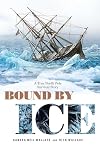
This nonfiction account tells of a group of 19-century explorers who attempted to reach the north pole but found disaster. With such a compelling premise, this narrative should have been quite solid, but I found myself disappointed overall; parts of this were great, but the whole thing should have been much better.
I want to say first of all that I think the authors are good writers. They have an excellent ability to set the tone, and their instincts for finding the right word for the right show more moment are unerring. They do not talk down to the readers. The topics in this book that could have been dry, such as the type of ship and its different provisions, are still presented in an interesting manner, and the more dramatic elements (starvation, death, etc.) are not overwritten, not over-the-top, not melodramatic in any sense. Parts of this book feel as page-turning as a thriller, and the authors certainly made good use of dramatic tension. The writing is tasteful, and while the authors don't shrink from recording the more gruesome aspects of the journey, they also don't dwell too much on the gory details. There are dogs in this story, so here is my spoiler:The dogs all die, and one in particular is killed for food, but the writing is matter-of-fact and without a lot of tragic details. I also applaud their wisdom in summarizing (but not dwelling on) some of the negative comments made by one of the survivors and published in the papers. The distinctive personalities of several of the adventurers shine through quite well. Primary sources abound, especially the journals kept by the lieutenant commander. It is very clear which elements are quotes from the primary sources and which are reconstructions, and yet this plethora of quoted material never disrupts the narrative flow. The writing is quite smooth. The subject matter is certainly interesting. The maps are helpful, and the epilogue ties up many loose ends.
The biggest problem is clarity. Some of these issues are relatively minor (e.g., one of the pen-and-ink drawings that illustrate this book was made by a specific crew member, but I have no idea who drew any of the others, if they're even from the expedition, or if they were made in modern times for this book). Other issues are more severe. For one thing, the timing is unclear. Some dates are given, but not all. How long was the initial delay, right at the start? Later, when the explorers were resting on an island, Melville and De Long disagreed about whether it was more important to rest or to leave immediately, and although their departure date is given, the date of their landing is not, so it is unclear how long the delay had been, or whether there had even been a delay at all. Consequently, it is impossible to know to what extent that rest cost them. It seems as though the whole party would have made it safely to Russian mainland if they hadn't been hit by a gale, and I think (again, it's not clear) that they only missed the fair weather by one day. Also frustrating was the lack of information about the travelers. Specifically, I wondered how many of them there were. 20-some? 30? It was difficult to visualize the party when I had no idea how large (or small) a group it was. A few of the names were given early on, with descriptions and even pictures of the men, but only six members of the expedition were described in this way. I wondered how many men there were. I wondered all the way from page 28, when it said that there were openings for 24 spots, to page 116, when the authors finally (finally!) listed the names of all the men who undertook this dangerous voyage: 34 names, all printed neatly in three columns across the page. What a relief! The group was quite a bit larger than I'd been picturing, but I wasn't about to reread the whole book just to re-imagine that one detail. At least I had an answer. Of course, now I'm back to wondering, because when I reached page 165, I read that 33 men undertook this voyage. So which is it?
Worst of all, for me, are the mistakes and omissions. There were 33 men but 34 names listed. There were 13 survivors (p. 150) but only 12 people survived (p. 165). De Long abandoned his rifle during his march through Siberia, leaving it behind on page 124, yet "De Long's rifle" was recovered with his body on page page 173. So did the group double back to retrieve it? Or did they have extra guns, and he just claimed a different (presumably lighter to carry) rifle as his own? The group of explorers included two Yup'ik men (Alaska Natives). Both of them were honored afterward with medals from the U.S. Congress. These medals are inscribed, but while the photos of them are clear enough for me to see that the letters are neat and well-formed, they are not clear enough for me to read the words, and the text of them is not given in the book. What a waste! But at least I know it was something positive. Conversely, the authors' lack of clarity is detrimental to the reputation of scientist and naturalist Raymond Newcomb. Newcomb had made friends with the Yup'ik men and took an interest in learning about their traditions, particularly when he worked closely with them on a task. On page 46, the authors quote a short excerpt from his journal in which he describes hunting with Alexey (one of the Yup'ik men). He recounts a conversation in which Alexey shared some hunting advice from his father. The authors uncharacteristically interrupt the flow of narrative here to interject, "Though Newcomb was fascinated by Yup'ik rituals, he incorrectly identified Alexey and Aneguin as Indians." This incorrect commentary hurts both Yup'ik men by muddying the information about their heritage. It also minimizes the relationship between these two friends, and Newcomb comes off as someone too careless even to pay attention to details about his coworkers. Every subsequent quote from Newcomb using the word "Indians" was equally distracting. Because here's the problem: Newcomb was correct. The different peoples native to North America were called Indians as early as the fifteenth century, and the term is still used today in schools, in books, and in official documents. The U.S. Government officially recognizes Native American nations as American Indians. That is the correct legal term, even to this day. According to the United States Bureau of Indian Affairs, the U.S. Government recognizes 574 entities who have official "status as Indian Tribes." The Yup'ik people are on the list. So in what way do these authors think that they don't count as Indians? The BIA seems like an obvious source to miss, and I was stunned to see that the authors DID list that website as one of their sources. Did they not read the list all the way to the bottom? The list is alphabetical, so they could just skip to the end, or at the very least, simply use ctrl F. I can't really believe they'd miss this, but if there is some sort of nuanced distinction here regarding the word "Indian" or the mens' status within their tribe, the authors never addressed it. I can't imagine what it could be.
Again, there was much to commend about this book. The writing is superb and the topic intriguing. But the editing seems rushed and sloppy, and that's really too bad. show less
I want to say first of all that I think the authors are good writers. They have an excellent ability to set the tone, and their instincts for finding the right word for the right show more moment are unerring. They do not talk down to the readers. The topics in this book that could have been dry, such as the type of ship and its different provisions, are still presented in an interesting manner, and the more dramatic elements (starvation, death, etc.) are not overwritten, not over-the-top, not melodramatic in any sense. Parts of this book feel as page-turning as a thriller, and the authors certainly made good use of dramatic tension. The writing is tasteful, and while the authors don't shrink from recording the more gruesome aspects of the journey, they also don't dwell too much on the gory details. There are dogs in this story, so here is my spoiler:
The biggest problem is clarity. Some of these issues are relatively minor (e.g., one of the pen-and-ink drawings that illustrate this book was made by a specific crew member, but I have no idea who drew any of the others, if they're even from the expedition, or if they were made in modern times for this book). Other issues are more severe. For one thing, the timing is unclear. Some dates are given, but not all. How long was the initial delay, right at the start? Later, when the explorers were resting on an island, Melville and De Long disagreed about whether it was more important to rest or to leave immediately, and although their departure date is given, the date of their landing is not, so it is unclear how long the delay had been, or whether there had even been a delay at all. Consequently, it is impossible to know to what extent that rest cost them. It seems as though the whole party would have made it safely to Russian mainland if they hadn't been hit by a gale, and I think (again, it's not clear) that they only missed the fair weather by one day. Also frustrating was the lack of information about the travelers. Specifically, I wondered how many of them there were. 20-some? 30? It was difficult to visualize the party when I had no idea how large (or small) a group it was. A few of the names were given early on, with descriptions and even pictures of the men, but only six members of the expedition were described in this way. I wondered how many men there were. I wondered all the way from page 28, when it said that there were openings for 24 spots, to page 116, when the authors finally (finally!) listed the names of all the men who undertook this dangerous voyage: 34 names, all printed neatly in three columns across the page. What a relief! The group was quite a bit larger than I'd been picturing, but I wasn't about to reread the whole book just to re-imagine that one detail. At least I had an answer. Of course, now I'm back to wondering, because when I reached page 165, I read that 33 men undertook this voyage. So which is it?
Worst of all, for me, are the mistakes and omissions. There were 33 men but 34 names listed. There were 13 survivors (p. 150) but only 12 people survived (p. 165). De Long abandoned his rifle during his march through Siberia, leaving it behind on page 124, yet "De Long's rifle" was recovered with his body on page page 173. So did the group double back to retrieve it? Or did they have extra guns, and he just claimed a different (presumably lighter to carry) rifle as his own? The group of explorers included two Yup'ik men (Alaska Natives). Both of them were honored afterward with medals from the U.S. Congress. These medals are inscribed, but while the photos of them are clear enough for me to see that the letters are neat and well-formed, they are not clear enough for me to read the words, and the text of them is not given in the book. What a waste! But at least I know it was something positive. Conversely, the authors' lack of clarity is detrimental to the reputation of scientist and naturalist Raymond Newcomb. Newcomb had made friends with the Yup'ik men and took an interest in learning about their traditions, particularly when he worked closely with them on a task. On page 46, the authors quote a short excerpt from his journal in which he describes hunting with Alexey (one of the Yup'ik men). He recounts a conversation in which Alexey shared some hunting advice from his father. The authors uncharacteristically interrupt the flow of narrative here to interject, "Though Newcomb was fascinated by Yup'ik rituals, he incorrectly identified Alexey and Aneguin as Indians." This incorrect commentary hurts both Yup'ik men by muddying the information about their heritage. It also minimizes the relationship between these two friends, and Newcomb comes off as someone too careless even to pay attention to details about his coworkers. Every subsequent quote from Newcomb using the word "Indians" was equally distracting. Because here's the problem: Newcomb was correct. The different peoples native to North America were called Indians as early as the fifteenth century, and the term is still used today in schools, in books, and in official documents. The U.S. Government officially recognizes Native American nations as American Indians. That is the correct legal term, even to this day. According to the United States Bureau of Indian Affairs, the U.S. Government recognizes 574 entities who have official "status as Indian Tribes." The Yup'ik people are on the list. So in what way do these authors think that they don't count as Indians? The BIA seems like an obvious source to miss, and I was stunned to see that the authors DID list that website as one of their sources. Did they not read the list all the way to the bottom? The list is alphabetical, so they could just skip to the end, or at the very least, simply use ctrl F. I can't really believe they'd miss this, but if there is some sort of nuanced distinction here regarding the word "Indian" or the mens' status within their tribe, the authors never addressed it. I can't imagine what it could be.
Again, there was much to commend about this book. The writing is superb and the topic intriguing. But the editing seems rushed and sloppy, and that's really too bad. show less
Lists
Awards


Between the Lines: How Ernie Barnes Went from the Football Field to the Art Gallery (Informational Books for Younger Readers – 2018)
Love Is Loud: How Diane Nash Led the Civil Rights Movement (Informational Books for Younger Readers – 2023)
You May Also Like


Associated Authors
Statistics
- Works
- 11
- Members
- 757
- Popularity
- #33,605
- Rating
- 4.2
- Reviews
- 34
- ISBNs
- 45
- Languages
- 1