
Bethany Hegedus
Author of Grandfather Gandhi
Series
Works by Bethany Hegedus
Associated Works
Dear Teen Me: Authors Write Letters to Their Teen Selves (2012) — Contributor — 118 copies, 19 reviews
Tagged
Common Knowledge
- Gender
- female
Members
Reviews

When Arun and his family come to stay with his grandfather, the famous activist and philosopher Gandhi, at his ashram in India, the young boy knows that he has an immense legacy to live up to. He finds himself wishing that he had more time alone with his grandfather, but the Mahatma always seems to be surrounded by his followers and assistants. When a shove during a soccer game reduces him to a state of rage, Arun feels that he has disgraced his grandfather and his name. Then he has a talk show more with the great man himself, and learns that everyone is prone to anger, even Gandhi. Like electricity though, the question is how one channels that anger, whether one chooses to destroy as lightning does, or to illuminate as a lamp does...
Based upon his experiences as a young boy with his famous grandfather, Arun Gandhi, together with co-author Bethany Hegedus, has crafted a tale that highlights one of Gandhi's central ideas: the harnessing of natural human anger to constructive purposes, rather than destructive ones. As someone prone to anger myself, I found the story here quite moving, and know that I will be pondering the idea of being a light for some time. This latter, the idea of living one's life as a light, also reminded me of the Quaker idea of the inner light, or the divine light of God, speaking to each of us through conscience. However that may be, this was a book that has appeal on multiple levels. As the story of a boy and his grandfather, it will speak to many young children who love their elders and long to win their approval. As an exploration of one of Gandhi's ideas, it will expose children to the philosophies of one of the 20th century's most influential figures. Finally, as a physical book, Grandfather Gandhi, illustrated by Evan Turk in variety of different media, from watercolor to collage, will have great visual appeal. The artwork really captures the emotional ups and downs of its protagonist, making excellent use of color, form, and light and shadow, to create a wholly engrossing visual narrative that mirrors and enhances the textual one. An excellent title, one I would recommend to anyone looking for teaching tales, stories that address emotions (especially anger) in the young, or books that deal with the figure of Gandhi and his legacy. show less
Based upon his experiences as a young boy with his famous grandfather, Arun Gandhi, together with co-author Bethany Hegedus, has crafted a tale that highlights one of Gandhi's central ideas: the harnessing of natural human anger to constructive purposes, rather than destructive ones. As someone prone to anger myself, I found the story here quite moving, and know that I will be pondering the idea of being a light for some time. This latter, the idea of living one's life as a light, also reminded me of the Quaker idea of the inner light, or the divine light of God, speaking to each of us through conscience. However that may be, this was a book that has appeal on multiple levels. As the story of a boy and his grandfather, it will speak to many young children who love their elders and long to win their approval. As an exploration of one of Gandhi's ideas, it will expose children to the philosophies of one of the 20th century's most influential figures. Finally, as a physical book, Grandfather Gandhi, illustrated by Evan Turk in variety of different media, from watercolor to collage, will have great visual appeal. The artwork really captures the emotional ups and downs of its protagonist, making excellent use of color, form, and light and shadow, to create a wholly engrossing visual narrative that mirrors and enhances the textual one. An excellent title, one I would recommend to anyone looking for teaching tales, stories that address emotions (especially anger) in the young, or books that deal with the figure of Gandhi and his legacy. show less

Arun Gandhi draws once again upon his childhood experiences living at the Sevagram ashram, his famous grandfather's service village, in this second picture-book following upon his earlier Grandfather Gandhi. Still struggling to live up to his grandfather's example, the young Arun finds it particularly difficult to uphold his vow not to waste, and has trouble understanding how wastefulness is related to violence. When his grandfather makes him search for a pencil stub he threw away in a show more moment of rebellion, the young boy is overcome by shame, but still not sure why avoiding waste is so important. Then his grandfather explains that every one of our actions, no matter how small, affects others, and encourages him to create a tree with branches devoted to both actively and passively violent acts. To Arun's surprise, there are far more passively violent acts - taking more than one's share, wasting resources when others have little or none - pointing to the reality that passive violence is every bit as destructive of the welfare of others, as the more active variety...
Like its predecessor, Be the Change: A Grandfather Gandhi Story offers an exploration of some of Gandhi's core beliefs - the importance of avoiding passive violence, and of living a life that is mindful of one's effect upon others - but also presents a story of a boy and his beloved grandfather with which many children will be able to identify. As someone who was taught, from the time I was a small child, to consider every small decision - especially consumer decisions - as an ethical one, and to think of the consequence our personal choices have for others, I greatly identified with the larger philosophical lesson being imparted here by Arun Gandhi and his co-author Bethany Hegedus. I also appreciated the beauty of Evan Turk's illustrations, done in a variety of media, from watercolor to collage, cotton fabric to gouache. The artwork here is wonderfully dynamic, with a great sense of movement and a vibrant color palette. Arun's emotional journey is captured on each beautiful page. Recommended to anyone who enjoyed Grandfather Gandhi, as well as to anyone looking for children's stories that teach ethical thinking, or that address Gandhi's legacy. show less
Like its predecessor, Be the Change: A Grandfather Gandhi Story offers an exploration of some of Gandhi's core beliefs - the importance of avoiding passive violence, and of living a life that is mindful of one's effect upon others - but also presents a story of a boy and his beloved grandfather with which many children will be able to identify. As someone who was taught, from the time I was a small child, to consider every small decision - especially consumer decisions - as an ethical one, and to think of the consequence our personal choices have for others, I greatly identified with the larger philosophical lesson being imparted here by Arun Gandhi and his co-author Bethany Hegedus. I also appreciated the beauty of Evan Turk's illustrations, done in a variety of media, from watercolor to collage, cotton fabric to gouache. The artwork here is wonderfully dynamic, with a great sense of movement and a vibrant color palette. Arun's emotional journey is captured on each beautiful page. Recommended to anyone who enjoyed Grandfather Gandhi, as well as to anyone looking for children's stories that teach ethical thinking, or that address Gandhi's legacy. show less
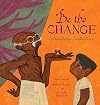
Great story for being a springboard to talk with children/groups about passive violence, waste, active violence, and how each individual behaves influences the world and all others in it. It goes to a quote I have always liked: “Be the change you wish to see in the world.” I love how it encourages children and all readers to be the change. I can see a lot of great school and other projects coming about and great discussions about ethical living because of this book. I think the book will show more make readers think about their actions/behavior. I think it empowers children and all readers to know that decisions they make can have great impact.
The illustrations are interesting and fit the story but I can’t say I loved them. Aesthetically I did not like them that much but I think many others will appreciate them more than I did.
I liked this book better than Grandfather Gandhi, written and illustrated by the same team of three, two authors and one illustrator.
I’d love to hear the two authors speak. One is one of Gandhi’s grandsons. I would love to bring children and teens to hear them speak. I think it would be inspirational.
The last page with the A Note from the Authors for me made the book.
3-1/2 stars show less
The illustrations are interesting and fit the story but I can’t say I loved them. Aesthetically I did not like them that much but I think many others will appreciate them more than I did.
I liked this book better than Grandfather Gandhi, written and illustrated by the same team of three, two authors and one illustrator.
I’d love to hear the two authors speak. One is one of Gandhi’s grandsons. I would love to bring children and teens to hear them speak. I think it would be inspirational.
The last page with the A Note from the Authors for me made the book.
3-1/2 stars show less
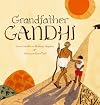
Arun Gandhi tells a story of his childhood stay at Gandhi's ashram, learning that everyone feels anger but it's like electricity. "Anger can strike like lightning, and split a living tree in two. Or it can be channeled transformed. A switch can be flipped, and it can shed light like a lamp."
Lists
Awards


You May Also Like


Associated Authors
Statistics
- Works
- 9
- Also by
- 1
- Members
- 717
- Popularity
- #35,385
- Rating
- 4.1
- Reviews
- 55
- ISBNs
- 31