
Cynthia Levinson
Author of The Youngest Marcher: The Story of Audrey Faye Hendricks, a Young Civil Rights Activist
Works by Cynthia Levinson
The Youngest Marcher: The Story of Audrey Faye Hendricks, a Young Civil Rights Activist (2017) 604 copies, 28 reviews
Fault Lines in the Constitution: The Framers, Their Fights, and the Flaws that Affect Us Today (2017) 198 copies, 10 reviews
Fault Lines in the Constitution: The Graphic Novel (World Citizen Comics) (2020) 55 copies, 3 reviews
Watch Out for Flying Kids! How Two Circuses, Two Countries, and Nine Kids Confront Conflict and Build Community (2015) 34 copies, 3 reviews
Associated Works
1789: Twelve Authors Explore a Year of Rebellion, Revolution, and Change (2020) — Contributor — 59 copies, 14 reviews
Tagged
Common Knowledge
- Gender
- female
Members
Reviews
The Youngest Marcher: The Story of Audrey Faye Hendricks, a Young Civil Rights Activist by Cynthia Levinson
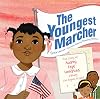
4.5 stars rounded up. If I'd been introduced to history this way, I may actually have enjoyed it and wanted to learn more.
I very much enjoyed it. I agree it's not a complete biography, but it does include some of Audrey's life beyond this one experience. And the bright illustrations make it palatable--it doesn't look like heavy old history but more like a fun story that happens to be True and also Relevant. I think it's perfect for schoolchildren who still get too much dry & didactic stuff show more that they find it easy to dismiss as 'the old days, when everything was in black and white.'
I'm tempted to give this five stars, because I think everyone should read it. How many of us have even heard of Audrey? Not me! We should all know that thousands, tens of thousands, of people are involved in most events/ changes... not just the big few names but all the others marching with them, helping them with their lab work, building their rocketships, etc. And Audrey was more than just one of thousands, so she matters even more. show less
I very much enjoyed it. I agree it's not a complete biography, but it does include some of Audrey's life beyond this one experience. And the bright illustrations make it palatable--it doesn't look like heavy old history but more like a fun story that happens to be True and also Relevant. I think it's perfect for schoolchildren who still get too much dry & didactic stuff show more that they find it easy to dismiss as 'the old days, when everything was in black and white.'
I'm tempted to give this five stars, because I think everyone should read it. How many of us have even heard of Audrey? Not me! We should all know that thousands, tens of thousands, of people are involved in most events/ changes... not just the big few names but all the others marching with them, helping them with their lab work, building their rocketships, etc. And Audrey was more than just one of thousands, so she matters even more. show less
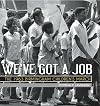
Like a lot of people my age and younger, I have trouble trying to imagine what it would've been like to grow up in the South in the 1960s. The injustice, the suffering, the hatred--it's overwhelming to imagine it happening around me. But here comes a book that really puts you right there in the middle and shows you the nitty gritty.
Because Cynthia Levinson's We've Got a Job is told from the perspectives of four real children who lived in Birmingham at the time, it is immediately more show more visceral and moving than most accounts I've read. If you can put yourself in the shoes of Audrey, Arnetta, James, and Wash, you can have some idea of what you might've thought, said, and done if you'd been there. I think that's the power of this book and it's especially apparent in the book's awesome opening:
"On Thursday morning, May 2, 1963, nine-year-old Audrey Faye Hendricks woke up with freedom on her mind. But, before she could be free, there was something important she had to do. 'I want to go to jail,' Audrey had told her mother. Since Mr. and Mrs. Hendricks thought that was a good idea, they helped her get ready."
Would you go to jail to be free? What if you were just nine years old? Could you be peaceful and passive as your enemies called you names and threatened you? Would you pick yourself up and try again after multiple defeats?
This book just slays me because it's so inspirational and heartbreaking at the same time. For every win, there's a terrible loss. For every step forward, there's also a push back. We have this in teen non-fiction, but I think kids as young as 5th, maybe 4th, grade would be absorbed by the stories of the people in this book, especially the children.
Children are the heroes in this story. When Martin Luther King Jr. and Fred Shuttlesworth were trying to fill the jails of Birmingham in peaceful protest, they couldn't get enough adults to volunteer for the cause. The grown-ups were afraid of losing their jobs and weren't sure protesting was the smartest way to go. The kids, however, valiantly risked life and limb to demand equal treatment. They marched and went to jail in the thousands. They endured racist taunts, fire hoses, attack dogs, and other violence. They made a difference.
The only reason I didn't give this book 5 stars is because there were a few times I found the narrative confusing. The author would refer back to a character I didn't remember or jump around in time in a way that didn't make sense to me. Ultimately, it's a well-written, powerful book that I'll be happy to recommend this coming school year. show less
Because Cynthia Levinson's We've Got a Job is told from the perspectives of four real children who lived in Birmingham at the time, it is immediately more show more visceral and moving than most accounts I've read. If you can put yourself in the shoes of Audrey, Arnetta, James, and Wash, you can have some idea of what you might've thought, said, and done if you'd been there. I think that's the power of this book and it's especially apparent in the book's awesome opening:
"On Thursday morning, May 2, 1963, nine-year-old Audrey Faye Hendricks woke up with freedom on her mind. But, before she could be free, there was something important she had to do. 'I want to go to jail,' Audrey had told her mother. Since Mr. and Mrs. Hendricks thought that was a good idea, they helped her get ready."
Would you go to jail to be free? What if you were just nine years old? Could you be peaceful and passive as your enemies called you names and threatened you? Would you pick yourself up and try again after multiple defeats?
This book just slays me because it's so inspirational and heartbreaking at the same time. For every win, there's a terrible loss. For every step forward, there's also a push back. We have this in teen non-fiction, but I think kids as young as 5th, maybe 4th, grade would be absorbed by the stories of the people in this book, especially the children.
Children are the heroes in this story. When Martin Luther King Jr. and Fred Shuttlesworth were trying to fill the jails of Birmingham in peaceful protest, they couldn't get enough adults to volunteer for the cause. The grown-ups were afraid of losing their jobs and weren't sure protesting was the smartest way to go. The kids, however, valiantly risked life and limb to demand equal treatment. They marched and went to jail in the thousands. They endured racist taunts, fire hoses, attack dogs, and other violence. They made a difference.
The only reason I didn't give this book 5 stars is because there were a few times I found the narrative confusing. The author would refer back to a character I didn't remember or jump around in time in a way that didn't make sense to me. Ultimately, it's a well-written, powerful book that I'll be happy to recommend this coming school year. show less
We've Got a Job: The 1963 Birmingham Children's March (Jane Addams Award Book (Awards)) by Cynthia Levinson
I stayed up all night to read this breathtaking, informative and inspirational book about the Birmingham Children's March in Birmingham, Alabama. This beautifully written and photographed book tells the story of the 4,000 children who integrated Birmingham after the adults, feeling frightened of violence and probable loss of livelihoods, stopped protesting with Dr. Martin King Jr. and other clergy. Facing violence, expulsion from school, threats to their parents lives, and the killing of 4 show more little girls from a bomb planted at church by white supremacists, the children of Birmingham continued to march and protest until they won significant concessions from Bull Conner and the white power structure. It also frankly discusses the use of non-violent and violent tactics used by the Black community to protect themselves, a topic that is not often discussed. This book for older children, teens and adults inspires us to fight for what is right, and gives us courage for the journey. show less
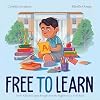
Atribute to a courageous family of undocumented immigrants who went to court to secure their child’s right to a free public education.
Basing her account on a 1977 case in Texas and adding dialogue but using real names, Levinson tells the tale from 9-year-old Alfredo’s point of view. Traveling north from Zacatecas, Mexico, with his tío, Alfredo slips past the Border Patrol and joins his loving Amá and Apá at last in Tyler. But he’s forced to watch sadly from his window as other show more children go to school—until the morning his parents pack up the car (in case they have to flee afterward) and sneak into the local federal courthouse to testify before a judge. There the Lopez family hears their lawyer argue that a new state law barring undocumented children from free public schooling is neither fair nor, according to the 14th Amendment’s guarantee that everyone is subject to equal treatment under the law, legal. As the author notes in her more detailed afterword, the latter argument not only convinced the judge but also held all the way through multiple appeals to the U.S. Supreme Court, giving Alfredo and millions of other undocumented students since then the right to attend school in every state. Most of the figures in Ortega’s warm illustrations (the judge and lawyers excepted) are brown-skinned; Alfredo, bright-eyed and usually smiling, looks equally comfortable in both Mexico and the U.S. and (at last) in school.
Frank and sympathetic in presenting a lesser-known landmark in the struggle for human rights. (notes, bibliography) (Informational picture book. 6-8)
-Kirkus Review show less
Basing her account on a 1977 case in Texas and adding dialogue but using real names, Levinson tells the tale from 9-year-old Alfredo’s point of view. Traveling north from Zacatecas, Mexico, with his tío, Alfredo slips past the Border Patrol and joins his loving Amá and Apá at last in Tyler. But he’s forced to watch sadly from his window as other show more children go to school—until the morning his parents pack up the car (in case they have to flee afterward) and sneak into the local federal courthouse to testify before a judge. There the Lopez family hears their lawyer argue that a new state law barring undocumented children from free public schooling is neither fair nor, according to the 14th Amendment’s guarantee that everyone is subject to equal treatment under the law, legal. As the author notes in her more detailed afterword, the latter argument not only convinced the judge but also held all the way through multiple appeals to the U.S. Supreme Court, giving Alfredo and millions of other undocumented students since then the right to attend school in every state. Most of the figures in Ortega’s warm illustrations (the judge and lawyers excepted) are brown-skinned; Alfredo, bright-eyed and usually smiling, looks equally comfortable in both Mexico and the U.S. and (at last) in school.
Frank and sympathetic in presenting a lesser-known landmark in the struggle for human rights. (notes, bibliography) (Informational picture book. 6-8)
-Kirkus Review show less
Lists
Awards


We've Got a Job: The 1963 Birmingham Children's March (Informational Books for Older Readers – 2012)
The People's Painter: How Ben Shahn Fought for Justice with Art (Informational Books for Younger Readers – 2021)
You May Also Like


Associated Authors
Statistics
- Works
- 10
- Also by
- 1
- Members
- 1,510
- Popularity
- #17,027
- Rating
- 4.2
- Reviews
- 84
- ISBNs
- 57