
Jeff Sharlet
Author of The Family: The Secret Fundamentalism at the Heart of American Power
About the Author
Jeff Sharlet is a visiting research scholar at New York University's Center for Religion and Media. He is a contributing editor for Harper's and Rolling Stone, the coauthor, with Peter Manseau, of Killing the Buddha, and the editor of The Revealer.org. He lives in Brooklyn, New York.
Image credit: Greg Martin
Works by Jeff Sharlet
The Family: The Secret Fundamentalism at the Heart of American Power (2008) 1,114 copies, 30 reviews
Sweet Heaven When I Die: Faith, Faithlessness, and the Country In Between (2011) 59 copies, 1 review
Believer, Beware: First-Person Dispatches from the Margins of Faith (2009) — Editor — 44 copies, 1 review
Radiant Truths: Essential Dispatches, Reports, Confessions, and Other Essays on American Belief (2014) — Editor — 32 copies, 1 review
Associated Works
Boob Jubilee: The Mad Cultural Politics of the New Economy: Salvos from the Baffler (2003) — Contributor — 86 copies
Tagged
Common Knowledge
- Birthdate
- 1972
- Gender
- male
- Education
- Hampshire College
- Occupations
- journalist
- Organizations
- Harper's Magazine
Rolling Stone
The Nation Institute - Relationships
- Sharlet, Robert (father)
- Nationality
- USA
- Places of residence
- New York, New York, USA
- Associated Place (for map)
- New York, USA
Members
Reviews
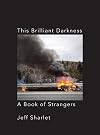
Deeply moving, Sharlet's This Brilliant Darkness is a contradiction, simultaneously painful and hopeful, optimistic but realistic. Sharlet paints a picture of the United States as it is - Not a nation of life, liberty, and happiness; but a nation bleeding and bruised. That picture is illustrated by his own photography, a collection curated over a period of two years. His photos are a necessary antidote to the tone of his writing - When he describes horrific events we're reminded of the show more humanity of the situation, and when he writes positively we're reminded of the pain his subjects are fighting. show less
A remarkable travelogue of post-Trumpian America that explores vast differences of ideology across vast tracts of grief-stricken land. Sharlet is a wonderfully gifted journalist whose ornate prose flows through brooks and ravines of communities in perpetual mourning. He compassionately interrogates the stormy confluence of emotion and logic, a remote and fathomless delta poisoned by blind faith and cultish urges that are fomented by charismatic charlatans and righteous avengers for an show more imagined populace who have collectively been duped by the very junkyard messiah they worship. The Undertow is a modern take on Lesy's Wisconsin Death Trip that lays bare the circling eddy of white American exceptionalism and provides creative commentary about the overfracked streams of consciousness that have carried the nation to the brink of another civil war, and that continue to roil and bubble just upriver from the next roaring cataract. Bookended by transportive chapters that explore the legacies of Harry Belafonte and Lee Hays and their respective ordeals of social justice, Sharlet effectively reminds us that the past is all-too-obviously prologue. show less
Sharlet is such a beautiful writer that you almost forget he's telling a horror story. He interviews numerous people of all races across our country who believe that Trump is God, Ashli Babbitt (who was killed in the January 6 capitol riot) is a martyr, and only through armed insurrection will the country be set right. They're already busy preaching their unique take on the Gospels, amassing multitudes of firearms, and training militias.
The only reassurance that Sharlet can provide are show more bookend chapters about activists Harry Belafonte, and folksong legends The Weavers, who kept on singing even though their causes were virtually hopeless. He admits to having started his odyssey with heart problems, and one wonders if the process of researching and writing this book may have further eroded his health. It certainly raised my blood pressure. show less
The only reassurance that Sharlet can provide are show more bookend chapters about activists Harry Belafonte, and folksong legends The Weavers, who kept on singing even though their causes were virtually hopeless. He admits to having started his odyssey with heart problems, and one wonders if the process of researching and writing this book may have further eroded his health. It certainly raised my blood pressure. show less
Our present moment is haunted by its socio-cultural condition. Many would rather pretend otherwise or remain ensconced in their particular bubble. Jeff Sharlet went out exploring.
The result is The Undertow Scenes From a Slow Civil War. Sharlet uses the January 6 insurrection and the death of Ashli Babbit to frame his 12 year exploration into the socio-cultural movements at work in American society.
Sharlet does fantastic work in investigation and reporting and writes well. He visits Occupy show more Wall Street and gets a feel for why people are there. He visits Trump rallies in 2016 and 2020 and men’s rights conferences. He is present at a rally in remembrance of Ashli Babbit and then drives across the country, randomly visiting churches and/or interviewing people who express strong support for Trump. He hears the same fevered stories, heartfelt yet almost utterly devoid of reality. The same anxieties and fears pervade throughout. There is an expectation - almost a relishing - of the prospect of civil war, of "“us” against “them,” “red” against “blue,” “rural” vs. “urban.” Sharlet concludes with an account of The Weavers, the last moment of vitality in an American Left worthy of the name and its ultimate demise in the 1950s and 1960s.
This is definitely a work written more for understanding the condition of the reactionary right-wing in America than anything else, but all do well to grapple with the reality of the world Sharlet investigated. How much longer will comity prevail? What awful and terrible crisis will come to relieve all of this friction and tension? Only God knows; it probably won’t be good. show less
The result is The Undertow Scenes From a Slow Civil War. Sharlet uses the January 6 insurrection and the death of Ashli Babbit to frame his 12 year exploration into the socio-cultural movements at work in American society.
Sharlet does fantastic work in investigation and reporting and writes well. He visits Occupy show more Wall Street and gets a feel for why people are there. He visits Trump rallies in 2016 and 2020 and men’s rights conferences. He is present at a rally in remembrance of Ashli Babbit and then drives across the country, randomly visiting churches and/or interviewing people who express strong support for Trump. He hears the same fevered stories, heartfelt yet almost utterly devoid of reality. The same anxieties and fears pervade throughout. There is an expectation - almost a relishing - of the prospect of civil war, of "“us” against “them,” “red” against “blue,” “rural” vs. “urban.” Sharlet concludes with an account of The Weavers, the last moment of vitality in an American Left worthy of the name and its ultimate demise in the 1950s and 1960s.
This is definitely a work written more for understanding the condition of the reactionary right-wing in America than anything else, but all do well to grapple with the reality of the world Sharlet investigated. How much longer will comity prevail? What awful and terrible crisis will come to relieve all of this friction and tension? Only God knows; it probably won’t be good. show less
Lists
Awards


You May Also Like


Associated Authors
Statistics
- Works
- 11
- Also by
- 3
- Members
- 2,025
- Popularity
- #12,697
- Rating
- 3.8
- Reviews
- 60
- ISBNs
- 34
- Languages
- 1
- Favorited
- 3