
Max Blumenthal
Author of Republican Gomorrah: Inside the Movement that Shattered the Party
About the Author
Max Blumenthal is an award-winning, New York Times-bestselling journalist whose articles and video documentaries have appeared in The Nation, New York Times, Huffington Post, Salon, and others. He is a Puffin writing fellow at The Nation Institute. His website is www.maxblumenthal.com.
Works by Max Blumenthal
Associated Works
Tagged
Common Knowledge
- Birthdate
- 1977-12-18
- Gender
- male
- Occupations
- journalist
- Organizations
- The Daily Beast
Alternet
The Grayzone - Awards and honors
- Serena Shim Award for Uncompromised Integrity in Journalism (2019)
- Relationships
- Blumenthal, Sidney (father)
- Nationality
- USA
- Places of residence
- New York, New York, USA
- Associated Place (for map)
- New York, USA
Members
Reviews
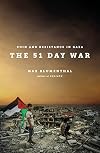
A devastating testimony on Israel's military assault on virtually defenceless Gaza in 2014. An intrepid journalist and first-hand witness, Max Blumenthal covers not just the damage inflicted on Gaza, the people and the place, but also explores the political and military strategies used by the government of Israel to justify the war. This included the dubious linking of Hamas to a criminal kidnapping and murder of Israeli youths in the West Bank as an excuse to attack Gaza. The similarities show more of this "war" to the current conflict in Gaza (after 7 October 2023) are startling - but if anything the loss of life, especially civilians, and damage to the infrastructure of Gaza are on a scale hardly imagined in 2014.
I also recommend viewing Max Blumenthal's video on the Electronic Intifada website for an alternative view on the 7 October Hamas attack which precipitated the current Israeli assault on Gaza. Many difficult questions are raised, about both Israel and Hamas, to put it mildly.. show less
I also recommend viewing Max Blumenthal's video on the Electronic Intifada website for an alternative view on the 7 October Hamas attack which precipitated the current Israeli assault on Gaza. Many difficult questions are raised, about both Israel and Hamas, to put it mildly.. show less
The Management of Savagery: How America's National Security State Fueled the Rise of Al Qaeda, ISIS, and Donald Trump by Max Blumenthal
The Management of Savagery is a brilliant and thorny book, a bold indictment of American foreign policy let down by shifts between two versions of core thesis, and an emotional commitment to an unconventional wisdom Blumenthal desperately wants you to believe and doesn't have the evidence to prove.
The weak version of the the book's thesis is simply: 9/11 was the direct result of American blowback, the end result of Zbigniew Brzezinski's ploy to cripple the USSR in Afghanistan by supplying show more and training proxy militias of Salafi extremists, which would eventually grow into Al Qaeda. We all know the consequences: 9/11, the invasion of Iraq, a never ending imperial quagmire. Worse, "giving Muslim extremists guns and money and hoping for the best" has become the bipartisan foreign policy establishment's go to plan despite the fact that it never ever works, leaving shattered countries, a maze of atrocities on all sides, seas of refugees, and right-wing populist backlashes to the refugees.
The weak version of the thesis is well worth attending to, especially claims of contacts between Al Qaeda and Western intelligence agencies in the period leading up to 9/11. There's also hints of a very important book about the nature of American governance in the early part of the 21st century, a kind of nightmare hydra of self-proclaimed 'counter-terrorism experts' laundering credibility through a revolving series of government, academic, thinktank, and media posts to justify imperial expeditions no matter who sits in the White House. That Project for a New American Century ghouls (remember PNAC?) and humanitarian interventionists like Hillary Clinton and Samantha Powers could come to the same means and ends is worth considering in full.
The problem is the strong version of the thesis. If this bipartisan foreign policy has been one of the major contributors to human misery in the 21st century, it is evil, and therefore anybody who opposes it is... well good might be too far, but righteous perhaps? It's the same kind of blinkered thinking that leads to the CIA handing weapons to Salafi extremists, and it puts Blumenthal in the same corner as Assad, Putin, and Trump, and renders his analysis crude and conspiratorial.
And this is a goddamn shame. Because we need to be reminded of this legacy of absolute failure, and the way that the parasitic counter-terrorism security state is choking the life out of our democracy (he says, as clouds of teargas drift through Seattle and Portland). And there is a very solid realpolitik analysis to be made here, about which factions have power within states, be they intelligence agencies or extremist cells or the people, and the balance of power between the Gulf Monarchies, Iran, Israel, Saddam Hussein's Iraq, America, Turkey, NATO, Russia, China etc..., and how this is leading us all down a bloody road, but Blumenthal isn't quite objective enough to make the case. And I sympathize, Blumenthal is an ADL designated anti-Semite (for the record, the ADL needs to chillax on officially designating people anti-Semites), and he's been writing stories the Israel government would rather not have published his entire career. But the web of treachery is too big to be adequately explained in this short book. show less
The weak version of the the book's thesis is simply: 9/11 was the direct result of American blowback, the end result of Zbigniew Brzezinski's ploy to cripple the USSR in Afghanistan by supplying show more and training proxy militias of Salafi extremists, which would eventually grow into Al Qaeda. We all know the consequences: 9/11, the invasion of Iraq, a never ending imperial quagmire. Worse, "giving Muslim extremists guns and money and hoping for the best" has become the bipartisan foreign policy establishment's go to plan despite the fact that it never ever works, leaving shattered countries, a maze of atrocities on all sides, seas of refugees, and right-wing populist backlashes to the refugees.
The weak version of the thesis is well worth attending to, especially claims of contacts between Al Qaeda and Western intelligence agencies in the period leading up to 9/11. There's also hints of a very important book about the nature of American governance in the early part of the 21st century, a kind of nightmare hydra of self-proclaimed 'counter-terrorism experts' laundering credibility through a revolving series of government, academic, thinktank, and media posts to justify imperial expeditions no matter who sits in the White House. That Project for a New American Century ghouls (remember PNAC?) and humanitarian interventionists like Hillary Clinton and Samantha Powers could come to the same means and ends is worth considering in full.
The problem is the strong version of the thesis. If this bipartisan foreign policy has been one of the major contributors to human misery in the 21st century, it is evil, and therefore anybody who opposes it is... well good might be too far, but righteous perhaps? It's the same kind of blinkered thinking that leads to the CIA handing weapons to Salafi extremists, and it puts Blumenthal in the same corner as Assad, Putin, and Trump, and renders his analysis crude and conspiratorial.
And this is a goddamn shame. Because we need to be reminded of this legacy of absolute failure, and the way that the parasitic counter-terrorism security state is choking the life out of our democracy (he says, as clouds of teargas drift through Seattle and Portland). And there is a very solid realpolitik analysis to be made here, about which factions have power within states, be they intelligence agencies or extremist cells or the people, and the balance of power between the Gulf Monarchies, Iran, Israel, Saddam Hussein's Iraq, America, Turkey, NATO, Russia, China etc..., and how this is leading us all down a bloody road, but Blumenthal isn't quite objective enough to make the case. And I sympathize, Blumenthal is an ADL designated anti-Semite (for the record, the ADL needs to chillax on officially designating people anti-Semites), and he's been writing stories the Israel government would rather not have published his entire career. But the web of treachery is too big to be adequately explained in this short book. show less
As they say in Spanish "va sumando," or "it adds up." Blumenthal's landmark book is written in extremely accessible journalistic anecdotal style. There is no theory. But the anecdotes just keep adding up, forcing the reader to draw some of their own conclusions, unable to avert their gaze and dismiss each story as just an individual story. The fascist, racist nature of the Zionist system becomes undeniable. And as the book comes to a close, Blumenthal draws the reader to Germany, where the show more only place that young Jewish Israelis feel at home is within a pluralistic society. It is hard to avoid the conclusion that Max is arguing for ethnic pluralism everywhere over an (impossible) ethnic purity in Israel, a country stolen by force of arms, as the basis of the Jewish response to the Holocaust.
When Ian Lustick, the very liberal Zionist political scientist and friend of Blumenthal's father, received Max at UPenn, part of a friendly effort to break the media blackout around this book (in contrast to the wide coverage of his previous book on the Republican party), the reception was friendly but condemnatory. Lustick starts speaking at 22m50s and goes on at great length with his own anecdotal stories. These stories seem to lull the audience into a disarmed position, as the stories repeatedly reinforce Lustick's caring, considerate, anti-racist, liberal credentials. And then, all of a sudden, at the end of all this storytelling, starting at minute 36, he does a few things. First, he accuses Blumenthal of being too anecdotal and not sufficiently serious. Second, he suggests that Blumenthal is making a mountain out of molehill and overreacting. Why can't we just give Israel a little more time? Thirdly, finally, and most importantly, he suddenly springs the anti-semetic label on Blumenthal, accusing him of willing 'the end of Jewish collective life in Israel,' which is probably an accurate accusation, but which deliberately sounds like he is willing the end of Jewish life itself - the complete opposite of what Blumenthal is advocating.
These two positions really sum up the divide inside the Jewish community. Should the response to the Holocaust be "never again, for us," or "never again, for anyone"? It is a divide between exclusionists and universalists, the two great strands of Jewish thinking through the ages. Max is clearly a universalist, as are most Palestinians. Lustick wants his ethnically pure enclave, notwithstanding the cost to the native Palestinian inhabitants of the land - a cost laid bare in page after page of Blumenthal's book. And while the Jewish community debates amongst itself, the Palestinians suffer under the Israeli jackboot and, as also becomes clear through Blumenthal, the soul of Judaism itself corrodes. To understand the panic of liberal Zionists like Ian Lustick, indeed to understand Israel itself, this important book is required reading.
https://www.youtube.com/watch?v=upv9KUuks_8 show less
When Ian Lustick, the very liberal Zionist political scientist and friend of Blumenthal's father, received Max at UPenn, part of a friendly effort to break the media blackout around this book (in contrast to the wide coverage of his previous book on the Republican party), the reception was friendly but condemnatory. Lustick starts speaking at 22m50s and goes on at great length with his own anecdotal stories. These stories seem to lull the audience into a disarmed position, as the stories repeatedly reinforce Lustick's caring, considerate, anti-racist, liberal credentials. And then, all of a sudden, at the end of all this storytelling, starting at minute 36, he does a few things. First, he accuses Blumenthal of being too anecdotal and not sufficiently serious. Second, he suggests that Blumenthal is making a mountain out of molehill and overreacting. Why can't we just give Israel a little more time? Thirdly, finally, and most importantly, he suddenly springs the anti-semetic label on Blumenthal, accusing him of willing 'the end of Jewish collective life in Israel,' which is probably an accurate accusation, but which deliberately sounds like he is willing the end of Jewish life itself - the complete opposite of what Blumenthal is advocating.
These two positions really sum up the divide inside the Jewish community. Should the response to the Holocaust be "never again, for us," or "never again, for anyone"? It is a divide between exclusionists and universalists, the two great strands of Jewish thinking through the ages. Max is clearly a universalist, as are most Palestinians. Lustick wants his ethnically pure enclave, notwithstanding the cost to the native Palestinian inhabitants of the land - a cost laid bare in page after page of Blumenthal's book. And while the Jewish community debates amongst itself, the Palestinians suffer under the Israeli jackboot and, as also becomes clear through Blumenthal, the soul of Judaism itself corrodes. To understand the panic of liberal Zionists like Ian Lustick, indeed to understand Israel itself, this important book is required reading.
https://www.youtube.com/watch?v=upv9KUuks_8 show less
If Blumenthal has one particular insight it is to illustrate the linkages between certain evangelical Christian organizations that have made an industry of exploiting personal crisis, with particular jabs made at James Dobson of Focus on the Family, and how this style has insinuated itself into Republican politics; with corrosive results for the ability of the GOP to offer positive leadership and convincing solutions.
That said I'm not as impressed with Blumenthal as he seems to be with show more himself, as the level of analysis displayed might be adequate for an article in a magazine, but not for a book-length study, even for what is mostly a polemic. There has been other writing on how psychological distress feeds into political conflict since Erich Fromm. Not to mention that there seems to be little appreciation of the social stresses that lead people to this style of coping. Nor respect for how people may have made their life choices with with clear eyes and not in the throes of irrational crisis. Even if I don't have much use for many of the would be powerbrokers and politicians who pass through these pages, they're mostly treated as little more than bogeymen; that isn't helpful either. It's what you get when you merely concentrate on the most spectacular exemplars of a phenomena.
If Blumenthal had cast his net wider, he might have wondered about factors undermining the norms of modern American society, and how that offers an opening for more extreme forms of politics. Basically healthy societies don't turn to psycho-social messiahs.
Oh yes, I've also found such little pieces of sloppiness such as claiming that Sarah Palin attended five colleges "in Idaho," or calling William Branham, the inspiration behind Gov. Palin's church, Canadian, when the man was apparently from Kentucky; it's hard to tell with the lame citations. show less
That said I'm not as impressed with Blumenthal as he seems to be with show more himself, as the level of analysis displayed might be adequate for an article in a magazine, but not for a book-length study, even for what is mostly a polemic. There has been other writing on how psychological distress feeds into political conflict since Erich Fromm. Not to mention that there seems to be little appreciation of the social stresses that lead people to this style of coping. Nor respect for how people may have made their life choices with with clear eyes and not in the throes of irrational crisis. Even if I don't have much use for many of the would be powerbrokers and politicians who pass through these pages, they're mostly treated as little more than bogeymen; that isn't helpful either. It's what you get when you merely concentrate on the most spectacular exemplars of a phenomena.
If Blumenthal had cast his net wider, he might have wondered about factors undermining the norms of modern American society, and how that offers an opening for more extreme forms of politics. Basically healthy societies don't turn to psycho-social messiahs.
Oh yes, I've also found such little pieces of sloppiness such as claiming that Sarah Palin attended five colleges "in Idaho," or calling William Branham, the inspiration behind Gov. Palin's church, Canadian, when the man was apparently from Kentucky; it's hard to tell with the lame citations. show less
Lists
Five star books (1)
Awards


You May Also Like


Associated Authors
Statistics
- Works
- 6
- Also by
- 1
- Members
- 663
- Popularity
- #38,037
- Rating
- 4.1
- Reviews
- 21
- ISBNs
- 33
- Favorited
- 2