
Nancy Antle
Author of The good bad cat
About the Author
Works by Nancy Antle
The Good Bad Cat - Class Set 1 copy
The Good Bad Cat 1 copy
Tagged
Common Knowledge
- Birthdate
- 1955-10-11
- Gender
- female
- Education
- Oklahoma State University
San Jose State University (B.A., Creative Arts) - Awards and honors
- IRA/CBC Children's Choice Book (1995)
NCSS/CBC Notable Children's Trade Book in the Field of Social Studies (1998)
Bank Street College of Education Best Children’s Book of the Year (1998) - Nationality
- USA
- Places of residence
- Utah, USA
Oklahoma, USA
California, USA
Madison, Wisconsin, USA (birth) - Associated Place (for map)
- USA
Members
Reviews
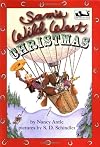
This was a different twist on Christmas. I don't think I've ever read a children's book about a cowboy Christmas. It was a nice change of pace from all those city folk. Plus, who doesn't love a good character by the name of Sam? ;)
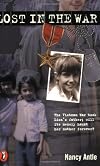
Lisa is the oldest of two daughters and tries to take the responsibility of caring for her mother who has horrific flashbacks to when she was nurse in the Vietnam war. In addition to these painful flashbacks, Lisa's father was killed in the war. Lisa's mother begins to find solace when she meets a a fellow Vietnam veteran who lost a leg in the war. Lisa, her family, and new friends travel to Washington DC to see the unveiling of the Vietnam War memorial. I love this book because it does a show more great job describing PTSD on a level that children can understand. It also shows the difficulties of children who lost a parent during a war. show less

For teachers:
Once, a student told me that the novel No Promises in the Wind by Irene Hunt was "like the author wanted to make a book that would help kids understand what it was like during the Great Depression and that's it. There was no compelling story or any other point to it," (Anders L.). I didn't agree at all, but that's exactly what I'd say about this book. It was short, at a much easier reading level than No Promises, perfect for an AIS class to supplement the Social Studies unit on show more the Great Depression, except that it has no other merit. It gives a personal touch to what they're learning; the plot is as follows:
The main character is a middle-school-aged boy who plays the harmonica well and lives in Oklahoma with his parents and his (16-year-old!)sister, who moved back home with her husband and baby "until they can get back on their feet, which, of course, never happens). The family (whom you care about minimally) finally loses his job as a typewriter repairman. It is explained that while everyone seemed to be losing their jobs, the father's business was strong as people didn't have enough money to buy new, so they spent their money on repairs (I liked that this was mentioned). The sister and her family decide to drive out to California since there are supposedly better jobs there, and the protagonist and his parents move in with his farmer grandparents. They encounter a dust storm on the way, seek shelter in a farm house that is filled with dust and a crying baby and a single mom, and finally arrive at their new home to find out how poorly the grandparents' crops are doing. The father seeks work every day, never gets more than an odd job here or there, the grandparents feed and board a hobo (teenager coming back from California who informs them of the terrible discrimination faced by "Okies" out there), find that word has spread that they are hospitable to hobos, leading to an influx in hobo traffic, until the whole family begins to starve, hoping all the while that if they keep trying, it will eventually rain and their crops will grow. The protagonist is unable to attend school when it reopens (after being closed for a while due to Depression-related issues)because he cannot afford to buy books and supplies. The family who had moved to California come home, the sister pregnant again, and the father realizes he must, after all, apply for relief. None of this matters, as at least they're all together. The end.
Crappy ending, makes you wonder why you bothered at all, but as you can see, this fictional narrative does get the students into the world of the GD with all of the key concepts present, but at the end, the students probably will think it was a pretty crappy story. On the other hand, it will be a book successfully read by your lower-level readers which never hurts. Until I find something better, I'll differentiate with this book, while my more proficient readers read No Promises in the Wind. show less
Once, a student told me that the novel No Promises in the Wind by Irene Hunt was "like the author wanted to make a book that would help kids understand what it was like during the Great Depression and that's it. There was no compelling story or any other point to it," (Anders L.). I didn't agree at all, but that's exactly what I'd say about this book. It was short, at a much easier reading level than No Promises, perfect for an AIS class to supplement the Social Studies unit on show more the Great Depression, except that it has no other merit. It gives a personal touch to what they're learning; the plot is as follows:
The main character is a middle-school-aged boy who plays the harmonica well and lives in Oklahoma with his parents and his (16-year-old!)sister, who moved back home with her husband and baby "until they can get back on their feet, which, of course, never happens). The family (whom you care about minimally) finally loses his job as a typewriter repairman. It is explained that while everyone seemed to be losing their jobs, the father's business was strong as people didn't have enough money to buy new, so they spent their money on repairs (I liked that this was mentioned). The sister and her family decide to drive out to California since there are supposedly better jobs there, and the protagonist and his parents move in with his farmer grandparents. They encounter a dust storm on the way, seek shelter in a farm house that is filled with dust and a crying baby and a single mom, and finally arrive at their new home to find out how poorly the grandparents' crops are doing. The father seeks work every day, never gets more than an odd job here or there, the grandparents feed and board a hobo (teenager coming back from California who informs them of the terrible discrimination faced by "Okies" out there), find that word has spread that they are hospitable to hobos, leading to an influx in hobo traffic, until the whole family begins to starve, hoping all the while that if they keep trying, it will eventually rain and their crops will grow. The protagonist is unable to attend school when it reopens (after being closed for a while due to Depression-related issues)because he cannot afford to buy books and supplies. The family who had moved to California come home, the sister pregnant again, and the father realizes he must, after all, apply for relief. None of this matters, as at least they're all together. The end.
Crappy ending, makes you wonder why you bothered at all, but as you can see, this fictional narrative does get the students into the world of the GD with all of the key concepts present, but at the end, the students probably will think it was a pretty crappy story. On the other hand, it will be a book successfully read by your lower-level readers which never hurts. Until I find something better, I'll differentiate with this book, while my more proficient readers read No Promises in the Wind. show less
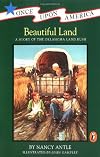
Summary:
When Annie Mae's and her family is ready to start a new life, since they have lost their mother, they are going to start an adventure on the Oklahoma Land Run. Her family and extended family come across many troubles along the way and realize this was not an easy task to accomplish. As this family sticks together, they notice they can accomplish anything together.
Person Reaction:
This book was very good. I liked the small chapter book because my two sons enjoyed listening to the show more story as well. I also like how the story was told perfectly. The family had troubles getting their land.
Classroom Extension Ideas:
1. Most schools have a land run week and this book would be great for kids to read or hear during this week.
2. It would be fun to have an actual land run for the kids to perform and run into some of the trials that Annie Mae's family encountered along the way. show less
When Annie Mae's and her family is ready to start a new life, since they have lost their mother, they are going to start an adventure on the Oklahoma Land Run. Her family and extended family come across many troubles along the way and realize this was not an easy task to accomplish. As this family sticks together, they notice they can accomplish anything together.
Person Reaction:
This book was very good. I liked the small chapter book because my two sons enjoyed listening to the show more story as well. I also like how the story was told perfectly. The family had troubles getting their land.
Classroom Extension Ideas:
1. Most schools have a land run week and this book would be great for kids to read or hear during this week.
2. It would be fun to have an actual land run for the kids to perform and run into some of the trials that Annie Mae's family encountered along the way. show less
Lists
Awards


You May Also Like


Associated Authors
Statistics
- Works
- 14
- Members
- 726
- Popularity
- #34,982
- Rating
- 3.4
- Reviews
- 14
- ISBNs
- 41
- Languages
- 2