
Herman Bang (1857–1912)
Author of Katinka
About the Author
Both an astute literary critic and a master prose stylist, Herman Bang was born in Denmark in 1857. His style has been described as impressionistic. With a few literary brush strokes, Bang is able to paint sensitive psychological portraits. Bang was not as optimistic as his colleagues about the show more Modern Breakthrough, the rejection of nineteenth-century perspectives for modern progress. His characters are often gentle individuals crushed by circumstances. Bang's propensity for depicting declining noble families makes him a major precursor of literary decadence and fin de siecle pessimism. Although he enjoyed great popularity abroad, particularly in Germany, Bang's success at home in Denmark was hampered by a competition with the critics Georg Branes and Edvard Brandes. Several books have been written about Bang in the Scandinavian countries; none have yet appeared in English. (Bowker Author Biography) show less
Image credit: Courtesy of the NYPL Digital Gallery (image use requires permission from the New York Public Library)
Works by Herman Bang
Værker i Mindeudgave 5 copies
Fra de unge Aar 5 copies
Breve til Fritz 3 copies
Tine. Sommerfreuden : Zwei Romane 2 copies
Isamaatud 2 copies
Les quatre diables og andre noveller 2 copies
Herman Bang fortæller 2 copies
Digte 2 copies
Herman Bangs Vandreaar 2 copies
Under Aaget 2 copies
Masker og Mennesker 1 copy
Værker i mindeudgave Bd. 1 1 copy
Élet és halál 1 copy
Mikal︠ 1 copy
Ved vejen - Sommerglæder 1 copy
Værker i mindeudgave Bd 4 1 copy
Værker i mindeudgave Bd. 2 1 copy
Værker i mindeudgave Bd 5 1 copy
Værker i mindeudgave Bd 6 1 copy
Sælsomme Fortællinger 1 copy
Præster 1 copy
Lootuseta hukkaminejad 1 copy
Udvalgte Fortællinger 1 copy
Graaveir. En Akt 1 copy
Hverdagskampe og Du og Jeg 1 copy
Liv og Død 1 copy
Associated Works
Hævnen og andre danske mesterfortællinger - Bind 1 (1973) — Author, some editions — 7 copies, 1 review
The Masterpiece Library of Short Stories Vol. XIX: Scandinavian & Dutch — Contributor — 6 copies
Fantastiske fortellinger — Contributor — 3 copies
Dansk litterær kritik fra Anders Sørensen Vedel til Sophus Claussen — Author, some editions — 3 copies, 1 review
Tagged
Common Knowledge
- Canonical name
- Bang, Herman
- Birthdate
- 1857-04-20
- Date of death
- 1912-01-29
- Gender
- male
- Relationships
- Holst, Bertha (niece)
- Nationality
- Denmark
- Birthplace
- Asserballe, Denmark
- Place of death
- Ogden, Utah, USA
- Associated Place (for map)
- Denmark
Members
Reviews

The Raven is the story of a somewhat older disfigured and single, well off woman who gives a dinner party for her relatives, who are clearly the ravens of the title story in their greed after her money. They are plotting to get her admitted into a psychiatric ward in order to get to her money and possessions early. In the final paragraph it becomes clear that she sees right through them and plans to spend her money so there won’t be much of an inheritance left when she’ll be dead: show more “What has life given me? Now I want to see them dance until they are weeping at my grave side.”
She also notices the meanness of her servants who are appalled by her disfigurements but who think she does not notice. A servant who looks at her as if she looked at a “cadaver at the waterfront”. She retaliates in small ways like calling for a servant who she knows is busy.
In typical Bang style the story is told almost completely through dialogues that are splendid in the way they let the reader see the machinations, hints, and subtle sexuality, both straight and gay of the characters.
And striking: published in 1903 and already phones are lamented:
‘I at least need a room without a telephone now and then.’
William Ask said: ‘There are people who just cannot do without those chimes.’
Bella smiled. ‘That’s true’, she said, ‘but it remains a nuisance when you are reading.’
A fine novella by a great writer. show less
She also notices the meanness of her servants who are appalled by her disfigurements but who think she does not notice. A servant who looks at her as if she looked at a “cadaver at the waterfront”. She retaliates in small ways like calling for a servant who she knows is busy.
In typical Bang style the story is told almost completely through dialogues that are splendid in the way they let the reader see the machinations, hints, and subtle sexuality, both straight and gay of the characters.
And striking: published in 1903 and already phones are lamented:
‘I at least need a room without a telephone now and then.’
William Ask said: ‘There are people who just cannot do without those chimes.’
Bella smiled. ‘That’s true’, she said, ‘but it remains a nuisance when you are reading.’
A fine novella by a great writer. show less
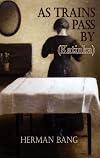
This is a short novel by the Danish writer Herman Bang published in 1886 as Ved Vejen.The translation is by W Glyn Jones and was published in 2015. A previous translation had titled the Book Katinka, but the amended title is more appropriate given the importance of the passing of trains in relation to the passing of the life of Katinka, but this is not a book about trains. It is a study of women's roles and their restricted lives.
Katinka grows up in the town in which she was born and finds show more herself married to the Station master Mr Bai, she is a dutiful wife and lives quietly with Bai, she finds him a little rough at first, but she settles into a routine and tries to make the best of her lot. She is well liked but seems to fade into the background and when she starts to lose weight and become ill hardly anyone notices. Her life revolves around a small group who socialise with Mr Bai and she takes her pleasure in companionship, knowing the women around her, observing their characteristics and being a party to their needs and issues. She is a good listener. Mr Bai has an eye for the ladies and takes his sexual pleasures where he can find them, but he is not unkind to his wife. They are not blessed with children and so Katinka has more time than most women in her circle to enter into her own peaceful world and enjoy the countryside and her minute observations of the people that pass by the station house.
A Mr Huus: a solid quiet man takes the job as a bailiff with one of the gentleman farmers who are in the Bai's circle of friends. Huus becomes good friends with the Bai's and spends time in their house and garden. He is a permanent member of their social circle and Katinka finds that she feels comfortable with him and then something more, as slowly she misses him, and thinks about him when he is not around. Huus increasingly seems to seek her out and Bai is quite happy to leave the two of them together, because as he says to one of is friends Huus hasn't a clue about chasing women. Herman Bang's writing lends a slightly dreamy quality to their friendship which could develop into a romance. He also writes about the quiet suffering of their other friends. Little Miss Jensen the elderly school teacher who craves companionship and lavishes all her affection on her little pug Bel-Ami. The widowed Mrs Abel who has two fractious daughters of marriageable age still at home and the elderly parson and his wife, who do their best to provide a centre for the small social group.
These are people who live in the slow lane whose life is measured by the trains that pass by. Their meeting place is the station and the stopping trains either focus their attentions on the passengers or are an impetus for them to come and go from the station. A tranquil existence but for many of the women and some of the men it is a life of quiet suffering and Katinka is the one that Herman Bang has selected to express for us a life of understated desperation. The slow pace of life, measured by the changing seasons and observations of people in simple social gatherings give this book a rather special atmosphere. As a reader there is a feeling of people dreaming their lives away while suffering nightmares of worries and doubt underneath. The translation aids the gentle understatement that is a feature of the book, but the understatement can mean the reader is struggling to know who is speaking during conversations. I enjoyed this sad, contemplative novel and so 4 stars, show less
Katinka grows up in the town in which she was born and finds show more herself married to the Station master Mr Bai, she is a dutiful wife and lives quietly with Bai, she finds him a little rough at first, but she settles into a routine and tries to make the best of her lot. She is well liked but seems to fade into the background and when she starts to lose weight and become ill hardly anyone notices. Her life revolves around a small group who socialise with Mr Bai and she takes her pleasure in companionship, knowing the women around her, observing their characteristics and being a party to their needs and issues. She is a good listener. Mr Bai has an eye for the ladies and takes his sexual pleasures where he can find them, but he is not unkind to his wife. They are not blessed with children and so Katinka has more time than most women in her circle to enter into her own peaceful world and enjoy the countryside and her minute observations of the people that pass by the station house.
A Mr Huus: a solid quiet man takes the job as a bailiff with one of the gentleman farmers who are in the Bai's circle of friends. Huus becomes good friends with the Bai's and spends time in their house and garden. He is a permanent member of their social circle and Katinka finds that she feels comfortable with him and then something more, as slowly she misses him, and thinks about him when he is not around. Huus increasingly seems to seek her out and Bai is quite happy to leave the two of them together, because as he says to one of is friends Huus hasn't a clue about chasing women. Herman Bang's writing lends a slightly dreamy quality to their friendship which could develop into a romance. He also writes about the quiet suffering of their other friends. Little Miss Jensen the elderly school teacher who craves companionship and lavishes all her affection on her little pug Bel-Ami. The widowed Mrs Abel who has two fractious daughters of marriageable age still at home and the elderly parson and his wife, who do their best to provide a centre for the small social group.
These are people who live in the slow lane whose life is measured by the trains that pass by. Their meeting place is the station and the stopping trains either focus their attentions on the passengers or are an impetus for them to come and go from the station. A tranquil existence but for many of the women and some of the men it is a life of quiet suffering and Katinka is the one that Herman Bang has selected to express for us a life of understated desperation. The slow pace of life, measured by the changing seasons and observations of people in simple social gatherings give this book a rather special atmosphere. As a reader there is a feeling of people dreaming their lives away while suffering nightmares of worries and doubt underneath. The translation aids the gentle understatement that is a feature of the book, but the understatement can mean the reader is struggling to know who is speaking during conversations. I enjoyed this sad, contemplative novel and so 4 stars, show less

Jeg kan fornemme kvaliteten i særligt dialogerne og persongalleriet, og det var fascinerende at læse om livet i den lille stationsby. Men bogen er ikke ældet godt, den er svær at læse, og jeg kedede mig bravt undervejs.
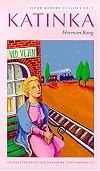
'Katinka' is the story of a Danish woman's domestic unhappiness. The main character, Katinka, is the wife of the insensitive and womanizing stationmaster Bai. Her life revoles around the coming and going of the trains and catering to her husband's whims until the sensitive foreman Huus moves into the neighbor and makes her realize how much she is missing. The story is simple and the prose is crystal clear. Herman Bang is considered to be an "impressionist" writer. This books is a pleasure to show more read. Watch for the symbolic consumption! show less
Lists
Awards


You May Also Like


Associated Authors
Statistics
- Works
- 106
- Also by
- 10
- Members
- 902
- Popularity
- #28,435
- Rating
- 3.8
- Reviews
- 16
- ISBNs
- 193
- Languages
- 11
- Favorited
- 9
