
A. J. Liebling (1904–1963)
Author of Between Meals: An Appetite for Paris
About the Author
A. J. Liebling was an urbane and prolific journalist whose style, incorporating first-person narrative, street talk, and exuberant metaphor, became a model for the New Journalism of the 1960's and later. Although he came from a genteel New York family, he was fascinated by the irreverent underworld show more all his life and made it his special subject. After being expelled from Dartmouth College for refusing to attend chapel, Liebling graduated from Columbia University's Pulitzer School of Journalism in 1925 and then worked for various newspapers, including The New York Times, which fired him, and the New York World, before he found his metier at The New Yorker magazine in 1935. It was there that he developed his signature style and did his best work, writing about a wide range of subjects, from the city's characters to gastronomy to boxing to the London Blitz and the Normandy invasion. A born raconteur with a fertile imagination, Liebling carved out a territory between objective reporting and fiction, which so many other journalists have mined since. Yet he could also produce straight war reportage fine enough to merit receiving the Legion of Honor from a grateful France in 1952. Starting in 1945, Liebling wrote a widely admired column for The New Yorker called "The Wayward Pressman," in which he criticized American journalism's priorities and performance. This was probably the first such column in U.S. journalism. During the 1950s and 1960s, he also wrote book reviews for Esquire. Besides his massive newspaper and magazine output, Liebling wrote about 20 books. He was married three times, the last time to the writer Jean Stafford. (Bowker Author Biography) show less
Image credit: John Burlinson
Works by A. J. Liebling
World War II Writings: The Road Back to Paris / Mollie and Other War Pieces / Uncollected War Journalism / Normandy Revisited (2008) 221 copies, 2 reviews
The Sweet Science and Other Writings: The Sweet Science / The Earl of Louisiana / The Jollity Building / Between Meals / The Press (2009) — Author — 157 copies, 1 review
Associated Works
Secret Ingredients: The New Yorker Book of Food and Drink (2007) — Contributor — 593 copies, 10 reviews
Reporting World War II Part One : American Journalism, 1938-1944 (1995) — Contributor — 479 copies, 3 reviews
Reporting World War II Part Two : American Journalism 1944-1946 (1995) — Contributor — 429 copies, 3 reviews
Choice Cuts: A Savory Selection of Food Writing from Around the World and Throughout History (2002) — Contributor — 367 copies, 2 reviews
The Art of Fact: A Historical Anthology of Literary Journalism (1997) — Contributor — 225 copies, 1 review
The New Yorker Book of War Pieces: London, 1939 to Hiroshima, 1945 (1947) — Contributor — 114 copies, 2 reviews
Writing New York: A Literary Anthology (Expanded 10th-Anniversary Edition) (2008) — Contributor — 101 copies, 1 review
The Tavern Lamps Are Burning: Literary Journeys through Six Regions and Four Centuries of New York State (1964) — Contributor — 24 copies
Tagged
Common Knowledge
- Canonical name
- Liebling, A. J.
- Legal name
- Liebling, Abbott Joseph
- Birthdate
- 1904-10-18
- Date of death
- 1963-12-28
- Gender
- male
- Education
- Columbia University
Dartmouth College - Occupations
- journalist
war correspondent
essayist
media critic - Organizations
- The New Yorker
- Awards and honors
- Légion d'Honneur
- Relationships
- Stafford, Jean (wife)
- Short biography
- Abbott Joseph (A.J.) Liebling was the legendary journalist who spent many years writing for The New Yorker magazine. He was born into a wealthy family on the Upper East Side of Manhattan. He attended Dartmouth College, where he wrote for the Jack-O-Lantern, its nationally known humor magazine. He left Dartmouth without graduating, later claiming he was thrown out for "missing compulsory chapel attendance." He then enrolled in the School of Journalism at Columbia University. He began his career as a reporter at the Providence Evening Bulletin and worked briefly in the sports department of the New York Times.
In 1926, his father offered him the chance to study in Paris for a year, which he seized. He studied French medieval literature at the Sorbonne and began a life-long love affair with French life, culture, and cuisine. After returning to the USA, he campaigned for a job on The New York World, which he won. In 1934, he married Mary Anne Quinn, who was often hospitalized for mental illness during their marriage.
They were later divorced and he married author Jean Stafford.
Liebling joined The New Yorker in 1935. During World War II, he served as a war correspondent in North Africa, England, and France, and took part in the D-Day invasion of Normandy. He became famous for his reporting on fine food, politics, horse racing, boxing, and journalism itself. Slate Magazine wrote, "If Liebling didn't invent press criticism, he might as well have. Liebling still ranks so high that, in 2000 when the New Republic's Franklin Foer wanted to take the Washington Post's media reporter Howard Kurtz down a couple of point sizes, he wrote that Kurtz was no Liebling. . .Foer's gist was clear: A few writers may occasionally reach Lieblingesque heights in their press criticism, but nobody survives at the long-dead master's altitude for very long." - Nationality
- USA
- Birthplace
- New York, New York, USA
- Places of residence
- New York, New York, USA
Providence, Rhode Island, USA
Paris, France - Burial location
- Green River Cemetery, East Hampton, New York, USA
- Associated Place (for map)
- USA
Members
Reviews
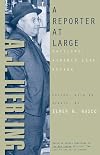
Definitely for fans of Liebling's prose, but also a chance to read him in a fairly straight reporting mode. Liebling went to Reno to establish residency so he could divorce his first wife, who was severely schizophrenic. While staying at a guest ranch on the Paiute reservation at Pyramid Lake, he learned about the struggle the Paiutes were having with getting some white squatters off their land. Now, this was in 1949, but the dispute had been going on since at least 1924, when Congress had show more passed a bill allowing the squatters to buy the land -- but they never paid up (they weren't even the original squatters, who dated back to 1864!). Enter Senator Pat McCarran in 1937, who seemingly suffered from an obsessive disorder that over the course of almost two decades caused him to introduce at least seven bills that would have awarded the squatters with Native American land.
Liebling wrote four long articles in the New Yorker in 1955 covering the saga, which are gathered here. We learn a great deal about some of the tribal leaders, the couple running the guest ranch, advocates for the Paiutes in the Bureau of Indian Affairs, and even get long snippets of McCarran's disingenuous blathering from multiple Senate hearings. It's all done with the usual Liebling aplomb. I found this (possibly the most obscure volume of his writing) at my local library; it was published by the University of Nevada Press in 2000, but, remarkably, it is still available for purchase.
It's a great example of a single mean-spirited politician and the amount of federal tax dollars and time squandered in a lost cause, one that was designed to benefit one man and his career. Not to mention the Paiutes' reduced abilities to live on their own land (the squatters took the best).
By the way, cutthroat trout disappeared from Pyramid Lake when Derby Dam was built in 1905. Thankfully, they are back thanks to a reintroduction effort by the Fish and Wildlife Service and the Paiute tribe. show less
Liebling wrote four long articles in the New Yorker in 1955 covering the saga, which are gathered here. We learn a great deal about some of the tribal leaders, the couple running the guest ranch, advocates for the Paiutes in the Bureau of Indian Affairs, and even get long snippets of McCarran's disingenuous blathering from multiple Senate hearings. It's all done with the usual Liebling aplomb. I found this (possibly the most obscure volume of his writing) at my local library; it was published by the University of Nevada Press in 2000, but, remarkably, it is still available for purchase.
It's a great example of a single mean-spirited politician and the amount of federal tax dollars and time squandered in a lost cause, one that was designed to benefit one man and his career. Not to mention the Paiutes' reduced abilities to live on their own land (the squatters took the best).
By the way, cutthroat trout disappeared from Pyramid Lake when Derby Dam was built in 1905. Thankfully, they are back thanks to a reintroduction effort by the Fish and Wildlife Service and the Paiute tribe. show less

Other readers concoct projects that might entail reading, say, all of Balzac’s novels in chronological order (insane, you say?). Or those of Dickens. Not me. I have embarked on a quest of unquestionable merit — tracking down as many writings of A. J. Liebling’s as I can find. If you have read any of his best work, you are shivering with envy, I know. While others seem to limit their excavation of legendary journalists to reading Joseph Mitchell’s “Up in the Old Hotel” and leave show more it at that, little do they suspect that there are far more delights to be had from other cherished New Yorker writers; however, a bit of online legwork might be needed.
I started this whole venture with “Between Meals: An Appetite for Paris”, which I had seen mentioned in an interview with Anthony Bourdain some time ago. Hooked, I then decided I must read all of the out-of-print books from the San Diego Public Library before they got (shudder) tossed into a rubbish bin. I quickly polished off “Chicago: The Second City” and “A Reporter at Large”. Now, I have a copy of “The Wayward Pressman” in my grasp.
And what a copy it is. An original hardback edition from Doubleday & Co., 1948, it of course has no dust cover and is somewhere between burnt orange and dirty salmon in color. Its pages are as yellow as they come, and even a few minutes of holding it transfers a smell of mustiness to one’s fingers not to be believed, necessitating surgeon-like scrubbing after a reading session, or would be the donning of thin gloves for the germaphobes among us. Remarkably, the spine is quite intact (a testament to the decline in book quality nowadays?), although almost every page is dog-eared and brown-spotted with what one hopes is just spilt coffee. The inside cover has one of those glued-in pockets that at one time received a stamped card containing the due date; the back cover has a scannable chip (instituted by SDPL about two years ago). The title page has been punched by some long-discarded contraption that leaves a series of tiny holes in the page, spelling out “San Diego Public Library” when held singly against the light. Some overzealous librarian also punched page 49. Page 271’s lower corner has perhaps been torn away by an angry pet, removing the ability to read Paul’s last name in page 272’s footnote.
Yes, you’re on the edge of your seat now, aren’t you? Liebling’s writing is marvelous, as always, and the first section is basically a memoir of how he got into the newspaper business in the first place, with some earlier reminiscences of his college days at Dartmouth and at the Columbia School of Journalism. Lots of insight into what reportage was like in the 20’s are included, which of course was during Prohibition. As early as page 63, we have skipped the time he spent in Paris, chronicled memorably and indispensably in “Between Meals”, a sabbatical of sorts ostensibly for study at the Sorbonne but instead devoted to eating well on not a lot of francs. (For contrast, pick up “Down and Out in London and Paris” and read about George Orwell’s stint in the kitchen of a Parisian eatery — it’s fantastic). Liebling’s career as a newspaperman sputters during the Depression, and he was there for the unfortunate end of the great New York World, the paper started by Joseph Pulitzer.
Liebling had been lucky enough to land a full-time gig at the New Yorker magazine in 1935, his employer until his death in 1963. The second section contains a number of pieces that he wrote for the New Yorker under the rubric “The Wayward Press”, essentially an irregular Robert Benchley column that had appeared in the New Yorker between 1927 and 1937 which Liebling resurrected. These articles are all dated between 1945 and 1947; the war year stories he issued from Europe for the magazine were collected in several books (now OOP) and are now available again in the Library of America edition I have yet to peruse. That leaves a gap from 1935 to 1939 that may or may not be covered in some of the other OOP books (such as “Back Where I Came From” and “Telephone Booth Indian”). Anyway, in these articles he critiques the press, actually the New York daily newspapers with the occasional dig at Colonel McCormick’s Chicago Tribune. (I’m reminded of Graydon Carter’s defunct magazine “Spy” and its regular column on the New York Times entitled “The Old Gray Lady”.)
Perhaps the most striking piece is “Papers Within Papers”, in which he calls attention to the recent (in 1947) decision by the dailies to take in political advertising bucks — essentially editorial pieces completely unvetted by the editors — that, without obvious libel, engaged in outlandish claims and innuendo with headlines that might convince the reader that they were actual news stories. In these current days of “advertising” on Facebook that amount to lies and propaganda and CNN webpage “stories” feebly and microscopically labeled “Paid Content”, this article seems alarmingly prescient. The defensive statements made by the publisher of the New York Times, Alfred Sulzberger, sound eerily like those of Mark Zuckerberg.
What Liebling was doing at the New Yorker could not have occurred without his firm grounding in the inner workings of newspapers (both in small — Providence, R.I. — and large markets). There’s a lot of information here about the business and how it was conducted back then that you won’t find anywhere outside a well-researched bio of one of these owners. Over the course of his career, Liebling saw the number of dailies in New York dwindle from over fifteen to less than a half dozen during his career; the underachieving (in quality) Daily News led the field with a circulation of over 2,250,000 in 1947. His was an era of family-owned papers, although consolidation was already occurring and corporate ownership and publicly traded ventures were yet to come.
The last piece in the book, “A Free Press?”, was written for the Dartmouth Alumni Magazine, and what a piece it is! This single article should be back in print and part of every School of Journalism’s curriculum. It reads like it could have been written yesterday, and before there was the much bandied-about term “fake news”, Liebling was taking the press to task for publishing things that just weren’t true. And he describes the owners and their political agendas. He clearly wanted the public to be aware of who these people are and to seek out a number of news sources to (hopefully) get an idea of what is really going on. He includes a footnote relating an idea of Albert Camus’ to have a newspaper that is published after the dailies that computes the probability of the truth of each article based on analysis of a database of owner and reporter past records of accuracy. But there’s much more to this excellent article.
This is fascinating stuff for anyone left in America who actually cares about a free and responsible press. show less
I started this whole venture with “Between Meals: An Appetite for Paris”, which I had seen mentioned in an interview with Anthony Bourdain some time ago. Hooked, I then decided I must read all of the out-of-print books from the San Diego Public Library before they got (shudder) tossed into a rubbish bin. I quickly polished off “Chicago: The Second City” and “A Reporter at Large”. Now, I have a copy of “The Wayward Pressman” in my grasp.
And what a copy it is. An original hardback edition from Doubleday & Co., 1948, it of course has no dust cover and is somewhere between burnt orange and dirty salmon in color. Its pages are as yellow as they come, and even a few minutes of holding it transfers a smell of mustiness to one’s fingers not to be believed, necessitating surgeon-like scrubbing after a reading session, or would be the donning of thin gloves for the germaphobes among us. Remarkably, the spine is quite intact (a testament to the decline in book quality nowadays?), although almost every page is dog-eared and brown-spotted with what one hopes is just spilt coffee. The inside cover has one of those glued-in pockets that at one time received a stamped card containing the due date; the back cover has a scannable chip (instituted by SDPL about two years ago). The title page has been punched by some long-discarded contraption that leaves a series of tiny holes in the page, spelling out “San Diego Public Library” when held singly against the light. Some overzealous librarian also punched page 49. Page 271’s lower corner has perhaps been torn away by an angry pet, removing the ability to read Paul’s last name in page 272’s footnote.
Yes, you’re on the edge of your seat now, aren’t you? Liebling’s writing is marvelous, as always, and the first section is basically a memoir of how he got into the newspaper business in the first place, with some earlier reminiscences of his college days at Dartmouth and at the Columbia School of Journalism. Lots of insight into what reportage was like in the 20’s are included, which of course was during Prohibition. As early as page 63, we have skipped the time he spent in Paris, chronicled memorably and indispensably in “Between Meals”, a sabbatical of sorts ostensibly for study at the Sorbonne but instead devoted to eating well on not a lot of francs. (For contrast, pick up “Down and Out in London and Paris” and read about George Orwell’s stint in the kitchen of a Parisian eatery — it’s fantastic). Liebling’s career as a newspaperman sputters during the Depression, and he was there for the unfortunate end of the great New York World, the paper started by Joseph Pulitzer.
Liebling had been lucky enough to land a full-time gig at the New Yorker magazine in 1935, his employer until his death in 1963. The second section contains a number of pieces that he wrote for the New Yorker under the rubric “The Wayward Press”, essentially an irregular Robert Benchley column that had appeared in the New Yorker between 1927 and 1937 which Liebling resurrected. These articles are all dated between 1945 and 1947; the war year stories he issued from Europe for the magazine were collected in several books (now OOP) and are now available again in the Library of America edition I have yet to peruse. That leaves a gap from 1935 to 1939 that may or may not be covered in some of the other OOP books (such as “Back Where I Came From” and “Telephone Booth Indian”). Anyway, in these articles he critiques the press, actually the New York daily newspapers with the occasional dig at Colonel McCormick’s Chicago Tribune. (I’m reminded of Graydon Carter’s defunct magazine “Spy” and its regular column on the New York Times entitled “The Old Gray Lady”.)
Perhaps the most striking piece is “Papers Within Papers”, in which he calls attention to the recent (in 1947) decision by the dailies to take in political advertising bucks — essentially editorial pieces completely unvetted by the editors — that, without obvious libel, engaged in outlandish claims and innuendo with headlines that might convince the reader that they were actual news stories. In these current days of “advertising” on Facebook that amount to lies and propaganda and CNN webpage “stories” feebly and microscopically labeled “Paid Content”, this article seems alarmingly prescient. The defensive statements made by the publisher of the New York Times, Alfred Sulzberger, sound eerily like those of Mark Zuckerberg.
What Liebling was doing at the New Yorker could not have occurred without his firm grounding in the inner workings of newspapers (both in small — Providence, R.I. — and large markets). There’s a lot of information here about the business and how it was conducted back then that you won’t find anywhere outside a well-researched bio of one of these owners. Over the course of his career, Liebling saw the number of dailies in New York dwindle from over fifteen to less than a half dozen during his career; the underachieving (in quality) Daily News led the field with a circulation of over 2,250,000 in 1947. His was an era of family-owned papers, although consolidation was already occurring and corporate ownership and publicly traded ventures were yet to come.
The last piece in the book, “A Free Press?”, was written for the Dartmouth Alumni Magazine, and what a piece it is! This single article should be back in print and part of every School of Journalism’s curriculum. It reads like it could have been written yesterday, and before there was the much bandied-about term “fake news”, Liebling was taking the press to task for publishing things that just weren’t true. And he describes the owners and their political agendas. He clearly wanted the public to be aware of who these people are and to seek out a number of news sources to (hopefully) get an idea of what is really going on. He includes a footnote relating an idea of Albert Camus’ to have a newspaper that is published after the dailies that computes the probability of the truth of each article based on analysis of a database of owner and reporter past records of accuracy. But there’s much more to this excellent article.
This is fascinating stuff for anyone left in America who actually cares about a free and responsible press. show less
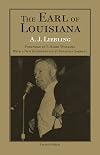
Abbott Joseph Liebling’s 1961 book “The Earl of Louisiana” has been on my shelves for a long time. I bought it thinking it was about Huey Long and shelved it when I learned otherwise. After seeing the movie “Blaze” I had the opinion that younger brother Earl was a bit of a fool. If Rachel Shteir had not mentioned Liebling so many times in her book “Striptease: the untold history of the girlie show” I doubt I would have bothered to read it at all. I now have a new rule, if a show more book stays in print for over fifty years I need to read it.
This is not a biography of Earl Long, it is more a memoir of Liebling’s trip to Louisiana to report on the their governor's mental breakdown. What he found, Louisiana style politics, was so different from what he expected that he stayed on the story even when he had to do it from long distance, covering the British elections. Earl Long, did have a physical breakdown, he was exhausted fighting to stop a bill intended to purge Louisiana’s voting rolls of African Americans. Louisiana, the entire south, was having a resurgence in segregation politics after the Brown V Board decision. Long called the segregationists “grass eaters”, herd animals, and Liebling adopted the practice.
As interesting as it was to have a glimpse into Louisiana politics it was Liebling’s playful use of language that most impressed me. Discussing how every Southern physician seemed to have an opinion on Earl Long’s health and pointing out the partisan divide on the diagnoses Liebling wrote, “Even his own experts, who denied he was demented, said in explanation of his antislavery views that he was beset by arteriosclerosis, several small strokes, oscillatory blood pressure and an irreverent gleam in his eye.” To illustrate the confusing mix of conversations at a campaign office on the night of the election he wrote, “Carried away by the stream of idiom like a drunk on a subway train, I missed a lot of stations.” Liebling had an ear for language. He quoted Earl Long at a campaign stop after opponents started labeling him crazy, “Wouldn’t you rather have a tried and true man, half crazy and half intelligent, than some bladderskite?”
I could go on and on with quotes like that, in places I gave up on highlighting sentences and simply put brackets around entire pages. I remember reviewing another book that had been in print continuously for over fifty years, “How to Lie with Statistics”, this is that good and just as deserving of being read. show less
This is not a biography of Earl Long, it is more a memoir of Liebling’s trip to Louisiana to report on the their governor's mental breakdown. What he found, Louisiana style politics, was so different from what he expected that he stayed on the story even when he had to do it from long distance, covering the British elections. Earl Long, did have a physical breakdown, he was exhausted fighting to stop a bill intended to purge Louisiana’s voting rolls of African Americans. Louisiana, the entire south, was having a resurgence in segregation politics after the Brown V Board decision. Long called the segregationists “grass eaters”, herd animals, and Liebling adopted the practice.
As interesting as it was to have a glimpse into Louisiana politics it was Liebling’s playful use of language that most impressed me. Discussing how every Southern physician seemed to have an opinion on Earl Long’s health and pointing out the partisan divide on the diagnoses Liebling wrote, “Even his own experts, who denied he was demented, said in explanation of his antislavery views that he was beset by arteriosclerosis, several small strokes, oscillatory blood pressure and an irreverent gleam in his eye.” To illustrate the confusing mix of conversations at a campaign office on the night of the election he wrote, “Carried away by the stream of idiom like a drunk on a subway train, I missed a lot of stations.” Liebling had an ear for language. He quoted Earl Long at a campaign stop after opponents started labeling him crazy, “Wouldn’t you rather have a tried and true man, half crazy and half intelligent, than some bladderskite?”
I could go on and on with quotes like that, in places I gave up on highlighting sentences and simply put brackets around entire pages. I remember reviewing another book that had been in print continuously for over fifty years, “How to Lie with Statistics”, this is that good and just as deserving of being read. show less
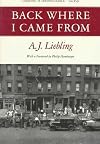
It pains me to report that Joe's first published book doesn't stand up to the test of time. For the most part, he lets his colorful New York subjects speak for themselves, but they don't tend to be either very articulate or compelling. Perhaps in 1938 your average New Yorker reader chuckled with derision at the folks depicted, but at least we get to hear their speech patterns rendered and their very real struggles to "make it" without the benefit of a decent education. We see the genesis of show more Joe's obsession with boxing and horse racing here, done with more aplomb and humor in his later writings. 2 1/2 stars, I guess. His writing gets much better in the 40's and 50's. show less
Lists
Awards


You May Also Like


Associated Authors
Statistics
- Works
- 34
- Also by
- 23
- Members
- 2,428
- Popularity
- #10,566
- Rating
- 3.9
- Reviews
- 44
- ISBNs
- 76
- Languages
- 5
- Favorited
- 10