
Ursula Dubosarsky
Author of Rex
About the Author
Ursula Dubosarsky was born in Ursula Coleman, Sydney, in 1961. She is an Australian writer of fiction and non-fiction for children and young adults, whose work is characterised by a child's vision and voice. She has won nine national literary prizes, including five New South Wales Premier's show more Literary Awards. She is the author of illustrated books and novels, and also three works of non-fiction about the English language, grammar and etymology for children, featuring a comically enthusiastic character known as "The Word Spy". These "Word Spy" books, illustrated by Tohby Riddle, have won the New South Wales Premier's Literary Award, the Children's Book Council of Australia Junior Judges' Award and Book of the Year Award. In the United States and Canada "The Word Spy" is published under the title "The Word Snoop. Three of her books have been adapted for theatre - "The Red Shoe", "The Terrible Plop" and "Too Many Elephants In This House". She is a Hans Christian Andersen Award Nominee and a Astrid Lindgren Memorial Award Nominee. (Bowker Author Biography) show less
Image credit: Stuart Spence
Series
Works by Ursula Dubosarsky
The Missing Mongoose (The Cryptic Casebook of Coco Carlomagno and Alberta) (2013) 4 copies, 1 review
The Perfect Wife 1 copy
The puppet show 1 copy
Sammy the space koala 1 copy
Associated Works
The Great War: Stories Inspired by Items from the First World War (2015) — Contributor — 119 copies, 18 reviews
The Road to Camelot: Tales of the Young Merlin, Arthur, Lancelot and More (2002) — Contributor — 42 copies
Tagged
Common Knowledge
- Birthdate
- 1961-06-25
- Gender
- female
- Education
- Macquarie University (PhD - English Literature)
University of Sydney (BA Hons ∙ DipEd)
SCEGGS Darlinghurst - Occupations
- novelist
children's book author - Relationships
- Coleman, Peter (father)
Coleman, Verna (mother) - Nationality
- Australia
- Birthplace
- Sydney, New South Wales, Australia
- Places of residence
- Canberra, Australian Capital Territory, Australia
- Associated Place (for map)
- Australia
Members
Reviews

A book for children about the history and quirks of the English language. I’ve been reading another book about the development of the English as a language, so those parts in The Word Spy mostly just summarised what I already knew - but I am not the book’s intended audience.
And I was thoroughly entertained by the rest of the book. It’s full of interesting details about language and history, clever word play and amusing illustrations. There were things I didn’t know, like the origin show more of the word apostrophe, or had misremembered, like the origin of Mrs Malaprop, or didn’t know the name for, like tautologies. I knew about anagrams, but hadn’t heard of lipograms (not using words with a certain letter) or pangrams (using all the letters of the alphabet). I hadn’t seen the Monty Python sketch about the ex-parrot recommended in the section about euphemisms.
This is published in the US as The Word Snoop, which seems like a strange title change. (What’s wrong with the word ‘spy’?)
I suppose in the end, language, like history, is made by human beings. And human beings are so hopelessly different and disorganised, they can never quite agree on anything. They’re only humans, after all. (Sigh.)
Still, maybe there’s something special about having these crazy plurals and even crazier spellings. I sometimes think English is like a big old wall that people have been scribbling on for centuries. show less
And I was thoroughly entertained by the rest of the book. It’s full of interesting details about language and history, clever word play and amusing illustrations. There were things I didn’t know, like the origin show more of the word apostrophe, or had misremembered, like the origin of Mrs Malaprop, or didn’t know the name for, like tautologies. I knew about anagrams, but hadn’t heard of lipograms (not using words with a certain letter) or pangrams (using all the letters of the alphabet). I hadn’t seen the Monty Python sketch about the ex-parrot recommended in the section about euphemisms.
This is published in the US as The Word Snoop, which seems like a strange title change. (What’s wrong with the word ‘spy’?)
I suppose in the end, language, like history, is made by human beings. And human beings are so hopelessly different and disorganised, they can never quite agree on anything. They’re only humans, after all. (Sigh.)
Still, maybe there’s something special about having these crazy plurals and even crazier spellings. I sometimes think English is like a big old wall that people have been scribbling on for centuries. show less
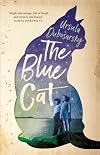
Ursula Dubosarsky’s novels are ostensibly for children. The main characters are certainly young, but the books’ historical events and slight plots might prevent them from being entirely appealing to the targeted audience. They are mysterious books—atmospheric, dreamlike, luminous, distinctive. Interspersed throughout, Dubosarsky includes photographs, snippets of news articles, and fragments of government documents that relate to her characters’ experiences. I always want to read her show more books and can barely put them down once I begin. They remind me of the strangeness I was aware of and trying to sort out in my own childhood.
The Blue Cat is set in Sydney in 1942 and focuses on Columba, an imaginative only child who lives with her parents, next door to two elderly twin sisters, the talkative, social Hazel and the retiring, harp-playing Marguerite. This is a time of fear and menace in Sydney. There are regular air raid practices, water rations, warships in the harbour, and American soldiers encamped in a local park. The Japanese have begun to bomb the northern part of Australia, and many frightened parents have sent their children to stay in the country, where it’s believed to be safer. Amidst all this, a steel-grey cat, a Russian blue, follows Hazel home one night. She introduces the animal to Columba, whose first thought is to pet him. He’s not at all tame, won’t allow himself to be touched or held, and, according to Hazel, was likely tossed overboard by sailors on one of the ships. He comes and goes as he pleases. At one point, he disappears, and Columba, along with her busybody, know-it-all friend, Hilda, and a new schoolmate, Ellery, go looking for him in Sydney’s Luna Park.
Columba’s fascination with Ellery, who is very clean, very white, very small, and unable to speak any English, is the focus of the book. He is brought to school each day by his formally dressed, bearded father. When, over tea one night, Columba tells her mother and Hazel of the unusual new boy at school, who speaks no English—indeed, who doesn’t speak at all—the women refer indirectly to the terrible things going on in Europe. This is the first Columba’s ever heard about “Jewish” people, and she asks the adults to clarify. It’s a religion whose people believe in Moses, says Hazel. But Columba believes in Moses, too, she says; they’ve learned about him in scripture class at school!—the baby in a basket among the bullrushes.
Hazel mentions the earlier arrival in town of another child, a little girl, also from Europe who had, for a time, received letters from her mother in a camp, but the letters had suddenly stopped. Columba, who’s been filled in on Hitler’s malevolence by Hilda, knows that the girl’s mother is dead. She wants to console Ellery, whom she has seen crying at school. She has instinctively known that his are tears of separation and grief. She decides to write a letter to him,in which she poses as his mother and reassures her “dear son” that she is saving money for a ticket to be reunited with him soon. Ultimately, Columba suddenly falls ill, and Ellery and his father mysteriously disappear. The unreliable Hilda says they’ve been sent to Holsworthy. (This is unlikely, as Holsworthy, an internment camp for Germans, was only in operation during World War I.) Later, Columba will receive a letter back from Ellery with the salutation “Dear Mother”, a closing—“From your loving son, Elias”, and words about his luck in having “a real friend”, Columba.
This is a story about war, displacement, loss, and friendship. Indirectly, it is also about the Holocaust. The novel ends with a poignant poem by Friedrich Rückert from his cycle of poems about the loss of two of his children, which Mahler later set to music as Kindertotenliede, Songs on the Death of Children.
I often think they have only just gone out
And soon they will come home.
It’s a beautiful day! don’t be afraid.
They have gone for a long, long walk.
Yes, they have only just stepped out,
And soon they will come home.
Don't be afraid, the day is fine.
They have gone for a walk, up the high hill.
They are just a little ahead of us
And are not coming home yet.
We will find them there, on that high hill
In the sunshine. show less
The Blue Cat is set in Sydney in 1942 and focuses on Columba, an imaginative only child who lives with her parents, next door to two elderly twin sisters, the talkative, social Hazel and the retiring, harp-playing Marguerite. This is a time of fear and menace in Sydney. There are regular air raid practices, water rations, warships in the harbour, and American soldiers encamped in a local park. The Japanese have begun to bomb the northern part of Australia, and many frightened parents have sent their children to stay in the country, where it’s believed to be safer. Amidst all this, a steel-grey cat, a Russian blue, follows Hazel home one night. She introduces the animal to Columba, whose first thought is to pet him. He’s not at all tame, won’t allow himself to be touched or held, and, according to Hazel, was likely tossed overboard by sailors on one of the ships. He comes and goes as he pleases. At one point, he disappears, and Columba, along with her busybody, know-it-all friend, Hilda, and a new schoolmate, Ellery, go looking for him in Sydney’s Luna Park.
Columba’s fascination with Ellery, who is very clean, very white, very small, and unable to speak any English, is the focus of the book. He is brought to school each day by his formally dressed, bearded father. When, over tea one night, Columba tells her mother and Hazel of the unusual new boy at school, who speaks no English—indeed, who doesn’t speak at all—the women refer indirectly to the terrible things going on in Europe. This is the first Columba’s ever heard about “Jewish” people, and she asks the adults to clarify. It’s a religion whose people believe in Moses, says Hazel. But Columba believes in Moses, too, she says; they’ve learned about him in scripture class at school!—the baby in a basket among the bullrushes.
Hazel mentions the earlier arrival in town of another child, a little girl, also from Europe who had, for a time, received letters from her mother in a camp, but the letters had suddenly stopped. Columba, who’s been filled in on Hitler’s malevolence by Hilda, knows that the girl’s mother is dead. She wants to console Ellery, whom she has seen crying at school. She has instinctively known that his are tears of separation and grief. She decides to write a letter to him,
This is a story about war, displacement, loss, and friendship. Indirectly, it is also about the Holocaust. The novel ends with a poignant poem by Friedrich Rückert from his cycle of poems about the loss of two of his children, which Mahler later set to music as Kindertotenliede, Songs on the Death of Children.
I often think they have only just gone out
And soon they will come home.
It’s a beautiful day! don’t be afraid.
They have gone for a long, long walk.
Yes, they have only just stepped out,
And soon they will come home.
Don't be afraid, the day is fine.
They have gone for a walk, up the high hill.
They are just a little ahead of us
And are not coming home yet.
We will find them there, on that high hill
In the sunshine. show less
Why yes, I am cleaning out my to be reviewed list.
This was one of my favorite discoveries a few years ago. An Australian import, it's a delightful story in swinging rhyme with equally entrancing pictures.
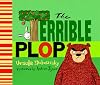
A happy band of rabbits are gulping down carrots and chocolate cake by the lake (really more a big pond) when suddenly...there's a TERRIBLE PLOP! Their panic sets off a mass flight and soon the rabbits, a fox, pig, elephant, tiger, and more are all fleeing from the terrible plop. Then they show more encounter a rather cynical bear, who doesn't think anything, even a terrible plop, is as strong and scary as him! This time, a little rabbit realizes the secret of the plop - but not until the bear has been just as silly as everyone else!
The clues in the text and pictures will easily key children in to the solution of the mystery at the beginning of the book, so they'll be able to snicker along as all the animals flee from nothing much at all.
Andrew Joyner's are just plain fun with cartoon animals and backgrounds and the occasional grab your eye collage piece, like an elaborate knife for the chocolate cake. He does a great job adding hints to the text about the mystery and showing the growing panic of the various animals.
Verdict: A fun story with a moral about confronting your fears that's not too heavily emphasized. This is a favorite storytime choice for my library as well as a top read-aloud pick for parents.
ISBN: 9780374374280; Published August 2009 by Farrar Straus Giroux; Borrowed from the library; Purchased for the library show less
This was one of my favorite discoveries a few years ago. An Australian import, it's a delightful story in swinging rhyme with equally entrancing pictures.
A happy band of rabbits are gulping down carrots and chocolate cake by the lake (really more a big pond) when suddenly...there's a TERRIBLE PLOP! Their panic sets off a mass flight and soon the rabbits, a fox, pig, elephant, tiger, and more are all fleeing from the terrible plop. Then they show more encounter a rather cynical bear, who doesn't think anything, even a terrible plop, is as strong and scary as him! This time, a little rabbit realizes the secret of the plop - but not until the bear has been just as silly as everyone else!
The clues in the text and pictures will easily key children in to the solution of the mystery at the beginning of the book, so they'll be able to snicker along as all the animals flee from nothing much at all.
Andrew Joyner's are just plain fun with cartoon animals and backgrounds and the occasional grab your eye collage piece, like an elaborate knife for the chocolate cake. He does a great job adding hints to the text about the mystery and showing the growing panic of the various animals.
Verdict: A fun story with a moral about confronting your fears that's not too heavily emphasized. This is a favorite storytime choice for my library as well as a top read-aloud pick for parents.
ISBN: 9780374374280; Published August 2009 by Farrar Straus Giroux; Borrowed from the library; Purchased for the library show less
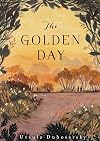
This spooky little book catches the edge of things just right - the boundaries of what we know about each other, the line between tame gardens and wild places, the quick switch in the fall between bright afternoons and surprisingly dark evenings, and on and on. It's murky, secretive, beautiful territory. I love when I can't really say whether it's realistic fiction or fantasy because it depends on what you choose to believe.
Lists
Awards


You May Also Like


Associated Authors
Statistics
- Works
- 66
- Also by
- 4
- Members
- 1,753
- Popularity
- #14,672
- Rating
- 3.7
- Reviews
- 59
- ISBNs
- 254
- Languages
- 5