

Pamela Frankau (1908–1967)
Author of The Willow Cabin
About the Author
Image credit: Pamela Frankau
Series
Works by Pamela Frankau
Marriage of Harlequin 2 copies
Duchess and The Smugs, The 1 copy
Appointment with death 1 copy
A democrat dies 1 copy
"I was the man" 1 copy
Laughter in the sun 1 copy
Jezebel 1 copy
Some new planet 1 copy
Villa Anodyne 1 copy
Fly now, falcon 1 copy
Tassel-gentle 1 copy
A manual of modern manners 1 copy
Born at sea, a novel 1 copy
Three : a novel 1 copy
The fig tree 1 copy
The Duchess And The Smugs 1 copy
Associated Works
Reader's Digest Condensed Books 1954 v03: The Desperate Hours / General Dean's Story / Mr Hobbs' Vacation / The Power & the Prize / The Duchess & the Smugs / Tomorrow! (1954) — Author — 29 copies
Tagged
Common Knowledge
- Canonical name
- Frankau, Pamela
- Legal name
- Frankau, Pamela Sydney
- Birthdate
- 1908-01-03
- Date of death
- 1967-06-08
- Gender
- female
- Education
- Burgess Hill School for Girls, Sussex, England, UK
- Occupations
- novelist
journalist
short story writer - Relationships
- Frankau, Gilbert (father)
Wolfe, Humbert (lover)
Webster, Margaret (lover)
Frankau, Ronald (uncle)
Danby, Frank (grandmother)
Raymond, Diana (cousin|typist) - Short biography
- Pamela Frankau was born in London, England to a literary family of Anglo-Jewish origins. Her father was the novelist Gilbert Frankau and her paternal grandmother was writer Julia Frankau, who used the pseudonym Frank Danby. Her grandmother's brother James Davis was a musical comedy librettist under the name Owen Hall. Gilbert Frankau abandoned the family in about 1919, and Pamela and her sister had little to do with him until they were nearly grown up. They were sent to Burgess Hill School, a boarding school in Sussex. She began writing at an early age and her first novel, Marriage of Harlequin (1927), was published when she was 19 years old. It was well received and she published 20 novels by age 30. She also wrote short stories and worked as a journalist for The Mirror and The Daily Sketch. She had a nine-year affair with Humbert Wolfe, a married poet, which ended with his death in 1940. During World War II, she worked for the BBC, the Ministry of Food, and then the Auxiliary Territorial Service. Raised an Anglican, she converted to the Roman Catholic faith, described later in her book Shaken in the Wind (1948). In 1945, she married Marshall Dill, an American academic and former naval intelligence officer, with whom she lived in the USA. Their only child died in infancy. She returned to England and divorced in 1951. Her most successful and popular novel, The Willow Cabin, was published in 1949. Some of her novels, including The Bridge (1957), were fantasy or science fiction. She wrote about her distant relationship with her father in Pen to Paper (1961). She also wrote an autobiographical novel, I Find Four People (1935).
- Cause of death
- cancer
- Nationality
- UK
- Birthplace
- London, England, UK
- Places of residence
- England, UK
USA - Place of death
- London, England, UK
- Burial location
- Hampstead Cemetery, Fortune Green Road, West Hampstead, Camden, London, England, UK
- Associated Place (for map)
- London, England, UK
Members
Reviews

Wonderfully written; it follows a set of english characters formative in the protagonist's Penelope's growth. Set initially in a hotel on the French Riviera, it transitions to lengthy sequences where each character is developed - or better, grows as an individual - separately. From Don and Eve's (the Smugs) first interactions with Penelope, it leaps across a number of years to spend time with Don as he encounters his soon to be friend Caruso. It steps across time in this manner among the show more characters as the narrative unfolds. The writing itself is technically wonderful and the book is a marvelous cycle - it ends where it began. show less
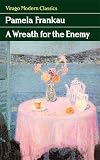
It is a novel told in three sections, characters moving in and out of view – with some brilliantly plotted connections which make this a wonderfully clever novel. The opening is immediately captivating – Pamela Frankau knows how to get her readers hooked.
“There had been two crises already that day before the cook’s husband called to assassinate the cook. The stove caught fire in my presence; the postman had fallen off his bicycle at the gate and been bitten by Charlemagne, our show more sheepdog, whose policy it was to attack people only when they were down.
Whenever there were two crises my stepmother Jeanne said ‘Jamais deux sans trois.’ This morning she and Francis (my father) had debated whether the two things happening to the postman could be counted as two separate crises and might therefore be said to have cleared matters up. I thought that they were wasting their time. In our household things went on and on happening. It was an hotel, which made the doom worse: it would have been remarkable to have two days without a crisis and even if we did, I doubted whether the rule would apply in reverse, so that we could augur a third. I was very fond of the word augur.”
Our narrator is Penelope Wells, one of several voices that tell this story of non-conformity, friendship and family. As the novel opens Penelope is a precocious fourteen-year-old compiling an anthology of hates (this alone made me love her). She lives in a small hotel on the French Riviera with her poet, father and her stepmother. The hotel is often empty, Francis Wells having a somewhat relaxed attitude to business he is as likely to refuse entry to his establishment as he is to welcome visitors. The walls of the bar are adorned with the photographs of famous guests, and those guests who do arrive are generally eccentric, bohemian types.
Penelope; who calls her father and stepmother by their first name, – has this wonderfully unique way of speaking – her conversation is a delight. Quite obviously, a child who grew up surrounded by adults and her nose in a book – she speaks like the characters she has come up against in fiction. With her powers of imagination and observation, Penelope is ripe to be swept up in a childish infatuation for an English family staying next door to the hotel. The Bradleys are middle-class well behaved, conventional, their meal times run to a predictable timetable – their lives are ordered, unlike Penelope’s life at the hotel. It seems – from a distance to be an ideal life. Francis – much to Penelope’s irritation calls them The Smugs – it’s a pretty perfect name.
“They laughed when I shook hands with them, and Don made me an elaborate bow after the handshake. Then they laughed again.
‘Are you French or English?’
That saddened me. I said, ‘I am English, but I live here because my stepmother is a Frenchwoman and my father likes the Riviera.’
‘We know that,’ said Don quickly. ‘He was shot down and taken prisoner by the Germans and escaped and fought with the Resistance, didn’t he?’
‘Yes. That is how he met Jeanne.’
‘And he’s Francis Wells, the poet?’
‘Yes’
‘And the hotel is quite mad, isn’t it?’
‘Indubitably,’ I said. It was another of my favourite words. Eva doubled up with laughter. ‘Oh, that’s wonderful! I’m always going to say indubitably.’
It is the Bradley children; Don and his sister Eva, thirteen, who Penelope is particularly charmed by. Their lives are so well ordered that Penelope is able to predict exactly when they will appear in the garden. It isn’t long before the three meet – and Penelope delights Don and Eva with her unusual conversation, and tantalising tales of the hotel. Just as Penelope starts to get to know her new friends, the hotel welcomes one of its most colourful and frequent guests; the Duchess – who Penelope doesn’t much like – though the Duchess seems to adore her.
However, childhood, as we know is full of small betrayals, and Penelope’s fledgling friendship is doomed when the Bradley parents declare the hotel to be an unsuitable place for Don and Eva – who are not so used to such grown up surroundings. The disappointments and betrayals of childhood and adolescence are so formative, they direct so much of what comes next – and how we build relationships.
In the second and third parts of the novel we move forward four and five years respectively, and hear from Don Bradley in England, and other characters. At seventeen, at boarding school, Don is straining against his father’s rigid conventionality – his greatest friend a middle-aged man in a wheelchair who owns the estate where Don goes to ride and mess around happily with horses. Deeply affected by events in France four years earlier, Don is in need of counsel, and in this most unlikely of friends Don had found the friend he lacks in his own father. Crusoe is a straight-talking breath of fresh air to Don – his easy unconventional way of life is attractive. Crusoe challenges Don’s way of thinking – and so there’s bound to be tensions when Don’s parents meet Crusoe.
In the final section of the novel, another year has passed, and we’re are back with Penelope – among others. I’m certainly not going to say too much about this section – but here we meet Cara – another superb creation from Pamela Frankau, brittle, damaged and potentially damaging – whose life is destined to collide with that of Penelope’s.
I still have two other Pamela Frankau novels waiting to be read – but she was pretty prolific – and although out of print – some of her books are available – and I have two more winging their way to me from a rash ebay purchase the other day show less
“There had been two crises already that day before the cook’s husband called to assassinate the cook. The stove caught fire in my presence; the postman had fallen off his bicycle at the gate and been bitten by Charlemagne, our show more sheepdog, whose policy it was to attack people only when they were down.
Whenever there were two crises my stepmother Jeanne said ‘Jamais deux sans trois.’ This morning she and Francis (my father) had debated whether the two things happening to the postman could be counted as two separate crises and might therefore be said to have cleared matters up. I thought that they were wasting their time. In our household things went on and on happening. It was an hotel, which made the doom worse: it would have been remarkable to have two days without a crisis and even if we did, I doubted whether the rule would apply in reverse, so that we could augur a third. I was very fond of the word augur.”
Our narrator is Penelope Wells, one of several voices that tell this story of non-conformity, friendship and family. As the novel opens Penelope is a precocious fourteen-year-old compiling an anthology of hates (this alone made me love her). She lives in a small hotel on the French Riviera with her poet, father and her stepmother. The hotel is often empty, Francis Wells having a somewhat relaxed attitude to business he is as likely to refuse entry to his establishment as he is to welcome visitors. The walls of the bar are adorned with the photographs of famous guests, and those guests who do arrive are generally eccentric, bohemian types.
Penelope; who calls her father and stepmother by their first name, – has this wonderfully unique way of speaking – her conversation is a delight. Quite obviously, a child who grew up surrounded by adults and her nose in a book – she speaks like the characters she has come up against in fiction. With her powers of imagination and observation, Penelope is ripe to be swept up in a childish infatuation for an English family staying next door to the hotel. The Bradleys are middle-class well behaved, conventional, their meal times run to a predictable timetable – their lives are ordered, unlike Penelope’s life at the hotel. It seems – from a distance to be an ideal life. Francis – much to Penelope’s irritation calls them The Smugs – it’s a pretty perfect name.
“They laughed when I shook hands with them, and Don made me an elaborate bow after the handshake. Then they laughed again.
‘Are you French or English?’
That saddened me. I said, ‘I am English, but I live here because my stepmother is a Frenchwoman and my father likes the Riviera.’
‘We know that,’ said Don quickly. ‘He was shot down and taken prisoner by the Germans and escaped and fought with the Resistance, didn’t he?’
‘Yes. That is how he met Jeanne.’
‘And he’s Francis Wells, the poet?’
‘Yes’
‘And the hotel is quite mad, isn’t it?’
‘Indubitably,’ I said. It was another of my favourite words. Eva doubled up with laughter. ‘Oh, that’s wonderful! I’m always going to say indubitably.’
It is the Bradley children; Don and his sister Eva, thirteen, who Penelope is particularly charmed by. Their lives are so well ordered that Penelope is able to predict exactly when they will appear in the garden. It isn’t long before the three meet – and Penelope delights Don and Eva with her unusual conversation, and tantalising tales of the hotel. Just as Penelope starts to get to know her new friends, the hotel welcomes one of its most colourful and frequent guests; the Duchess – who Penelope doesn’t much like – though the Duchess seems to adore her.
However, childhood, as we know is full of small betrayals, and Penelope’s fledgling friendship is doomed when the Bradley parents declare the hotel to be an unsuitable place for Don and Eva – who are not so used to such grown up surroundings. The disappointments and betrayals of childhood and adolescence are so formative, they direct so much of what comes next – and how we build relationships.
In the second and third parts of the novel we move forward four and five years respectively, and hear from Don Bradley in England, and other characters. At seventeen, at boarding school, Don is straining against his father’s rigid conventionality – his greatest friend a middle-aged man in a wheelchair who owns the estate where Don goes to ride and mess around happily with horses. Deeply affected by events in France four years earlier, Don is in need of counsel, and in this most unlikely of friends Don had found the friend he lacks in his own father. Crusoe is a straight-talking breath of fresh air to Don – his easy unconventional way of life is attractive. Crusoe challenges Don’s way of thinking – and so there’s bound to be tensions when Don’s parents meet Crusoe.
In the final section of the novel, another year has passed, and we’re are back with Penelope – among others. I’m certainly not going to say too much about this section – but here we meet Cara – another superb creation from Pamela Frankau, brittle, damaged and potentially damaging – whose life is destined to collide with that of Penelope’s.
I still have two other Pamela Frankau novels waiting to be read – but she was pretty prolific – and although out of print – some of her books are available – and I have two more winging their way to me from a rash ebay purchase the other day show less
This is lovely: a quite beautifully written book that speaks so profoundly. I find myself wanting to say so much, and at the same time being almost lost for words.
‘A Wreath for the Enemy’ is a coming of age story, the story of a girl and a boy, whose paths cross one summer on the French Riviera.
Penelope lived there, in the hotel that her father and her step-mother. It was the most bohemian of establishments, catering for artists, performers and eccentrics. Penelope’s life had no rules, show more she was free to do as she pleased, and she hated it. She longed for a conventional family, and she longed to be free of the chaos that surrounded her.
She watched the family staying at the villa set below the hotel – father, mother, son, daughter, baby – and she so wished that she could be one of them. She couldn’t, but she met the children, Don and Eva, and they became friends. Don and Eva were as taken with her world as she was with theirs.
Pamela Frankau captures that relationship, and the emotions of the young people, wonderfully well. Their fascination with a different world, and the tempering of that interest when faced with some of its realities. The resentment of their own reality that turns to defensiveness when it is criticised. All of those complex things.
Naturally both sets of parents are concerned and in the end a death – a quite natural death ends that friendship.
And that is the first of the three acts, told in Penelope’s voice.
Her voice rang true, and I understood exactly how she had become the girl she was: careful, naïve, and not nearly as sophisticated as the books he read and the stream of guests she met made her think she was.
The second act is Don’s. The events of the summer change him, and they make him question things that he had never thought to question before. He judges his parents, he finds them wanting, and his own interests draw him into the circle of an extraordinary man. He is an unconventional man, but he proves to be a wise counsellor.
Again Pamela Frankau captures his emotions, his growing pains quite perfectly.
He was lucky, he was gifted; but another death, another quite natural death shook him.
The third act is told in Penelope’s and in other voices. She and Don had friends in common, and the events that shook his life also touched hers. Penelope would learn lessons, would learn to see the world as an adult, before she and Don meet again.
They had both changed, but they recognised each other, and they both understood the events of the summer that changed their lives so much better.
The third act is not so easy to warm to as the first and second, because it moves between very different characters, but it is so profound. And it speaks so clearly about life, about death, about learning and growing, about penitence and forgiveness ….
Every voice rings trues, every character is beautifully realised, and every word is utterly right and utterly believable. ‘A Wreath for the Enemy’ is not a comfortable story, few of the characters are likeable, but it is – they are – fascinating.
The dialogue is pitch perfect, there’s just enough wit, and the themes and ideas that are threaded through the story work so well.
I really couldn’t have predicted the way the it played out, but it was so thought-provoking and so right.
The only thing that stops me from saying that this book is perfect is the structure. The shifting voices, the overlapping stories, worked wonderfully well, and I liked the more linear story of ‘The Willow Cabin’ a little more.
So ‘A Wreath for the Enemy’ is one small step away from perfection. One very small step. The quality of the writing, the depth of the story, the insight of the author, make this book something very special.
I’m so sorry that none of Pamela Frankau’s work is in print now, but I plan to track down and read as many of her books as I can. show less
‘A Wreath for the Enemy’ is a coming of age story, the story of a girl and a boy, whose paths cross one summer on the French Riviera.
Penelope lived there, in the hotel that her father and her step-mother. It was the most bohemian of establishments, catering for artists, performers and eccentrics. Penelope’s life had no rules, show more she was free to do as she pleased, and she hated it. She longed for a conventional family, and she longed to be free of the chaos that surrounded her.
She watched the family staying at the villa set below the hotel – father, mother, son, daughter, baby – and she so wished that she could be one of them. She couldn’t, but she met the children, Don and Eva, and they became friends. Don and Eva were as taken with her world as she was with theirs.
Pamela Frankau captures that relationship, and the emotions of the young people, wonderfully well. Their fascination with a different world, and the tempering of that interest when faced with some of its realities. The resentment of their own reality that turns to defensiveness when it is criticised. All of those complex things.
Naturally both sets of parents are concerned and in the end a death – a quite natural death ends that friendship.
And that is the first of the three acts, told in Penelope’s voice.
Her voice rang true, and I understood exactly how she had become the girl she was: careful, naïve, and not nearly as sophisticated as the books he read and the stream of guests she met made her think she was.
The second act is Don’s. The events of the summer change him, and they make him question things that he had never thought to question before. He judges his parents, he finds them wanting, and his own interests draw him into the circle of an extraordinary man. He is an unconventional man, but he proves to be a wise counsellor.
Again Pamela Frankau captures his emotions, his growing pains quite perfectly.
He was lucky, he was gifted; but another death, another quite natural death shook him.
The third act is told in Penelope’s and in other voices. She and Don had friends in common, and the events that shook his life also touched hers. Penelope would learn lessons, would learn to see the world as an adult, before she and Don meet again.
They had both changed, but they recognised each other, and they both understood the events of the summer that changed their lives so much better.
The third act is not so easy to warm to as the first and second, because it moves between very different characters, but it is so profound. And it speaks so clearly about life, about death, about learning and growing, about penitence and forgiveness ….
Every voice rings trues, every character is beautifully realised, and every word is utterly right and utterly believable. ‘A Wreath for the Enemy’ is not a comfortable story, few of the characters are likeable, but it is – they are – fascinating.
The dialogue is pitch perfect, there’s just enough wit, and the themes and ideas that are threaded through the story work so well.
I really couldn’t have predicted the way the it played out, but it was so thought-provoking and so right.
The only thing that stops me from saying that this book is perfect is the structure. The shifting voices, the overlapping stories, worked wonderfully well, and I liked the more linear story of ‘The Willow Cabin’ a little more.
So ‘A Wreath for the Enemy’ is one small step away from perfection. One very small step. The quality of the writing, the depth of the story, the insight of the author, make this book something very special.
I’m so sorry that none of Pamela Frankau’s work is in print now, but I plan to track down and read as many of her books as I can. show less
Spending a few days away with family in Devon – this novel seemed a great companion with its Devonshire setting. Sing for Your Supper is the first book in the Clothes of a King’s Son, trilogy – and I already have the third, and just ordered the second.
The summer of 1926 and as the novel opens Blanche Briggs is preparing to rejoin her beloved Weston children. Fourteen years earlier Blanche was employed as the family Nanny, now Blanche exists looking after wealthy London ladies in show more between summer seasons when the children return from school. The three children, Gerald (15) Sarah (13) and Thomas (10) are the children of Phillip Weston a widowed gentleman Pierrot star and owner of the Moonrakers troupe; who do the summer seasons in Devon and elsewhere, with diminishing success. The children are well aware of their father’s hopelessness with business, resigned to fairly constant genteel poverty. Even poor Blanche is not paid for her much longed for summers. Gerald is particularly obsessed by the question of money.
“Money, money, money. Without it the world was against you. He seemed to have known this for a long time, to have been making – for years – a cold, practical assessment of the family fortunes. Misfortunes rather. He saw them now with his routine mixture of pity and scorn. The struggle had endured since he could remember: even in his mother’s lifetime.”
Blanche’s excitement at the prospect of another summer with her children is infectious, leaving her sister’s house earlier than she need clutching a string bag containing presents for the children.
” As she walked to the barrier at the head of Number Three platform she was looking out for Gerald. There he was. No, he wasn’t. Another boy in grey flannels, with something of Gerald’s look, a neat dark- haired boy walking with a swagger: a forecast of Gerald . ‘Mind your back miss…’ A porter pushing a barrow with a mountainous load: there was a new spade and bucket perched on top: an iron spade, bluish- black, with a white wooden handle: the bucket was red with a gold band round it. Gerald and Sarah and Thomas were too big to care for spades and buckets anymore. But these things were still stamped with a trademark of rightness; she smiled upon them.”
Blanche can’t help but be astounded by the first class ticket sent by Philip Weston for her and the children, something which has never happened before. The children are equally surprised, travelling first class with their darling Brigstock, they each – unknown to Blanche – have their own secrets and concerns as they contemplate the summer with their father and the Moonrakers. The family will be occupying Roseclay, a large Edwardian house they’ve taken before, it’s like going home, though this time without the presence of ‘the grandmother’ and aunt and uncle who usually make up the household. Roseclay, first class train travel suggest to the children that their father is again living outside his means. Either that, or he has suddenly come into money.
Upon arrival, there are signs of a new prosperity, and both the elder children begin to suspect their father has a secret, or at the very least something to tell them. Sarah suffering from neuralgia headaches, fancies herself a great actress, Gerald is carrying his carefully hoarded secret stash of money and Thomas is the subject of a letter sent by his headmaster which speaks of his ungovernable rages. Thomas is a wonderful character, loyal, vague and loving, he will fly into rage if someone he loves is threatened. It would also appear he has inherited his grandmother’s clairvoyance, though none of his family believe it to be anything other than a trick.
They all love Nanny, who runs a pretty tight ship. Blanche has her way of doing things which until now has always gone unchallenged. She knows swimming can bring on Sarah’s headaches, and has a particularly close relationship with Thomas, understands Thomas, defends him and loves him best. Gerald meanwhile seems headed for his own special brand of trouble. This summer change will come to the Weston family, changes which Blanche might not be ready for.
Everywhere there are posters advertising the new show; Moonrakers 1926, and the two elder children are expected to see the show on their first evening in Devon, Thomas will attend the matinée the following day. Other members of the Moonrakers troupe are frequently at the house, late night parties and behavior resulting in what Thomas thinks of as Brigstock’s Sunday face. Gwen, Philip’s long time co-star is sporting a flashy ring, everyone else is much the same, and Gerald finds he still dislikes Leo Clyde.
Before the show the next day Thomas meets Rab, an American girl, a little older than himself, a bit of a tomby with whom he immediately allies himself. Rab is installed at a local hotel; unusually in the care of her chauffeur Miles, her mother Paula is in Paris and will soon be arriving. Rab tells Thomas all about Martha’s Vineyard, the home she is nostalgic for. Rab it appears already knows all about the Weston family, viewing Gerald and Sarah as little gods, is delighted to find Thomas quite ready and wiling to do her bidding. They become fast friends. Rab is keen to be drawn into the heart of the Weston family, cared for by Nanny with a more regular routine. Unknown to his own children, Philip is already very familiar with Rab – she worries him a little.
” A child of twelve, who had never been to school; who was a world- traveller and could mix a dry Martini: a child of divorce: a child who had, despite these dooms, no appearance of sophistication and few graces. A wild one: farouche was the word that came to his mind. The worry-tune skirled and screamed ‘what will Nanny think?’ He turned it off. Rab was a darling and all would be well.”
I thoroughly enjoyed Sing for your Supper and can’t wait to read the rest of the trilogy. Pamela Frankau is a superb novelist, there is great interplay between the characters, fabulous storytelling from multiple perspectives and in this novel a quite marvellous ending. show less
The summer of 1926 and as the novel opens Blanche Briggs is preparing to rejoin her beloved Weston children. Fourteen years earlier Blanche was employed as the family Nanny, now Blanche exists looking after wealthy London ladies in show more between summer seasons when the children return from school. The three children, Gerald (15) Sarah (13) and Thomas (10) are the children of Phillip Weston a widowed gentleman Pierrot star and owner of the Moonrakers troupe; who do the summer seasons in Devon and elsewhere, with diminishing success. The children are well aware of their father’s hopelessness with business, resigned to fairly constant genteel poverty. Even poor Blanche is not paid for her much longed for summers. Gerald is particularly obsessed by the question of money.
“Money, money, money. Without it the world was against you. He seemed to have known this for a long time, to have been making – for years – a cold, practical assessment of the family fortunes. Misfortunes rather. He saw them now with his routine mixture of pity and scorn. The struggle had endured since he could remember: even in his mother’s lifetime.”
Blanche’s excitement at the prospect of another summer with her children is infectious, leaving her sister’s house earlier than she need clutching a string bag containing presents for the children.
” As she walked to the barrier at the head of Number Three platform she was looking out for Gerald. There he was. No, he wasn’t. Another boy in grey flannels, with something of Gerald’s look, a neat dark- haired boy walking with a swagger: a forecast of Gerald . ‘Mind your back miss…’ A porter pushing a barrow with a mountainous load: there was a new spade and bucket perched on top: an iron spade, bluish- black, with a white wooden handle: the bucket was red with a gold band round it. Gerald and Sarah and Thomas were too big to care for spades and buckets anymore. But these things were still stamped with a trademark of rightness; she smiled upon them.”
Blanche can’t help but be astounded by the first class ticket sent by Philip Weston for her and the children, something which has never happened before. The children are equally surprised, travelling first class with their darling Brigstock, they each – unknown to Blanche – have their own secrets and concerns as they contemplate the summer with their father and the Moonrakers. The family will be occupying Roseclay, a large Edwardian house they’ve taken before, it’s like going home, though this time without the presence of ‘the grandmother’ and aunt and uncle who usually make up the household. Roseclay, first class train travel suggest to the children that their father is again living outside his means. Either that, or he has suddenly come into money.
Upon arrival, there are signs of a new prosperity, and both the elder children begin to suspect their father has a secret, or at the very least something to tell them. Sarah suffering from neuralgia headaches, fancies herself a great actress, Gerald is carrying his carefully hoarded secret stash of money and Thomas is the subject of a letter sent by his headmaster which speaks of his ungovernable rages. Thomas is a wonderful character, loyal, vague and loving, he will fly into rage if someone he loves is threatened. It would also appear he has inherited his grandmother’s clairvoyance, though none of his family believe it to be anything other than a trick.
They all love Nanny, who runs a pretty tight ship. Blanche has her way of doing things which until now has always gone unchallenged. She knows swimming can bring on Sarah’s headaches, and has a particularly close relationship with Thomas, understands Thomas, defends him and loves him best. Gerald meanwhile seems headed for his own special brand of trouble. This summer change will come to the Weston family, changes which Blanche might not be ready for.
Everywhere there are posters advertising the new show; Moonrakers 1926, and the two elder children are expected to see the show on their first evening in Devon, Thomas will attend the matinée the following day. Other members of the Moonrakers troupe are frequently at the house, late night parties and behavior resulting in what Thomas thinks of as Brigstock’s Sunday face. Gwen, Philip’s long time co-star is sporting a flashy ring, everyone else is much the same, and Gerald finds he still dislikes Leo Clyde.
Before the show the next day Thomas meets Rab, an American girl, a little older than himself, a bit of a tomby with whom he immediately allies himself. Rab is installed at a local hotel; unusually in the care of her chauffeur Miles, her mother Paula is in Paris and will soon be arriving. Rab tells Thomas all about Martha’s Vineyard, the home she is nostalgic for. Rab it appears already knows all about the Weston family, viewing Gerald and Sarah as little gods, is delighted to find Thomas quite ready and wiling to do her bidding. They become fast friends. Rab is keen to be drawn into the heart of the Weston family, cared for by Nanny with a more regular routine. Unknown to his own children, Philip is already very familiar with Rab – she worries him a little.
” A child of twelve, who had never been to school; who was a world- traveller and could mix a dry Martini: a child of divorce: a child who had, despite these dooms, no appearance of sophistication and few graces. A wild one: farouche was the word that came to his mind. The worry-tune skirled and screamed ‘what will Nanny think?’ He turned it off. Rab was a darling and all would be well.”
I thoroughly enjoyed Sing for your Supper and can’t wait to read the rest of the trilogy. Pamela Frankau is a superb novelist, there is great interplay between the characters, fabulous storytelling from multiple perspectives and in this novel a quite marvellous ending. show less
Lists
Which house? (1)
Awards


You May Also Like


Associated Authors
Statistics
- Works
- 39
- Also by
- 4
- Members
- 594
- Popularity
- #42,286
- Rating
- 3.9
- Reviews
- 17
- ISBNs
- 31
- Favorited
- 6

