
Wolfgang Hilbig (1941–2007)
Author of The Sleep of the Righteous
About the Author
Works by Wolfgang Hilbig
Stimme, Stimme Gedichte und Prosa 3 copies
Werke 2 copies
»Ich unterwerfe mich nicht der Zensur«. Briefe an DDR-Ministerien, Minister und Behörden. Neue Rundschau 2021/2 (2021) 1 copy
Werke, Band 5: »Ich« 1 copy
Ja 1 copy
Associated Works
The New Sufferings of Young W. and Other Stories from the German Democratic Republic (1997) — Contributor — 12 copies
Tagged
Common Knowledge
- Canonical name
- Hilbig, Wolfgang
- Birthdate
- 1941-08-31
- Date of death
- 2007-06-02
- Gender
- male
- Occupations
- auteur
dichter - Organizations
- Deutsche Akademie für Sprache und Dichtung
- Awards and honors
- Georg Büchner Preis (2002)
- Relationships
- Wodin, Natascha (Ehepartner, 1994-2002)
- Nationality
- Germany
- Birthplace
- Meuselwitz, Germany
- Places of residence
- Berlin, Germany
Leipzig, Germany
Hanau, Germany
Nürnberg, Germany
Edenkoben, Germany - Place of death
- Berlin, Germany
- Burial location
- Dorotheenstädtischer Friedhof, Berlin, Germany
- Associated Place (for map)
- Germany
Members
Reviews
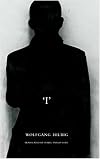
Sometimes I feel like it's not worth trying to read hard novels, and I should just read things I'm comfortable with. Then someone like Hilbig comes along, and reminds me the only novels worth reading, in a very real sense, are the difficult ones. But difficult like his, not other people's.
Step one: find a premise that lets you be meta-literary, but in a way that makes it clear that being meta-literary is really unimportant compared to actual, real, human life. 'I' is about a writer who is show more kind of sort of employed by the Stasi to spy, particularly on artists and writers. Thinking about literature is important, but not as important as, you know, massive state-sponsored repression.
Step two: find a style that hasn't been done to death, and then do it so well that someone would have to be stupid to copy you. 'I' combines, implausibly, gorgeous, Proustian, descriptive sentences with Celine's broken syntax and constant ellipses. It's not easy reading, but holy hell is it effective.
Step three: be intelligent. Don't just write about the ideas that everyone else is writing about. As you'd expect from a book called 'I,' this is largely about the eponymous informant's sense of self, his subjectivity. Most contemporary writers who have ambitions to write about selfhood and subjectivity will, say, write guff about how narrative helps us to keep your sense of self together, or write guff about how keeping your sense of self together is just an oppression forced on you by the capitalist psychoanalytic international. Hilbig will have none of the former pap--stories, here, are just as effective at undermining the informant's sense of self as others would say they are at building that sense of self up. Nor will he have any of the latter palaver--the disintegration of the self might sound really hip and revolutionary in the capitalist west, but in fact disintegration is usually the result of external forces. There are some glorious passages in here about what the post-structuralists sounds like, when read in a Western, but totalitarian, society. In short: like twits.
Is it so hard to think about literature, while also thinking about the world, and to have something really smart to say about both, and to say it in a style that's fascinating, original, and suited to the subjects about which you are writing?
Yeah, it is. Really freaking hard. But Hilbig does it. show less
Step one: find a premise that lets you be meta-literary, but in a way that makes it clear that being meta-literary is really unimportant compared to actual, real, human life. 'I' is about a writer who is show more kind of sort of employed by the Stasi to spy, particularly on artists and writers. Thinking about literature is important, but not as important as, you know, massive state-sponsored repression.
Step two: find a style that hasn't been done to death, and then do it so well that someone would have to be stupid to copy you. 'I' combines, implausibly, gorgeous, Proustian, descriptive sentences with Celine's broken syntax and constant ellipses. It's not easy reading, but holy hell is it effective.
Step three: be intelligent. Don't just write about the ideas that everyone else is writing about. As you'd expect from a book called 'I,' this is largely about the eponymous informant's sense of self, his subjectivity. Most contemporary writers who have ambitions to write about selfhood and subjectivity will, say, write guff about how narrative helps us to keep your sense of self together, or write guff about how keeping your sense of self together is just an oppression forced on you by the capitalist psychoanalytic international. Hilbig will have none of the former pap--stories, here, are just as effective at undermining the informant's sense of self as others would say they are at building that sense of self up. Nor will he have any of the latter palaver--the disintegration of the self might sound really hip and revolutionary in the capitalist west, but in fact disintegration is usually the result of external forces. There are some glorious passages in here about what the post-structuralists sounds like, when read in a Western, but totalitarian, society. In short: like twits.
Is it so hard to think about literature, while also thinking about the world, and to have something really smart to say about both, and to say it in a style that's fascinating, original, and suited to the subjects about which you are writing?
Yeah, it is. Really freaking hard. But Hilbig does it. show less
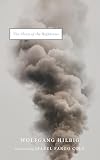
This is an extraordinary, sad work of a kind that could only have been written by a man of Hilbig's unique era: born in 1941, growing up in the rubble of East Germany, and already in late middle age when the Germanies reunified, when he was too old to change much about his life view or habits or to do anything other than chronicle his times with extreme, even painful truthfulness.
I disagree with those who find this work surreal, or who compare it with Kafka or even Poe. Anyone who had the show more experience of spending any time at all in pre-1989 East Germany would remember how reality itself was surreal, in the DDR. The stories in The Sleep of the Righteous capture the paranoia and the surreal nature of living in that culture of paranoia and defeat.
But this isn't a nihilistic book. It's full of humanity, and that's what makes the tragedy it chronicles so deeply affecting. Every one of these stories is heartbreaking in some way, from the first in the collection, about a boy growing up in a world defined by unexploded ordinance and industrial waste--a world so natural to the boy that he doesn't think to complain--to the last, extraordinary story, narrated by an older man, post-unification, who tells of his chance meeting with the Stasi officer who had been assigned to spy on him for decades.
This is an incredible book. show less
I disagree with those who find this work surreal, or who compare it with Kafka or even Poe. Anyone who had the show more experience of spending any time at all in pre-1989 East Germany would remember how reality itself was surreal, in the DDR. The stories in The Sleep of the Righteous capture the paranoia and the surreal nature of living in that culture of paranoia and defeat.
But this isn't a nihilistic book. It's full of humanity, and that's what makes the tragedy it chronicles so deeply affecting. Every one of these stories is heartbreaking in some way, from the first in the collection, about a boy growing up in a world defined by unexploded ordinance and industrial waste--a world so natural to the boy that he doesn't think to complain--to the last, extraordinary story, narrated by an older man, post-unification, who tells of his chance meeting with the Stasi officer who had been assigned to spy on him for decades.
This is an incredible book. show less
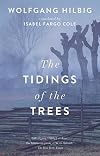
Another gem, in a beautiful translation. Everything available by Hilbig in English is outstanding; The Tidings is the best of the novellas, I would say, although it takes a few pages to get out of the writers-block starting blocks. The imagery here is astonishing, and although the palette is simple (cherry trees; ash; mannequins), the structure and combinations are all perfectly done. And later pages do redeem the writers-block bit at the start, as the art of story-telling turns out to be show more what the soul-less human world (i.e., the world of mannequins) lacks, and what separates it from the natural world of the cherry trees, and the ensouled world of human beings. Smart, beautiful, artful, painful. Someone give Isabel Fargo Cole a highly-paid job translating the rest of Hilbig, please. show less
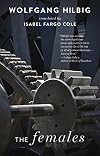
A bit like if "Love Affairs of Nathaniel P" had been written in the era of the incel counter-revolution, and by a man, who worked with post-war experimental forms, hallucination, and social theory, and had as his target not self-satisfied left-liberal assholes (a worthy target, I accept), but the horrors of the DDR and the world in general. As with all of Cole's translations of Hilbig, this is fantastic, though certainly not the place to start. You'll need to build up some love for the show more author, and the implied author, and have some accumulated sympathy for the narrator himself, to get through this one in good faith. show less
Awards


You May Also Like


Associated Authors
Statistics
- Works
- 35
- Also by
- 4
- Members
- 608
- Popularity
- #41,353
- Rating
- 3.8
- Reviews
- 9
- ISBNs
- 72
- Languages
- 8
- Favorited
- 2