
Eleanor Coerr (1922–2010)
Author of Sadako and the Thousand Paper Cranes
About the Author
Eleanor Coerr was born in 1922 in Kamsack, Saskatchewan, Canada. Before becoming a children's book author, she was a newspaper reporter, an editor of a column for children, and taught children's literature at Monterey Peninsula College and creative writing at Chapman College in California. Her show more works include Sadako and the Thousand Paper Cranes, Mieko and the Fifth Treasure, Sadako, and The Big Balloon Race. She died on November 22, 2010 at the age of 88. (Bowker Author Biography) show less
Works by Eleanor Coerr
Associated Works
Tagged
Common Knowledge
- Birthdate
- 1922
- Date of death
- 2010-11-22
- Gender
- female
- Nationality
- Canada
- Birthplace
- Kamsack, Saskatchewan, Canada
- Places of residence
- Saskatoon, Saskatchewan, Canada
- Burial location
- cremated
- Map Location
- Canada
Members
Reviews
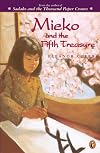
I loved "Mieko and the Fifth Treasure," and I would give it five stars. I liked that I was able to see the effects of the bombing of Nagasaki in WWII through the lens of a child survivor, which is a unique perspective that I have not come across in other children's books and novels. I have read several books that have mentioned the bombings, like "When my Name was Keoko," but very few of the books I read feature Japanese protagonists. The few books that I have read from the Japanese show more perspective, like "Shin's Tricycle," are told from the perspective of adult survivors, so when I read "Mieko and the Fifth Treasure" I found it very interesting to read about these historical events through the eyes of a child. I think that this book helped me to better understand the impact that the bombings had on the citizens who did survive and had to radically change their lives as a result. I thought that Mieko was a great character because I found that she was very relatable, even though I have never experienced anything like Mieko had. What I could relate to were Mieko's emotions about the world and about herself after the event. Mieko had sustained an injury on her hand when the bomb had hit Nagasaki, and as a result she had a large scar and could not move her hand normally. As a result, Mieko felt embarrassed about how her hand looked and frustrated that she was not able to paint "word-pictures" like she used to, so she grew bitter and angry. Several times in my life, I have felt angry and bitter as a result of failure or loss, and I believe that to be a universal reaction to events over which we have no power. Mieko could not make the scar on her hand disappear and she could not go back to Nagasaki with her parents, so she reacted by turning her sadness into anger. My late grandmother lived for several years with dementia, but she only had full-time care for the last few weeks of her life. For years I knew that she was not receiving the level of care that she needed, and I allowed myself to become angry at my grandfather for refusing assistance. I began to blame my grandfather, my father, and my aunts for my grandmother's declining health. I convinced myself that it was their fault that she was getting worse even though I knew that they had no control over what was happening. While she should have had more assistance, it would not have changed the progression of the disease in any way. I found that placing the blame on others and becoming angry to be much easier than admitting that there was nothing that I or anyone else could do to make my grandmother better. Only within the past couple of months I have been able to let go of that anger and come to terms with the fact that my family and I were powerless to stop what was happening. In "Mieko and the Fifth Treasure," Mieko did not want to face the fact that there was nothing she could do to make her scar go away or to make her hand work the way it used to, so she decided to "hate everyone." She gave up on painting and chose to stew over her misfortune, but eventually she learned that this anger was only hurting her. I believe that the "big idea" of the story is that harboring anger is not productive, but learning to accept changes and move forward with life can help to heal emotional wounds. When Mieko opened herself up to Yoshi and her other classmates, accepted that her "word-pictures" would be different but still beautiful, and allowed herself to make mistakes, Mieko was able to find "the fifth treasure," her ability to see beauty and translate it into art, within her heart once again. By making herself honest, open, and vulnerable, Mieko was able to let go of her hatred and begin to enjoy life again. show less
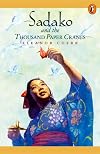
It is a difficult question: how to breach, for our children, the concepts of death, of war, of hope, and of the inescapable. When we scale it down, to one person, to one pain, that is when we feel it the most. But when we do this, we miss out on all that surrounds it. By concentrating on one person, you can turn a mutual war into a directed crime, and there lies the danger.
It is not uplifting to see a little girl die slowly, of something she cannot understand, to have her promise of a life show more revoked, but this is not all there is to the matter. As human beings, it is easy for us to look at the suffering of a few, especially a spectacular suffering: nuclear weapons, the Holocaust, 9/11, and feel enraged.
And it should upset us. War is unequal, unfair, and makes a mockery of beauty, art, and humanity. But it is always too easy for us to forget the other side.
So many people react to this book with sorrow for the little girl, with a sense that the nuclear weapons were a tragedy, unnecessary, and inhumane. I cannot argue those points, there is far too much there, and I would never suggest that mass death is a beneficial thing.
However, we might ask ourselves where are the books about all the children the Japanese soldiers killed? Perhaps they didn't use nuclear weapons, but the Japanese practiced total war, which meant hundreds of thousands of civilians dying every month. They slaughtered children, they took slaves and worked them to death in mines.
The Japanese planned to recruit every man, woman, and child during the final invasion, to blow up American tanks with fifteen year-old boys strapped to bombs. Even after the first atomic bomb was dropped, the Japanese command--including the Emporor--rallied to continue the war, even passing off the bombing itself as an industrial accident.
It is important to recognize the suffering of others, but it seems we too often concentrate on the suffering of one person over another. Perhaps it is easier for us to concentrate this way. Perhaps it is easier to see something spectacular and terrifying like the 2,752 deaths of 9/11, and ignore the 1,311,969 Iraqis dead since. Or look at the death of Jews in the Holocaust and ignore the Poles, Romany, Atheists, and Homosexuals who died alongside them
I sometimes fear that by hiding death from our children, we do not allow them to think about death except for isolated, melodramatic stories. If we cannot learn confront death except when it spectacular, then we will never really try to stop it, because we will only focus on the rare cases, and fail to notice that people death is no less final from untreated disease as from a gun.
There is another curious fact in this story: that the little girl does not finish her thousand cranes before she dies. In the real-world events this story is based on, she did finish the thousand, and continued on until her death. Of course, since the book posits that her wish was to stay alive, perhaps the author thought that to have her reach her goal and still die would be too sad.
I find this disappointing, as the author could have transferred the wish here: that no one can stand against their own death, but even as we face our own, we may fight for something greater, we may try to fight against a world of senseless death.
Are we afraid to tell our children it is a fight we can never win? Does that make it less worth fighting? Wouldn't it be better for them to learn that now, from someone they love and trust, rather than to discover it later, when they are already in the middle of the confusions of life? What could be more disheartening than suddenly having that dream snatched away?
Perhaps I am silly to expect more of children's books than I do of adult books, but then, I've found I can expect more from children than from adults. I am of the opinion that the best way to prevent children and adolescents from sex is by giving them all the difficult, unpleasant details. I think the same goes for war. This doesn't mean showing them footage of either act, but an open, honest sit-down beats a dramatized, nationalistic euphemism any day of the week. show less
It is not uplifting to see a little girl die slowly, of something she cannot understand, to have her promise of a life show more revoked, but this is not all there is to the matter. As human beings, it is easy for us to look at the suffering of a few, especially a spectacular suffering: nuclear weapons, the Holocaust, 9/11, and feel enraged.
And it should upset us. War is unequal, unfair, and makes a mockery of beauty, art, and humanity. But it is always too easy for us to forget the other side.
So many people react to this book with sorrow for the little girl, with a sense that the nuclear weapons were a tragedy, unnecessary, and inhumane. I cannot argue those points, there is far too much there, and I would never suggest that mass death is a beneficial thing.
However, we might ask ourselves where are the books about all the children the Japanese soldiers killed? Perhaps they didn't use nuclear weapons, but the Japanese practiced total war, which meant hundreds of thousands of civilians dying every month. They slaughtered children, they took slaves and worked them to death in mines.
The Japanese planned to recruit every man, woman, and child during the final invasion, to blow up American tanks with fifteen year-old boys strapped to bombs. Even after the first atomic bomb was dropped, the Japanese command--including the Emporor--rallied to continue the war, even passing off the bombing itself as an industrial accident.
It is important to recognize the suffering of others, but it seems we too often concentrate on the suffering of one person over another. Perhaps it is easier for us to concentrate this way. Perhaps it is easier to see something spectacular and terrifying like the 2,752 deaths of 9/11, and ignore the 1,311,969 Iraqis dead since. Or look at the death of Jews in the Holocaust and ignore the Poles, Romany, Atheists, and Homosexuals who died alongside them
I sometimes fear that by hiding death from our children, we do not allow them to think about death except for isolated, melodramatic stories. If we cannot learn confront death except when it spectacular, then we will never really try to stop it, because we will only focus on the rare cases, and fail to notice that people death is no less final from untreated disease as from a gun.
There is another curious fact in this story: that the little girl does not finish her thousand cranes before she dies. In the real-world events this story is based on, she did finish the thousand, and continued on until her death. Of course, since the book posits that her wish was to stay alive, perhaps the author thought that to have her reach her goal and still die would be too sad.
I find this disappointing, as the author could have transferred the wish here: that no one can stand against their own death, but even as we face our own, we may fight for something greater, we may try to fight against a world of senseless death.
Are we afraid to tell our children it is a fight we can never win? Does that make it less worth fighting? Wouldn't it be better for them to learn that now, from someone they love and trust, rather than to discover it later, when they are already in the middle of the confusions of life? What could be more disheartening than suddenly having that dream snatched away?
Perhaps I am silly to expect more of children's books than I do of adult books, but then, I've found I can expect more from children than from adults. I am of the opinion that the best way to prevent children and adolescents from sex is by giving them all the difficult, unpleasant details. I think the same goes for war. This doesn't mean showing them footage of either act, but an open, honest sit-down beats a dramatized, nationalistic euphemism any day of the week. show less
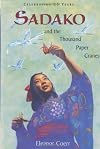
This book got to me. That's the simplest way I can put it. If there's anything that makes my heart sink and has a lasting effect on me, it's a child's life being cut short sooner than is should be. This book has been in publication for quite some time, and I'm glad that I finally took the time to read it and experience the heartbreaking, but inspiring story of this little girl named Sadako.
The ending of the story is presented in the prologue, which is not entirely surprising for a show more non-fiction book, but it is a little surprising for a non-fiction children's book, such as this, that reads like a fictional chapter book. Sadako was a little girl living in Hiroshima at the time the U.S. dropped the atomic bomb on the Japanese city. Although she was only an infant when the bomb fell and she experienced no immediate harm from the blast, when she was 12 years old, it was discovered that she had contracted leukemia from the radiation that resulted from the bomb, or the "Thunderbolt" as she called it.
The author's opening chapters describe the playful and enthusiastic nature of Sadako, but only briefly. The bulk of the book focuses on her life after her diagnosis, how she feels each day, what she thinks about her condition and her hope to overcome it, and, of course, the thousand paper cranes that she is determined to make to help cure her of her illness. When Sadako eventually succumbs to her disease, her classmates from school complete the 356 paper cranes that Sadako was not able to finish before her time in this world was up.
The tears in my eyes were real when I finished reading this book, but then I quickly switched to critic-mode and wondered, "who wrote this book and how did they know any of the events that took place?" The epilogue nicely summed up the background of the Canadian author who lived in Japan and heard of Sadako's story. After many years of trying to locate a copy of Kokeshi, the autobiography written by Sadako before her illness and containing letters she wrote while in the hospital, Eleanor Coerr finally attained it and began writing this book.
The accuracy of Sadako's heartbreaking tale may seem presented in a fictitious way, but after reading the determination of the author to obtain Sadako's autobiography before writing this book leads me to believe that the utmost effort was used to depict the most truthful and accurate account of Sadako's story. The story is simply written to ensure comprehension by young readers, but detailed enough to evoke emotion from experienced readers as well. While I plan on holding off for a few more years before I introduce my own daughter to this tale, I believe that this is an important story for children to experience. show less
The ending of the story is presented in the prologue, which is not entirely surprising for a show more non-fiction book, but it is a little surprising for a non-fiction children's book, such as this, that reads like a fictional chapter book. Sadako was a little girl living in Hiroshima at the time the U.S. dropped the atomic bomb on the Japanese city. Although she was only an infant when the bomb fell and she experienced no immediate harm from the blast, when she was 12 years old, it was discovered that she had contracted leukemia from the radiation that resulted from the bomb, or the "Thunderbolt" as she called it.
The author's opening chapters describe the playful and enthusiastic nature of Sadako, but only briefly. The bulk of the book focuses on her life after her diagnosis, how she feels each day, what she thinks about her condition and her hope to overcome it, and, of course, the thousand paper cranes that she is determined to make to help cure her of her illness. When Sadako eventually succumbs to her disease, her classmates from school complete the 356 paper cranes that Sadako was not able to finish before her time in this world was up.
The tears in my eyes were real when I finished reading this book, but then I quickly switched to critic-mode and wondered, "who wrote this book and how did they know any of the events that took place?" The epilogue nicely summed up the background of the Canadian author who lived in Japan and heard of Sadako's story. After many years of trying to locate a copy of Kokeshi, the autobiography written by Sadako before her illness and containing letters she wrote while in the hospital, Eleanor Coerr finally attained it and began writing this book.
The accuracy of Sadako's heartbreaking tale may seem presented in a fictitious way, but after reading the determination of the author to obtain Sadako's autobiography before writing this book leads me to believe that the utmost effort was used to depict the most truthful and accurate account of Sadako's story. The story is simply written to ensure comprehension by young readers, but detailed enough to evoke emotion from experienced readers as well. While I plan on holding off for a few more years before I introduce my own daughter to this tale, I believe that this is an important story for children to experience. show less
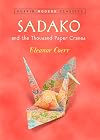
First, about the physical book: this is short. For an adult, you can easily read it in an hour, maybe two if you are studying the illustrations, looking facts up, or trying to learn how to fold your own crane. The illustrations, however, are well worth studying; they are lovely and touching and fit the story very nicely.
Now, about the story: I had to keep in mind that its audience was much younger than I am. It didn't shy away from the dark -- but very real -- subject matter, but it did show more approach it from the eyes of a child. It talks about the aftermath of the bombing of Hiroshima, and its main character is based on a real girl who died of leukemia as a result of the atom bomb. It's going to be dark. However, it also manages to portray hope along with the darkness, and while most people will cry at the ending (I did) it's not a book that leaves you feeling miserable.
I read this book because I intend to give it to my niece, who has recently been interested in origami cranes. She saw a musical version of this story, Peace On Your Wings, so I thought she should read the original -- but that I should read it first, just to make sure it wasn't too dark. It isn't. This book may inspire tough questions to answer, but isn't that the point of good literature? show less
Now, about the story: I had to keep in mind that its audience was much younger than I am. It didn't shy away from the dark -- but very real -- subject matter, but it did show more approach it from the eyes of a child. It talks about the aftermath of the bombing of Hiroshima, and its main character is based on a real girl who died of leukemia as a result of the atom bomb. It's going to be dark. However, it also manages to portray hope along with the darkness, and while most people will cry at the ending (I did) it's not a book that leaves you feeling miserable.
I read this book because I intend to give it to my niece, who has recently been interested in origami cranes. She saw a musical version of this story, Peace On Your Wings, so I thought she should read the original -- but that I should read it first, just to make sure it wasn't too dark. It isn't. This book may inspire tough questions to answer, but isn't that the point of good literature? show less
Lists
Awards


You May Also Like


Associated Authors
Statistics
- Works
- 23
- Also by
- 1
- Members
- 12,897
- Popularity
- #1,814
- Rating
- 4.0
- Reviews
- 150
- ISBNs
- 216
- Languages
- 10
- Favorited
- 2