
Nancy Smiler Levinson
Author of Clara and the Bookwagon
About the Author
Nancy Smiler Levinson is the award-wining author of several books for children. Ms. Levinson lives in Beverly Hills, California, with her husband. They have two sons
Image credit: via Scholastic
Series
Works by Nancy Smiler Levinson
Schritte ins Glück. 1 copy
Tagged
Common Knowledge
- Birthdate
- 1938-11-05
- Gender
- female
- Education
- University of Minnesota
- Occupations
- journalist
editor - Nationality
- USA
- Birthplace
- Minnesota, USA
- Places of residence
- Minnesota, USA
New York, New York, USA
Beverly Hills, California, USA - Associated Place (for map)
- USA
Members
Reviews

A good story for young kids to learn about the hardships of pioneer days, yet with the main character's longing for his father that modern kids might relate to. Shows us that skis weren't always well known! It took a Norwegian immigrant to bring the idea to America, and this book portrays the steps he took to make a pair (with the help of young Danny).
Red-headed Danny reminded me so much of my grandson I had to get the book for him. He enjoyed it, likely because he also likes to make things.
Red-headed Danny reminded me so much of my grandson I had to get the book for him. He enjoyed it, likely because he also likes to make things.

Levinson and Burman’s book is an introduction to the history of women working on the railroad written for readers between the ages of 8 and 11. The authors start with the earliest known record of women working for the railroad – 1838 – a handful of nameless women (white, Native American and black) who were hired in domestic service jobs. They also served water to thirsty passengers, and sold fruit to women traveling in the ladies’ cars.
Domestic service work was the norm until the show more advent of the telegraph and its rapid deployment across railroad systems. By the 1850’s the need for telegraphers far outstripped the male supply and women with the combination of knowledge and skills were hired by railroads across the United States. The role of telegrapher also opened the door to other railroad jobs – notably that of station agent. However, women were still treated as inferiors and were almost always paid less than men for doing the same work.
1883 saw the advent of the Harvey Houses on the Santa Fe railroad which opened up the west to work for women. These houses were the Santa Fe Railroad’s restaurants which served both the local populace in towns along the Santa Fe right-of-way and Santa Fe Railroad passengers.
The entry of the United States into World War I meant a shortage of men in all railroad occupations. As a result, women were hired to perform many of the tasks formerly reserved for men including dispatcher, machinists, engine overhaul, - essentially every job save that of engineer. With the end of WWI these jobs, for the most part, disappeared and were taken over by men.
The same thing happened when the U.S. entered WWII and when WWII ended. It wasn’t until the 1970’s and the advent of federal laws against discrimination that women finally began to be found working in all roles in the railroad workplace.
The authors have taken the framework of the history outlined above and populated it with brief biographies of women who were working during the times described, the work they did, and the workplace issues they faced. Through the pages of this book, one meets individuals such as:
Ella Campbell – telegrapher – prevented a nightmare “cornfield meet” – head on collision between two trains - 1870.
Ida Hewitt – engineer – believed to be the first woman locomotive engineer – ca 1870.
Mary Pennington – mechanical engineer – designer of refrigerator cars
The Harvey Girls – 1883 to early 1950’s
Mary Colter – architect – designed many of the Santa Fe stations – responsible for Bright Angel Lodge at the Grand Canyon.
Amy Fisher – steam hammer operator B&O Railroad.
Olive Dennis – research engineer – B&O Railroad
Christene Gonzales – railroad engineer – present day
…and many more.
This reviewer has read a number of the cited works in the authors Further Reading list and, if a young reader found this book to be interesting, I think they would find any of the Further Reading books to be interesting as well.
I would make two additional recommendations for the Further Reading list
1. My Sisters Telegraphic – Thomas C. Jepsen
2. Harvey Girl – Sheila Wood Foard – this is a novel but it is very accurate with respect to the world of the Harvey Girls.
Book length 93 pages text and photos, two pages each of Chapter Endnotes, a Glossary of railroad terminology/slang, and further reading. Book Dimensions (Width x Height x Thickness) 7 ½” x 9 ¼” x ½” show less
Domestic service work was the norm until the show more advent of the telegraph and its rapid deployment across railroad systems. By the 1850’s the need for telegraphers far outstripped the male supply and women with the combination of knowledge and skills were hired by railroads across the United States. The role of telegrapher also opened the door to other railroad jobs – notably that of station agent. However, women were still treated as inferiors and were almost always paid less than men for doing the same work.
1883 saw the advent of the Harvey Houses on the Santa Fe railroad which opened up the west to work for women. These houses were the Santa Fe Railroad’s restaurants which served both the local populace in towns along the Santa Fe right-of-way and Santa Fe Railroad passengers.
The entry of the United States into World War I meant a shortage of men in all railroad occupations. As a result, women were hired to perform many of the tasks formerly reserved for men including dispatcher, machinists, engine overhaul, - essentially every job save that of engineer. With the end of WWI these jobs, for the most part, disappeared and were taken over by men.
The same thing happened when the U.S. entered WWII and when WWII ended. It wasn’t until the 1970’s and the advent of federal laws against discrimination that women finally began to be found working in all roles in the railroad workplace.
The authors have taken the framework of the history outlined above and populated it with brief biographies of women who were working during the times described, the work they did, and the workplace issues they faced. Through the pages of this book, one meets individuals such as:
Ella Campbell – telegrapher – prevented a nightmare “cornfield meet” – head on collision between two trains - 1870.
Ida Hewitt – engineer – believed to be the first woman locomotive engineer – ca 1870.
Mary Pennington – mechanical engineer – designer of refrigerator cars
The Harvey Girls – 1883 to early 1950’s
Mary Colter – architect – designed many of the Santa Fe stations – responsible for Bright Angel Lodge at the Grand Canyon.
Amy Fisher – steam hammer operator B&O Railroad.
Olive Dennis – research engineer – B&O Railroad
Christene Gonzales – railroad engineer – present day
…and many more.
This reviewer has read a number of the cited works in the authors Further Reading list and, if a young reader found this book to be interesting, I think they would find any of the Further Reading books to be interesting as well.
I would make two additional recommendations for the Further Reading list
1. My Sisters Telegraphic – Thomas C. Jepsen
2. Harvey Girl – Sheila Wood Foard – this is a novel but it is very accurate with respect to the world of the Harvey Girls.
Book length 93 pages text and photos, two pages each of Chapter Endnotes, a Glossary of railroad terminology/slang, and further reading. Book Dimensions (Width x Height x Thickness) 7 ½” x 9 ¼” x ½” show less

This is an easy early chapter book from the I CAN READ Books series focused on history. It tells a simple story about a boy wishing to send a letter to his Pa, during the California Gold Rush Days asking him to come home for Christmas. A winter snowstorm covering the Sierra Nevada Mountains is stopping all mail delivery, until John Thompson comes to the rescue. The book tells how he and Danny make skis to help John deliver the mail. A nice simple history story for an emerging reader. The show more author's note also gives informative historical information. show less
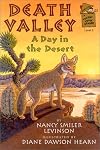
Death Valley: A Day in the Desert brought the reader straight into one of the hottest places on earth. Hardly any rain falls in Death Valley, but it is still home to many animals. I learned multiple facts about Death Valley while reading this book. I did not know that the ground of Death Valley would melt the rubber off of a pair of sneakers! I enjoyed learning about the different animals as well. The pocket mice and kangaroo rats are smart for living in deep tunnels underground. This allows show more them to stay cool in the desert. This book would be a good addition to a science lesson on deserts. I would use this book to help my students create their own Death Valley using a shoe box and art supplies. show less
Lists
Awards


You May Also Like


Associated Authors
Statistics
- Works
- 29
- Members
- 3,797
- Popularity
- #6,676
- Rating
- 3.8
- Reviews
- 34
- ISBNs
- 73
- Languages
- 1
- Favorited
- 1