
Akira Himekawa
Author of The Legend of Zelda: Twilight Princess, Vol. 1
About the Author
Disambiguation Notice:
Pen name of a duo of female Japanese comic book artists.
Image credit: via Zelda Wiki
Series
Works by Akira Himekawa
The Legend of Zelda: Legendary Edition, Vol. 1: Ocarina of Time Parts 1 & 2 (2016) 444 copies, 2 reviews
The Legend of Zelda: Legendary Edition, Vol. 3: Majora's Mask & A Link to the Past (2017) 290 copies, 1 review
The Legend of Zelda: Legendary Edition, Vol. 2: Oracle of Seasons and Oracle of Ages (2017) 218 copies
The Legend of Zelda: Legendary Edition, Vol. 4: The Minish Cap & Phantom Hourglass (2017) 171 copies
The Legend of Zelda - Four Swords Adventures - Perfect Edition (The Legend of Zelda, 5) (French Edition) (2017) 5 copies
ゼルダの伝説 トワイライトプリンセス 11 [Zelda no Densetsu: Twilight Princess 11] (The Legend of Zelda: Twilight Princess, #11) (2022) 1 copy
When idling Extract Nazca (1) (Kadokawa Comics Ace) (1998) ISBN: 4047132233 [Japanese Import] 1 copy
When idling Extract Nazca (2) (Kadokawa Comics Ace) (1999) ISBN: 4047132675 [Japanese Import] 1 copy
Kamudo, Vol. 2 1 copy
Tagged
Common Knowledge
Members
Reviews
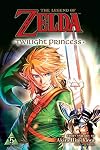
I feel as if they still haven't quite cracked the code on how to make dungeons or their battles appropriately tense/dramatic, though we get a handful of nice action frames...and I'm here for the characters anyways. (Still always feel so anticlimactic though, pff.)
Again, they're doing some great work with expanding the characters and world of Twilight Princess, making me fall more and more in love with this game that I already adore so much, and giving it some much-needed layers. Link & his show more good dad Rusl hug! Midna and Zelda being friends as children!! The manga is still a very short-form story but I love these little morsels of new story and connections. show less
Again, they're doing some great work with expanding the characters and world of Twilight Princess, making me fall more and more in love with this game that I already adore so much, and giving it some much-needed layers. Link & his show more good dad Rusl hug! Midna and Zelda being friends as children!! The manga is still a very short-form story but I love these little morsels of new story and connections. show less
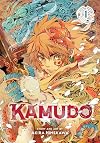
⭐ Manga | Fantasy
Thank you to VIZ Media LLC for this ARC in exchange for my honest review!
Kamudo, Vol. 1 introduces a rich fantasy world inhabited by demibeings, creatures that are half human and half beast. The title Kamudo, meaning the God Gate, sets the tone for a story steeped in identity.
This volume is fairly text-heavy, taking its time to establish the world and its lore. Most of the creatures lean far more beastly than human, which makes the central mystery stand out even more when show more a baby hatches from an egg who looks strikingly human. This child is named Kamuna the main character, a.k.a Child of God, and the story follows his life from infancy onward.
Despite being raised by deeply loving caretakers, Kamuna grows up feeling like an outcast. Unlike his siblings, who are full dragons, he struggles to understand why he was born so differently, and what that difference might mean. His desire to uncover the truth about his origins and purpose becomes the core of the story.
Since it's going to be a series, there is a lot of buildup, and towards the last few pages, action is about to happen, but none really takes place yet.
Overall, Kamudo, Vol. 1 is a fantasy manga focused on belonging, self-discovery, and destiny. While slower and more dialogue-driven, it lays a strong foundation for a mythological coming-of-age story that invites readers to reflect on identity and what it means to be “other.” A solid start for readers who enjoy lore-heavy fantasy. show less
Thank you to VIZ Media LLC for this ARC in exchange for my honest review!
Kamudo, Vol. 1 introduces a rich fantasy world inhabited by demibeings, creatures that are half human and half beast. The title Kamudo, meaning the God Gate, sets the tone for a story steeped in identity.
This volume is fairly text-heavy, taking its time to establish the world and its lore. Most of the creatures lean far more beastly than human, which makes the central mystery stand out even more when show more a baby hatches from an egg who looks strikingly human. This child is named Kamuna the main character, a.k.a Child of God, and the story follows his life from infancy onward.
Despite being raised by deeply loving caretakers, Kamuna grows up feeling like an outcast. Unlike his siblings, who are full dragons, he struggles to understand why he was born so differently, and what that difference might mean. His desire to uncover the truth about his origins and purpose becomes the core of the story.
Since it's going to be a series, there is a lot of buildup, and towards the last few pages, action is about to happen, but none really takes place yet.
Overall, Kamudo, Vol. 1 is a fantasy manga focused on belonging, self-discovery, and destiny. While slower and more dialogue-driven, it lays a strong foundation for a mythological coming-of-age story that invites readers to reflect on identity and what it means to be “other.” A solid start for readers who enjoy lore-heavy fantasy. show less
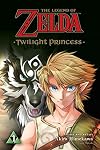
Akira Himekawa is the joint pen name of A. Honda and S. Nagano, two women who have been collaborators for over thirty years. The two-person creative team is probably best known for their work on the manga adaptations of The Legend of Zelda series of video games, although some North American readers may associate Himekawa with the Avatar: The Last Airbender comics as well. Despite being a fan of both franchises, I actually hadn't made a point to read any of Himekawa's work until after meeting show more the two women briefly at the Toronto Comic Arts Festival in 2014. Twilight Princess is the most recent entry in Himekawa's series of The Legend of Zelda adaptations. Initially Twilight Princess was intended to be a children's series, but when the original 2006 video game it was to be based on became the first in the franchise to be rated for teens, plans for that manga were cancelled. It wasn't until 2016 that Himekawa would begin serializing Twilight Princess digitally, the first volume subsequently being released in Japan in print later that year. Viz Media's English-language edition of Twilight Princess debuted in print in 2017.
Link is a young man trying to outrun his past. A year and a half ago he wandered into the border village of Ordon, hiding his personal history in hopes of establishing a new life for himself. Ordon is idyllic, seemingly a perfect place for Link to retreat. The land is said to have been blessed by the spirits and the village is well-known for its bountiful harvests. Although Link arrived as a stranger, he was warmly welcomed by the villagers and has since become an integral part of the community. Link loves Ordon and its people, but there's always a small part of him that feels like he doesn't quite belong. He is still plagued by guilt over the tragedies of his past, dealing with a weighty feeling of responsibility which is impossible to ignore. Having experienced disaster before, Link may be one of the few who can prevent it from happening again. Most of the other people in the sacred kingdom of Hyrule are unaware of the looming threat that the long-forgotten Twilight Realm poses. It's a danger that grows even greater when the ambitions of one man to rule both the light and the dark begin to come to fruition. As the shadows of darkness gather around Ordon, Link will have to face his past and his fears, confronting the possibility that he will once again lose everything that he holds most dear.
Although I've played some of the original Twilight Princess, familiarity with the video game is not at all necessary to enjoy Himekawa's adaptation. At least so far, the series can stand on its own as a work–the manga largely comes across as a freely-developed fantasy rather than a strict reimagining of a video game. Himekawa's narrative in Twilight Princess is streamlined and quickly paced, incorporating elements of the original game in clever ways. Some of the wonder of having a world to leisurely explore and discover is lost as Twilight Princess is adapted into a different medium, but in exchange the manga emphasizes depth of characterization. As the protagonist, Link is generally the most fully-realized character. I really like Himkeawa's multi-faceted interpretation of Link in Twilight Princess. While at heart Link is a troubled and brooding hero, he also exhibits happiness and joy and there are moments in the manga when his good-natured goofiness shines through. The Twilight Princess manga, much like the video game itself, is intended for a more mature audience than many of the previous incarnations of The Legend of Zelda. The story tends to be fairly dark and can be strikingly violent at times.
One of the things that I appreciate the most about Himekawa's work on The Legend of Zelda manga is the creators' ability to adjust their tone and style to fit the requirements of a given series. Himekawa's skill and flexibility as artists can be seen as they move from one adaptation to the next, but can also be exhibited within a single manga. In Twilight Princess specifically there is a wonderful contrast between the serene, pastoral setting of Ordon and the ominous darkness and shadowy creatures encroaching upon it. The artwork in Twilight Princess is beautifully executed, ranging from the gorgeous to the grotesque as demanded by the story. In comparison, the storytelling itself isn't nearly as strong. The first chapter of Twilight Princess in particular suffers from some awkward exposition and Link has a tendency to ask questions that he should already know the answers to having lived in Ordon for so long. Still, I do like the story, characters, and settings of Twilight Princess. In the past, Himekawa's The Legend of Zelda manga have only been one or two volumes long. I would be surprised if Twilight Princess could end satisfactorily in such a short span, so I hope that the series will be longer to allow the story to unfold more naturally; I enjoyed the first volume of Twilight Princess a great deal and look forward to reading more.
Experiments in Manga show less
Link is a young man trying to outrun his past. A year and a half ago he wandered into the border village of Ordon, hiding his personal history in hopes of establishing a new life for himself. Ordon is idyllic, seemingly a perfect place for Link to retreat. The land is said to have been blessed by the spirits and the village is well-known for its bountiful harvests. Although Link arrived as a stranger, he was warmly welcomed by the villagers and has since become an integral part of the community. Link loves Ordon and its people, but there's always a small part of him that feels like he doesn't quite belong. He is still plagued by guilt over the tragedies of his past, dealing with a weighty feeling of responsibility which is impossible to ignore. Having experienced disaster before, Link may be one of the few who can prevent it from happening again. Most of the other people in the sacred kingdom of Hyrule are unaware of the looming threat that the long-forgotten Twilight Realm poses. It's a danger that grows even greater when the ambitions of one man to rule both the light and the dark begin to come to fruition. As the shadows of darkness gather around Ordon, Link will have to face his past and his fears, confronting the possibility that he will once again lose everything that he holds most dear.
Although I've played some of the original Twilight Princess, familiarity with the video game is not at all necessary to enjoy Himekawa's adaptation. At least so far, the series can stand on its own as a work–the manga largely comes across as a freely-developed fantasy rather than a strict reimagining of a video game. Himekawa's narrative in Twilight Princess is streamlined and quickly paced, incorporating elements of the original game in clever ways. Some of the wonder of having a world to leisurely explore and discover is lost as Twilight Princess is adapted into a different medium, but in exchange the manga emphasizes depth of characterization. As the protagonist, Link is generally the most fully-realized character. I really like Himkeawa's multi-faceted interpretation of Link in Twilight Princess. While at heart Link is a troubled and brooding hero, he also exhibits happiness and joy and there are moments in the manga when his good-natured goofiness shines through. The Twilight Princess manga, much like the video game itself, is intended for a more mature audience than many of the previous incarnations of The Legend of Zelda. The story tends to be fairly dark and can be strikingly violent at times.
One of the things that I appreciate the most about Himekawa's work on The Legend of Zelda manga is the creators' ability to adjust their tone and style to fit the requirements of a given series. Himekawa's skill and flexibility as artists can be seen as they move from one adaptation to the next, but can also be exhibited within a single manga. In Twilight Princess specifically there is a wonderful contrast between the serene, pastoral setting of Ordon and the ominous darkness and shadowy creatures encroaching upon it. The artwork in Twilight Princess is beautifully executed, ranging from the gorgeous to the grotesque as demanded by the story. In comparison, the storytelling itself isn't nearly as strong. The first chapter of Twilight Princess in particular suffers from some awkward exposition and Link has a tendency to ask questions that he should already know the answers to having lived in Ordon for so long. Still, I do like the story, characters, and settings of Twilight Princess. In the past, Himekawa's The Legend of Zelda manga have only been one or two volumes long. I would be surprised if Twilight Princess could end satisfactorily in such a short span, so I hope that the series will be longer to allow the story to unfold more naturally; I enjoyed the first volume of Twilight Princess a great deal and look forward to reading more.
Experiments in Manga show less
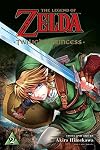
this isn't actually a review but I got thoughts. I've read every one of the Zelda manga adaptations but this is actually somehow the first one that I played the game before I read it (I guess since the others are so old :| ) and so it's been super neat to see how the condensing and added context works!! especially since i have this game practically memorized since i'm a LOSER
I was most excited for this one because (it's my favourite game but also because) of how much of this game is built on show more the characters. Something about the huge cast in TP has always been really different and precious to me compared to the other games in the series ;-; (Majora's Mask was a close second, but idk man, all the family elements in TP just get me like ;;;-;;;;). But no matter how much I love it I can admit that there were moments where it's mostly my brain filling in the gaps and it dropped the ball. But it has so many characters and awesome setpieces that I was so excited to see how the manga maneuvered them!
And I'm suuuper happy. Adding context and emotion (both the sad feels and the good feels) to all the relationships just has me missing the game and smiling like a crazy person. Some elements are being added or changed but the new complexity suits it so well. I always get really happy when interpretations fit in a simple moment or two that adds so much to the character - Renado helping Link in battle and Luda going to Death Mountain were super nice touches.
also every time i play the section where link reunites for realsies with all the kids of his village i get annoyed that the only cutscene is link smiling blankly with his doofy face. thanks 2 this for fulfilling me ultimate dreams and making him CRY MUAHAHAHA
And as always, Himekawa's art is stunning. I actually feel bad that I tear so fast through manga and only ever really look at the characters because they've created some really nice monsters and locations and especially effects. I also can tip my cap to the obvious attempts to add some nuance and complexity to a plot that's Classic Video Game Good vs Evil. idk if it's working because I know that underneath it all is just ganon being his classically evil self. It does make me wonder if they'll integrate the pretty standard supposition that arbiter's grounds/the twilight realm is where the gerudo were banished because that's just "YOUR GOOD GUYS AREN'T SO GOOD" summarized.
anyways 10/10 for integrating the fact that Link can carry cats around and also Ilia is taking care of the kittens in the hidden village and also the cats are talking to Link. 10 cats out of 10 show less
I was most excited for this one because (it's my favourite game but also because) of how much of this game is built on show more the characters. Something about the huge cast in TP has always been really different and precious to me compared to the other games in the series ;-; (Majora's Mask was a close second, but idk man, all the family elements in TP just get me like ;;;-;;;;). But no matter how much I love it I can admit that there were moments where it's mostly my brain filling in the gaps and it dropped the ball. But it has so many characters and awesome setpieces that I was so excited to see how the manga maneuvered them!
And I'm suuuper happy. Adding context and emotion (both the sad feels and the good feels) to all the relationships just has me missing the game and smiling like a crazy person. Some elements are being added or changed but the new complexity suits it so well. I always get really happy when interpretations fit in a simple moment or two that adds so much to the character - Renado helping Link in battle and Luda going to Death Mountain were super nice touches.
also every time i play the section where link reunites for realsies with all the kids of his village i get annoyed that the only cutscene is link smiling blankly with his doofy face. thanks 2 this for fulfilling me ultimate dreams and making him CRY MUAHAHAHA
And as always, Himekawa's art is stunning. I actually feel bad that I tear so fast through manga and only ever really look at the characters because they've created some really nice monsters and locations and especially effects. I also can tip my cap to the obvious attempts to add some nuance and complexity to a plot that's Classic Video Game Good vs Evil. idk if it's working because I know that underneath it all is just ganon being his classically evil self. It does make me wonder if they'll integrate the pretty standard supposition that arbiter's grounds/the twilight realm is where the gerudo were banished because that's just "YOUR GOOD GUYS AREN'T SO GOOD" summarized.
anyways 10/10 for integrating the fact that Link can carry cats around and also Ilia is taking care of the kittens in the hidden village and also the cats are talking to Link. 10 cats out of 10 show less
Lists
Awards


You May Also Like


Associated Authors
Statistics
- Works
- 56
- Members
- 7,143
- Popularity
- #3,435
- Rating
- 4.0
- Reviews
- 25
- ISBNs
- 199
- Languages
- 8
- Favorited
- 3