
Kathy Kacer
Author of I Am Not a Number
About the Author
Kathy Kacer travels widely talking about the importance of remembering our history. The daughter of Holocaust survivors, she has written many award-winning books including To Hope arid Back: The Journey of the St. Louis and The Secret of Gabi's Dresser Kathy created this project with educators show more Karen Krasny, Alan Gotlib, Susan Gordin, and Shawntelle Nesbitt in order to demonstrate that young people cab feel a meaningful connection to the Holocaust. show less
Series
Works by Kathy Kacer
Hidden on the High Wire (The Holocaust Remembrance Series for Young Readers 2022, 20) (2022) 25 copies
Escondendo Edith uma história real 24 copies
The Brushmaker's Daughter (The Holocaust Remembrance Series for Young Readers 2020, 18) (2020) 10 copies
Associated Works
Tagged
Common Knowledge
- Birthdate
- 1954-09-06
- Gender
- female
- Occupations
- children's book author
- Awards and honors
- Norma Fleck Award for Canadian Children’s Non-Fiction
Silver Birch Express Award
Canadian Jewish Book Award
Hackmatack Award - Nationality
- Canada
- Birthplace
- Toronto, Ontario, Canada
- Places of residence
- Toronto, Ontario, Canada
- Associated Place (for map)
- Toronto, Ontario, Canada
Members
Reviews
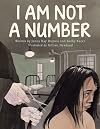
Jenny Kay Dupuis writes in the voice of her grandmother as a child, telling how (in 1928) little Irene, aged eight, and her two young brothers were taken from their home on the Nipissing First Nation Reserve, just west of North Bay, Ontario. Their father was threatened with jail if he didn’t hand over the children to the Indian agent. Resigned and grieved, he and the children’s mother watched as the government representative drove off with them. It would have been a long ride west (along show more what is now known as highway 17) to Spanish, Ontario where the imposing Catholic-run residential school stood. There Irene would be separated from her brothers. She’d be assigned a number (Indian kids were deprived of names at the school), ordered to “scrub the brown off”, and her beautiful hair would be cut (a ritual the Anishinaabe perform when grieving a loved one, and one which Irene saw as peculiarly fitting in this terrible place—given the losses she was experiencing). Irene’s essential kindness—her sharing a biscuit with another child at breakfast, a transaction which involved the use of Nippissing words (the “devil’s language”, according to the worst of the nuns)—was punished. Sister Mary made the little girl hold a bedpan full of hot coals. The child’s hands were badly burned.
Irene’s story has a happier ending than many other survivor accounts of these residential schools. Irene and her siblings were sent home for the summer. Slowly, the stories of the deprivation and abuse they endured at the Indian School leaked out. Irene’s father resolved and succeeded in heroically hiding the children when the Indian agent returned for them in the fall. He told the government man he didn’t care about his threats. He refused to send the kids back.
An afterword notes that in the course of a century approximately 150,000 First Nations, Inuit, and Métis children were removed from their families and taken to residential schools, places of horror and mistreatment. Jenny Kay Dupuis’s account, accompanied by spare, subdued paintings, is a very accessible one. It gives a good idea of the abuse and the sadness without overwhelming young readers with too many terrible details. Presenting Irene’s story in a two-language (Nipissing and English) text is a powerful statement. The language (like the Nipissing people from which it comes) has endured.
Recommended for children ages 8-12, this is another book I’d love to see on the Ontario Library Association’s Silver Birch Express Readers’ Choice Awards list this fall. show less
Irene’s story has a happier ending than many other survivor accounts of these residential schools. Irene and her siblings were sent home for the summer. Slowly, the stories of the deprivation and abuse they endured at the Indian School leaked out. Irene’s father resolved and succeeded in heroically hiding the children when the Indian agent returned for them in the fall. He told the government man he didn’t care about his threats. He refused to send the kids back.
An afterword notes that in the course of a century approximately 150,000 First Nations, Inuit, and Métis children were removed from their families and taken to residential schools, places of horror and mistreatment. Jenny Kay Dupuis’s account, accompanied by spare, subdued paintings, is a very accessible one. It gives a good idea of the abuse and the sadness without overwhelming young readers with too many terrible details. Presenting Irene’s story in a two-language (Nipissing and English) text is a powerful statement. The language (like the Nipissing people from which it comes) has endured.
Recommended for children ages 8-12, this is another book I’d love to see on the Ontario Library Association’s Silver Birch Express Readers’ Choice Awards list this fall. show less
In an afterword by Jenny Kay Dupuis we learn:
“I Am Not a Number is based on the true story of my granny, Irene Couchie Dupuis, an Anishinaabe woman who was born into a First Nation community that stretched along the shores of Lake Nipissing in Northern Ontario. Granny’s father was chief of the community, and her mother looked after their fourteen children.”
In 1928, when Irene was eight years old, an Indian Agent came to their house and demanded that her father hand over the children show more for the residential school: “They are wards of the government, now. They belong to us.” When her father objected, he was told that otherwise he would be fined and sent to jail. It was the law, and they had to go.
The stories taken from Irene’s memories of the school are pretty horrific. She was given a number and not allowed to use her name. Irene became "759." She was not permitted any regular contact with her parents. She was told to “scrub all the brown off” her body when she washed. The food was awful, and she and the other children were always hungry. They were beaten if they were heard using any words in their own language - “the devil’s language” according to the nuns.
When they attended mass (every morning and twice on Sundays) she recalled that she “secretly begged God to let me return to my family.”
After a year, she was allowed to return home for the summer. She loved being home, but had nightmares about the school every night. She begged her parents not to make her go back. Her parents decided to hide her and her brothers in the father’s taxidermy shop. The Indian Agent searched everywhere, including the shop, but didn’t find them. Her father claimed the children went up north and he didn’t know when they would be back. Finally the agent left, and they came out laughing and crying and shaking:
“We were safe. I was Irene Couchie, daughter of Ernest and Mary Ann Couchie. And I was home.”
An Author’s Note reports that Irene was among approximately 150,000 children - some as young as four - who were were removed from their homes and sent to live at residential schools across Canada. [There was a similar system in the United States.] She writes:
“Of the over 80,000 students who either returned home or relocated to cities and towns across Canada, many felt they didn’t belong anywhere and strugged all their lives.”
The last residential school did not close until 1996. In 2008, the Prime Minister of Canada issued a statement of apology.
There is an afterward by Jenny Kay Dupuis, the granddaughter of Irene Couchie Dupuis. She says her granny rarely would speak about what happened to her.
Illustrator Gillian Newland, using watercolor, ink, and pencils, manages to convey the hurt and fear and sorrow of the children in the schools with her spare lines and colors.
Evaluation: This is a story that should be known by all North Americans. What happened to Native Americans in both Canada and the United States is a sorrowful and shameful chapter of North American history. While the subject matter is difficult, it will help children develop empathy and understanding of the situation of others. Kids need alternate perspectives. There is no moralizing in the story; readers will have to think about what happened and draw their own conclusions.
In an interview, Jenny Kay Dupuis said:
"Co-writing I Am Not a Number with Kathy Kacer gave me the opportunity to reflect on the value of literature for young people and how educators and families can make use of picture books to start conversations about critical, real-world issues." show less
“I Am Not a Number is based on the true story of my granny, Irene Couchie Dupuis, an Anishinaabe woman who was born into a First Nation community that stretched along the shores of Lake Nipissing in Northern Ontario. Granny’s father was chief of the community, and her mother looked after their fourteen children.”
In 1928, when Irene was eight years old, an Indian Agent came to their house and demanded that her father hand over the children show more for the residential school: “They are wards of the government, now. They belong to us.” When her father objected, he was told that otherwise he would be fined and sent to jail. It was the law, and they had to go.
The stories taken from Irene’s memories of the school are pretty horrific. She was given a number and not allowed to use her name. Irene became "759." She was not permitted any regular contact with her parents. She was told to “scrub all the brown off” her body when she washed. The food was awful, and she and the other children were always hungry. They were beaten if they were heard using any words in their own language - “the devil’s language” according to the nuns.
When they attended mass (every morning and twice on Sundays) she recalled that she “secretly begged God to let me return to my family.”
After a year, she was allowed to return home for the summer. She loved being home, but had nightmares about the school every night. She begged her parents not to make her go back. Her parents decided to hide her and her brothers in the father’s taxidermy shop. The Indian Agent searched everywhere, including the shop, but didn’t find them. Her father claimed the children went up north and he didn’t know when they would be back. Finally the agent left, and they came out laughing and crying and shaking:
“We were safe. I was Irene Couchie, daughter of Ernest and Mary Ann Couchie. And I was home.”
An Author’s Note reports that Irene was among approximately 150,000 children - some as young as four - who were were removed from their homes and sent to live at residential schools across Canada. [There was a similar system in the United States.] She writes:
“Of the over 80,000 students who either returned home or relocated to cities and towns across Canada, many felt they didn’t belong anywhere and strugged all their lives.”
The last residential school did not close until 1996. In 2008, the Prime Minister of Canada issued a statement of apology.
There is an afterward by Jenny Kay Dupuis, the granddaughter of Irene Couchie Dupuis. She says her granny rarely would speak about what happened to her.
Illustrator Gillian Newland, using watercolor, ink, and pencils, manages to convey the hurt and fear and sorrow of the children in the schools with her spare lines and colors.
Evaluation: This is a story that should be known by all North Americans. What happened to Native Americans in both Canada and the United States is a sorrowful and shameful chapter of North American history. While the subject matter is difficult, it will help children develop empathy and understanding of the situation of others. Kids need alternate perspectives. There is no moralizing in the story; readers will have to think about what happened and draw their own conclusions.
In an interview, Jenny Kay Dupuis said:
"Co-writing I Am Not a Number with Kathy Kacer gave me the opportunity to reflect on the value of literature for young people and how educators and families can make use of picture books to start conversations about critical, real-world issues." show less
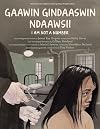
The cover says it all: A dismayed Native American child — or First Nations child, as they’re called in Canada — submits to having her hair cut in what’s clearly a highly institutionalized setting.
Author Jenny Kay Dupuis tells the story of her own grandmother: 8-year-old Irene Couchie in 1928 was forced from her Nipissing family into a cruel nun-run residential school in Ontario that attempted to “civilize” Indian children by denying them names (giving them numbers instead!), show more stripping them of their Ojibway language, and trying to turn them into “real” Canadians. Irene was one of 150,000 First Nations, Inuit and Métis children forced into horror-filled residential schools, where they were worked hard, barely fed and poorly educated. Children as young as 4 were shipped far from home for more than a century to schools run by different religious denominations.
When Irene is renamed 759, she silently vows: “I am not a number. I am Irene Couchie, daughter of Ernest and Mary Ann Couchie. I will never forget who I am.”
Irene and her two brothers were lucky enough to be saved after a year, but most others spent years in institutions where burning a child was considered appropriate punishment.
Beautiful prose — in both English and Nipissing — from Dupuis and her co-author Kathy Kacer accompany austere illustrations from Gillian Newland to create a book that’s eye-opening enough for adults, while not overwhelming its target audience of first- through third-graders.
In the interest of full disclosure, I received this book from NetGalley and Second Story Press in exchange for an honest review. show less
Author Jenny Kay Dupuis tells the story of her own grandmother: 8-year-old Irene Couchie in 1928 was forced from her Nipissing family into a cruel nun-run residential school in Ontario that attempted to “civilize” Indian children by denying them names (giving them numbers instead!), show more stripping them of their Ojibway language, and trying to turn them into “real” Canadians. Irene was one of 150,000 First Nations, Inuit and Métis children forced into horror-filled residential schools, where they were worked hard, barely fed and poorly educated. Children as young as 4 were shipped far from home for more than a century to schools run by different religious denominations.
When Irene is renamed 759, she silently vows: “I am not a number. I am Irene Couchie, daughter of Ernest and Mary Ann Couchie. I will never forget who I am.”
Irene and her two brothers were lucky enough to be saved after a year, but most others spent years in institutions where burning a child was considered appropriate punishment.
Beautiful prose — in both English and Nipissing — from Dupuis and her co-author Kathy Kacer accompany austere illustrations from Gillian Newland to create a book that’s eye-opening enough for adults, while not overwhelming its target audience of first- through third-graders.
In the interest of full disclosure, I received this book from NetGalley and Second Story Press in exchange for an honest review. show less
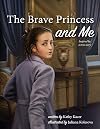
I loved this book. There aren't very many books for young children that deal with World War 2 and the Holocaust and this one was very well done. The main characters are Tilde, a young Jewish girl, and Princess Alice of Greece. In 1943 the Nazis have occupied Greece and proceed to capture and transport Jews to concentration camps. Princess Alice, who was completely deaf but proficient in lip-reading (in three languages!) used her disability to help as many people as she could. In this story, show more a mother and daughter appeared at her door one night, desperate for help. The princess took them in, giving them a place in the palace. She also warned them to be careful as the Gestapo headquarters was very close. The princess visited her guests every day, but the hiding was hard on young Tilde, who would occasionally break the rules by peeking out of the windows. One day two Gestapo agents came to the door, demanding to search the house. Tilde's fear was intense as she overheard the men's demands, but the princess knew just what to do. I loved her cleverness as she outwitted the men and kept Tilde and her mother safe.
I thought that this was an excellent introduction for younger children to the subject of the Holocaust and the fears of the Jewish people. The tension and facts are there without delving too deeply into the horrors that happened. The illustrations are beautiful, faithfully depicting events in the book. In each one I could clearly see the emotions of the subjects.
Also included in the book are biographical details of Princess Alice, one of the lesser known members of the royal family. She was the great-granddaughter of Queen Victoria, and the mother of Prince Philip, Duke of Edinburgh, and great-grandmother of Princes William and Harry. In her later years she became a nun, funding a convent and orphanage in Athens. After her death the title Righteous Among the Nations was bestowed on her for her work in saving Jews during the Holocaust. While accepting the honor for his mother, Prince Philip said, "I suspect that it never occurred to her that her action was in any way special. She was a person with a deep religious faith, and she would have considered it to be a perfectly natural human reaction to fellow beings in distress." show less
I thought that this was an excellent introduction for younger children to the subject of the Holocaust and the fears of the Jewish people. The tension and facts are there without delving too deeply into the horrors that happened. The illustrations are beautiful, faithfully depicting events in the book. In each one I could clearly see the emotions of the subjects.
Also included in the book are biographical details of Princess Alice, one of the lesser known members of the royal family. She was the great-granddaughter of Queen Victoria, and the mother of Prince Philip, Duke of Edinburgh, and great-grandmother of Princes William and Harry. In her later years she became a nun, funding a convent and orphanage in Athens. After her death the title Righteous Among the Nations was bestowed on her for her work in saving Jews during the Holocaust. While accepting the honor for his mother, Prince Philip said, "I suspect that it never occurred to her that her action was in any way special. She was a person with a deep religious faith, and she would have considered it to be a perfectly natural human reaction to fellow beings in distress." show less
Lists
Awards


You May Also Like


Associated Authors
Statistics
- Works
- 37
- Also by
- 1
- Members
- 1,600
- Popularity
- #16,111
- Rating
- 4.2
- Reviews
- 81
- ISBNs
- 155
- Languages
- 6


