
Alice Pung
Author of Unpolished Gem: My Mother, My Grandmother, and Me
About the Author
Alice Pung was born in 1981 in Footscray, Australia. She has attended the International Writing Program at the University of Iowa. Her first book, Unpolished Gem, won the 2007 Newcomer of the Year Award in the Australian Book Industry Awards. She is the editor of Growing up Asian in Australia show more (2008). Her other books include Her Father's Daughter and Laurinda, which is being adapted into a film. She is also a solicitor and an art instructor. (Bowker Author Biography) show less
Image credit: Black Inc Books
Series
Works by Alice Pung
Associated Works
Freedom: Stories Celebrating the Universal Declaration of Human Rights (2009) — Contributor — 85 copies, 2 reviews
Tagged
Common Knowledge
- Birthdate
- c1980
- Gender
- female
- Occupations
- memoirist
lawyer
teacher
editor
novelist
essayist - Awards and honors
- Order of Australia (2022)
- Nationality
- Australia
- Birthplace
- Footscray, Victoria, Australia
- Places of residence
- Melbourne, Victoria, Australia
- Associated Place (for map)
- Victoria, Australia
Members
Reviews
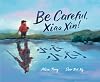
Xiao Xin's name means "Be Careful," something his overprotective immigrant parents and grandparents say to him over and over. But he believes his name means something else, showing that he is someone who is brave and independent, someone who can get knocked down, but will up again because you're never gonna keep him down. (He's still too young for vodka, lager, and cider drinks though.)
The adorable illustrations make this book irresistible even as it gets a little dark, like the brief show more allusions to the difficult past of the parents and grandparents or the symbolic forms their fears take as they surround Xiao Xin.
While uplifting, it's still all a bit heavy, so more suitable for reading when you have time for a discussion with your children rather than say at bedtime. show less
The adorable illustrations make this book irresistible even as it gets a little dark, like the brief show more allusions to the difficult past of the parents and grandparents or the symbolic forms their fears take as they surround Xiao Xin.
While uplifting, it's still all a bit heavy, so more suitable for reading when you have time for a discussion with your children rather than say at bedtime. show less
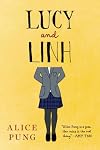
Chinese-Australian Lucy Lam is shocked when she wins acceptance to Laurinda on the first Equal Access scholarship - she was sure her classmate Tully would get the place. Lucy goes off to Laurinda believing that hard work and friendliness will help her there as they did at Christ Our Savior, and finds that things are very different: the school is effectively run by the three-member Cabinet of popular students (the daughters of former popular students, and back and back), and the Cabinet show more viciously bullies teachers and students alike.
Lucy narrates in first person, each chapter addressed to Linh - Lucy's old, whole self from when she lived in Stanley and went to Christ Our Savior with students similar to her. At Laurinda, Lucy isn't her old self, mainly keeping quiet and certainly not even attempting to explain to any of the other students what her home life is like: her father works at a factory, her mother works out of their garage (sewing, illegally), and Lucy helps take care of her little brother, affectionately called the Lamb.
But the Cabinet adopts Lucy in an attempt to co-opt and control her, and finds that she's more than they expected. During her first year at Laurinda, Lucy slowly figures out how to navigate this new world, and what she values about her old one.
Quotes
It never occurred to me that what I knew wouldn't alter the personality I had. (32)
This was how "niceness" was policed - not through directives about virtue, but through conformity in dress and manners. (108)
How strange high school is, that our reputations are in the hands of people we barely know, people we see every day... (119)
It was exhausting to be the sort of person they expected me to be. (138)
As I felt the woman's power over me shrink, I also felt something expanding in me - not empathy, but condescension....Laurinda had shown me that just because a person was an adult, it didn't necessarily mean you had to respect them. (182-183)
People, even well-intentioned people, were always trying to take away our quiet little successes and joys and replace them with big, overarching fears. (238)
..."tacky," the term used by wealthy people to describe the most beautiful things poor people could afford. (267)
And there's only so much of yourself you can hide...before you start to fall apart. (267)
It's so much easier to be a hero when you know you belong. (287)
But I knew now that success had to mean something to me, not only to those around me. You could do all the right things and still feel as though you had failed. (320)
"...Leadership is about building your own character before you start influencing anyone else. To be a true leader, I think you must first learn what it is like to follow....and to follow without losing your own moral compass, you have to know yourself and appreciate where you come from." (Lucy's speech, 333)
"They were not good. They were not bad. They were just nice." (paraphrase from from Into the Woods, 334) show less
Lucy narrates in first person, each chapter addressed to Linh - Lucy's old, whole self from when she lived in Stanley and went to Christ Our Savior with students similar to her. At Laurinda, Lucy isn't her old self, mainly keeping quiet and certainly not even attempting to explain to any of the other students what her home life is like: her father works at a factory, her mother works out of their garage (sewing, illegally), and Lucy helps take care of her little brother, affectionately called the Lamb.
But the Cabinet adopts Lucy in an attempt to co-opt and control her, and finds that she's more than they expected. During her first year at Laurinda, Lucy slowly figures out how to navigate this new world, and what she values about her old one.
Quotes
It never occurred to me that what I knew wouldn't alter the personality I had. (32)
This was how "niceness" was policed - not through directives about virtue, but through conformity in dress and manners. (108)
How strange high school is, that our reputations are in the hands of people we barely know, people we see every day... (119)
It was exhausting to be the sort of person they expected me to be. (138)
As I felt the woman's power over me shrink, I also felt something expanding in me - not empathy, but condescension....Laurinda had shown me that just because a person was an adult, it didn't necessarily mean you had to respect them. (182-183)
People, even well-intentioned people, were always trying to take away our quiet little successes and joys and replace them with big, overarching fears. (238)
..."tacky," the term used by wealthy people to describe the most beautiful things poor people could afford. (267)
And there's only so much of yourself you can hide...before you start to fall apart. (267)
It's so much easier to be a hero when you know you belong. (287)
But I knew now that success had to mean something to me, not only to those around me. You could do all the right things and still feel as though you had failed. (320)
"...Leadership is about building your own character before you start influencing anyone else. To be a true leader, I think you must first learn what it is like to follow....and to follow without losing your own moral compass, you have to know yourself and appreciate where you come from." (Lucy's speech, 333)
"They were not good. They were not bad. They were just nice." (paraphrase from from Into the Woods, 334) show less
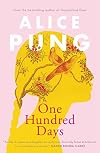
Karuna is a teenage girl, daughter of a controlling mother, whom she calls Grand Mar. Grand Mar comes from a village in the Philippines, and is like a fish out of water in urban Australia. When Karuna gets herself pregnant, Grand Mar's controlling behaviour goes into overdrive.
The narrative voice of the book is Karuna writing her story for her child to read in the future, and she recounts her frustrations at Grand Mar's insistence that all modern medicine and expected behaviour of show more mothers-to-be be ignored in favour of the way things were done in her village. It's a splendid account of a fraught mother-daughter relationship that also perfectly captures the experience of the first-generation children of migrants who never really left home in their minds. show less
The narrative voice of the book is Karuna writing her story for her child to read in the future, and she recounts her frustrations at Grand Mar's insistence that all modern medicine and expected behaviour of show more mothers-to-be be ignored in favour of the way things were done in her village. It's a splendid account of a fraught mother-daughter relationship that also perfectly captures the experience of the first-generation children of migrants who never really left home in their minds. show less

Alice Pung has received critical acclaim for her memoirs, Unpolished Gem and Her Father's Daughterwhich explore her experience as an Asian-Australian.
Laurinda is Alice Pung's first fiction novel and features a teenage girl, Lucy Lam, who is awarded the inaugural 'Equal Access' scholarship to the exclusive Laurinda Ladies College.
Lucy is the daughter of Chinese/Vietnamese 'boat' immigrants who live in a 'povvo' area of suburban Australia. Her father is a shift worker in a carpet factory while show more her mother, who speaks almost no English, sews in their garage under sweatshop conditions while caring for Lucy's baby brother. As an Asian-Australian scholarship student without a background of wealth and privilege, Lucy is an outsider at Laurinda in more ways than one, but wants to fit in and take advantage of the opportunities the school affords her.
Initially Lucy feels confident she will be able to hold her own at Laurinda but she soon realises that there is a cultural and social divide she is at a loss as to how best negotiate. In particular, Lucy is both fascinated with and horrified by the dynamics at the school which contrast sharply with her experience at Christ Our Saviour College. Laurinda is in thrall to three young women known as the Cabinet who wield a frightening amount of influence within the school with the tacit approval of the headmistress, Mrs Grey. Amber, Chelsea and Brodie are manipulative and cruel yet have cultivated an aura of power that none of their peers, and few of their teachers, are willing to challenge. As Lucy is absorbed into the school's insular environment she is caught up in the ethos of Laurinda, and nearly loses herself, but eventually finds a way to forge her own path.
The narrative is presented in the form of a series of letters addressed to 'Linh' whom we assume is a friend of Lucy's from her previous school (view spoiler) The author's portrayal of Lucy is compassionate, sensitive and achingly real. Lucy is smart, capable and strong, but she is also a teenager and as such is beset by bouts of insecurity and vulnerability. Though I do not share the same ethnicity nor background as Lucy, I found her, and several of her experiences, easy to relate to.
Part satire, magnifying the pretensions of private school and the aspirations of immigrant families, part poignant coming of age tale, Pung draws on her own experiences which gives the story a sense of authenticity. Privilege, racism, class, identity and integrity are all themes explores in the novel. Pung also skilfully captures the almost universal experience for teenage girls negotiating high school where a small number of students often have an inexplicable cache of power and wield it without mercy. While Lucy is not the only victim of the Cabinet's bullying, she also has to negotiate the additional stress of cultural discord and the expectations of Laurinda's principal who demands Lucy is suitably grateful for, and repays, the privilege she has been given.
The writing is sharp and witty with characters and scenes that are vividly portrayed. The pace is good and the structure works well to deliver an interesting surprise. Laurinda is a clever, entertaining and insightful novel, suitable for both a young adult and adult audience and I wouldn't hesitate to recommend it to either. show less
Laurinda is Alice Pung's first fiction novel and features a teenage girl, Lucy Lam, who is awarded the inaugural 'Equal Access' scholarship to the exclusive Laurinda Ladies College.
Lucy is the daughter of Chinese/Vietnamese 'boat' immigrants who live in a 'povvo' area of suburban Australia. Her father is a shift worker in a carpet factory while show more her mother, who speaks almost no English, sews in their garage under sweatshop conditions while caring for Lucy's baby brother. As an Asian-Australian scholarship student without a background of wealth and privilege, Lucy is an outsider at Laurinda in more ways than one, but wants to fit in and take advantage of the opportunities the school affords her.
Initially Lucy feels confident she will be able to hold her own at Laurinda but she soon realises that there is a cultural and social divide she is at a loss as to how best negotiate. In particular, Lucy is both fascinated with and horrified by the dynamics at the school which contrast sharply with her experience at Christ Our Saviour College. Laurinda is in thrall to three young women known as the Cabinet who wield a frightening amount of influence within the school with the tacit approval of the headmistress, Mrs Grey. Amber, Chelsea and Brodie are manipulative and cruel yet have cultivated an aura of power that none of their peers, and few of their teachers, are willing to challenge. As Lucy is absorbed into the school's insular environment she is caught up in the ethos of Laurinda, and nearly loses herself, but eventually finds a way to forge her own path.
The narrative is presented in the form of a series of letters addressed to 'Linh' whom we assume is a friend of Lucy's from her previous school (view spoiler) The author's portrayal of Lucy is compassionate, sensitive and achingly real. Lucy is smart, capable and strong, but she is also a teenager and as such is beset by bouts of insecurity and vulnerability. Though I do not share the same ethnicity nor background as Lucy, I found her, and several of her experiences, easy to relate to.
Part satire, magnifying the pretensions of private school and the aspirations of immigrant families, part poignant coming of age tale, Pung draws on her own experiences which gives the story a sense of authenticity. Privilege, racism, class, identity and integrity are all themes explores in the novel. Pung also skilfully captures the almost universal experience for teenage girls negotiating high school where a small number of students often have an inexplicable cache of power and wield it without mercy. While Lucy is not the only victim of the Cabinet's bullying, she also has to negotiate the additional stress of cultural discord and the expectations of Laurinda's principal who demands Lucy is suitably grateful for, and repays, the privilege she has been given.
The writing is sharp and witty with characters and scenes that are vividly portrayed. The pace is good and the structure works well to deliver an interesting surprise. Laurinda is a clever, entertaining and insightful novel, suitable for both a young adult and adult audience and I wouldn't hesitate to recommend it to either. show less
Lists
Awards


You May Also Like


Associated Authors
Statistics
- Works
- 15
- Also by
- 9
- Members
- 1,049
- Popularity
- #24,562
- Rating
- 3.7
- Reviews
- 45
- ISBNs
- 105
- Languages
- 2
- Favorited
- 1