

Anita Heiss
Author of Growing Up Aboriginal in Australia
About the Author
Dr. Anita Heiss is an Australian author, poet, cultural activist, and social commentator. She was born in 1968 in Gadigal country and is a member of the Wiradjuri Nation of central New South Wales. She is a graduate of the University of New South Wales, Western Sydney University. She writes show more non-fiction, historical fiction, commercial women's fiction, children's novels, and blogs. Her books include Tiddas (2014) and Barbed Wire and Cherry Blossoms (2016), the 2020 University of Canberra Book of the Year. Her most recent book is entitled Bila Yarrudhanggalangdhuray (2021). She has won numerous awards including 2 NSW Premier History Awards, 2002 and 2003; 4 of the Deadly Award for Most Outstanding Contribution to Literature for Not Meeting Mr. Right (2007), Macquarie PEN Anthology of Aboriginal Literature (2008) with Peter Minter, Manhattan Dreaming (2010), and Paris Dreaming (2011). In 2012, she won the Victorian Premier's Literary Award for Indigenous Writing for Am I Black Enough for You? Her career includes, Ambassador for the Indigenous Literacy Foundation, the GO Foundation and Worawa Aboriginal College. Anita is a board member of University of Queensland Press and Circa Contemporary Circus and is a Professor of Communications at the University of Queensland. (Bowker Author Biography) show less
Works by Anita Heiss
Associated Works
Tagged
Common Knowledge
- Birthdate
- 1968
- Gender
- female
- Education
- University of Western Sydney (PhD - Communication and Media)
- Occupations
- novelist
non-fiction author
commentator
children's book author
poet - Nationality
- Australia
- Birthplace
- Sydney, New South Wales, Australia
- Places of residence
- Matraville, New South Wales, Australia
- Associated Place (for map)
- New South Wales, Australia
Members
Reviews
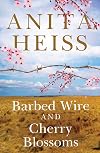
Thoroughly enjoyed this well-written book by Anita Heiss. Set in Cowra during WWII, it tells of a breakout from the Japanese prison camp and how one escapee finds himself at the Aboriginal mission, Erambie. This was the time when Aboriginal people were housed in enclaves with basic houses, no power or running water, a mission manager, and a lot of restrictions on what they could and could not do, including curfews. There was always the fear hanging over them that their children could be show more taken away if they didn’t keep their homes spotless and follow all the rules.
When one family finds the Japanese POW under their house they hide him in the bomb shelter at the bottom of their yard. He lives there for a year, his food brought to him by the 17-year old daughter of the house. There is always the danger that the gossipy neighbour will ‘dob them in’ but solidarity wins out. The restrictions of Japanese culture and family honour are compared to the restrictions of Aboriginal life. The daughter and POW fall in love but when the war ends, the POW returns home and both go on to lead their own separate lives. The manner of the POW ‘coming out’ is delightfully handled. show less
When one family finds the Japanese POW under their house they hide him in the bomb shelter at the bottom of their yard. He lives there for a year, his food brought to him by the 17-year old daughter of the house. There is always the danger that the gossipy neighbour will ‘dob them in’ but solidarity wins out. The restrictions of Japanese culture and family honour are compared to the restrictions of Aboriginal life. The daughter and POW fall in love but when the war ends, the POW returns home and both go on to lead their own separate lives. The manner of the POW ‘coming out’ is delightfully handled. show less
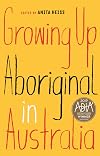
““There is no single or simple way to define what it means to grow up Aboriginal in Australia….”
I’m having such a hard time putting together a response to reading Growing Up Aboriginal in Australia. I have such a mix of emotions - I am angered, ashamed, sad, enlightened, inspired and hopeful.
Fifty contributors share their diverse experiences of growing up Aboriginal in Australia. They come from all over country, and are of varied ages, genders, sexual orientations, and show more socioeconomic class.
Yet there are commonalities in their stories -the weight of intergenerational trauma, the burden of stereotypes and racism, the struggle with identity, the desire to understand and embrace their culture, kin and country.
Though the quality of the writing can be uneven, the honesty of the authors stories are affecting and powerful. They are a generous invitation to learn and gain some understanding of what it is like to be a First Nations person growing up in Australia, both then and now.
“….it’s so obvious that underneath the invisible barriers and expectations we have constructed and placed on each other, we are all brothers and sisters; we are all just pink flesh and bone.”
An informative, thought-provoking, and moving anthology Growing Up Aboriginal in Australia is essential reading in the journey to create a new dialogue with and about Aboriginal Australians. show less
I’m having such a hard time putting together a response to reading Growing Up Aboriginal in Australia. I have such a mix of emotions - I am angered, ashamed, sad, enlightened, inspired and hopeful.
Fifty contributors share their diverse experiences of growing up Aboriginal in Australia. They come from all over country, and are of varied ages, genders, sexual orientations, and show more socioeconomic class.
Yet there are commonalities in their stories -the weight of intergenerational trauma, the burden of stereotypes and racism, the struggle with identity, the desire to understand and embrace their culture, kin and country.
Though the quality of the writing can be uneven, the honesty of the authors stories are affecting and powerful. They are a generous invitation to learn and gain some understanding of what it is like to be a First Nations person growing up in Australia, both then and now.
“….it’s so obvious that underneath the invisible barriers and expectations we have constructed and placed on each other, we are all brothers and sisters; we are all just pink flesh and bone.”
An informative, thought-provoking, and moving anthology Growing Up Aboriginal in Australia is essential reading in the journey to create a new dialogue with and about Aboriginal Australians. show less
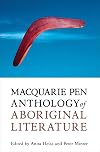
Superb although, perhaps in a very real sense, dated by its choice of focus.
This anthology accompanies the larger Macquarie PEN Anthology of Australian Literature and it is a worthy decision to give Aboriginal Literature its own volume entirely. The power of the material contained herein is at times overwhelming. Heiss and Minter collect letters and speeches given from the early 19th century through to the middle of the 20th century, with more focus on traditional "literature", i.e. poetry show more and fiction, in the second half of the 20th century. (Until at least WWII, Aboriginal Australians were essentially wards of the state, requiring permission to marry and get employment, often having their wages given directly to their state overseer to protect them, and routinely having children taken from their families to be raised in white households, the famous Stolen Generation. As a result, there were really only two or three "literary" Indigenous writers until late in the last century.)A
What is most poignant for me personally, as a white Australian who grew up in the 1990s, is how few of these voices were taught to me at school or in my broader social education. The manifestos that were shared back in 1938, Australia's sesquicentenary, have an awful lot in common with modern Indigenous demands - yet a lot of people today feel as if these arguments are new! There has been a blank space in Australian history, or at least a hazy one, and this anthology helps rectify that. Every writer here is of interest, with the final inclusion - Tara June Winch - being a perceptive one: at the time she had recently published a debut work; a decade later, she is widely considered one of our best novelists.
Of course, all anthologies delight and frustrate, sometimes in equal measure. It's understandable that this volume takes the "Cultural Studies" approach to literature - i.e. widening the scope to include letters, autobiography, and manifestos - because, as mentioned above, due to historic injustices it would have been hard to find enough writers otherwise. Additionally, since much of the Aboriginal experience has been one of fighting daily oppression, it makes sense that a compilation of lived experiences, many told with wit and insight, is an effective way to render this ancient, oral culture on the page. It is slightly sad, but understandable, that the editors choose to omit the many traditional songs which were collected in the first half of the 20th century by passionate white anthropologist-poets such as Roland Robinson. But as these songs were transmitted through white hands and white minds, it is fair to say many of them do not represent a true experience, in much the same way as the beautiful translations of Chinese poetry by Ezra Pound and his contemporaries are poetic wonders in their own right, but not a very useful insight into the depths of genuine Chinese art.
In terms of "canonical" Aboriginal writers, the only notable omission for me is the late Colin Johnson, aka Mudrooroo. A powerful voice between the 1960s and 1980s, Mudrooroo's legacy was shattered when questions were raised about his Aboriginality. It is now generally considered that he was mistaken in his self-identification with Aboriginal Australia, although more critical voices accuse him of outright fraud. With the author's death, this controversy has subsided, and the editors make glancing reference to him in the introduction when - without citing his name - they indicate they have omitted authors who are "in dialogue with local communities regarding ancestry and identity".
I do think, though, that this anthology perhaps does the same as many modern anthologies; it sands off the rough edges. There aren't really any voices from the more conservative side of Aboriginal life, those who do not agree with the mainstream movement. Additionally some of the most progressive, radical voices of recent years also seem to miss out, those who perhaps make white people uncomfortable rather than just acknowledging the plight. With such a groundbreaking publication, which has the ability to fall into the hands of ignorant people like myself and awaken us to the realities of the last 230 years, it is completely understandable that the editors chose to sand off the spiky edges. Here's hoping that this anthology will have many future editions, and that with time it will be allowed as much complexity and nuance as the best anthologies should. show less
This anthology accompanies the larger Macquarie PEN Anthology of Australian Literature and it is a worthy decision to give Aboriginal Literature its own volume entirely. The power of the material contained herein is at times overwhelming. Heiss and Minter collect letters and speeches given from the early 19th century through to the middle of the 20th century, with more focus on traditional "literature", i.e. poetry show more and fiction, in the second half of the 20th century. (Until at least WWII, Aboriginal Australians were essentially wards of the state, requiring permission to marry and get employment, often having their wages given directly to their state overseer to protect them, and routinely having children taken from their families to be raised in white households, the famous Stolen Generation. As a result, there were really only two or three "literary" Indigenous writers until late in the last century.)A
What is most poignant for me personally, as a white Australian who grew up in the 1990s, is how few of these voices were taught to me at school or in my broader social education. The manifestos that were shared back in 1938, Australia's sesquicentenary, have an awful lot in common with modern Indigenous demands - yet a lot of people today feel as if these arguments are new! There has been a blank space in Australian history, or at least a hazy one, and this anthology helps rectify that. Every writer here is of interest, with the final inclusion - Tara June Winch - being a perceptive one: at the time she had recently published a debut work; a decade later, she is widely considered one of our best novelists.
Of course, all anthologies delight and frustrate, sometimes in equal measure. It's understandable that this volume takes the "Cultural Studies" approach to literature - i.e. widening the scope to include letters, autobiography, and manifestos - because, as mentioned above, due to historic injustices it would have been hard to find enough writers otherwise. Additionally, since much of the Aboriginal experience has been one of fighting daily oppression, it makes sense that a compilation of lived experiences, many told with wit and insight, is an effective way to render this ancient, oral culture on the page. It is slightly sad, but understandable, that the editors choose to omit the many traditional songs which were collected in the first half of the 20th century by passionate white anthropologist-poets such as Roland Robinson. But as these songs were transmitted through white hands and white minds, it is fair to say many of them do not represent a true experience, in much the same way as the beautiful translations of Chinese poetry by Ezra Pound and his contemporaries are poetic wonders in their own right, but not a very useful insight into the depths of genuine Chinese art.
In terms of "canonical" Aboriginal writers, the only notable omission for me is the late Colin Johnson, aka Mudrooroo. A powerful voice between the 1960s and 1980s, Mudrooroo's legacy was shattered when questions were raised about his Aboriginality. It is now generally considered that he was mistaken in his self-identification with Aboriginal Australia, although more critical voices accuse him of outright fraud. With the author's death, this controversy has subsided, and the editors make glancing reference to him in the introduction when - without citing his name - they indicate they have omitted authors who are "in dialogue with local communities regarding ancestry and identity".
I do think, though, that this anthology perhaps does the same as many modern anthologies; it sands off the rough edges. There aren't really any voices from the more conservative side of Aboriginal life, those who do not agree with the mainstream movement. Additionally some of the most progressive, radical voices of recent years also seem to miss out, those who perhaps make white people uncomfortable rather than just acknowledging the plight. With such a groundbreaking publication, which has the ability to fall into the hands of ignorant people like myself and awaken us to the realities of the last 230 years, it is completely understandable that the editors chose to sand off the spiky edges. Here's hoping that this anthology will have many future editions, and that with time it will be allowed as much complexity and nuance as the best anthologies should. show less
Words are powerful and this is so apparent while reading this book. The writers reclaim phrases, reject others and use their voice to talk to their audience in an intimate and candid setting. And when words connect, they create stories — such a central part of Aboriginal culture and incredibly present in each unique chapter.
The 51 Aboriginal writers come from all over the country and from all walks of life. From suburbia to country towns, with a myriad of lifestyles and paths among them. show more That alone should quash any ‘othering’ that can take place when non-Indigenous people think about Aboriginal Australia. This is a diverse snapshot that only just skims the surface of Blak culture and community.
Chapters are sorted by alphabetical order, which means there is no structure to narrative or theme. You’ll meet people who struggled with their identity, the varying shades of their skin, and the casual racism thrown their way. You’ll meet people in pain. And others who are embracing their culture after living removed for so long.
Celeste Little, one of the writers in the collection, sums it up best: "Until this country finally 'grows up Aboriginal' itself, and starts not only being honest about its history and the ongoing impacts of colonisation, but also making amends, I don't feel I will be able to completely grow up Aboriginal myself. I wonder if I will ever get to be able to in this lifetime. I hope so."
#alwayswasalwayswillbe show less
The 51 Aboriginal writers come from all over the country and from all walks of life. From suburbia to country towns, with a myriad of lifestyles and paths among them. show more That alone should quash any ‘othering’ that can take place when non-Indigenous people think about Aboriginal Australia. This is a diverse snapshot that only just skims the surface of Blak culture and community.
Chapters are sorted by alphabetical order, which means there is no structure to narrative or theme. You’ll meet people who struggled with their identity, the varying shades of their skin, and the casual racism thrown their way. You’ll meet people in pain. And others who are embracing their culture after living removed for so long.
Celeste Little, one of the writers in the collection, sums it up best: "Until this country finally 'grows up Aboriginal' itself, and starts not only being honest about its history and the ongoing impacts of colonisation, but also making amends, I don't feel I will be able to completely grow up Aboriginal myself. I wonder if I will ever get to be able to in this lifetime. I hope so."
#alwayswasalwayswillbe show less
Lists
Awards


You May Also Like


Associated Authors
Statistics
- Works
- 34
- Also by
- 1
- Members
- 972
- Popularity
- #26,497
- Rating
- 3.7
- Reviews
- 37
- ISBNs
- 125