
Bruce Pascoe
Author of Dark Emu
About the Author
Bruce Pascoe was born in 1947 in Melbourne, Australia. He is an Indigenous writer. His latest books include Fog a Dox (winner of the Prime Minister's Literary Awards in 2013), Convincing Ground, Dark Emu, and Mrs Whitlam. He received the 2016 NSW Premier's Literary Awards Indigenous Writers Prize, show more Joint Winner. In 2018, he won the Australia Council Award for Lifetime Achievement in Literature. It acknowledges prominent literary writers over 60 who have made outstanding and lifelong contribution to Australian literature. (Bowker Author Biography) show less
Series
Works by Bruce Pascoe
The Little Red Yellow Black Book: An Introduction to Indigenous Australia (2008) 76 copies, 2 reviews
Aboriginal Short Stories 4 copies
Wathaurong : too bloody strong : stories and life journeys of people from Wathaurong (1997) 3 copies
Australian Short Stories No 36 3 copies
Australian Short Stories No. 14 3 copies
Australian Short Stories No 25 2 copies
No Hiding From the Woman in the Moon 2 copies
Australian Short Stories No 33 2 copies
Australian Short Stories No 28 2 copies
Australian Short Stories No 21 2 copies
Australian Short Stories Vol 1 No 3 2 copies
Australian Short Stories No 10 2 copies
Australian Short Stories No 15 2 copies
Associated Works
Tagged
Common Knowledge
- Canonical name
- Pascoe, Bruce
- Legal name
- Pascoe, Bruce
- Birthdate
- 1947
- Gender
- male
- Education
- University High School, Melbourne
University of Melbourne
Melbourne State College (BEd) - Occupations
- teacher
language researcher
farmer
fisherman - Nationality
- Australia
- Birthplace
- Richmond, Victoria, Australia
- Places of residence
- King Island, Tasmania, Australia (early years)
Mornington, Victoria, Australia (1957)
Melbourne, Victoria, Australia
Shepparton, Victoria, Australia (teacher)
Bairnsdale, Victoria, Australia (teacher for nine years)
Mallacoota, Victoria, Australia - Associated Place (for map)
- Victoria, Australia
Members
Reviews
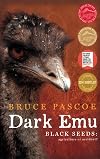
The diaries and journals of early Australian explorers and settlers tell a different story of Aboriginal settlement than the later historians and especially contemporary conservatives and politicians. That is, the land was managed for hunting, fishing, agriculture. Some newcomers described the landscape as a kind of park, not unlike the managed estates of English gentry, open fields, woods and farms. Those diaries therefore tell us that the premise of Australia's settlement, ie, the rights show more of British acquisition is based on a falseness - that the land was unoccupied or 'terra nullis'. No treaty was ever negotiated with any peoples already here - anyone who has seen John Batman's treaty knows that copperplate script was not taught to the wurrunjeri people in schools. And hence, the legitimacy of ownership in Australia is still contested, except by the courts and legislature which seems pretty ok with it all. Australians don't much like complexity when it comes to land ownership. We like our myths, we like our settled history. Dark emu takes us to the documents that cause us to be unstable, if we bother to read.
For a deeper look into the subject, The Biggest Estate on Earth by Bill Gammage is worth reading
https://www.goodreads.com/book/show/13041243-the-biggest-estate-on-earth show less
For a deeper look into the subject, The Biggest Estate on Earth by Bill Gammage is worth reading
https://www.goodreads.com/book/show/13041243-the-biggest-estate-on-earth show less
Bruce seems to be pretty much a man with a mission. And that mission is to redeem the image of the Australian Aboriginals as primitive hunter gatherers and have them recognised as farmers, agriculturalists, architects and creators of elaborate engineering works. Well he half convinces me. The issue is that he seems to go overboard. He cites Bill Gammage (author of "The biggest estate on earth") a lot. And I make the same comment about Bill Gammage...that they both take SOME evidence and show more generalise it, and, to my mind anyway, both of them over-claim on the basis of the evidence.
Apparently a new book has just been published which is a scholarly review of Pascoe's book and it makes some of these points. For example, when I read Pascoe's book and an account of Sturt seeing a sophisticated village of some seventy huts (p78) on the Darling River....I had assumed that it was an active, occupied village....but apparently, Bruce has been a little selective about what he quotes and leaves out the fact that the village was unoccupied and looked like it had been that way for some time. OK this is a minor criticism but it worries me that Bruce might have done similar things elsewhere and slanted his reporting and maybe cherry picked his data. Because there seem to be innumerable contemporary reports of Aboriginals being hunter gathers but relatively few about them cultivating or planting seed.
I spent a lot of my holidays around Dayleys Point on the central coast of NSW and there were significant middens there accumulated over thousands of years I guess. On the sandstone shelf above those caves with middens there were carvings of fish, sharks and, (I think) people though no plants. But the location would not have been all that great for cultivation or farming and with the abundance of shellfish and actual fish in the waters alongside, I suspect there would be very little incentive to make life difficult and to go out planting kangaroo grass or yams. (Though Kangaroo grass does grow around that area ...so might have been harvested).
I was fascinated by the stories told by many of the explorers about large stocks of grain being found; of yams being cultivated, and of mitchell grass being harvested. (It must have been hard work because the seeds are so small). So I think Bruce is onto something here. Clearly there were places that were on the cusp of agriculture. And there were places, like Brewarrina, where fish traps had been built. But maybe he overstates the engineering skills involved. I have many recollections as a kid camping by rivers with rocky bottoms and lots of water worn stones, and damming up the water ...just to make a deeper swimming hole; and making some races to capture fish. (I would have been about 11 years old with no instruction from adults etc....it was just play to us. But if your life depended on catching fish (maybe as at Brewarrina) then I guess things might have become more sophisticated). So yes, there were fish traps ...and maybe they have been there for a long while but I'm not sure they should be "talked-up" as marvels of modern engineering.
I was also fascinated by the reports of stone houses. (Well, the bases were stone and apparently the upper structure was of bark.). I was unaware of this development around Victoria. Though was it widespread throughout Australia? He quotes Basedow in 1925 writing about stone slabs on beams ..used for roofing in South Australia (though that's 135 years after European settlement so there could be an element of copying) and states (without evidence) that buildings in the Kimberley were built with large slabs of stone. However, from what I know, the practice of building substantial structures with stone was not widespread...and even the explorers (such as Mitchell and Sturt) that he quotes extensively, mainly describe bark dwellings.
So I come away from Bruce's book slightly mystified. Yes, it does seem that there were elements of the start of Agriculture and there were some permanent dwellings, and there were places where mildly complex fish traps had been built; And certainly, there were some fairly sophisticated articles made from fibre (nets, containers, etc). But the evidence appears to be a bit sparse that these innovations were universal.
Of course the whole issue is terribly muddled by the impact of smallpox on the indigenous population. It spread faster than the colonialists and clearly disrupted the social structures and caused a massive decline in the population, and presumably to practices such as farming or building. Pascoe draws attention to this. He rightly draws attention to the fact that aboriginal structures were burned and stones used for fences. (A bit like what happened to the Aztecs with their temple stones being repurposed to build churches). He rightly draws attention to the fact that there was evidence of large buildings used by large numbers of people and the people were no longer present in obvious numbers.
So, as I said above, Bruce has half convinced me. I would be more convinced if he had appeared to be more objective and not "over-claim". That's a pity, because I think he's raised some really important issues here. I guess, he felt that it was better to make a big bold claim and have impact than a more modest, less impactful claim. I am also impressed by the variety of sources he has rescued from archives and libraries. A pity that (as cited above) he seems to have been a bit selective in how he quotes the original reports.
He writes well and it's an interesting and easy read. I give it four stars. show less
Apparently a new book has just been published which is a scholarly review of Pascoe's book and it makes some of these points. For example, when I read Pascoe's book and an account of Sturt seeing a sophisticated village of some seventy huts (p78) on the Darling River....I had assumed that it was an active, occupied village....but apparently, Bruce has been a little selective about what he quotes and leaves out the fact that the village was unoccupied and looked like it had been that way for some time. OK this is a minor criticism but it worries me that Bruce might have done similar things elsewhere and slanted his reporting and maybe cherry picked his data. Because there seem to be innumerable contemporary reports of Aboriginals being hunter gathers but relatively few about them cultivating or planting seed.
I spent a lot of my holidays around Dayleys Point on the central coast of NSW and there were significant middens there accumulated over thousands of years I guess. On the sandstone shelf above those caves with middens there were carvings of fish, sharks and, (I think) people though no plants. But the location would not have been all that great for cultivation or farming and with the abundance of shellfish and actual fish in the waters alongside, I suspect there would be very little incentive to make life difficult and to go out planting kangaroo grass or yams. (Though Kangaroo grass does grow around that area ...so might have been harvested).
I was fascinated by the stories told by many of the explorers about large stocks of grain being found; of yams being cultivated, and of mitchell grass being harvested. (It must have been hard work because the seeds are so small). So I think Bruce is onto something here. Clearly there were places that were on the cusp of agriculture. And there were places, like Brewarrina, where fish traps had been built. But maybe he overstates the engineering skills involved. I have many recollections as a kid camping by rivers with rocky bottoms and lots of water worn stones, and damming up the water ...just to make a deeper swimming hole; and making some races to capture fish. (I would have been about 11 years old with no instruction from adults etc....it was just play to us. But if your life depended on catching fish (maybe as at Brewarrina) then I guess things might have become more sophisticated). So yes, there were fish traps ...and maybe they have been there for a long while but I'm not sure they should be "talked-up" as marvels of modern engineering.
I was also fascinated by the reports of stone houses. (Well, the bases were stone and apparently the upper structure was of bark.). I was unaware of this development around Victoria. Though was it widespread throughout Australia? He quotes Basedow in 1925 writing about stone slabs on beams ..used for roofing in South Australia (though that's 135 years after European settlement so there could be an element of copying) and states (without evidence) that buildings in the Kimberley were built with large slabs of stone. However, from what I know, the practice of building substantial structures with stone was not widespread...and even the explorers (such as Mitchell and Sturt) that he quotes extensively, mainly describe bark dwellings.
So I come away from Bruce's book slightly mystified. Yes, it does seem that there were elements of the start of Agriculture and there were some permanent dwellings, and there were places where mildly complex fish traps had been built; And certainly, there were some fairly sophisticated articles made from fibre (nets, containers, etc). But the evidence appears to be a bit sparse that these innovations were universal.
Of course the whole issue is terribly muddled by the impact of smallpox on the indigenous population. It spread faster than the colonialists and clearly disrupted the social structures and caused a massive decline in the population, and presumably to practices such as farming or building. Pascoe draws attention to this. He rightly draws attention to the fact that aboriginal structures were burned and stones used for fences. (A bit like what happened to the Aztecs with their temple stones being repurposed to build churches). He rightly draws attention to the fact that there was evidence of large buildings used by large numbers of people and the people were no longer present in obvious numbers.
So, as I said above, Bruce has half convinced me. I would be more convinced if he had appeared to be more objective and not "over-claim". That's a pity, because I think he's raised some really important issues here. I guess, he felt that it was better to make a big bold claim and have impact than a more modest, less impactful claim. I am also impressed by the variety of sources he has rescued from archives and libraries. A pity that (as cited above) he seems to have been a bit selective in how he quotes the original reports.
He writes well and it's an interesting and easy read. I give it four stars. show less

Growing up in Australia in the 1970s and 80s, there were a grand total of three mentions of Aboriginal people in the curriculum; when I was five we got to colour in a picture of an Aboriginal man, a book told us that a European explorer on the Murray got some spears chucked at him and another book told us that all the Kaurna people, the traditional owners of Adelaide, had all died out. Imagine my confusion when I later met Kaurna elders.
This all vaguely ties into "Dark Emu" as European show more Australians have done such a bang up job erasing the achievements of pre-contact Indigenous Australia that we have no idea of many ways Australia leads the world; the oldest human built structure in the world, the first parliament, the first farmers, the first builders (to name a few examples). Pascoe provides very readable evidence that Australian Aboriginal and Torres Strait Islanders were far more advanced than we have given them credit for. Check it out. show less
This all vaguely ties into "Dark Emu" as European show more Australians have done such a bang up job erasing the achievements of pre-contact Indigenous Australia that we have no idea of many ways Australia leads the world; the oldest human built structure in the world, the first parliament, the first farmers, the first builders (to name a few examples). Pascoe provides very readable evidence that Australian Aboriginal and Torres Strait Islanders were far more advanced than we have given them credit for. Check it out. show less
I'd been meaning to read this for a long time and thought I knew the general gist of it, but it's 1000% more so. It outlines an overwhelming number of lavishly referenced examples of fields of grain or yam crops, wells and dams, fish weirs and kangaroo battues, hunting alliances with killer whales and dolphins, mosaic fires relying on predictable changes in wind direction, and more. The sheer extent of agriculture, aquaculture, soil management, storage of excess harvests, permanent show more settlements, and social systems so stable that they could maintain all the above sustainably over tens of thousands of years - and the extent to which European settler simultaneously admired and denied the results of all this, and simultaneously used and destroyed its fruits - leads inexorably to the conclusion embodied in a word never written in the text: genocide.
But while the author's feelings about the destruction of the culture and of even the memory of it are very clear, he ends on the optimistic note that if [we] settlers can move beyond "saying sorry" to "saying thanks" we could then take the next step to equality - perhaps "insufficient to account for the loss of the land, but in our current predicament it is not a bad place to start". By acknowledging and reviving traditional practices of managing the land, Australia could revert from the desert it's unjustly famous for, back to the rich, productive farmland that first met the European colonists. show less
But while the author's feelings about the destruction of the culture and of even the memory of it are very clear, he ends on the optimistic note that if [we] settlers can move beyond "saying sorry" to "saying thanks" we could then take the next step to equality - perhaps "insufficient to account for the loss of the land, but in our current predicament it is not a bad place to start". By acknowledging and reviving traditional practices of managing the land, Australia could revert from the desert it's unjustly famous for, back to the rich, productive farmland that first met the European colonists. show less
Lists
Awards


You May Also Like


Associated Authors
Statistics
- Works
- 83
- Also by
- 4
- Members
- 1,617
- Popularity
- #15,935
- Rating
- 4.0
- Reviews
- 29
- ISBNs
- 111