
Henry Reynolds (1) (1938–)
Author of The Other Side of the Frontier: Aboriginal Resistance to the European Invasion of Australia
For other authors named Henry Reynolds, see the disambiguation page.
About the Author
Henry Reynolds is the author of Forgotten War which made the Tasmanian Premier¿s Literary Prizes 2015 shortlists in the Tasmanian content in any genre category. (Bowker Author Biography)
Image credit: Image copyright Henry Reynolds
Works by Henry Reynolds
The Other Side of the Frontier: Aboriginal Resistance to the European Invasion of Australia (1981) 178 copies, 1 review
Drawing the Global Colour Line: White Men's Countries and the International Challenge of Racial Equality (2008) 64 copies, 2 reviews
With the White People: The Crucial Role of Aborigines in the Exploration and Development of Australia (1990) 34 copies
Associated Works
Tagged
Common Knowledge
- Birthdate
- 1938-03-01
- Gender
- male
- Education
- University of Tasmania
James Cook University - Occupations
- historian
professor - Awards and honors
- Sir Ernest Scott Prize (1982)
Harold White Fellowship (1986)
Human Rights Commission Literature Award (1988)
Banjo Award (1996)
Human Rights Commission Arts Non-Fiction Award (1999)
Fellow of the Academy of the Social Sciences in Australia (1999 (show all 11)
Fellow of the Australian Academy of the Humanities (1999)
Queensland Premier's Literary Award for Best Literary Work Advancing Public Debate (2000)
Queensland Premier's History Book Award (2008)
Prime Minister's Literary Award for Non-Fiction (2009)
Victorian Premier's Prize for Nonfiction (2014) - Relationships
- Reynolds, Margaret (wife)
- Nationality
- Australia
- Birthplace
- Hobart, Tasmania, Australia
- Associated Place (for map)
- Tasmania, Australia
Members
Reviews
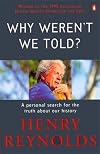
Mostly a personal narrative of a white Australian historian about the failures of representing the country’s past with respect to Indigenous people. It was an interesting contrast to books about the US: white Australians told themselves that the native peoples didn’t resist colonization, suppressing lots of history about violent attacks, and using that putative lack of resistance as evidence of “savage” inferiority; white Americans told themselves that native peoples resisted show more colonization and thus needed to be exterminated. Both narratives end in the same place—pretending that native peoples existed only in the past and were not influential then. White Australians had to engage in a fair amount of retconning, not just about violence committed by and against native peoples but also about native land title—including the fact that nineteenth-century settlers, including government entities, fully acknowledged that native groups had rights in land. show less
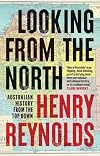
Reynold's thesis is that the North of Australia had a very different colonisation pattern to the south; that after a rocky and murderous start chronic labour shortages meant white acceptance of Indigenous, Pacific Islander and Chinese labour, at least before the White Australia Policy took over in 1901. The white man was never in majority in the north, and in many cases even among early pastoralists and miners First Nations people lived as they had always done. Since the landmark Mabo show more decision in 1992, which struck down the British legal fiction of Terra Nullius (the 'uninhabited' continent), 70% of northern Australia has been claimed by indigenous groups. Decolonisation is well underway there, though few in the capital cities of the south are aware. show less
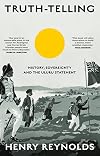
This is an important book for all Australians.
Reynolds is an historian. I commenced reading his works in the 1990s. His main focus is that of the First Nations Peoples of Australia.
Now in his 80s, this book might be viewed as a bringing together of his life's works but is better viewed (as its title suggests) as a timely, readable contribution to the truth telling called for as one of the 3 planks of the Uluru Statement from the Heart (a Voice to Parliament; a Makarrata (or treaty); Truth show more Telling about the history of Australia).
Much of what Reynolds writes is confronting, but the writing and the telling is rational and compelling, but neither sensationalist nor alarmist.
The first half of the book is largely about the various claims as to possession, terra nullius, sovereignty and similar topics. Reynolds is an historian, not a lawyer, but it does not stop him from looking at the state of both international and domestic law and philosophy over the relevant period (approx the 1700s through 1900s), as well as the experience is comparable jurisdictions (the USA, Canada, NZ, India etc).
And the conclusion is that on any number of bases, the claims of (or for) Australia as to sovereignty, ownership, possession etc are largely unprecedented. That is they do not accord with (then) contemporary law or thinking, nor the practice as applied in the formation of other countries/colonies etc.
What surprises me most are:
- the number of times when 'right' thinking (think exhortations by London) telling colonisers to seek consent/agreement from the 'natives', but such was ignored/overlooked
- the grant of crown leases to settlers which specifically recognised/reserved rights to be retained by the First Nations Peoples, but which were positively ignored by the lessees (at times violently) without any recourse
- the recognition of laws which should have protected people generally, including First Nations Peoples, which were simply ignored/ not enforced, to the detriment of those Peoples.
The result is that Australia is precariously placed. It is a square that tries to fit into a round hole. Or a house of cards.
Reynolds notes that the famous Mabo decision of the High Court was as to property rights but not as to sovereignty. Indeed, Reynolds notes (but also questions why it is) that the High Court does not have jurisdiction or standing as to matters as to sovereignty. That is the High Court cannot determine whether London 'properly' 'acquired' Australia. or for that matter whether the UK could cede sovereignty of the Australian continent onto the peoples of Australia.
Reynolds questions why this is so. It is an interesting question. But by analogy, it is akin to why a football referee cannot rule on a plea by a player as to why a forward pass is/is not permissible. The referee is given rules within which s/he conducts the game, rather than being allowed to change those rules. In the case of football, there is usually a world governing body which decides such matters. In the case of the ultimate courts of nations, there are some matters which are beyond their remit. And sovereignty is one of them. It might help, if one thinks of sovereignty as akin to the very legitimacy of the existence of the nation itself.
The balance of the book deals with the implications of these conclusions. Such as 26 January. And the status of some to now revered people.
A case in point is Sir Samuel Griffith, a 2 time premier of Queensland, the Chief Justice of Queensland, the first Chief Justice of the High Court of Australia, a significant player in the drafting of the Australian Constitution, and the author of Queensland's Criminal Code. Named after him are a university, a seat in the Commonwealth parliament, an influential periodical, a suburb. (Perhaps not relevant for current purposes) he was also said to be Australia's first translator of Dante's Inferno.
Reynolds demonstrates that at all relevant times:
- the First nations Peoples were British subjects in exactly the same way as settlers
- the law of the land made it a crime for people to take it into their own hands to 'disperse' those who occupied settlers (often unwarranted) occupation of lands and to inflict 'revenge' on those First Nations Peoples who reacted (sometimes violently) to settlers actions
- notwithstanding knowing of these activities, little was done to bring perpetrators to account.
And Reynolds, invoking Governmental responsibility, asks why Griffiths and his peers did nothing. It was as if the government of the day turned its eyes.
As I said, there are some confronting matters.
Reynolds concludes that if matters cannot be resolved, it may be necessary to resort to international arenas. Should could be interpreted as inflammatory or sabre rattling. But I do not read it that way.
Rather, I read it as Reynolds rational extrapolation that if we cannot come to a satisfactory resolution between First Nations Peoples and Australia, one may need to resort elsewhere given as already noted, Australia's High Court may not be able to opine as to all issues.
I encourage all Australians to read and consider this book.
Big Ship
27 July 2022 show less
Reynolds is an historian. I commenced reading his works in the 1990s. His main focus is that of the First Nations Peoples of Australia.
Now in his 80s, this book might be viewed as a bringing together of his life's works but is better viewed (as its title suggests) as a timely, readable contribution to the truth telling called for as one of the 3 planks of the Uluru Statement from the Heart (a Voice to Parliament; a Makarrata (or treaty); Truth show more Telling about the history of Australia).
Much of what Reynolds writes is confronting, but the writing and the telling is rational and compelling, but neither sensationalist nor alarmist.
The first half of the book is largely about the various claims as to possession, terra nullius, sovereignty and similar topics. Reynolds is an historian, not a lawyer, but it does not stop him from looking at the state of both international and domestic law and philosophy over the relevant period (approx the 1700s through 1900s), as well as the experience is comparable jurisdictions (the USA, Canada, NZ, India etc).
And the conclusion is that on any number of bases, the claims of (or for) Australia as to sovereignty, ownership, possession etc are largely unprecedented. That is they do not accord with (then) contemporary law or thinking, nor the practice as applied in the formation of other countries/colonies etc.
What surprises me most are:
- the number of times when 'right' thinking (think exhortations by London) telling colonisers to seek consent/agreement from the 'natives', but such was ignored/overlooked
- the grant of crown leases to settlers which specifically recognised/reserved rights to be retained by the First Nations Peoples, but which were positively ignored by the lessees (at times violently) without any recourse
- the recognition of laws which should have protected people generally, including First Nations Peoples, which were simply ignored/ not enforced, to the detriment of those Peoples.
The result is that Australia is precariously placed. It is a square that tries to fit into a round hole. Or a house of cards.
Reynolds notes that the famous Mabo decision of the High Court was as to property rights but not as to sovereignty. Indeed, Reynolds notes (but also questions why it is) that the High Court does not have jurisdiction or standing as to matters as to sovereignty. That is the High Court cannot determine whether London 'properly' 'acquired' Australia. or for that matter whether the UK could cede sovereignty of the Australian continent onto the peoples of Australia.
Reynolds questions why this is so. It is an interesting question. But by analogy, it is akin to why a football referee cannot rule on a plea by a player as to why a forward pass is/is not permissible. The referee is given rules within which s/he conducts the game, rather than being allowed to change those rules. In the case of football, there is usually a world governing body which decides such matters. In the case of the ultimate courts of nations, there are some matters which are beyond their remit. And sovereignty is one of them. It might help, if one thinks of sovereignty as akin to the very legitimacy of the existence of the nation itself.
The balance of the book deals with the implications of these conclusions. Such as 26 January. And the status of some to now revered people.
A case in point is Sir Samuel Griffith, a 2 time premier of Queensland, the Chief Justice of Queensland, the first Chief Justice of the High Court of Australia, a significant player in the drafting of the Australian Constitution, and the author of Queensland's Criminal Code. Named after him are a university, a seat in the Commonwealth parliament, an influential periodical, a suburb. (Perhaps not relevant for current purposes) he was also said to be Australia's first translator of Dante's Inferno.
Reynolds demonstrates that at all relevant times:
- the First nations Peoples were British subjects in exactly the same way as settlers
- the law of the land made it a crime for people to take it into their own hands to 'disperse' those who occupied settlers (often unwarranted) occupation of lands and to inflict 'revenge' on those First Nations Peoples who reacted (sometimes violently) to settlers actions
- notwithstanding knowing of these activities, little was done to bring perpetrators to account.
And Reynolds, invoking Governmental responsibility, asks why Griffiths and his peers did nothing. It was as if the government of the day turned its eyes.
As I said, there are some confronting matters.
Reynolds concludes that if matters cannot be resolved, it may be necessary to resort to international arenas. Should could be interpreted as inflammatory or sabre rattling. But I do not read it that way.
Rather, I read it as Reynolds rational extrapolation that if we cannot come to a satisfactory resolution between First Nations Peoples and Australia, one may need to resort elsewhere given as already noted, Australia's High Court may not be able to opine as to all issues.
I encourage all Australians to read and consider this book.
Big Ship
27 July 2022 show less
Drawing the Global Colour Line: White Men's Countries and the International Challenge of Racial Equality by Marilyn Lake

Taken from http://shawjonathan.wordpress.com/2009/11/23/drawing-the-global-colour-line/
This book starts brilliantly, quoting W E B DuBois's 1910 essay, 'The Souls of White Folk':
' the discovery of personal whiteness among the world's peoples is a very modern thing – a nineteenth and twentieth century matter indeed. ... What is whiteness that one should so desire it? ... Whiteness is the ownership of the earth forever and ever, Amen.'
The historical narrative starts with the arrival of an show more entrepreneurial Chinese man in Melbourne in 1855, two years after the discovery of gold, and ranges around Australia, New Zealand, South Africa, California, British Columbia, tracing the progress of the ideal of 'white men's countries', and along with it the betrayal of promises made by the British Empire and US to their non-Anglo-Saxon subjects and citizens.
It's a hard read, especially in the first two sections – 'Discursive frameworks' and 'Transnational solidarities' – where public intellectuals of more than a hundred years ago solemnly put forward blatantly racist propositions that are still awfully familiar, but with very little of the dog-whistling, denial and misdirection we're used to these days, and then democracy-loving politicians proceed to build on each other's successes in excluding and disenfranchising anyone who is classified as not white. We have our noses rubbed in the arrogant and repulsive racist atmosphere in which the Australian Commonwealth and the Union of South Africa were founded and first California and then the rest of the US chose 'racial solidarity' even with recent bitter enemies and legislated to keep Asian, particularly Japanese, immigrants away from their shores.
In some ways it's like a horror story, a sort of "I know what you did last century". The scientific consensus reached in the 1940s, that 'race' was 'not so much a biological phenomenon as a social myth, which had "created an enormous amount of damage, taking a heavy toll in human lives causing intolerable suffering",'* followed by the UN's Universal Declaration of Human Rights in 1948, amounts to the moment where we wake up and discover it was all a terrible dream ... or was it? That moment is followed by a long tail, in which the 'white men's countries' one by one open their doors and legislate against racial discrimination, until 'Nelson Mandela and the African National Congress sweep into power and dismantle the last bastion of white supremacy.'
The book marshalls a vast amount of material, and it has hugely enriched my understanding of the White Australia Policy, among other things, but the prose is very heavy going, and the authors are often absent except as very competent and passionate compilers of evidence. This may well be necessary when there is such a complex field to cover, but it doesn't make for literary excellence.
The chapter on the Paris Peace Conference of 1919 is a rich exception. The Australian Prime Minister, W M Hughes, emerges there as a lively fall-guy cum villain: he vociferous opposes the Japanese delegation's diplomatic, courteous and eminently rational push to include a paragraph on racial equality in the covenant of the League of Nations. The other white leaders, who generally despise the uncouth Australian, say that if it was up to them they'd include the paragraph, but you know, the Australians (who didn't actually have a seat at the table) won't stand for it ... Hughes went to the grave thinking of this as a great victory. Someone ought to make a movie of that chapter. show less
This book starts brilliantly, quoting W E B DuBois's 1910 essay, 'The Souls of White Folk':
' the discovery of personal whiteness among the world's peoples is a very modern thing – a nineteenth and twentieth century matter indeed. ... What is whiteness that one should so desire it? ... Whiteness is the ownership of the earth forever and ever, Amen.'
The historical narrative starts with the arrival of an show more entrepreneurial Chinese man in Melbourne in 1855, two years after the discovery of gold, and ranges around Australia, New Zealand, South Africa, California, British Columbia, tracing the progress of the ideal of 'white men's countries', and along with it the betrayal of promises made by the British Empire and US to their non-Anglo-Saxon subjects and citizens.
It's a hard read, especially in the first two sections – 'Discursive frameworks' and 'Transnational solidarities' – where public intellectuals of more than a hundred years ago solemnly put forward blatantly racist propositions that are still awfully familiar, but with very little of the dog-whistling, denial and misdirection we're used to these days, and then democracy-loving politicians proceed to build on each other's successes in excluding and disenfranchising anyone who is classified as not white. We have our noses rubbed in the arrogant and repulsive racist atmosphere in which the Australian Commonwealth and the Union of South Africa were founded and first California and then the rest of the US chose 'racial solidarity' even with recent bitter enemies and legislated to keep Asian, particularly Japanese, immigrants away from their shores.
In some ways it's like a horror story, a sort of "I know what you did last century". The scientific consensus reached in the 1940s, that 'race' was 'not so much a biological phenomenon as a social myth, which had "created an enormous amount of damage, taking a heavy toll in human lives causing intolerable suffering",'* followed by the UN's Universal Declaration of Human Rights in 1948, amounts to the moment where we wake up and discover it was all a terrible dream ... or was it? That moment is followed by a long tail, in which the 'white men's countries' one by one open their doors and legislate against racial discrimination, until 'Nelson Mandela and the African National Congress sweep into power and dismantle the last bastion of white supremacy.'
The book marshalls a vast amount of material, and it has hugely enriched my understanding of the White Australia Policy, among other things, but the prose is very heavy going, and the authors are often absent except as very competent and passionate compilers of evidence. This may well be necessary when there is such a complex field to cover, but it doesn't make for literary excellence.
The chapter on the Paris Peace Conference of 1919 is a rich exception. The Australian Prime Minister, W M Hughes, emerges there as a lively fall-guy cum villain: he vociferous opposes the Japanese delegation's diplomatic, courteous and eminently rational push to include a paragraph on racial equality in the covenant of the League of Nations. The other white leaders, who generally despise the uncouth Australian, say that if it was up to them they'd include the paragraph, but you know, the Australians (who didn't actually have a seat at the table) won't stand for it ... Hughes went to the grave thinking of this as a great victory. Someone ought to make a movie of that chapter. show less
Lists
Awards


You May Also Like


Associated Authors
Statistics
- Works
- 27
- Also by
- 1
- Members
- 1,107
- Popularity
- #23,219
- Rating
- 4.2
- Reviews
- 14
- ISBNs
- 90