
Sally Morgan (1) (1951–)
Author of My Place
For other authors named Sally Morgan, see the disambiguation page.
About the Author
Sally Morgan was born on January 18, 1951 in Perth, Western Australia. She is of Aboriginal descent from the Bailgu people of the Pilbara region of Western Australia. Her books, My Place, and Wanamurraganya, the story of Jack McPhee, won the Human Rights Literature and Other Writing Award in 1987 show more and 1989. Her other awards include Order of Australia Book Prize 1990; Fremantle Print Award with Bevan Hone in 1993; Notable Book, Children's Book Council in 1998 and Notable Book, Children's Book Council of Australia in 2012. Her other books include Sally's Story, Mother and Daughter, and Arthur Corinna's Story. Her children's books include Little piggies, The flying emu and other Australian stories, Hurry up, Oscar!, Pet problem, Dan's grandpa, In your dreams, and Just a little brown dog. She won the 2016 Prime Minister's Literary Award for Children's Fiction for her book, Sister Heart. (Bowker Author Biography) show less
Series
Works by Sally Morgan
Our Place 1 copy
Associated Works
Paperbark: A Collection of Black Australian Writings (Uqp Black Australian Writers Series) (1990) — Contributor — 54 copies, 1 review
Australian Literature: An Anthology of Writing from the Land Down Under (1993) — Contributor — 29 copies, 1 review
In Her Own Words: Women's Memoirs from Australia, New Zealand, Canada, and the United States (1999) — Contributor — 28 copies
Facing Writers : Australia's Leading Writers Talk with Dagmar Strauss (1990) — Contributor — 6 copies
Tagged
Common Knowledge
- Legal name
- Morgan, Sally Jane
- Other names
- Milroy, Sally
- Birthdate
- 1951-01-18
- Gender
- female
- Occupations
- author
artist - Organizations
- University of Western Australia
- Relationships
- Blaze Kwaymullina (son)
- Nationality
- Australia
- Birthplace
- Perth, Western Australia, Australia
- Associated Place (for map)
- Western Australia, Australia
Members
Reviews
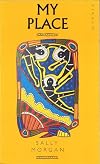
I read what turned out to be a cheesy romance novel recently, just because the story was set in the outback, but the author recommended this book in her acknowledgements so I bought a copy. What a difference! Sally Morgan's family history/memoir is witty, endearing, honest and painful in places, recounting her discovery and acceptance of her Aboriginal heritage. She grew up in Perth in the 1980s, with her mother Gladys, four siblings and her nan, Daisy, and once asked her mother, in all show more innocence, which country they originally came from. Her mother and grandmother had learned to be ashamed, even fearful, of admitting that they were Aboriginal Australians and never told Sally and her brothers and sisters about where their family came from. After reading the personal memories of Gladys, Daisy and Daisy's brother Arthur, told through Sally, that bitter secret seems almost understandable.
The first part of the book is a standard memoir, with the thread of identity running through Sally's vault of hilarious childhood anecdotes. Young Sally reminded me of Scout in Mockingbird, a wilful and individual child whose imagination keeps getting her into trouble. Her father, who was a POW during the Second World War and suffered from (undiagnosed) PTSD when he returned home, took his life when his children were still young, but despite poverty and prejudice, the family stuck together and looked out for each other. 'You lot stick like glue,' a classmate tells Sally, and I love that about them. Nan is a fantastic character, leaving onions all over the house and chatting up Jehovah's witnesses to use their leaflets as toilet paper, but beneath all the humour, there is a sadness and a frustration too. When Sally realises that her family are Aboriginal, she wants to learn more, but both Gladys and Daisy have distanced themselves from the past.
I suppose, in hundreds of years time, there won't be any black Aboriginals left. Our colour dies out; as we mix with other races, we'll lose some of the physical characteristics that distinguish us now. i like to think that, no matter what we become, our spiritual tie with the land and the other unique qualities we possess, will somehow weave their way through to future generations of Australians. I mean, this is our land after all, surely we've got something to offer.'
Daisy, born in 1900, and Gladys, born in 1931, were both used and abused by white men, in particular, fathered by employers but then sent away from the land like dirty secrets. Children fathered by white men who 'passed' for white were even taken from their Aboriginal mothers and adopted out (the 'Stolen Generations'). I can't even begin to take in how they were treated. Everybody knows about the history of slavery in America, but the same disgusting practices and attitudes were still happening in twentieth century Australia, thanks to men like A O Neville.
Thank you to Sally Morgan, her mother Gladys and grandmother Daisy, for sharing their stories. Definitely recommended. show less
The first part of the book is a standard memoir, with the thread of identity running through Sally's vault of hilarious childhood anecdotes. Young Sally reminded me of Scout in Mockingbird, a wilful and individual child whose imagination keeps getting her into trouble. Her father, who was a POW during the Second World War and suffered from (undiagnosed) PTSD when he returned home, took his life when his children were still young, but despite poverty and prejudice, the family stuck together and looked out for each other. 'You lot stick like glue,' a classmate tells Sally, and I love that about them. Nan is a fantastic character, leaving onions all over the house and chatting up Jehovah's witnesses to use their leaflets as toilet paper, but beneath all the humour, there is a sadness and a frustration too. When Sally realises that her family are Aboriginal, she wants to learn more, but both Gladys and Daisy have distanced themselves from the past.
I suppose, in hundreds of years time, there won't be any black Aboriginals left. Our colour dies out; as we mix with other races, we'll lose some of the physical characteristics that distinguish us now. i like to think that, no matter what we become, our spiritual tie with the land and the other unique qualities we possess, will somehow weave their way through to future generations of Australians. I mean, this is our land after all, surely we've got something to offer.'
Daisy, born in 1900, and Gladys, born in 1931, were both used and abused by white men, in particular, fathered by employers but then sent away from the land like dirty secrets. Children fathered by white men who 'passed' for white were even taken from their Aboriginal mothers and adopted out (the 'Stolen Generations'). I can't even begin to take in how they were treated. Everybody knows about the history of slavery in America, but the same disgusting practices and attitudes were still happening in twentieth century Australia, thanks to men like A O Neville.
Thank you to Sally Morgan, her mother Gladys and grandmother Daisy, for sharing their stories. Definitely recommended. show less
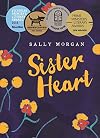
Told in verse, this was the story of a young Aboriginal girl who was taken from her family and put into an institution for Indigenous children where they were taught English, given Anglo-Saxon names and forced to change their culture.
"Sister Heart" was an emotional read and my heart wept for Annie and the other children in the institution, especially Janey and Tim. I can’t understand how anyone could think it is a good idea to forcibly take children from their families. It is totally cruel show more and heartless!
The loneliness, fear and anguish Annie felt was heartbreaking and I was disgusted at how she was treated by the adults who were 'educating' her. Even though this was a quick read "Sister Heart" is an important book as it highlights a shameful time in Australia’s history and should be read by both children and adults alike. Highly recommended. show less
"Sister Heart" was an emotional read and my heart wept for Annie and the other children in the institution, especially Janey and Tim. I can’t understand how anyone could think it is a good idea to forcibly take children from their families. It is totally cruel show more and heartless!
The loneliness, fear and anguish Annie felt was heartbreaking and I was disgusted at how she was treated by the adults who were 'educating' her. Even though this was a quick read "Sister Heart" is an important book as it highlights a shameful time in Australia’s history and should be read by both children and adults alike. Highly recommended. show less
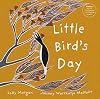
The plot of Little Bird's day is no surprise-we follow Little Bird from morning to night and see the landscape and other animals. The setting is Australia and the book projects the Aboriginal heritage in its colors and its treatment of all nature as living and vital. I love the white outlining in all the illustrations. I couldn't place why I felt the illustrations made me think of natives and then I read the description of them at the end--"the color palette is based on natural show more pigments...and the animals are embellished with cross-hatching, a traditional raark design". My favorite illustration was Little Bird flying among the stars. In the text, the author capitalizes everything natural--Sun, Wind, Cloud, Rain, etc. This personifies these things that other cultures do not see as alive. The verb choice fit the native atmoshpere--journey, gliding, soar, nestle. It's a beautiful and well-written picture book. show less
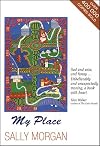
Another book I’m glad I picked up thanks to a fellow Viner. This is a non-fiction account of the life of Aboriginal professor, artist and author Sally Morgan. The book goes through her memories of childhood dealing with her sometimes abusive father, the struggles of her mother and grandmother trying to provide for Sally and her siblings, and her discovery of her Aboriginal culture.
Prior to this book I had no idea of the Aboriginal culture or Austrialia’s history for that matter. This show more was a good introduction into the topic. Morgan’s book not only touches on Morgan’s own personal story and struggle, but also that of her grandmother and her great uncle helping to give a well rounded view of the cultural and generational change towards national acceptance.
Morgan has an honest way of writing, which makes it almost seem like she is just chatting with you and telling you her story of discovery. There were moments that I was cracking up at her smartassness and other moments that were genuinely touching. By the end of the book I was sobbing uncontrollably because Morgan’s grandmother reminded me of my own grandmother who passed away. It made me miss her and wonder what stories I may have missed from her. show less
Prior to this book I had no idea of the Aboriginal culture or Austrialia’s history for that matter. This show more was a good introduction into the topic. Morgan’s book not only touches on Morgan’s own personal story and struggle, but also that of her grandmother and her great uncle helping to give a well rounded view of the cultural and generational change towards national acceptance.
Morgan has an honest way of writing, which makes it almost seem like she is just chatting with you and telling you her story of discovery. There were moments that I was cracking up at her smartassness and other moments that were genuinely touching. By the end of the book I was sobbing uncontrollably because Morgan’s grandmother reminded me of my own grandmother who passed away. It made me miss her and wonder what stories I may have missed from her. show less
Lists
Awards


You May Also Like


Associated Authors
Statistics
- Works
- 42
- Also by
- 6
- Members
- 1,890
- Popularity
- #13,603
- Rating
- 3.7
- Reviews
- 36
- ISBNs
- 1,371
- Languages
- 21
