
Andrew Sherratt (1946–2006)
Author of The Cambridge Encyclopedia of Archaeology
About the Author
Andrew Sherratt is Professor of Archaeology and Anthropology at the University of Oxford.
Image credit: from Lifeinlegacy.com
Works by Andrew Sherratt
New connections 1 copy
Associated Works
The Oxford Illustrated Prehistory of Europe (1994) — Contributor, some editions — 423 copies, 1 review
Escaping the Labyrinth: The Cretan Neolithic in Context (Sheffield Studies in Aegean Archaeology) (2008) — Contributor — 11 copies, 1 review
Tagged
Common Knowledge
- Birthdate
- 1946-05-08
- Date of death
- 2006-02-24
- Gender
- male
- Nationality
- UK
- Associated Place (for map)
- UK
Members
Reviews

Although now over a quarter of a century out of date, this is a baseline master work, providing a summary of the state of archaeological knowledge as it was in the late 1970s/early 1980s (depending on the edition).
Andrew Sherratt's contributors cover the then-state of archaeology and dating technologies but the bulk of the book (over 50 region-specific articles) covers, chronologically, the archaeological record from the palaeolithic to the urbanisation of Eastern Europe.
Nor is the book show more weighted towards 'Western civilisation'. Equal weight is given to Africa, Asia and the Americas with chapters on the Arctic and Near-Arctic (2), Oceania and Australia (2) so that what we have here is a sort of global non-history to act as a corrective to a reliance on texts.
However, the age does tell in some areas rather than others. The sections on human palaeontology would now be seriously misleading and one suspects that, today, there would be significant shifts of interpretative emphasis throughout the book.
The only shame is that there does not seem to be a new edition since 1985 and yet archaeology (and human paleaontology) have continued to make new discoveries and interpretations. A new edition is sorely needed - until then, it stays on the shelf as a good reference point for further questions. show less
Andrew Sherratt's contributors cover the then-state of archaeology and dating technologies but the bulk of the book (over 50 region-specific articles) covers, chronologically, the archaeological record from the palaeolithic to the urbanisation of Eastern Europe.
Nor is the book show more weighted towards 'Western civilisation'. Equal weight is given to Africa, Asia and the Americas with chapters on the Arctic and Near-Arctic (2), Oceania and Australia (2) so that what we have here is a sort of global non-history to act as a corrective to a reliance on texts.
However, the age does tell in some areas rather than others. The sections on human palaeontology would now be seriously misleading and one suspects that, today, there would be significant shifts of interpretative emphasis throughout the book.
The only shame is that there does not seem to be a new edition since 1985 and yet archaeology (and human paleaontology) have continued to make new discoveries and interpretations. A new edition is sorely needed - until then, it stays on the shelf as a good reference point for further questions. show less
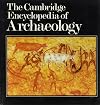
From two-million-year-old kitchen-middens in Africa to evidence of 10,000 years of agriculture in Niu Gini, and the revolutionary discoveries in Macedonia, tracing the movement of human species in time and space. Compilation of articles by largely British scholars opening up the major themes and describing the often laborious enterprises across the callings of all the specialties from all the sciences. Wow -- this is a coming of age reference book for Archaeology. (Compare, Ashmolean show more Museum.) Now, "history" no longer depends on writings and stones. The Whole Story of existence on Earth is read from the entire "book" of material. The archaeological emphasis on material conditions rather than theoretical, political, or military accounts, is shown to have a major impact on our views of "humanity". In addition, these studies open up the time-scale, describing processes rather than events, and the regularities of change rather than the impact of a contingent circumstance. The time-scale given along the horizontal axis is a logarithmic one, so comparisons can be made from a glance at a single diagram [418]. From the Introduction: "The key to an understanding of this scale of development lies in controlled comparison - the recognition of regularities in the development of human societies in diverse circumstances and of the similarities and differences that have arisen among them." The discipline of archaeology compasses the comparisons and reveals a common history. With calibrated radio-carbon and other dating technologies, fieldworkers can pin-point the age of the discoveries.
Includes a Chronological Atlas (series of globes showing the emergence and expansion of human activity), a detailed Bibliography and Index. show less
Includes a Chronological Atlas (series of globes showing the emergence and expansion of human activity), a detailed Bibliography and Index. show less
Lists
You May Also Like


Associated Authors
Statistics
- Works
- 12
- Also by
- 3
- Members
- 231
- Popularity
- #97,642
- Rating
- 4.0
- Reviews
- 4
- ISBNs
- 16
- Languages
- 3