
Jacob Bronowski (1908–1974)
Author of The Ascent of Man
About the Author
Born in Poland, Jacob Bronowski moved to England at the age of 12. He received a scholarship to study mathematics at Cambridge University, where he earned a Ph.D. in 1933. At Cambridge, Bronowski edited a literary magazine and wrote verse. He served as lecturer at University College in Hull before show more joining the government service in 1942. During World War II Bronowski participated in military research. He pioneered developments in operations research, which enhanced the effectiveness of Allied bombing raids. After viewing the ruins of Hiroshima and Nagasaki in 1945, Bronowski refused to continue military research and became involved with the ethical and technological issues related to science. When he wrote a report on the devastating effects of the atomic bomb, the experience became critical to his career as an author. The report was eventually incorporated in his book Science and Human Values (1965). After World War II Bronowski joined the Ministry of Works, assuming several government posts concerned with research in power resources. In 1964 he came to the United States and served as senior fellow (1964-70) and then director (1970-74) of the Council for Biology in Human Affairs at the Salk Institute for Biological Studies in La Jolla, California. He taught and lectured at several American universities, including MIT, Columbia University, and Yale. Until his death, Bronowski remained a resident fellow at the Salk Institute. Bronowski's writing career can be divided into two periods. Prior to World War II, he wrote mathematical papers, poetry, and literary criticism. After the war, Bronowski wrote mainly about scientific values, science as a humanistic enterprise, language, and creativity. In 1973 Bronowski's acclaimed 13-part BBC television series titled The Ascent of Man chronicled attempts to understand and control nature from antiquity to the present. The series called for a democracy of intellect in which "knowledge sits in the homes and heads of people with no ambition to control others, and not up in the isolated seats of power." Neither naive nor utopian, Bronowski remained a consistent optimist and defender of science. In A Sense of the Future (1977), Bronowski states that, as science becomes increasingly preoccupied with relations and arrangement, it too becomes engaged in the search for structure that typifies modern art. He believed that self-knowledge brings together the experience of the arts and the explanations of science. (Bowker Author Biography) show less
Series
Works by Jacob Bronowski
Associated Works
Tagged
Common Knowledge
- Other names
- Bronowski, J.
- Birthdate
- 1908-01-18
- Date of death
- 1974-08-22
- Gender
- male
- Education
- Central Foundation School, London, England
University of Cambridge (Jesus College) - Occupations
- biologist
author
teacher
mathematician
historian of science - Organizations
- University of Hull
Salk Institute for Biological Studies
National Coal Board - Relationships
- Jardine, Lisa (daughter)
Bronowski, Judith (daughter)
Szilard, Leo (friend) - Short biography
- Jacob Bronowski's family fled Poland when it was occupied by Russia in World War I, and arrived in England in 1920. He spoke no English, but eventually won a scholarship to Cambridge University and became a mathematician, scientist, and historian of science. He began appearing on British television in the 1950s and is best remembered as the host and writer of the groundbreaking 13-part 1973 BBC documentary series, The Ascent of Man.
- Nationality
- Poland (birth)
Russian Empire (birth)
England
UK - Birthplace
- Łódź, Poland, Russian Empire
- Place of death
- East Hampton, New York, USA
- Burial location
- Highgate Cemetery, London, England, UK
Members
Reviews
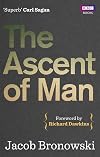
This book, which is an augmented version of the narrative Bronowski delivered for the BBC series of 1973, which I haven't yet watched, is lucid and brilliant from start to finish. At first, I regretted not having the accompanying video, but this feeling passed quickly. My edition does have some illustrations, but they are all black & white and most are poorly reproduced. In the end, they aren't needed. The writing is so good, the argument so convincing, and the content so fascinating that show more the book is a joy to read. And what a guide--a mathematician who later turned to other sciences, while at the same time a scholar of English literature, Bronowski's ascent of man is both scientific and artistic. His focus on the accomplishments of individuals such as Galileo, Newton, and Alfred Russel Wallace is fascinating. Topics include discovering atomic structure, genetics, and, of course, evolution. It is sad that Bronowski didn't live a lot longer. I would love to see him discussing quantum physics. Highly, highly recommended! show less

The best kind of book on science, full of wit and erudition, asking questions instead of making declarations. Bronowski celebrates and encourages keen wonder and the human drive to understand, while reminding us that science, which rests on its own kinds of faith, incompleteness and paradox, is only one version of knowledge and understanding.
Shiner Bock
Otter Creek Citra Mantra Pils
Shiner Bock
Otter Creek Citra Mantra Pils

A well-illustrated book to accompany the television series. Bronowski was lucid, inspirational and endearing, but he was writing during the age of postwar optimism in human progress, so unlike the present period of medical conspiracy theorists and unreflective consumers of technological panaceas.

The Western Intellectual Tradition: From Leonardo to Hegel is an excellent overview of the subject. It is very readable and avoids jargon. While the primary emphasis is not on science, it does examine some of the (often ignored) effects on historical intellectual progress furnished by the evolving sciences. The analysis is well-balanced and to the point. It identifies the important issues and addresses them directly.
Solid five stars, recommended for every reader, whether or not particularly show more interested in the western intellectual tradition. Academic authorities in this rather broad subject may yet find interest in this. I suspect that most already have read it. show less
Solid five stars, recommended for every reader, whether or not particularly show more interested in the western intellectual tradition. Academic authorities in this rather broad subject may yet find interest in this. I suspect that most already have read it. show less
Lists
Read in 2006 (1)
Folio Society (1)
Awards


You May Also Like


Associated Authors
Statistics
- Works
- 33
- Also by
- 9
- Members
- 5,468
- Popularity
- #4,554
- Rating
- 4.1
- Reviews
- 45
- ISBNs
- 94
- Languages
- 14
- Favorited
- 15
