
Jacquetta Hawkes (1910–1996)
Author of Atlas of Ancient Archaeology
About the Author
Image credit: Tara Heinemann
Works by Jacquetta Hawkes
The Atlas of Early Man: The Rise of Man Across the Globe, From 35,000 B.C. to A.D. 500 (1976) 207 copies, 3 reviews
The first great civilizations : life in Mesopotamia, the Indus Valley, and Egypt (1973) 111 copies, 3 reviews
Prehistory - History of Mankind - Cultural and Scientific Development, Volume I, Part 1 (1965) 42 copies
Historia de la humanidad. T. 1. Prehistoria y los comienzos de la civilización (1979) — Editor — 6 copies
A Land 2 copies
Symbols and speculations 1 copy
Associated Works
Tagged
Common Knowledge
- Canonical name
- Hawkes, Jacquetta
- Legal name
- Hawkes, Jessie Jacquetta
- Other names
- Hopkins, Jessie Jacquetta (birth name)
Hawkes J. J. - Birthdate
- 1910-08-05
- Date of death
- 1996-03-18
- Gender
- female
- Education
- Newnham College, Cambridge (Archaeology and Anthropology)
- Occupations
- archaeologist
historian
author
broadcaster - Organizations
- Post-War Reconstruction Secretariat
Ministry of Education
UNESCO (Secretary of the UK National Commission) - Awards and honors
- Society of Antiquaries of London (Fellow)
- Relationships
- Hopkins, Sir Frederick Gowland (father)
Hawkes, Christopher (1st husband)
Hawkes, Nicolas (son)
Priestley, J. B. (2nd husband) - Short biography
- http://en.wikipedia.org/wiki/Jacquett...
Jessie Jacquetta Hawkes, née Hopkins, was the daughter of Sir Frederick Gowland Hopkins, a Nobel Prize-winning scientist. In 1933, she married Christopher Hawkes, an archeologist and professor, then an assistant keeper at the British Museum. She attended Cambridge University and became an archeologist and scholar and a prolific writer, producing academic papers, children's books, guidebooks, complex works on ancient Egypt, Minoan, and Mediterranean civilizations, poetry, plays, and a novel. She also appeared on television and radio. In 1953, after a divorce, she remarried to J. B. Priestley. With Hawkes, she co-authored Prehistoric Britain (1943). With Priestley, she wrote Dragon's Mouth (1952) and Journey Down a Rainbow (1955). She was also the author of History of Mankind: Cultural and Scientific Development, Volume 1, Part 1 (1963) under the auspices of UNESCO, and The Atlas of Early Man (1976). Her best known book was A Land (1951). See a biography of Jacquetta Hawkes in Her Brilliant Career by Rachel Cooke. - Nationality
- UK
- Birthplace
- Cambridge, Cambridgeshire, England, UK
- Places of residence
- Cambridge, Cambridgeshire, England, UK
Colchester, Essex, England, UK - Place of death
- Cheltenham, Gloucestershire, England, UK
- Map Location
- England, UK
Members
Reviews

A remarkable book by a remarkable woman. Many years ago, I had an out-of-body experience where I rose above myself and located myself in time and space while I looked down on myself. Lying on back in her garden in London, Jaquetta Hawkes locates herself in time and space by sinking through the strata of the earth and through time. All important is William Smith's principle of stratigraphy, that the strata may be identified by the fossils they contain. So attuned is Hawkes to her sense of show more place that this journey through rock strata becomes an act of recollection, a memoir.
When she eventually rises to the surface she examines the ways in which the qulaities of various rock strata have shaped human history and conversley the way humans have shaped the earth.
She is not a fan of concrete.
Hawkes develops notions of disconnection for more than half the book. There is an intelligence residing in stability that is constantly and relentlessly under threat.
By the 1950's, when this book was published, her world, her Britain, was being laid waste by a dystopian industrial era of complete disconnection that she glimpsed.
While she calls for the restoration of a mutilated Britain, she offers no practical way forward and instead draws together the threads of her narrative, back to her garden and to her place looking out from it. I couldn't help but wonder what she would have made of the communications revolution, the loss of language, identity, and the numbing sameness of thought that permeates the world today? show less
When she eventually rises to the surface she examines the ways in which the qulaities of various rock strata have shaped human history and conversley the way humans have shaped the earth.
...the centre of gravity of a people in any age may be expected to be found in the objects for which they will transport great quantities of building material.
She is not a fan of concrete.
...for it represents that terrifying new phenomenon, man mechanized and living cut off from his land, from the rock out of which he has come.
Hawkes develops notions of disconnection for more than half the book. There is an intelligence residing in stability that is constantly and relentlessly under threat.
The pressure of this life was always felt on the frontiers, and when at last it began to break in it was as if unconscious forces were reasserting themselves against the intellect.
By the 1950's, when this book was published, her world, her Britain, was being laid waste by a dystopian industrial era of complete disconnection that she glimpsed.
Who can ever express the desolation of these forlorn scenes? The grey slag heaps, the acres of land littered with rusted fragments of machinery, splintered glass, tin cans, sagging festoons of barbed wire, vile buildings, more vile in ruin; grimy stretches of cement floors, shapless heaps of broken concrete. The air about them still so foul that nothing more than a few nettles and tattered thistles will grow there; not even rosebay and ragewort can hide them with a brief summer promise. This is the worst that has happened to the land.
While she calls for the restoration of a mutilated Britain, she offers no practical way forward and instead draws together the threads of her narrative, back to her garden and to her place looking out from it. I couldn't help but wonder what she would have made of the communications revolution, the loss of language, identity, and the numbing sameness of thought that permeates the world today? show less
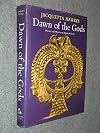
Feminine and Masculine Culture(s)
This is a fabulous book that I first saw in the seventies, probably still in high school. Sometime in the past few years, I was reminded of its existence in a conversation of with my sister-in-law. She asked if I thought prehistorical society could have been (in some sense) matriarchal, à la Marija Gimbutas or Johann Jakob Bachofen. I replied no, everything great is a result. A gender egalitarianism was not a natural state; it was an achievement. I suggested show more Crete for its earliest (near) instantation. I was surprised by my reply, - where did this notion regarding Crete come from? She mentioned (if I remember correctly) Jackie Hawkes, I made a mental note to look into this matter.
Sometime after this conversation, I became interested in feminist theoretical understanding of anthropology and ancient history and started reading up on it. And recently, I found the Hawkes book at a very low price and bought it. In this reading I found the author's voice very familiar, delightfully so. ...Perhaps I may have seen it in the late seventies in Princeton, at one of the many bookstores there. I am sure I will never know, but the moderate tone, sweet style and sane argumentation seems very familiar. I definitely never owned it. In those days of limited book shelving I certainly never (ever!) bought thick oversized books!
Now, this book is really two books. -An oversized scholarly coffee table reference book filled with sumptuous pictures and, according to the contents, 45 color plates. On the other hand, it is a gently, at times wryly, and often lyrical feminist meditation on (and invocation of) the "feminine personality" of Cretan (Minoan) civilization contrasted with Mycenaean 'masculinist' culture that eventually destroyed it.. Our author writes very well, and with wit. After first mentioning this duality between the feminine and the masculine cultures in the Preface she sweetly writes "-I hope no one will be provoked"!
Of course, our author intends to be a bit provocative, and she gently succeeds. Unfortunately, regarding real History, I think it should be obvious that if any civilization or empire or state or people become too civilized and peaceful, they will eventually be destroyed by those less civilized and peaceful.
Since this book is out of print I include the contents.
Contents
Introduction
1. The Birth of Athena
2. Two Island Civilization
3. The Grace of Life
4. Graves and Kingdoms
5. The Imperial Age
6. Greek Revival
Bibliography
Acknowledgments
Index show less
This is a fabulous book that I first saw in the seventies, probably still in high school. Sometime in the past few years, I was reminded of its existence in a conversation of with my sister-in-law. She asked if I thought prehistorical society could have been (in some sense) matriarchal, à la Marija Gimbutas or Johann Jakob Bachofen. I replied no, everything great is a result. A gender egalitarianism was not a natural state; it was an achievement. I suggested show more Crete for its earliest (near) instantation. I was surprised by my reply, - where did this notion regarding Crete come from? She mentioned (if I remember correctly) Jackie Hawkes, I made a mental note to look into this matter.
Sometime after this conversation, I became interested in feminist theoretical understanding of anthropology and ancient history and started reading up on it. And recently, I found the Hawkes book at a very low price and bought it. In this reading I found the author's voice very familiar, delightfully so. ...Perhaps I may have seen it in the late seventies in Princeton, at one of the many bookstores there. I am sure I will never know, but the moderate tone, sweet style and sane argumentation seems very familiar. I definitely never owned it. In those days of limited book shelving I certainly never (ever!) bought thick oversized books!
Now, this book is really two books. -An oversized scholarly coffee table reference book filled with sumptuous pictures and, according to the contents, 45 color plates. On the other hand, it is a gently, at times wryly, and often lyrical feminist meditation on (and invocation of) the "feminine personality" of Cretan (Minoan) civilization contrasted with Mycenaean 'masculinist' culture that eventually destroyed it.. Our author writes very well, and with wit. After first mentioning this duality between the feminine and the masculine cultures in the Preface she sweetly writes "-I hope no one will be provoked"!
Of course, our author intends to be a bit provocative, and she gently succeeds. Unfortunately, regarding real History, I think it should be obvious that if any civilization or empire or state or people become too civilized and peaceful, they will eventually be destroyed by those less civilized and peaceful.
Since this book is out of print I include the contents.
Contents
Introduction
1. The Birth of Athena
2. Two Island Civilization
3. The Grace of Life
4. Graves and Kingdoms
5. The Imperial Age
6. Greek Revival
Bibliography
Acknowledgments
Index show less
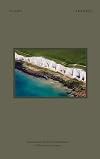
Rather sentimental account of the history of Britain, focusing on geology and later, social history of the people. Originally published in 1951, Jacquetta discusses the science known at the time, tells of the disputes in naming periods in time, and how no Neolithic sites had been discovered in Britain. Her sentimentality in the text is evident over the feelings she gains from meditating over the natural history, and talks about the land as having expressions of consciousness - "a deep-time show more dream of four billion years of earth-history," (- Robert MacFarlane, from the introduction). Informative and educational. show less
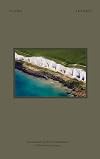
Has this book transcended its time and ethos? Several recommendations (including one by Robert MacFarlane) and the book's recent reissue suggested this one had. It was first published in 1949 and was immensely successful at the time though disliked by scientists as too populist. It is a paean to the creation of the modern land of Britain through geology, archaeology and a little history. She moves through the aeons of geological time as the rocks of first one and then another part of the show more island are created. It is very personal and not at all 'scientific' while being, for its time, very up to date and accurate scientifically. She lovingly describes the creation of the rocks in a geological timescape which leads to the creation of today's landscape which is evoked with obvious appreciation. She may reveal the effects of the geology on agriculture somewhere else and then celebrate the styles of vernacular architecture which use that local stone or materials. As is traditional in such works she laments the decline in architecture and agricultural life and the growth of cities, especially the growth of suburbs. (She has a point there of course. This was after a decade or more of strip developments out of most cities and large towns. Not usually a pretty site.) If she stuck to her rhapsodies on the land all would be well. She does link them with architecture, poetry, painting and sculpture in a very appealing way. There is a strong involvement with the roots of the land - rocks and history and people. Those parts of the book are definitely still enjoyable if a little dated. Well very dated as far as the science is concerned - no continental drift, Piltdown man, mass migration/invasion theories of prehistory to name but three.
Now let's be totally fair. Her scholarship is completely up-to-date and thorough - for its time. Alas for her, times have changed and we have the first problem. She is so very adamant about what she describes scientifically - she has an air of absolute certainty and I think, perhaps. she was typical of her time for the average scientist. Nowadays this absolute certainty seems to be mostly confined to economists. Scientists, historians, archaeologists, social historians recognise that they don't know everything - this is what appears/may have/seems/suggested etc happened. So this can jar in her descriptions especially when you know it probably wasn't so anyhow. Then again there are prejudices. It's a rare person nowadays who would suggest that the peak of human happiness was reached in eighteenth-century England. From the viewpoint of an upper middle class English woman from a city it might have appeared so, I suppose but the romanticism has blinkered her intelligence (although again this was not that uncommon in her day). But these are small problems before her rambles into the "consciousness" of the land etc. It gets perilously close to race consciousness, third age mysticism, land und volk but is such a mishmash of poor ideas that you can never be sure. She is definitely against 'modern' developments though not modern art. She dislikes or rather despises the urban working class (they have no culture). There are elements of early environmentalism glimmering in her views but they are clouded over by her prejudices.
In short it is a book of its time and its time is over. And I'm cross that I read this when I could probably have read a better informed modern book on the same topic. I must look for it. show less
Now let's be totally fair. Her scholarship is completely up-to-date and thorough - for its time. Alas for her, times have changed and we have the first problem. She is so very adamant about what she describes scientifically - she has an air of absolute certainty and I think, perhaps. she was typical of her time for the average scientist. Nowadays this absolute certainty seems to be mostly confined to economists. Scientists, historians, archaeologists, social historians recognise that they don't know everything - this is what appears/may have/seems/suggested etc happened. So this can jar in her descriptions especially when you know it probably wasn't so anyhow. Then again there are prejudices. It's a rare person nowadays who would suggest that the peak of human happiness was reached in eighteenth-century England. From the viewpoint of an upper middle class English woman from a city it might have appeared so, I suppose but the romanticism has blinkered her intelligence (although again this was not that uncommon in her day). But these are small problems before her rambles into the "consciousness" of the land etc. It gets perilously close to race consciousness, third age mysticism, land und volk but is such a mishmash of poor ideas that you can never be sure. She is definitely against 'modern' developments though not modern art. She dislikes or rather despises the urban working class (they have no culture). There are elements of early environmentalism glimmering in her views but they are clouded over by her prejudices.
In short it is a book of its time and its time is over. And I'm cross that I read this when I could probably have read a better informed modern book on the same topic. I must look for it. show less
Lists
Awards

You May Also Like


Associated Authors
Statistics
- Works
- 41
- Also by
- 7
- Members
- 1,733
- Popularity
- #14,830
- Rating
- 3.9
- Reviews
- 15
- ISBNs
- 56
- Languages
- 4
- Favorited
- 1
