

Narelle Oliver
Author of Sand Swimmers: The Secret Life of Australia's Desert Wilderness
About the Author
Narelle Oliver was born in Toowoomba, Queensland, Australia in 1960. She taught for several years at the Queensland School for the Deaf and tutored in language and children's literature subjects offered at the University of Southern Queensland. She was a children's book author and illustrator. Her show more first picture book, Leaf Tail, was published in 1989. Her other books include The Best Beak in Boonaroo Bay, The Hunt, Sand Swimmers, The Very Blue Thingamajig, Dancing the Boom-cha-cha Boogie, Home, Twilight Hunt, Fox and Fine Feathers, and Don't Let a Spoonbill in the Kitchen! Her books have received numerous awards including the Children's Book Council of Australia (CBCA) Picture Book of the Year, CBCA Book of the Year for Early Childhood, CBCA Eve Pownall Award for Information Books, NSW Premier's Literature Award for Children's Literature, and Wilderness Society Environment Award for Children's Literature. She died after a long battle with cancer on October 4, 2016 at the age of 66. (Bowker Author Biography) show less
Works by Narelle Oliver
Baby Bilby, Where Do You Sleep? 6 copies
Tagged
Common Knowledge
Members
Reviews
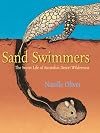
When I started reading this book, I was confused, skeptical, unsure. But it dragged me in and by the time I reached the end, I had to go back and read it again. It's a unique blend of nonfiction and artistic style that I've never seen before.
The art, informational text, excerpts from historical documents, and inset small panels flow across the page, taking readers down into the seemingly arid desert that is secretly full of life. The book contrasts the life of the desert and the animals and show more Aboriginal people who lived there for thousands of years with the view of the European settlers who found it a deadly and dead wasteland. Some pictures are like a puzzle, looking for the camouflaged animals a game. Others show the plants and animals in different groupings or habitats. Many illustrations and examples take a quote from European explorers such as Charles Sturt, talking about how lifeless the desert was, and then show the many different plants and animals they missed.
The art varies from sketches to stylized woodcuts, to full paintings. There's a fascinating variety in the styles used that move the reader easily between different perspectives and time periods.
Verdict: While Australian desert wildlife isn't something rural Wisconsin kids have probably ever thought much about, besides kangaroos, this is an amazing way to present not only the wildlife but the history of an area. It would be really interesting to go through it with elementary-aged kids and then work on creating similar projects for other areas they're interested in, or local areas. It's different but really cool. Recommended.
ISBN: 9780763667610; Published 1999 in Australia; Published 2015 by Candlewick; Borrowed from another library in my consortium show less
The art, informational text, excerpts from historical documents, and inset small panels flow across the page, taking readers down into the seemingly arid desert that is secretly full of life. The book contrasts the life of the desert and the animals and show more Aboriginal people who lived there for thousands of years with the view of the European settlers who found it a deadly and dead wasteland. Some pictures are like a puzzle, looking for the camouflaged animals a game. Others show the plants and animals in different groupings or habitats. Many illustrations and examples take a quote from European explorers such as Charles Sturt, talking about how lifeless the desert was, and then show the many different plants and animals they missed.
The art varies from sketches to stylized woodcuts, to full paintings. There's a fascinating variety in the styles used that move the reader easily between different perspectives and time periods.
Verdict: While Australian desert wildlife isn't something rural Wisconsin kids have probably ever thought much about, besides kangaroos, this is an amazing way to present not only the wildlife but the history of an area. It would be really interesting to go through it with elementary-aged kids and then work on creating similar projects for other areas they're interested in, or local areas. It's different but really cool. Recommended.
ISBN: 9780763667610; Published 1999 in Australia; Published 2015 by Candlewick; Borrowed from another library in my consortium show less
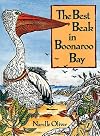
The colored linocuts are attractive and portray the birds well enough that birders could identify the oyster-catcher, cormorant, curlew, etc. ?áThe story is a classic: of course it turns out that there is no best beak, because each bird excels in a different event. ?áGood lesson to introduce the ideas of genetic variation and natural selection (evolution). ?áAlso, good lesson metaphorically to remind kids that each of them has a talent: Sara might be the best basketball player, but Sam show more might be the best artist, and Lou the best at making new kids feel welcome.
I particularly liked the posted sign announcing the rules of the contest, and especially #3. The judge's decision will be final and no further bickering will be entered into."" show less
I particularly liked the posted sign announcing the rules of the contest, and especially #3. The judge's decision will be final and no further bickering will be entered into."" show less

'Then the tide goes out and the sea is calm.
It's a good time to explore rock pools.'
Each spread of this picture book features a different creature in the rock pool and most spreads contain a large, shaped flap that reveals more details about the creature. Thus the spread about sea anemones shows them with their tentacles extended and when the flap is lifted the same scene is depicted but now the anemone's tentacles are retracted. As well as anemones, this book also shows hermit crabs, show more decorator crabs, shrimp, goby fish, star fish, octopus, sea slugs and turban shells. After introducing all the creatures, there is a spread of the entire rock pool with an invitation to find all the animals described.
This book features beautiful lino print pictures with minimal text making this book ideal for young children who will enjoy opening the flaps and trying to find the hidden creatures. For those who would like more information, there is a glossary at the back that gives further information about the animals depicted. show less
It's a good time to explore rock pools.'
Each spread of this picture book features a different creature in the rock pool and most spreads contain a large, shaped flap that reveals more details about the creature. Thus the spread about sea anemones shows them with their tentacles extended and when the flap is lifted the same scene is depicted but now the anemone's tentacles are retracted. As well as anemones, this book also shows hermit crabs, show more decorator crabs, shrimp, goby fish, star fish, octopus, sea slugs and turban shells. After introducing all the creatures, there is a spread of the entire rock pool with an invitation to find all the animals described.
This book features beautiful lino print pictures with minimal text making this book ideal for young children who will enjoy opening the flaps and trying to find the hidden creatures. For those who would like more information, there is a glossary at the back that gives further information about the animals depicted. show less
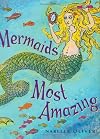
Great illustrations, not sure about the info dump at the beginning of the book, especially when some of that information is repeated in the tales. Enjoyed the reports of mermaid sightings and historical perspective of the legends.
Awards


You May Also Like


Statistics
- Works
- 21
- Members
- 473
- Popularity
- #52,093
- Rating
- 3.8
- Reviews
- 14
- ISBNs
- 52
- Languages
- 1