

Berthe Amoss (1925–2019)
Author of The Great Sea Monster
About the Author
Image credit: Bertheamoss.com
Series
Works by Berthe Amoss
Tagged
Common Knowledge
- Legal name
- Amoss, Berthe Lathrop Marks
- Birthdate
- 1925-09-26
- Date of death
- 2019
- Gender
- female
- Education
- Tulane University (MA|English)
Newcomb College - Occupations
- author
illustrator
columnist
teacher - Nationality
- USA
- Birthplace
- New Orleans, Louisiana, USA
- Places of residence
- New Orleans, Louisiana, USA
Pass Christian, Mississippi, USA - Associated Place (for map)
- USA
Members
Reviews
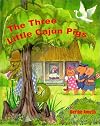
I immediately connected with this book being from Louisiana. I loved how it was a "Cajun" version of "The Three Little Pigs". It was down on the bayou and the villain was an alligator instead of a wolf.

Published in 1977, by the Preservation Resource Center of New Orleans - a non-profit organization which works to preserve and restore the architecture and historic neighborhoods of the city of New Orleans - this brief little picture-book follows the story of Mimi, a young girl who believes that she is being followed by a witch's cat. As All Saint's Day approaches, Mimi notices that the little cat which belongs to Concaline - a local praline-seller she believes to be a witch - is trailing her show more all over town. Is there some sinister purpose to it all? What do Concaline, and her cat, want...?
Although I wouldn't describe The Witch's Cat as the most scintillating holiday title I've read, as part of my recent "witchy-witches" project, I did enjoy the brief glimpse it provided, of the All Saints Day customs and beliefs of New Orleans. The story appears to be set in the nineteenth century, and the illustrations (done by Amoss herself, apparently) have a kind of vintage charm. Think largely black and white backgrounds, with two main color accents (pink and orange-yellow, in this case). Given the scarcity of this title, and its local appeal - mention is made of landmarks like the Cabildo, the Cathedral (St. Louis Cathedral, I assume) and the Presbytere - this is one I would primarily recommend to those searching for children's stories set in New Orleans, or to Berthe Amoss fans. show less
Although I wouldn't describe The Witch's Cat as the most scintillating holiday title I've read, as part of my recent "witchy-witches" project, I did enjoy the brief glimpse it provided, of the All Saints Day customs and beliefs of New Orleans. The story appears to be set in the nineteenth century, and the illustrations (done by Amoss herself, apparently) have a kind of vintage charm. Think largely black and white backgrounds, with two main color accents (pink and orange-yellow, in this case). Given the scarcity of this title, and its local appeal - mention is made of landmarks like the Cabildo, the Cathedral (St. Louis Cathedral, I assume) and the Presbytere - this is one I would primarily recommend to those searching for children's stories set in New Orleans, or to Berthe Amoss fans. show less

Ceridwen, an orphan known for her first twelve years simply as Waif, is taught herblore and healing by the traveling Wise-Woman Gallena, who warns her that all magic must have a purpose, and that simple tricks and illusion are the work of the Devil. When she heals Lord Robert, lord of the very castle in whose shadow she has always lived, Ceridwen finds her life transformed with dizzying swiftness. Proclaimed the Wise Woman of Bedevere, she is given her own garden and room in the castle, and show more after being made the companion of Lord Robert’s young daughter, Elinor, is given the precious gift of literacy, reserved only for the privileged few. But the jealousy of Dame Bewick, a castle servant with grand ambitions and an unpleasant disposition, and the arrival of the Plague at Bedevere, spell trouble for Ceridwen's new life and happiness...
While the transformation of Ceridwen’s social station seems unrealistic for the fourteenth century, the folkloric elements of Lost Magic are intriguing. The "magic" practiced here seems mostly to be herblore, though there are references to more powerful spells, and some genuinely supernatural elements, from fairy changelings to ancient sorcerers, are included. The Wise-Woman figure has been explored by authors such as Monica Furlong and Frances Mary Hendry, as well as featuring (not so positively) in Joan Aiken’s The Cuckoo Tree, and readers interested in this archetype should also seek out those authors. show less
While the transformation of Ceridwen’s social station seems unrealistic for the fourteenth century, the folkloric elements of Lost Magic are intriguing. The "magic" practiced here seems mostly to be herblore, though there are references to more powerful spells, and some genuinely supernatural elements, from fairy changelings to ancient sorcerers, are included. The Wise-Woman figure has been explored by authors such as Monica Furlong and Frances Mary Hendry, as well as featuring (not so positively) in Joan Aiken’s The Cuckoo Tree, and readers interested in this archetype should also seek out those authors. show less
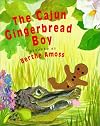
This book was very cute. I especially loved this book because it was based in Louisiana, so I was familiar with the Cajun language the author used. I also liked the small cardboard cutout of the gingerbread man, so the reader can interact with the story. The author made sure to use the traditional gingerbread man story, but she tweaked it a bit to fit Louisiana culture.
Awards


You May Also Like


Statistics
- Works
- 35
- Members
- 820
- Popularity
- #31,113
- Rating
- 3.7
- Reviews
- 21
- ISBNs
- 51