
David M. Schwartz
Author of How Much Is a Million?
About the Author
David M. Schwartz has brought his enjoyment of all things mathematical to millions with his award-winning books How Much Is a Million? and If You Made a Million. He speaks at more than 50 schools and conferences every year, generating more excitement about numbers and math than most people would show more think possible. David is also interested in nature and environmental issues, and he watches everything from stars in the night sky to birds in the rainforest. When at home, he can be found in Oakland, California. And yes, that's fewer than a googol popcorn kernels. show less
Series
Works by David M. Schwartz
Mouths 1 copy
Fighting Fish 1 copy
If Does Were Dinosaurs 1 copy
Animal Mothers 1 copy
Monarch Butterfly 1 copy
Tagged
Common Knowledge
- Birthdate
- 20th century
- Gender
- male
- Education
- Cornell University
- Occupations
- elementary teacher
journalist
lumberjack
veterinary assistant - Nationality
- USA
- Places of residence
- New York, New York, USA
Long Island, New York, USA
Oakland, California, USA - Associated Place (for map)
- New York, USA
Members
Reviews

How Much Is a Million? is a colourful picture book that seeks to make large numbers (million, billion, and trillion) more understandable to children. I first encountered this book as a child (I was the kind of hopelessly nerdy kid who was naturally good at and interested in math, so this book was perfect for me) and I still enjoy looking through it today. The author and illustrator use simple examples (how tall is a tower of kids standing on each other's shoulders, how big of a bowl is show more needed for goldfish, etc.) to demonstrate the size of the numbers. The illustrations are quirky and detailed and fun to look at (I especially love that the kids have a pet unicorn!). The author even includes a note at the end explaining the actual numbers and calculations in the book (possibly older children could enjoy reproducing these calculations or coming up with examples of their own). This is definitely a book I would recommend. show less
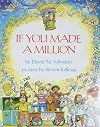
This was a book about money, how it is earned, how to count it, what it would look like stacked up, and tons of goofy ideas on what to buy with money. I thought this was a funny book that would keep children interested. Even though it has a lot of silly ideas on how to spend money it is still educational and the author was able to disguise the facts so that a child would be learning and not even realize it is a math book.
[(Where Else in the Wild?: More Camouflaged Creatures Concealed. . .and Revealed )] [Author: David M. Schwartz] [Oct-2009] by David M. Schwartz
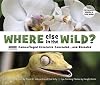
I enjoyed this book for two reasons. The first reason being that there are photographs of each insect presented that is made into a fun little game for the readers. After each page is a new insect along with a picture, the photographer took photos of the camouflaged creatures and it is up to the reader to search the picture to find the hidden creature. Kuhn provides the answers on a flip page or in the back which he states for each picture where the answers are located. The book is written show more in poetic form which makes it an easy and entertaining read. The words and information flow really well and are laid out on the pages in varying ways. For example, the poem about the inch worm on page three the words are laid out in the form of an inch worm as if it were moving across the page. The purpose of this book is to inform the reader of different creatures that use camouflage to hide themselves from predators. show less
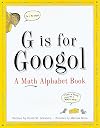
Great book for connecting math topics to everyday things in life. For example: How nature is connected to a math by use of the Fibonacci sequence of numbers. Pine needles come in groups or bundles is one way nature is connected to math. Each letter of the alphabet is associated with a math topic. In addition, in one corner of a page more math topics beginning with the letter are denoted. The explanations are short and precise and are not overwhelming to read. I will use this book in my show more classroom now when introducing a new topic. Exponent described on page 12 and 13 show jelly beans. I tried introducing exponents using jelly beans and it worked well in my classroom. The students enjoyed eating the jelly beans after the learning experience.
The author is interested in nature and is excited about math and wants to share his enjoyment of both with his readers. The glossary contained at the end of the book helps to give students a better understanding of the topic. show less
The author is interested in nature and is excited about math and wants to share his enjoyment of both with his readers. The glossary contained at the end of the book helps to give students a better understanding of the topic. show less
Lists
Awards


You May Also Like


Associated Authors
Statistics
- Works
- 75
- Members
- 17,859
- Popularity
- #1,230
- Rating
- 4.0
- Reviews
- 293
- ISBNs
- 213
- Languages
- 4
- Favorited
- 1