
Elaine Pascoe
Author of How and Why Animals Prepare for Winter (How and Why Series)
About the Author
Elaine Pascoe is the author of more than twenty books for young readers, including several in the series Nature Close-Up
Series
Works by Elaine Pascoe
Tagged
Common Knowledge
- Birthdate
- 1946-08-24
- Gender
- female
Members
Reviews
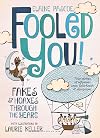
This book would be a good choice for students in 4th grade up until 7th grade as an independent reading book. It is informational, but it covers many topics so it wouldn't help to read it as a class or as an independent read aloud. It mentions many of the subjects students are learning about in these grades so they would be fascinated by the relation, and encourage them to learn more about the topics because this age likes to pull pranks and make jokes, which is what the book is all about.
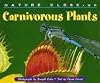
Carnivorous plants eat insects (and sometimes even other small animals), although they don't really eat meat like we do. There are several different varieties, many of which are endangered or threatened. You can grow your own carnivorous plants, and this book gives instructions and tips for growing Venus Fly Traps. It also suggests four experiments in detail, and gives ideas for more. Includes glossary, bibliography and plant source guide.
Carnivorous Plants is clearly written, providing an show more appropriate level of detail on the subject for the targeted reading level. The section describing different varieties provides good information, but is a little poorly organized; it is difficult to tell if the categories are reflecting scientific taxonomy or the author's own ideas about classification. The experiments are a little simplistic. They do however operate in a true scientific context; if the experimenter is confused by the results, he or she is encouraged to do it again.
The illustrations are color photographs. The pictures which depict the plants provide a good illustration of each variety's features. I was disappointed that there were no photographs of the plants in their wild context. The author emphasizes the threat to their habitats, but those habitats are never shown. The pictures in the grow your own and experiments section seem dated. The book was published in 2004, but those photos feel about ten years older. show less
Carnivorous Plants is clearly written, providing an show more appropriate level of detail on the subject for the targeted reading level. The section describing different varieties provides good information, but is a little poorly organized; it is difficult to tell if the categories are reflecting scientific taxonomy or the author's own ideas about classification. The experiments are a little simplistic. They do however operate in a true scientific context; if the experimenter is confused by the results, he or she is encouraged to do it again.
The illustrations are color photographs. The pictures which depict the plants provide a good illustration of each variety's features. I was disappointed that there were no photographs of the plants in their wild context. The author emphasizes the threat to their habitats, but those habitats are never shown. The pictures in the grow your own and experiments section seem dated. The book was published in 2004, but those photos feel about ten years older. show less
While the work that went in to this book in the 1990's was accurate at the time, the classification of many types of fungi have changed. The images are still useful, but if your students were looking for a resource I would not use this book. The author Elaine Pascoe has written a separate book on fungi that is up to date called, "A Kid's Guide to the Classification of Living Things: Fungi."
This book contains useful information on the different ways fungi are classified. There is also a section devoted to identifying fungi from field research. The book is up to date with the changes to the classification system. The images are of actual fungi and not drawings, which is helpful in determining size, shape, location and variations between different organisms of the same species.
This book could be easily used by someone for a report or research project on fungi or decomposers. show more Students in grades 2-6 would be at the appropriate reading level for this book. show less
This book could be easily used by someone for a report or research project on fungi or decomposers. show more Students in grades 2-6 would be at the appropriate reading level for this book. show less
Lists
Awards


You May Also Like


Statistics
- Works
- 89
- Members
- 2,536
- Popularity
- #10,124
- Rating
- 3.8
- Reviews
- 10
- ISBNs
- 151
- Languages
- 2