
Grace Krilanovich
Author of The Orange Eats Creeps
About the Author
Works by Grace Krilanovich
Associated Works
Black Clock 3 — Contributor — 1 copy
Tagged
Common Knowledge
- Birthdate
- 1979-10-05
- Gender
- female
- Education
- San Francisco State University (BA)
California Institute of the Arts (MFA) - Awards and honors
- National Book Foundation "5 Under 35" (2010)
- Nationality
- USA
- Places of residence
- Los Angeles, California, USA
Santa Cruz, California, USA - Map Location
- USA
Members
Reviews

Some novels are written as a sequence of linked short stories. This one is a series of linked paragraphs, with each sentence serving as chapters in a conventional work. It's therefore rather choppy to read, jumping around from topic to topic, place to place, with frequent flashbacks and dream sequences. The writing is laden with just about every literary device ever devised, relying heavily on alliteration and allegory, simile and metaphor, hyperbole and irony, descriptive imagery and shock show more value. As a result it teeters perilously between being a carefully constructed post-postmodernist statement piece and an inane meandering mess, but I'm not nearly qualified enough to tell the difference.
Not for the squeamish or easily offended, but if you can stomach the grossness and depravity there is enough vivid imagery and extremely creative phrasing to make for a worthwhile if not always pleasant or meaningful read. The writing reminded me of Chuck Palahniuk and Ottessa Moshfegh, but not quite as good as either.
CW:
Body Horror, copious gratuitous graphic sex and violence, prostitution, date rape, incest, torture, BDSM, animal cruelty, child abuse, under-age drinking, drug abuse, cough syrup addiction, depression, self-harm, disordered eating, suicidal ideation, gruesome gore, sickness, death, decay, sloth, greed, violent crime, predation, murder, cannibalism, corpse desecration, pedophilia, necrophilia, disturbing drug-induced hallucinations, gutter punks, PNW weather, and general "eww gross" ickiness. show less
Not for the squeamish or easily offended, but if you can stomach the grossness and depravity there is enough vivid imagery and extremely creative phrasing to make for a worthwhile if not always pleasant or meaningful read. The writing reminded me of Chuck Palahniuk and Ottessa Moshfegh, but not quite as good as either.
CW:
Body Horror, copious gratuitous graphic sex and violence, prostitution, date rape, incest, torture, BDSM, animal cruelty, child abuse, under-age drinking, drug abuse, cough syrup addiction, depression, self-harm, disordered eating, suicidal ideation, gruesome gore, sickness, death, decay, sloth, greed, violent crime, predation, murder, cannibalism, corpse desecration, pedophilia, necrophilia, disturbing drug-induced hallucinations, gutter punks, PNW weather, and general "eww gross" ickiness. show less
Wow.
Did you know that Kathy Acker and William Burroughs had a love-child? Her name is Grace Krilanovich and this is her debut.
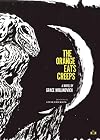
The Orange Eats Creeps reads like an extended tone poem written by someone on an LSD trip who has just woken up from a fever dream. It shares quite a bit of DNA with Acker's surreal Don Quixote - weirdly disjointed, albeit evocative, prose written from constantly shifting perspectives and describing the palpable horrors of a vagabond, junkie teenaged girl roaming show more the streets of the Pacific Northwest in search of her missing (dead?) step-sister (lover?). The rhythmic, repetitive writing is artfully composed and designed to conjure a very specific mood...
Dreadful, grey and disturbing.
There are [oblique] references to the Donner Party, shock rocker GG Allin (who often punctuated his performances by flinging his own feces into the audience) and the Green River serial killer. Although, truth be told, I might have missed these without having read the overleaf first. Which is partly why I've opted to only give the book three stars. While I appreciate a challenging novel, I'll admit that my mind tended to wander during the longer, more metaphysical, passages and I found that the actual storyline tends to get buried, making the action (such as it is) a bit hard to follow.
Oh, and if your idea of a book about teenage vampires in the Pacific Northwest is the Twilight series, stay away from this one. Frankly, I was rather surprised to learn that this won a Speculative Fiction literary award, since I saw the vampire/fantasy element as being strictly metaphorical. This reminded me more of Lee Williams underappreciated novel, After Nirvana (if Williams had been on acid when he wrote it) or a surrealistic version of the gripping 1984 documentary film about Seattle's teenaged runaways, "Streetwise" or even Harmony Korine's creepy little indie film "Kids."
My verdict? Read if you're looking to be shocked and challenged. Avoid if you're seeking emotional engagement or facile entertainment. show less
Did you know that Kathy Acker and William Burroughs had a love-child? Her name is Grace Krilanovich and this is her debut.
The Orange Eats Creeps reads like an extended tone poem written by someone on an LSD trip who has just woken up from a fever dream. It shares quite a bit of DNA with Acker's surreal Don Quixote - weirdly disjointed, albeit evocative, prose written from constantly shifting perspectives and describing the palpable horrors of a vagabond, junkie teenaged girl roaming show more the streets of the Pacific Northwest in search of her missing (dead?) step-sister (lover?). The rhythmic, repetitive writing is artfully composed and designed to conjure a very specific mood...
Dreadful, grey and disturbing.
There are [oblique] references to the Donner Party, shock rocker GG Allin (who often punctuated his performances by flinging his own feces into the audience) and the Green River serial killer. Although, truth be told, I might have missed these without having read the overleaf first. Which is partly why I've opted to only give the book three stars. While I appreciate a challenging novel, I'll admit that my mind tended to wander during the longer, more metaphysical, passages and I found that the actual storyline tends to get buried, making the action (such as it is) a bit hard to follow.
Oh, and if your idea of a book about teenage vampires in the Pacific Northwest is the Twilight series, stay away from this one. Frankly, I was rather surprised to learn that this won a Speculative Fiction literary award, since I saw the vampire/fantasy element as being strictly metaphorical. This reminded me more of Lee Williams underappreciated novel, After Nirvana (if Williams had been on acid when he wrote it) or a surrealistic version of the gripping 1984 documentary film about Seattle's teenaged runaways, "Streetwise" or even Harmony Korine's creepy little indie film "Kids."
My verdict? Read if you're looking to be shocked and challenged. Avoid if you're seeking emotional engagement or facile entertainment. show less
This was powerful and raw and sometimes kind of gross and often depressing but alternately funny and nearly always surreal and beautiful. It's essentially a stream of consciousness narrative written by a homeless teenage junky (vampire?) who might be hallucinating supernatural experiences or might just be using them as a poignant metaphor for being young and hurt and lost (or might as well as anything just be as real as any of the other nightmarish experiences that are more rooted in "reality")
I almost saw G. G. Allin perform. Running late for his gig, I was rolling up to the entrance of Stache’s, the small indie-rock/punk club on High Street in Columbus, when a burst of people stumbled out the door. “What’s going on?” I asked someone who was running by me. “G.G. is naked on stage with the mic cord wrapped around his dick, and he’s throwing bottles and shit at the audience.” I’m pretty sure he meant actual shit.
O-kay. Maybe not so much.
G. G. makes a brief cameo in show more The Orange Eats Creeps, which is fitting because this is a book of decadence, degradation, abuse, and horror.
The nearest relative to this work is Kathy Acker, who was herself influenced by William S. Burroughs. I found The Orange Eats Creeps to be more closely related to a poem than a novel although there is certainly no exact comparison to either. It has almost no narrative through-line. Chronology and location are generally dispensed with. Disjointed is not the right word because the main character’s thoughts seem to flow from present to past to fantasy and from place to place rather than leaping abruptly. Objects have strange lives and the distinction between metaphor and reality is blurred.
Nominally, this story is about a teenage runaway/foster kid who becomes a “vampire” and spends part of the book hanging with a small group of runaway vampire druggie hoodlum squatters running wild in the Northwest in the Nineties.(Note: They might not really be vampires, and this is nothing like a pop vampire book. Not. Even. Slightly.) Eventually, she ditches them or is ditched by them and wanders on her own spending a lot of time sleeping in forests, in storage rooms, in abandoned buildings or sheds and waking up in the homes of random men who pick her up off the street. She’s seems to be obsessed with her foster sister who may have also become a vampire and be wandering around the Northwest, or her sister may have been kidnapped and murdered. The vampirism might be a metaphor or it might not. The girl’s thoughts are so hallucinatory that much of what goes on is abstracted. She might have E.S.P. Or perhaps, schizophrenia. Characters are met briefly and then disappear. Some of them speak in prose rather than dialogue. It’s unclear if they are even “real” whatever that means in the context of a book that refuses to acknowledge the difference between real and fiction. This isn’t postmodern in the sense of acknowledging the author. The Orange Eats Creeps creates a world where it’s impossible to distinguish whether the character’s thoughts represent reality (within the context of the story), insanity, or metaphor. As metaphor, it becomes more like a novel-length poem than a story although story-like things happen occasionally. After all, Paradise Lost is considered a poem even though “shit happens.”
We are sustained in this morass of despair and violence by the poetic voice and a consistency of tone. Krilanovich’s use of language is rather breathtaking and always surprising. It’s consistently shocking, as well. Without ever specifically mentioning it directly, this books seems to reflect the political sickness of our age. The empty relationships between the main character and everyone she encounters spoke to me of the brutal, heartless nature of Capitalism and how it engenders alienation and the dismemberment of the family. We’re all so busy trying to survive there isn’t any time for real community. The communities shown in this book don’t seem to embody any affection, they are mostly survival oriented—cold, grungy squats filled with sick kids and small, violent gangs that ravage 7-11s for snacks. The main character, at least, doesn’t find any comprehensible emotional connections, possibly due to the inherent patriarchy in the male gaze or possibly just because the world is so owned by Capitalism that trying to subsist around the periphery of it is produces a brutal, pitiless existence. After all, the only food that’s free is in dumpsters.
The narrator does seem to “love” her sister but quite possibly only after her sister is dead. Certainly only after she disappeared. And is it love or just obsession and insanity? Either way, there is a terrifying recognition of the suffering that can be found in the human condition.
Truly original. Rather difficult. Powerfully written. Don’t go into it expecting a story, and you might be enthralled. show less
O-kay. Maybe not so much.
G. G. makes a brief cameo in show more The Orange Eats Creeps, which is fitting because this is a book of decadence, degradation, abuse, and horror.
The nearest relative to this work is Kathy Acker, who was herself influenced by William S. Burroughs. I found The Orange Eats Creeps to be more closely related to a poem than a novel although there is certainly no exact comparison to either. It has almost no narrative through-line. Chronology and location are generally dispensed with. Disjointed is not the right word because the main character’s thoughts seem to flow from present to past to fantasy and from place to place rather than leaping abruptly. Objects have strange lives and the distinction between metaphor and reality is blurred.
Nominally, this story is about a teenage runaway/foster kid who becomes a “vampire” and spends part of the book hanging with a small group of runaway vampire druggie hoodlum squatters running wild in the Northwest in the Nineties.(Note: They might not really be vampires, and this is nothing like a pop vampire book. Not. Even. Slightly.) Eventually, she ditches them or is ditched by them and wanders on her own spending a lot of time sleeping in forests, in storage rooms, in abandoned buildings or sheds and waking up in the homes of random men who pick her up off the street. She’s seems to be obsessed with her foster sister who may have also become a vampire and be wandering around the Northwest, or her sister may have been kidnapped and murdered. The vampirism might be a metaphor or it might not. The girl’s thoughts are so hallucinatory that much of what goes on is abstracted. She might have E.S.P. Or perhaps, schizophrenia. Characters are met briefly and then disappear. Some of them speak in prose rather than dialogue. It’s unclear if they are even “real” whatever that means in the context of a book that refuses to acknowledge the difference between real and fiction. This isn’t postmodern in the sense of acknowledging the author. The Orange Eats Creeps creates a world where it’s impossible to distinguish whether the character’s thoughts represent reality (within the context of the story), insanity, or metaphor. As metaphor, it becomes more like a novel-length poem than a story although story-like things happen occasionally. After all, Paradise Lost is considered a poem even though “shit happens.”
We are sustained in this morass of despair and violence by the poetic voice and a consistency of tone. Krilanovich’s use of language is rather breathtaking and always surprising. It’s consistently shocking, as well. Without ever specifically mentioning it directly, this books seems to reflect the political sickness of our age. The empty relationships between the main character and everyone she encounters spoke to me of the brutal, heartless nature of Capitalism and how it engenders alienation and the dismemberment of the family. We’re all so busy trying to survive there isn’t any time for real community. The communities shown in this book don’t seem to embody any affection, they are mostly survival oriented—cold, grungy squats filled with sick kids and small, violent gangs that ravage 7-11s for snacks. The main character, at least, doesn’t find any comprehensible emotional connections, possibly due to the inherent patriarchy in the male gaze or possibly just because the world is so owned by Capitalism that trying to subsist around the periphery of it is produces a brutal, pitiless existence. After all, the only food that’s free is in dumpsters.
The narrator does seem to “love” her sister but quite possibly only after her sister is dead. Certainly only after she disappeared. And is it love or just obsession and insanity? Either way, there is a terrifying recognition of the suffering that can be found in the human condition.
Truly original. Rather difficult. Powerfully written. Don’t go into it expecting a story, and you might be enthralled. show less
Lists
Awards


You May Also Like


Associated Authors
Statistics
- Works
- 2
- Also by
- 1
- Members
- 391
- Popularity
- #61,940
- Rating
- 2.9
- Reviews
- 20
- ISBNs
- 10
- Languages
- 1