
Jeff Jackson
Author of Mira Corpora
About the Author
Jeff Jackson has an MFA in Creative Writing from NYU. He's written several plays for the Obie-Award winning Collapsable Giraffe theater company. His fiction was selected by novelist Dennis Cooper for the anthology Userlands. He is a three-time fellow at the Virginia Center for Creative Arts and show more Arts Editor of Charlotte ViewPoint. show less
Works by Jeff Jackson
Novi Sad 8 copies
Uccidi quei mostri! 1 copy
Associated Works
Tagged
Common Knowledge
- Birthdate
- 1982-09-12
- Gender
- male
Members
Reviews
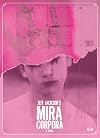
Holy, holy, holy strange, what a strange book. Billed as a coming-of-age story for people who don't like coming-of-age stories (which describes me, yes), this is a dark, playful book that's as fast-paced as it is lyrical. There are strains here of Denis Johnson and Cormac McCarthy, but the book itself is something else, peering into a world that one might hope would be drug-induced, but instead feels incendiary and real, as if you could too easily imagine it lurking on the edges of some city show more and sucking in passerby to suffer the consequences.
Jackson's world comes just short of being hallucinatory, but it is also accessable and careful, which makes for a read that's all the more frightening. I'll only off the one caveat... if you start reading, and you think it might be too much for you after the first few sections? Well, get out, because it's only going to get darker.
But, all that said... I loved reading this book, and experiencing this book, and taking the ride Jackson crafted in this little pink novel. This won't be for everyone, but I certainly recommend it. show less
Jackson's world comes just short of being hallucinatory, but it is also accessable and careful, which makes for a read that's all the more frightening. I'll only off the one caveat... if you start reading, and you think it might be too much for you after the first few sections? Well, get out, because it's only going to get darker.
But, all that said... I loved reading this book, and experiencing this book, and taking the ride Jackson crafted in this little pink novel. This won't be for everyone, but I certainly recommend it. show less
I record the events of my life, filling up one notebook after another. Maybe I’m not getting the details exactly right, but it doesn’t matter. The strict facts hold no currency here. What counts is the saliva I just spat on this very sheet of paper.Jeff Jackson’s first book considers the formative years, those crucial years that see us coming into our own individuality and subjectivity while faced with traumas, trials, and, in this case, ever so many dogs who seem to be hungry for show more their pound of flesh. Like many childhood coming-of-age stories, Jackson’s inverts reality: like Alice’s world in the looking-glass, like Pip literally turned upside-down in the opening pages of Great Expectations, and like Lacan’s subjectival model of the inverted bouquet in the mirror stage, Jackson insists that in order to fathom the depths of childhood, one must approach it back to front.
Here, our narrator, also named “Jeff Jackson,” reveals his childhood in sketches or fragments, but whether these are “real”—the prologue mentions how the author chanced upon old notebooks that eventually became the finished product Mira Corpora—or “imagined” scenes of childhood needn’t matter at all. Isn’t one’s childhood filled with as many unreal or exaggerated scenes as it is populated by intense realities and crushing blows?
Jackson’s narrator meanders through fantasized realities, through waking nightmares. There are intense yearnings for intimacy—an alcoholic mother, a glimpse across the street to catch the eye of a young girl who is similarly (albeit differently) captured—as well as battles for self-discovery at the hands of exploitative authoritative figures who capitalize on childhood, “innocence,” and the social and cultural fantasies and anxieties about any transient state. How can the individual triumph when the oracle—a teenaged girl, doped up on some yellow pill—delivers the prophecy on a blank sheet of paper? How can the many figurative and literal bodies—dead or all-but-dead—be laid to rest: by funeral pyre or through some means of automation, consisting of dehumanization and brainwashing?
The scope in Mira Corpora is wide indeed, and one can only be vague in discussing a book like this whose beauty lies in the rhythm and the power to disturb and disorient. Jackson has immense skill in his reinvention of cultural myths and in moving almost seamlessly between ancient lore to an almost Dennis Cooper-influenced world of sex, drugs, and longing; from a David Lynch inspired cinematic world of interlopers, outsiders, and doppelgangers to an almost Carnivale-esque examination of reality and its discontents. With declarative prose that mimics the poise of the narrator as he navigates between dreaming and intense self-revelation, this is a book that can invoke the smell of burning flesh just as succinctly as it can make the reader feel the tongues of wild dogs licking skin, the pang of nearly getting away, and the sad drone of a singer’s voice who might have lost everything yet still possesses the most important thing of all: the power to affect, to entrance, to heal. show less
Mira Corpora is one hell of a bleak book. And it packs quite an emotional wallop. I found very little positivity or hope within the text, but perhaps there was some lurking outside the story. I'll get to that in a bit.
Mira Corpora takes place in essentially six chapters with interludes at the beginning, middle and end. It's quite precisely structured for a book that is about pain, child abuse and the failure of society to care for its children. Each chapter features our main character, named show more Jeff, at a different age: My Year Zero (6 years old), My Life in Captivity (11 years old), My Life in the Woods (12 years old), My Life in the City (14 years old), My Life in Exile (15 years old), My Zero Year (18 years old). I will block the following as spoilers because it reveals the key plot points. To summarize, for those who don't want to read it...the kid has a really rough time of it and barely survives.
At 6, he seems to be in an orphanage. He participates in a hunt to shoot stray dogs in the woods and two older kids slather him with meat and use him for bait. At 11, he is back with his alcoholic Mom who apparently burned him with an iron, and he runs away from her. At 12, he lives in a runaway campground, a rundown sort of non-hippie commune in the woods. It's a pretty nasty place from a quality-of-life perspective, but the kids aren't so terrible at least. The threat of truckers raping and killing them always hangs over their heads. But compared to what is to come, it is a relatively decent place. At 14, he is homeless in a city. He falls in with a group of teens who obsess over a punk rock singer who seemed to capture the angst and anger of society better than any, but he disappeared. Eventually the kids find him and...let's just say, it's not a joyous reunion. Age 15 is by far the worst. He is at this point like a zombie. Obviously experiencing major food deprivation and possibly other health issues. He stumbles around the city until a man takes him in. To imprison him and drug him and use him as a sex toy for parties. It doesn't get much more disturbing than that. Eventually, he manages to escape, kind of. Or is no longer wanted because he became a little bit too troublesome. One of the most disturbing moments of the book occurs when Jeff realizes his kidnapper has either stolen or purchased a baby and plans to raise it...in captivity...and he does nothing/feels powerless to prevent it. Admittedly, he is about as beaten down as you can get at this point, so he lacked the strength to do anything. It was an image of ultimate impotence. But it was really hard to see him "let this go" and not go the police. I suspect he also needed to avoid the police because they might send him back to his abusive mother. But still, a baby. It was grim. Age 18 finds him learning his mother had finally died, and his decisions around what to do with his inheritance.
The greatest overriding theme here is about the forgotten. The children of our country being abandoned by society. This is true beyond the individual perspective of parents who abuse their kids. It is true from a societal perspective. We live in a cold, cold society. According to a Yale University study published in August in Pediatrics magazine, almost 30% of low-income women with children in diapers can't afford an adequate supply of them. The Department of Agriculture indicates that 17.6 million households in the United States regularly go hungry, up from 12 million ten years ago. But Republicans want to cut the food stamp budget by $40 billion over the next ten years. Of the 23 million households currently in the food stamp program, 3/4 of them include children. Does our society give a shit? Some significant portion doesn't care or is ignorant or intentionally avoids learning about it because they care only about themselves. And the Republicans play to the idea of self-sufficiency even if they really don't support it with their policies. (Not that I'm a fan of the Democrats.) Regardless of whether we blame people for their ignorance or selfishness or we blame the propaganda that misleads them to societal self-abuse in whom they elect (or all of the above), the result is a society that does not give a shit about children. And this book personifies through a narrative that social issue. It's a welcome if painful defamiliarizing scenario
There is some hope that creeps into the novel. Indirectly. It occurs in two ways. The final chapter, when Jeff is 18, begins with him receiving a registered letter. To this point, he had been homeless and unreachable. Although it is not explained where he is living and how he is able to have an address to receive mail (or to be found by someone writing a letter, for that matter), there is hope in the implication that somehow Jeff got his shit together and is living somewhere safe with basic comforts.
The other aspect of hope that comes from this story is from the author's note at the very beginning of the book, and the character's name. The introduction to the story claims that all the scenarios are based on the author's real childhood. That they are adaptations of his own journals. So it states within "a novel." Leaving aside whether we believe this to be true or not (several post-modern authors have inserted themselves as the main character of a book, so it is not an uncommon stylistic choice), this had two effects for me. On one hand, it felt like the author was offering himself up to the abuse undergone by his own character. In other words, he was saying, this is not happening to someone else, this is happening to me. To each of us. When my brother or sister suffers, I suffer. Whether this works in the case of a fictional character, it is a symbolic act of unity. The second meaning of this choice that fell upon me was that of giving us hope (and clearly it is a choice because even if the story is based on Jackson's childhood experiences, he didn't have to indicate that for the reader and he could have named the character differently), when I flipped to the author's bio at the back of the book, it reads:
Although how, that I cannot say. show less
Mira Corpora takes place in essentially six chapters with interludes at the beginning, middle and end. It's quite precisely structured for a book that is about pain, child abuse and the failure of society to care for its children. Each chapter features our main character, named show more Jeff, at a different age: My Year Zero (6 years old), My Life in Captivity (11 years old), My Life in the Woods (12 years old), My Life in the City (14 years old), My Life in Exile (15 years old), My Zero Year (18 years old). I will block the following as spoilers because it reveals the key plot points. To summarize, for those who don't want to read it...the kid has a really rough time of it and barely survives.
The greatest overriding theme here is about the forgotten. The children of our country being abandoned by society. This is true beyond the individual perspective of parents who abuse their kids. It is true from a societal perspective. We live in a cold, cold society. According to a Yale University study published in August in Pediatrics magazine, almost 30% of low-income women with children in diapers can't afford an adequate supply of them. The Department of Agriculture indicates that 17.6 million households in the United States regularly go hungry, up from 12 million ten years ago. But Republicans want to cut the food stamp budget by $40 billion over the next ten years. Of the 23 million households currently in the food stamp program, 3/4 of them include children. Does our society give a shit? Some significant portion doesn't care or is ignorant or intentionally avoids learning about it because they care only about themselves. And the Republicans play to the idea of self-sufficiency even if they really don't support it with their policies. (Not that I'm a fan of the Democrats.) Regardless of whether we blame people for their ignorance or selfishness or we blame the propaganda that misleads them to societal self-abuse in whom they elect (or all of the above), the result is a society that does not give a shit about children. And this book personifies through a narrative that social issue. It's a welcome if painful defamiliarizing scenario
There is some hope that creeps into the novel. Indirectly. It occurs in two ways. The final chapter, when Jeff is 18, begins with him receiving a registered letter. To this point, he had been homeless and unreachable. Although it is not explained where he is living and how he is able to have an address to receive mail (or to be found by someone writing a letter, for that matter), there is hope in the implication that somehow Jeff got his shit together and is living somewhere safe with basic comforts.
The other aspect of hope that comes from this story is from the author's note at the very beginning of the book, and the character's name. The introduction to the story claims that all the scenarios are based on the author's real childhood. That they are adaptations of his own journals. So it states within "a novel." Leaving aside whether we believe this to be true or not (several post-modern authors have inserted themselves as the main character of a book, so it is not an uncommon stylistic choice), this had two effects for me. On one hand, it felt like the author was offering himself up to the abuse undergone by his own character. In other words, he was saying, this is not happening to someone else, this is happening to me. To each of us. When my brother or sister suffers, I suffer. Whether this works in the case of a fictional character, it is a symbolic act of unity. The second meaning of this choice that fell upon me was that of giving us hope (and clearly it is a choice because even if the story is based on Jackson's childhood experiences, he didn't have to indicate that for the reader and he could have named the character differently), when I flipped to the author's bio at the back of the book, it reads:
Jeff Jackson holds an MFA from NYU and is the recipient of fellowships from the MacDowell Colony and Virginia Center for the Creative Arts. Five of his plays have been produced by the Obie Award-winning Collapsable Giraffe company.Thus, it is implied that despite all the horrors this young "Jeff Jackson" character experienced, he somehow pulled himself together to get not one but two college degrees and become an acclaimed author. The further implication is that society can change.
Although how, that I cannot say. show less
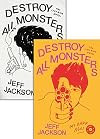
This novel is comprised of two analogous stories that offer alternate versions of a world where (small time, mediocre) musicians are murdered onstage. I agree with one of the main characters, who says, "I prefer the B-sides. They're the tunes where the bands bury their secrets. Their obsessions." Some scenes are wonderfully surreal or sinister, with tantalizing glimpses of the possible meaning behind the violence, but nothing is "solved." Recommended for fans of Paul Auster's New York show more Trilogy, where a mystery plot segues into existential inquiry, or David Lynch, where style outweighs substance. show less
Lists
Gimmicks (1)
Awards

You May Also Like


Associated Authors
Statistics
- Works
- 13
- Also by
- 1
- Members
- 206
- Popularity
- #107,331
- Rating
- 3.8
- Reviews
- 8
- ISBNs
- 22
- Languages
- 2
- Favorited
- 1