
Andrew Sean Greer
Author of Less
About the Author
Andrew Sean Greer was born in Washington, D.C. on November 5, 1970. He received a bachelor's degree from Brown University and a master of fine arts degree from the University of Montana. His collections of stories, How It Was for Me, was published in 2000. His novels include The Path of Minor show more Planets, The Story of a Marriage, and The Impossible Lives of Greta Wells. The Confessions of Max Tivoli received the California Book Award and the New York Public Library Young Lions Award for an author under 35 and Less received the Pulitzer Prize for fiction in 2018. (Bowker Author Biography) show less
Series
Works by Andrew Sean Greer
Kom in mijn leven en wees mijn lief 3 copies
Associated Works
Fight of the Century: Writers Reflect on 100 Years of Landmark ACLU Cases (2020) — Contributor — 260 copies, 5 reviews
Tagged
Common Knowledge
- Canonical name
- Greer, Andrew Sean
- Legal name
- Greer, Andrew Sean
- Birthdate
- 1970-11-21
- Gender
- male
- Education
- Brown University (Writing)
University of Montana (MFA)
Georgetown Day School - Occupations
- novelist
short story writer - Awards and honors
- National Endowment for the Arts Fellowship
New York Public Library Young Lions Award
Northern California Book Award
California Book Award - Agent
- Steven Barclay Agency
- Nationality
- USA
- Birthplace
- Washington, D.C., USA
- Places of residence
- San Francisco, California, USA
- Associated Place (for map)
- USA
Members
Reviews
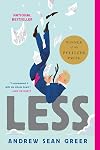
This is a delightfully self-aware, funny, and poignant story of Arthur Less, an author who is taking a trip around the world to distract himself from the fact that he is turning 50 and that his much younger lover is marrying someone else.
"Man dealing with midlife crisis" is one of the least appealing plotlines in the world to me, but this book is wonderful.
First of all, Greer's writing is amazing. I would happily read his shopping list. The book is laugh-out-loud funny. But as much as you show more find yourself laughing at Less and his charming, blundering naivete, it is a laughter that is full of compassion for this lovably flawed man. Greer lets us laugh at him without losing respect for him. The narrator occasionally intrudes to share with us how much he loves Less, and it's impossible not to share that love.
The humor is there to cover up a lot of pain. Less has a lot of flashbacks to both good and bad times with former lovers, to the joys and pains of being gay in San Francisco during the AIDS crisis.
The book is charmingly self-aware: Less is in the process of rewriting a rejected novel about a middle-aged gay man wandering around San Francisco, and the reader can't help but compare Less's failed novel to "Less" itself. It's especially ironic then, that "Less" won a Pulitzer Prize when one of the big scenes in the book is when Less's lover wins the Pulitzer. show less
"Man dealing with midlife crisis" is one of the least appealing plotlines in the world to me, but this book is wonderful.
First of all, Greer's writing is amazing. I would happily read his shopping list. The book is laugh-out-loud funny. But as much as you show more find yourself laughing at Less and his charming, blundering naivete, it is a laughter that is full of compassion for this lovably flawed man. Greer lets us laugh at him without losing respect for him. The narrator occasionally intrudes to share with us how much he loves Less, and it's impossible not to share that love.
The humor is there to cover up a lot of pain. Less has a lot of flashbacks to both good and bad times with former lovers, to the joys and pains of being gay in San Francisco during the AIDS crisis.
The book is charmingly self-aware: Less is in the process of rewriting a rejected novel about a middle-aged gay man wandering around San Francisco, and the reader can't help but compare Less's failed novel to "Less" itself. It's especially ironic then, that "Less" won a Pulitzer Prize when one of the big scenes in the book is when Less's lover wins the Pulitzer. show less
To read Andrew Sean Greer who is funny and witty and has the most wonderful metaphors restores my love of fiction. I put pages of quotes in my commonplace book. In telling the story of a self-effacing, lovable, heartbroken mid-list novelist named Arthur Less and his journey around the world, I fell in love with the protagonist and the story and even the hardest heart softens with the affection and smiles in this story. Insightful, funny, endearing, the perfect antidote to the times we live in.
I was not expecting to like this book as much as I did. Famous white male writer travels around the world, contemplating his mid-life crisis? Okay. No wonder it won the Pulitzer.
As the book progressed, my attitude shifted. I found myself chuckling at the tongue-in-cheek jibes about Less' white male writer status. Less' latest book, which is about a white gay man in modern San Francisco walking the street in existential angst, gets him dropped by his publisher. Nobody is searching for a story show more like Less', and yet, here I am, thoroughly enjoying Less against my better judgment.
It's funny, charming, and witty. I would recommend it for those who once had a love for John Updike, but who are tired of reading him. show less
As the book progressed, my attitude shifted. I found myself chuckling at the tongue-in-cheek jibes about Less' white male writer status. Less' latest book, which is about a white gay man in modern San Francisco walking the street in existential angst, gets him dropped by his publisher. Nobody is searching for a story show more like Less', and yet, here I am, thoroughly enjoying Less against my better judgment.
It's funny, charming, and witty. I would recommend it for those who once had a love for John Updike, but who are tired of reading him. show less
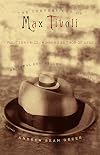
Max Tivoli is an odd person. He is born an old man and is growing old even though his body becomes younger. His parents at first keep him mostly hidden, cared for by a Maid and his grandmother. Slowly, he is allowed to interact with others and find companions, such as Hughie, who simply accepts him for who or what he is.
The book is very thoughtful. It explores interactions among people and the psychology not only of being different but of the process of aging and the disparity between people show more of different ages. The writing is beautiful--so evocative of a time in the past and a pervasive love. Amazingly--in the middle of the book--I realized that the name of the “monster” and the woman he loved were Max and Alice--the exact names of my parents!
I think this is a gorgeous love story. There is something about a forbidden love or a transient love that almost has more power than a love which is consummated and then allowed to fade over time. I found this book very passionate--both in emotion and in thoughts. It made me think about the transient nature of relationships--among acquaintances, friends, family, and the great loves of a person’s life. This book examines these from all angles so poignantly and in such a beautiful manner.
I really, really loved this book. I thought the writing was beautiful in how well it expressed the agonies, not only of unrequited love, but also what it's like being "different" in today's society. Although the premise of the story (a person being born old and growing younger) might not be real, being considered a "monster" in today's society (for various reasons in which one person might be different from another) is certainly true enough. The thoughts about which Max wrote show a real understanding of the pain of such marginalization.
Another reason I was impressed with this story was its mind-bending aspect! I had enough of a problem trying to figure out how a person who is growing younger while others are growing older would relate psychologically, physically, and chronologically to others...but the author made it all seem so easy! He did it with such eloquence.
I really got into the character of Max, felt for him, and much appreciated the character of Hughie, a true friend.
There were some chords that struck unusually close to home. Max and Alice (the two most important characters in this novel) were also the names of my parents! I believe that the author grew up in Rockville, Maryland (my home town). show less
The book is very thoughtful. It explores interactions among people and the psychology not only of being different but of the process of aging and the disparity between people show more of different ages. The writing is beautiful--so evocative of a time in the past and a pervasive love. Amazingly--in the middle of the book--I realized that the name of the “monster” and the woman he loved were Max and Alice--the exact names of my parents!
I think this is a gorgeous love story. There is something about a forbidden love or a transient love that almost has more power than a love which is consummated and then allowed to fade over time. I found this book very passionate--both in emotion and in thoughts. It made me think about the transient nature of relationships--among acquaintances, friends, family, and the great loves of a person’s life. This book examines these from all angles so poignantly and in such a beautiful manner.
I really, really loved this book. I thought the writing was beautiful in how well it expressed the agonies, not only of unrequited love, but also what it's like being "different" in today's society. Although the premise of the story (a person being born old and growing younger) might not be real, being considered a "monster" in today's society (for various reasons in which one person might be different from another) is certainly true enough. The thoughts about which Max wrote show a real understanding of the pain of such marginalization.
Another reason I was impressed with this story was its mind-bending aspect! I had enough of a problem trying to figure out how a person who is growing younger while others are growing older would relate psychologically, physically, and chronologically to others...but the author made it all seem so easy! He did it with such eloquence.
I really got into the character of Max, felt for him, and much appreciated the character of Hughie, a true friend.
There were some chords that struck unusually close to home. Max and Alice (the two most important characters in this novel) were also the names of my parents! I believe that the author grew up in Rockville, Maryland (my home town). show less
Lists
Awards


You May Also Like


Associated Authors
Statistics
- Works
- 14
- Also by
- 13
- Members
- 9,739
- Popularity
- #2,449
- Rating
- 3.6
- Reviews
- 474
- ISBNs
- 167
- Languages
- 12
- Favorited
- 15


