
Vanessa Veselka
Author of Zazen
About the Author
Image credit: Vanessa Veselka. Photo by Heather Hawksford.
Works by Vanessa Veselka
Violence 3 copies
Associated Works
BITCHfest: Ten Years of Cultural Criticism from the Pages of Bitch Magazine (2006) — Contributor — 720 copies, 10 reviews
Love and Ruin: Tales of Obsession, Danger, and Heartbreak from the Atavist Magazine (2016) — Contributor — 46 copies, 1 review
Tagged
Common Knowledge
Members
Reviews
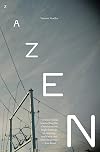
She writes really well about the present, which I think is hard to do. One of the central questions in the book is, what's the moral thing to do when a society is corrupt/broken/falling apart... the reader has to try to figure that out along with the narrator. Made me think about the Weather Underground and Merry in American Pastoral.
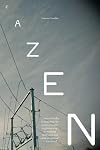
As I was reading Zazen, I was continually reminded of something Joshua Ferris said in his review of Don DeLillo's Zero K. To paraphrase: You don't read DeLillo for the plot. You read him for the sentences.
I often felt that way about Veselka, although I did enjoy the plot. The book opens with one of the more humorous/disturbing/poignant meditations I'd read in a while, involving self-immolation and fortune cookies. Without giving anything away, I was impressed with how that theme/motif was show more developed throughout the book.
Relatively early in the book, a character is planning to move to an Indian village, and the narrator says to herself, "Because the search for authenticity is a well without a bottom." For this narrator, that search is undertaken in the context of late-stage capitalism, and I can understand how certain readers who are fans of late-stage capitalism might find this a bit of a sticking point.
However, regardless of your sociopolitical orientation, if you can't find joy in such lines as "'Cultural obsolescence impeding the fresh flow of commerce,' I told the police operator, 'that's why we blew up the dog track,'" then I just couldn't have a beer with you. show less
I often felt that way about Veselka, although I did enjoy the plot. The book opens with one of the more humorous/disturbing/poignant meditations I'd read in a while, involving self-immolation and fortune cookies. Without giving anything away, I was impressed with how that theme/motif was show more developed throughout the book.
Relatively early in the book, a character is planning to move to an Indian village, and the narrator says to herself, "Because the search for authenticity is a well without a bottom." For this narrator, that search is undertaken in the context of late-stage capitalism, and I can understand how certain readers who are fans of late-stage capitalism might find this a bit of a sticking point.
However, regardless of your sociopolitical orientation, if you can't find joy in such lines as "'Cultural obsolescence impeding the fresh flow of commerce,' I told the police operator, 'that's why we blew up the dog track,'" then I just couldn't have a beer with you. show less
Thanks to NetGalley for my ARC.
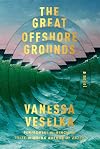
I came to The Great Offshore Grounds purely based on the art. The book cover art is totally beautiful. This concentric circle thing is a major theme in book cover art lately it seems and tends to be a indicator of good things within: The Overstory by Richard Powers, a masterpiece, and the forthcoming Cuyahoga by Pete Beatty, also great. So that stunning art hooked me right in and the synopsis was intriguing.
Two sisters are reunited at their deadbeat father's show more wedding. At the wedding they are given an inheritance in the form of information that promises a shot at some form of financial security. The information sets the sisters and their adopted brother on a harrowing adventure that is full of heart and humor and brutality and everything you could possibly want in a novel. All of it told in a very original way. All of The Great Offshore Grounds is familiar ground but tread upon in the most original and achingly beautiful way. Synopsis aside you will find yourself rooting for Cheyenne and Livy the novels star half-sisters as they make their way across the country.
Straight out of the gate in the first couple of pages Vanessa Veselka presents herself with full literary force:
"Her secondhand clothes came off as vintage, while her misadventures in body art made her seem a fine vase, badly cracked and chipping but a gritty accent to any room."
I mean come-on that is just drop dead gorgeous writing. Totally beautiful. The Great Offshore Grounds is just full of great sentences like that. Vanessa Veselka reveals herself to be a literary force. This is a great and original novel that treads over familiar ground and themes that well all know: family narratives, revelations of family secrets, cross-country journey's, and sisters - women - forging their way in the world and The Great Offshore Grounds does so in a way you have likely never seen before. The Great Offshore Grounds is vivid and full of heart and thrilling and also darkly funny. show less
I came to The Great Offshore Grounds purely based on the art. The book cover art is totally beautiful. This concentric circle thing is a major theme in book cover art lately it seems and tends to be a indicator of good things within: The Overstory by Richard Powers, a masterpiece, and the forthcoming Cuyahoga by Pete Beatty, also great. So that stunning art hooked me right in and the synopsis was intriguing.
Two sisters are reunited at their deadbeat father's show more wedding. At the wedding they are given an inheritance in the form of information that promises a shot at some form of financial security. The information sets the sisters and their adopted brother on a harrowing adventure that is full of heart and humor and brutality and everything you could possibly want in a novel. All of it told in a very original way. All of The Great Offshore Grounds is familiar ground but tread upon in the most original and achingly beautiful way. Synopsis aside you will find yourself rooting for Cheyenne and Livy the novels star half-sisters as they make their way across the country.
Straight out of the gate in the first couple of pages Vanessa Veselka presents herself with full literary force:
"Her secondhand clothes came off as vintage, while her misadventures in body art made her seem a fine vase, badly cracked and chipping but a gritty accent to any room."
I mean come-on that is just drop dead gorgeous writing. Totally beautiful. The Great Offshore Grounds is just full of great sentences like that. Vanessa Veselka reveals herself to be a literary force. This is a great and original novel that treads over familiar ground and themes that well all know: family narratives, revelations of family secrets, cross-country journey's, and sisters - women - forging their way in the world and The Great Offshore Grounds does so in a way you have likely never seen before. The Great Offshore Grounds is vivid and full of heart and thrilling and also darkly funny. show less
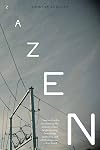
I went to work and a guy I wait on said he was leaving. He said everyone he knew was pulling out.
“Canada is just not far enough. Mostly Mexico. A bunch to Thailand. Some to Bali.”
He always orders a Tofu Scramble and makes me write a fucking essay to the cook. No soy sauce in the oil mix, no garlic, extra tomato, no green pepper. Add feta. Potatoes crispy and when are we going to get spelt. He holds me personally responsible for his continued patronage. I hope he dies. I’d like to read show more about it.
My brother Credence says people who leave are deluding themselves about what’s out there. I just think they’re cowards. Mr. Tofu Scramble says I should go anyway, that it’s too late. I want to but I can’t. Maybe when the bombs stop, or at least let up. Nobody thinks it’ll stay like this. I call it a war but Credence says it isn’t one. Not yet. I say they just haven’t picked a day to market it. Soft opens being all the rage. My last few weeks down at grad school it was so bad I thought everything was going to shake itself apart. I tried to focus on my dissertation, follow the diaspora of clamshells but every night it got worse. It’s not any better here—here, there, now, tomorrow, next Wednesday—geologically speaking it’s all the same millisecond. The gentle rustle of armies crawling the planet like ants. Anybody with any sense knows what’s coming.
With these opening sentences, Vanessa Veselka drew me into the world she created in her debut novel Zazen, through the eyes of its narrator/protagonist Della Mylinek. Della's voice is original and compelling. A recent recipient of a Ph.D. in geology, the daughter of New Left radicals who judge their children’s actions according to political optics, Della is working in a vegan restaurant as she struggles to put past traumas behind her. In this world, the United States is enmeshed in numerous wars and conflicts, citizens live in fear of bombings, and people are torn between leaving the US before it’s too late, or remaining at the mercy of the unnamed enemies who fill their lives with terror and chaos.
Although Zazen depicts bombings, riots, and murders, the novel also represents a world in which slogans, labels, and messages are ominpresent, and take the place of any concerted action for real change. Della has a keen eye and ear for people who substitute a pre-packaged identity for any deep sense of who they are. The novel is filled with her wry observations of friends, family, acquaintances, and passers-by who seem to devote more time to what their clothing and food choices signify, than to any real impact they might have on the world:
I signed up for yoga classes the week I found the rat. I got a six-month membership. Credence said the consistency would be good. The woman behind the counter was wearing a tank top that had “Namaste!” written across the front of it like the Coca Cola logo. Her hair was red and wrapped in an orange scarf. Her nails were pink glitter and she had a pendant of Guadalupe hanging from her neck.
“Can I help you?” she asked.
Yes. I want to look like you. I want to be so thoroughly anchored into some sort of pop culture aesthetic that nothing can knock me over or wash me away or make me hate everyone. I want to sleep again.
“I’d like to take some yoga classes,” I said.
In these passages, Zazen reads almost as a political, social, and cultural satire. However, Veselka does not limit herself to satirical prose. There are moments of pure poetry, and others of deep insight, that anchor the novel and give it power:
I would tell them tomorrow. I would say: I am a pool of light, then flicker like sun on a swimming pool. I would say: It has already erupted. And then, dancing through the braided shadows on the basin, wait for the foliage to land in the pool water and make galleons and cutters out of oak leaves and elm. Then they would have to understand.
The next day a second bomb went off at an auto shop down the street from Rise Up Singing. Everyone was running. But you can’t outrun it. I know. I’ve tried. You just come to the same place again and again. The return is so fast now for me that from the outside it looks like stillness. Like nothing is happening at all. But beyond that stillness is an unmappable topography, an endless stream of content.
And in the heart of the novel, at all times, is Della.
Throughout Zazen, Della struggles to determine where she belongs, who she is, and whether her actions can make any difference in the chaos and fear that surround her. As a geologist, she is trained in mapping the terrain and delving deep into the earth’s layers, so she turns this skill to her attempts to understand the terrain of the city she lives in, sometimes mapping small areas such as the yoga studio where she takes classes, sometimes mapping larger areas:
Out of a desire to understand, I began collecting maps and putting them on the walls. Gift shop maps with sea monsters on them and beveled, unfamiliar coastlines, cold war maps with the Soviet Menace spreading like leprosy. Pink East Germany. Red China. Maps of Pangaea and Gondwanaland from back before the seams pulled apart when we were still all one big continent—Deep Time, where countries turn to silt, silt turns to stone and we can now tell time by comparing the rates of nations collapsing—Biostratigraphy? Patriastratigraphy? Following the law of superposition, one thing always follows another: map of the Trail of Tears, bike map, subway map, and one I drew when I was twelve and wrote “Della’s world” in scented marker at the top. Historical, geological, topographical, ideological and imaginary. Sitting in Credence’s attic I tried to figure out if culture was just geology. Maybe Rwanda was caused by mountain building. And the Russo-Japanese War by glacial till. Maybe you need pirated rivers in the headlands before you can have a Paris Commune.
In times of stress, Della focuses on slow geologic changes and repeats, almost as a mantra, “Nothing personal.” She turns to fortune cookies to honor the memories of people who died through self immolation as a form of protest. As she tacks these fortunes to the maps she has collected, the juxtaposition of the original fortune and magic numbers with the person’s name underlines the ultimate futility of their gesture. Any messages they hoped to convey through their actions dissipate quickly:
I started putting them up on the walls too. I bought a bag of fortune cookies and raided the fortunes. On the back of each I wrote, underneath their lucky numbers in red, the name of the burned.
Jan Palach
Your warmth encourages honesty at home:
718253741.10
Thich Quang Duc
Magic will be created when an unconventional friend comes to visit:
816223141.24
Elizabeth Shin
Your future is as boundless as the lofty heaven:
811283645.15
Norman Morrison
You will be reunited with old friends:
615213840.12
Kathy Change
Your nature is intense, magnetic and passionate:
712293644.27
I taped the fortunes to pins like flags and stuck them in the maps. Each city that inspires immolation gets a tiny white flag to flutter. Tiny little surrender. Tiny little surrenders. Supposedly, the heart of the Vietnamese monk from ’63 never burned but shriveled to a tiny liver. It is held hostage (kept safe as a national treasure) by the Reserve Bank of Vietnam. Tiny liver hearts. I pinned them to the walls. Katydids flutter all around.
I hesitate to tell you much more about Zazen, because part of the joy of reading it comes from the feeling of surprise as Veselka’s prose takes turn after turn away from the expected. Her style and voice are original, but she is not writing simply to shock. The novel, and Della, crept up on me as I was reading, and I saw more and more points of similarity between Della’s concerns and mine. Although Zazen clearly is set in a US in the future, it’s a US that bears striking similarities to the US in 2012. This is a world where capitalist slogans and symbols overtake any changes that radicals hoped to make along the way. It’s a world where shopping becomes a patriotic act for some, echoing George W. Bush’s call for Americans to go shopping after 9/11 as a way to fight back against terrorism. It’s a world full of distractions of our own making, which too often dehumanize us and separate us from each other. And it’s a world where we helplessly ask whether change is possible, whether we can make a difference, and fear to hear the answer.
I had a very personal reaction to Zazen, and one which stemmed from only a very small part of the novel. Among the names of protesters who self-immolated Veselka includes Kathy Change, an activist and performance artist who set herself on fire in front of a peace symbol statue on the campus of the University of Pennsylvania in 1996. I was a graduate student writing my dissertation at Penn at the time. I remember Kathy Change well. She would dress in rainbow-colored leotards and dance in front of the main library on campus, waving hand-made flags with peace symbols on them, trying to forward a cause of peace that only she really understood. People saw her only in terms of her struggles with mental illness -- they let that label drown out any other message she was trying to convey. Some people would heckle her, while others would walk by, shaking our heads and averting our eyes. Kathy Change didn’t fit into any of the neat boxes we had for acceptable forms of political protest. I am not certain that a different reaction from us would have changed her decision, but I do know that any message she was trying to impart, whether by dancing or setting herself on fire, was lost in a sea of labels and symbols and distractions. As I read Zazen, I reflected on the profound failure that represents, considered my part in it, and wondered how to find a way forward, a way to make a difference. show less
“Canada is just not far enough. Mostly Mexico. A bunch to Thailand. Some to Bali.”
He always orders a Tofu Scramble and makes me write a fucking essay to the cook. No soy sauce in the oil mix, no garlic, extra tomato, no green pepper. Add feta. Potatoes crispy and when are we going to get spelt. He holds me personally responsible for his continued patronage. I hope he dies. I’d like to read show more about it.
My brother Credence says people who leave are deluding themselves about what’s out there. I just think they’re cowards. Mr. Tofu Scramble says I should go anyway, that it’s too late. I want to but I can’t. Maybe when the bombs stop, or at least let up. Nobody thinks it’ll stay like this. I call it a war but Credence says it isn’t one. Not yet. I say they just haven’t picked a day to market it. Soft opens being all the rage. My last few weeks down at grad school it was so bad I thought everything was going to shake itself apart. I tried to focus on my dissertation, follow the diaspora of clamshells but every night it got worse. It’s not any better here—here, there, now, tomorrow, next Wednesday—geologically speaking it’s all the same millisecond. The gentle rustle of armies crawling the planet like ants. Anybody with any sense knows what’s coming.
With these opening sentences, Vanessa Veselka drew me into the world she created in her debut novel Zazen, through the eyes of its narrator/protagonist Della Mylinek. Della's voice is original and compelling. A recent recipient of a Ph.D. in geology, the daughter of New Left radicals who judge their children’s actions according to political optics, Della is working in a vegan restaurant as she struggles to put past traumas behind her. In this world, the United States is enmeshed in numerous wars and conflicts, citizens live in fear of bombings, and people are torn between leaving the US before it’s too late, or remaining at the mercy of the unnamed enemies who fill their lives with terror and chaos.
Although Zazen depicts bombings, riots, and murders, the novel also represents a world in which slogans, labels, and messages are ominpresent, and take the place of any concerted action for real change. Della has a keen eye and ear for people who substitute a pre-packaged identity for any deep sense of who they are. The novel is filled with her wry observations of friends, family, acquaintances, and passers-by who seem to devote more time to what their clothing and food choices signify, than to any real impact they might have on the world:
I signed up for yoga classes the week I found the rat. I got a six-month membership. Credence said the consistency would be good. The woman behind the counter was wearing a tank top that had “Namaste!” written across the front of it like the Coca Cola logo. Her hair was red and wrapped in an orange scarf. Her nails were pink glitter and she had a pendant of Guadalupe hanging from her neck.
“Can I help you?” she asked.
Yes. I want to look like you. I want to be so thoroughly anchored into some sort of pop culture aesthetic that nothing can knock me over or wash me away or make me hate everyone. I want to sleep again.
“I’d like to take some yoga classes,” I said.
In these passages, Zazen reads almost as a political, social, and cultural satire. However, Veselka does not limit herself to satirical prose. There are moments of pure poetry, and others of deep insight, that anchor the novel and give it power:
I would tell them tomorrow. I would say: I am a pool of light, then flicker like sun on a swimming pool. I would say: It has already erupted. And then, dancing through the braided shadows on the basin, wait for the foliage to land in the pool water and make galleons and cutters out of oak leaves and elm. Then they would have to understand.
The next day a second bomb went off at an auto shop down the street from Rise Up Singing. Everyone was running. But you can’t outrun it. I know. I’ve tried. You just come to the same place again and again. The return is so fast now for me that from the outside it looks like stillness. Like nothing is happening at all. But beyond that stillness is an unmappable topography, an endless stream of content.
And in the heart of the novel, at all times, is Della.
Throughout Zazen, Della struggles to determine where she belongs, who she is, and whether her actions can make any difference in the chaos and fear that surround her. As a geologist, she is trained in mapping the terrain and delving deep into the earth’s layers, so she turns this skill to her attempts to understand the terrain of the city she lives in, sometimes mapping small areas such as the yoga studio where she takes classes, sometimes mapping larger areas:
Out of a desire to understand, I began collecting maps and putting them on the walls. Gift shop maps with sea monsters on them and beveled, unfamiliar coastlines, cold war maps with the Soviet Menace spreading like leprosy. Pink East Germany. Red China. Maps of Pangaea and Gondwanaland from back before the seams pulled apart when we were still all one big continent—Deep Time, where countries turn to silt, silt turns to stone and we can now tell time by comparing the rates of nations collapsing—Biostratigraphy? Patriastratigraphy? Following the law of superposition, one thing always follows another: map of the Trail of Tears, bike map, subway map, and one I drew when I was twelve and wrote “Della’s world” in scented marker at the top. Historical, geological, topographical, ideological and imaginary. Sitting in Credence’s attic I tried to figure out if culture was just geology. Maybe Rwanda was caused by mountain building. And the Russo-Japanese War by glacial till. Maybe you need pirated rivers in the headlands before you can have a Paris Commune.
In times of stress, Della focuses on slow geologic changes and repeats, almost as a mantra, “Nothing personal.” She turns to fortune cookies to honor the memories of people who died through self immolation as a form of protest. As she tacks these fortunes to the maps she has collected, the juxtaposition of the original fortune and magic numbers with the person’s name underlines the ultimate futility of their gesture. Any messages they hoped to convey through their actions dissipate quickly:
I started putting them up on the walls too. I bought a bag of fortune cookies and raided the fortunes. On the back of each I wrote, underneath their lucky numbers in red, the name of the burned.
Jan Palach
Your warmth encourages honesty at home:
718253741.10
Thich Quang Duc
Magic will be created when an unconventional friend comes to visit:
816223141.24
Elizabeth Shin
Your future is as boundless as the lofty heaven:
811283645.15
Norman Morrison
You will be reunited with old friends:
615213840.12
Kathy Change
Your nature is intense, magnetic and passionate:
712293644.27
I taped the fortunes to pins like flags and stuck them in the maps. Each city that inspires immolation gets a tiny white flag to flutter. Tiny little surrender. Tiny little surrenders. Supposedly, the heart of the Vietnamese monk from ’63 never burned but shriveled to a tiny liver. It is held hostage (kept safe as a national treasure) by the Reserve Bank of Vietnam. Tiny liver hearts. I pinned them to the walls. Katydids flutter all around.
I hesitate to tell you much more about Zazen, because part of the joy of reading it comes from the feeling of surprise as Veselka’s prose takes turn after turn away from the expected. Her style and voice are original, but she is not writing simply to shock. The novel, and Della, crept up on me as I was reading, and I saw more and more points of similarity between Della’s concerns and mine. Although Zazen clearly is set in a US in the future, it’s a US that bears striking similarities to the US in 2012. This is a world where capitalist slogans and symbols overtake any changes that radicals hoped to make along the way. It’s a world where shopping becomes a patriotic act for some, echoing George W. Bush’s call for Americans to go shopping after 9/11 as a way to fight back against terrorism. It’s a world full of distractions of our own making, which too often dehumanize us and separate us from each other. And it’s a world where we helplessly ask whether change is possible, whether we can make a difference, and fear to hear the answer.
I had a very personal reaction to Zazen, and one which stemmed from only a very small part of the novel. Among the names of protesters who self-immolated Veselka includes Kathy Change, an activist and performance artist who set herself on fire in front of a peace symbol statue on the campus of the University of Pennsylvania in 1996. I was a graduate student writing my dissertation at Penn at the time. I remember Kathy Change well. She would dress in rainbow-colored leotards and dance in front of the main library on campus, waving hand-made flags with peace symbols on them, trying to forward a cause of peace that only she really understood. People saw her only in terms of her struggles with mental illness -- they let that label drown out any other message she was trying to convey. Some people would heckle her, while others would walk by, shaking our heads and averting our eyes. Kathy Change didn’t fit into any of the neat boxes we had for acceptable forms of political protest. I am not certain that a different reaction from us would have changed her decision, but I do know that any message she was trying to impart, whether by dancing or setting herself on fire, was lost in a sea of labels and symbols and distractions. As I read Zazen, I reflected on the profound failure that represents, considered my part in it, and wondered how to find a way forward, a way to make a difference. show less
Lists
Library TBR (1)
Awards


You May Also Like


Associated Authors
Statistics
- Works
- 4
- Also by
- 3
- Members
- 458
- Popularity
- #53,634
- Rating
- 4.0
- Reviews
- 20
- ISBNs
- 14
- Languages
- 1
- Favorited
- 2