
Lidia Yuknavitch
Author of The Book of Joan: A Novel
About the Author
Lidia Yuknavitch teaches fiction writing and literature in Oregon
Series
Works by Lidia Yuknavitch
Associated Works
Alone Together: Love, Grief, and Comfort in the Time of COVID-19 (2020) — Contributor — 68 copies, 7 reviews
Dispatches from Anarres: Tales in Tribute to Ursula K. Le Guin (2021) — Contributor — 46 copies, 1 review
Get Out of My Crotch! Twenty-One Writers Respond to America's War on Women's Rights and Reproductive Health (2013) — Contributor — 12 copies
Wreckage of Reason: An Anthology of Contemporary Xxperimental Prose by Women Writers (2008) — Contributor — 8 copies
Tagged
Common Knowledge
- Canonical name
- Yuknavitch, Lidia
- Birthdate
- 1963-06-18
- Gender
- female
- Education
- University of Oregon
- Occupations
- writer
teacher
editor - Organizations
- Eastern Oregon University
- Awards and honors
- PNBA Award (2012)
- Nationality
- USA
- Birthplace
- San Francisco, California, USA
- Places of residence
- Portland, Oregon, USA
Eugene, Oregon, USA
Florida, USA - Associated Place (for map)
- USA
Members
Reviews
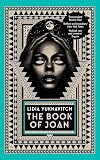
Yesterday I had a completely screen-free Saturday, which took me back to my teenage years. It was very restful and I read 650 pages of three books. This was the first, a novel I’d been very much looking forward to. The concept is so seductive: dystopian future Joan of Arc. I enjoyed it quite a bit, however would caution those intending to read it that the body horror is at times brutally intense. The whole narrative is visceral (sometimes very literally) and raw, even frenzied, with a show more great intensity of feeling. This gives it a mythic quality, as befits a Joan of Arc retelling, rather than the more measured traditional science fiction tone. The setup is as follows: Earth has been ruined and the rich have departed to an orbital space station called CIEL, ruled by a maniac called Jean le Men. Everyone who couldn’t afford it died or is dying in the bombed-out remains of the planet. The only means of survival seems to be hiding in caves.
Unusually for a post-apocalyptic tale, Yuknavitch centres the narrative on women and on bodies. The rich in their orbiting haven are unable to reproduce, having lost all apparent sexual characteristics. They occupy their time with aesthetic masochism: burning and cutting stories into their skin. When Joan appears in the story as an avatar of resistance, the reader is always very aware of her embodiment. She’s often in pain, all her emotions seem to be expressed through her body. A strong parallel is drawn between human bodies and the Earth as body, with soil as the bridge between them. Joan’s full title is Joan of Dirt and she is the last hope for reviving the dying Earth.
‘The Book of Joan’ reminded me of [a:Richard Calder|253327|Richard Calder|https://images.gr-assets.com/authors/1328816963p2/253327.jpg]’s novels, particularly [b:Frenzetta|1455326|Frenzetta|Richard Calder|https://images.gr-assets.com/books/1387708625s/1455326.jpg|1446098]. There is a similar fixation on thwarted sexual passions, on warped bodies, on transgression of the barrier between life and death, and on decay. Both books are memorably strange to read, in part due to hauntingly disgusting imagery. (If you can cope with the artisanal gore in the Hannibal TV series you’ll be OK. If not, tread carefully.) Neither is distinguished by plot coherence, but that isn’t the point. ‘The Book of Joan’ alternates between info-dumps and florid dialogue in a manner that is sometimes a little awkward. Nonetheless, the vividness and originality of the writing shine through. I consider it a postapocalyptic rather than dystopian novel as it has a similar message to Snowpiercer (book & film): everything must be destroyed so that something better might emerge. show less
Unusually for a post-apocalyptic tale, Yuknavitch centres the narrative on women and on bodies. The rich in their orbiting haven are unable to reproduce, having lost all apparent sexual characteristics. They occupy their time with aesthetic masochism: burning and cutting stories into their skin. When Joan appears in the story as an avatar of resistance, the reader is always very aware of her embodiment. She’s often in pain, all her emotions seem to be expressed through her body. A strong parallel is drawn between human bodies and the Earth as body, with soil as the bridge between them. Joan’s full title is Joan of Dirt and she is the last hope for reviving the dying Earth.
‘The Book of Joan’ reminded me of [a:Richard Calder|253327|Richard Calder|https://images.gr-assets.com/authors/1328816963p2/253327.jpg]’s novels, particularly [b:Frenzetta|1455326|Frenzetta|Richard Calder|https://images.gr-assets.com/books/1387708625s/1455326.jpg|1446098]. There is a similar fixation on thwarted sexual passions, on warped bodies, on transgression of the barrier between life and death, and on decay. Both books are memorably strange to read, in part due to hauntingly disgusting imagery. (If you can cope with the artisanal gore in the Hannibal TV series you’ll be OK. If not, tread carefully.) Neither is distinguished by plot coherence, but that isn’t the point. ‘The Book of Joan’ alternates between info-dumps and florid dialogue in a manner that is sometimes a little awkward. Nonetheless, the vividness and originality of the writing shine through. I consider it a postapocalyptic rather than dystopian novel as it has a similar message to Snowpiercer (book & film): everything must be destroyed so that something better might emerge. show less
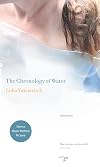
I bought this book three years ago. Why the hell did I wait so long to read it?
I was surprised at how much I read after cracking open this book. It was not what I expected. Not a story of racing at swim meets and Olympic victories won or lost, but of swimming, drowning in a life wrecked instead of protected and nurtured. Such raw and emotive power, unapologetically broken humanity transformed, saved, through linguistic narratives. I read the words and understood the subtext, the honest show more self-destruction that makes no excuse for itself, but is a coping mechanism for things endured. The honesty - at times titillating with remorseless sexuality, frank and fluid - is uncomfortably wrong, not what it's supposed to be, which is exactly the way truth should be.
The writing is like rapids at first, crazy and broken and joined - sentences simultaneously melded and fractured. Grammar and convention are broken in several ways, reflecting the story in other dimensions beyond the words that craft the narrative, reinforcing them. The style settles conventionally, but not artistically, when the story begins to talk about itself. Representative of maturing? Healing? A different mind picking up the story, using memories too oft revisited, altered a little with each glance?
It's an inspirational journey through a life wrenched and recovered, not through redemption, but through wordcraft. Healed? No. Grown beyond in spite of? Certainly. Acceptance is not forgiveness, it is its own power. Her life is one of many passages through a shared hell inflicted, inherited and self-perpetuated, creating the common human coping tropes. Endurance and survival are inspiring themes. Victorious? Definitely, but not because of a Disney ending; it's a human ending, swimmingly complex, defined in water. show less
I was surprised at how much I read after cracking open this book. It was not what I expected. Not a story of racing at swim meets and Olympic victories won or lost, but of swimming, drowning in a life wrecked instead of protected and nurtured. Such raw and emotive power, unapologetically broken humanity transformed, saved, through linguistic narratives. I read the words and understood the subtext, the honest show more self-destruction that makes no excuse for itself, but is a coping mechanism for things endured. The honesty - at times titillating with remorseless sexuality, frank and fluid - is uncomfortably wrong, not what it's supposed to be, which is exactly the way truth should be.
The writing is like rapids at first, crazy and broken and joined - sentences simultaneously melded and fractured. Grammar and convention are broken in several ways, reflecting the story in other dimensions beyond the words that craft the narrative, reinforcing them. The style settles conventionally, but not artistically, when the story begins to talk about itself. Representative of maturing? Healing? A different mind picking up the story, using memories too oft revisited, altered a little with each glance?
It's an inspirational journey through a life wrenched and recovered, not through redemption, but through wordcraft. Healed? No. Grown beyond in spite of? Certainly. Acceptance is not forgiveness, it is its own power. Her life is one of many passages through a shared hell inflicted, inherited and self-perpetuated, creating the common human coping tropes. Endurance and survival are inspiring themes. Victorious? Definitely, but not because of a Disney ending; it's a human ending, swimmingly complex, defined in water. show less
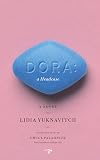
In her short, blistering novel, Lidia Yuknavitch reimagines Sigmund Freud’s case study of the hysterical teenager Dora in a contemporary setting. Ida is a seventeen year old black hole; she’s ferociously angry at her dysfunctional family and the injustices of life. She finds joy and meaning in her art and her small group of friends, all of whom have been damaged by an oppressive world. In between her ecstatic, intoxicated “art attacks” and her desperate, shyly romantic pursuit of her show more friend Obsidian, Ida is forced by her father to visit a psychiatrist, Freud, who she calls “Siggy” or “the Sig.” But Ida sees a threat in Siggy’s attempts to cure her of her voiceless madness, which drives her to fight back against him.
This psychosexual adventure story is told with black humor and vicious rage. Fans of that sort of thing should also try Joey Comeau’s The Complete Lockpick Pornography, another new favorite of mine. show less
This psychosexual adventure story is told with black humor and vicious rage. Fans of that sort of thing should also try Joey Comeau’s The Complete Lockpick Pornography, another new favorite of mine. show less
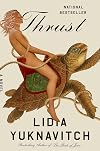
If I could make love to words, I would make love to the words of Lidia Yuknavitch. I've read all of her published novels and the least great page in her least greatest novel is still better than 99.9 percent of anything else ever written. Chronology of Water is still my favorite, but I think Thrust is now my second favorite. She blends linear storytelling with poetry with dreamlike trance-inducing experimental writing with a style that I can't define
Lists
Phoebe Bridgers (1)
Review 2 (1)
Awards


You May Also Like


Associated Authors
Statistics
- Works
- 24
- Also by
- 8
- Members
- 2,483
- Popularity
- #10,329
- Rating
- 3.5
- Reviews
- 111
- ISBNs
- 94
- Languages
- 6
- Favorited
- 8