
Alissa Nutting
Author of Tampa: A Novel
About the Author
Image credit: Author Alissa Nutting at the 2017 Texas Book Festival. By Larry D. Moore, CC BY-SA 4.0, https://commons.wikimedia.org/w/index.php?curid=64097224
Works by Alissa Nutting
Associated Works
My Mother She Killed Me, My Father He Ate Me: Forty New Fairy Tales (2010) — Contributor — 1,099 copies, 26 reviews
Eat Joy: Stories and Comfort Food from 31 Celebrated Writers (2019) — Contributor — 84 copies, 3 reviews
Fantastic Women: 18 Tales of the Surreal and the Sublime from Tin House (2011) — Contributor — 61 copies, 2 reviews
Tagged
Common Knowledge
- Birthdate
- 1980
- Gender
- female
- Education
- University of Florida (BA)
University of Alabama (MFA) - Occupations
- author
lecturer - Organizations
- Grinnell College
John Carroll University
University of Nevada at Las Vegas
Black Warrior Review - Relationships
- Bakopoulos, Dean (husband)
- Nationality
- USA
- Birthplace
- Michigan, USA
- Places of residence
- Iowa, USA
- Associated Place (for map)
- USA
Members
Reviews
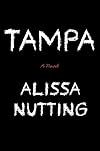
In which an unhappily married ephebeomaniac begins her career teaching junior high by evaluating the boys for a subject with her most desired characteristics to gratify her sensual passions and makes a successful approach to him. In many ways this is a difficult and flawed book; long sections of its prose reside in a grey area between a romance novel and quasi-pornography, and I defy anybody to identify a single character in it who is the least bit likable. Yet this trainwreck is difficult show more to look away from; the characters are well-drawn and the plot thickens beautifully. The easy comparison of this as a sort of reverse Lolita is incomplete and flawed in at least one major way; Humbert Humbert is a fool, and our narrator is no fool. Though not exactly likable, her frankness and quickness in anticipating tactics and scenarios is intriguing. And I especially liked that the novel didn't end up as a morality tale. show less
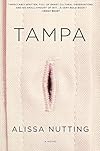
The easiest thing to say about Alissa Nutting's "Tampa" is that it's a gender-swapped "Lolita". But I've read "Lolita," and Alissa Nutting's "Tampa" is no "Lolita."
The real genius of Nabokov novel was that he wrote novel about a pedophile having an affair with a fourteen-year-old girl and came close to convincing you that he'd really written a novel about everything but that. Humbert Humbert is a pervert, yes, but he's also a man obsessed with evanescent beauty, a aesthete who's been show more tempted by beauty and simply given in. An old-fashioned Cold War-era European snob, he sometimes Dolores Haze to access the fun, empty, disposable commercial culture he both loathes and secretly craves, and sometimes I think that this aspect of Nabokov's book is played down too much.
But that's precisely what's wrong with "Tampa." All we get here is Celeste's explicitly consumeristic greed: for luxury items, beauty products, nice cars, and expensive meals. Her lust for young boys might just just be another item on her shopping list. It might, I suppose, be satire, but "Tampa" is played so straight-faced that I'm not sure that it is: Celeste's take on American consumerism is, to put it mildly, less conflicted than Humbert Humbert's, and the author's intent here seems to be to shock and nothing else. To say that Celeste isn't as deep a character as Humbert Humbert is and that Nutting isn't one-quarter the writer that Nabokov is is to understate the case. "Lolita" was a beautiful thing in its own right: the sort of thing that its main character would have loved: by contrast, "Tampa" seems to be written with a sledgehammer. There's little here but Celeste's monomaniacal desire. She's very likely some sort of sociopath, but, as other reviewers have noted, sociopaths are, like most egotists, sort of boring. The author does a good job of what Celeste gets from pubescent boys that she doesn't get from grown men, which is commendable in itself, but she herself seems to be something of a blank slate: we hear almost nothing about her life before she became a wife and a teacher, and little enough about the parts of her life that don't involve seducing teenagers. There's nothing here but plot, and when your protagonist's an enormous, unlikable egoist, that's just not enough.
Even after having made these criticisms, the one thing that I think that the author gets right is the sex, and, since there's little else here, that's a big point in the book's favor. Celeste isn't really much of a moral actor, and the author mostly withholds judgment, but she does manage to communicate the physical and emotional aspects of teenage boys that Celeste finds attractive in unblinking detail, which is difficult to do, as teenage boys can often be awkward, liminal creatures. This is a book where the unformed psychology and physiology of teenage boys is precious and full-grown masculinity seen as stomach-churningly repellent, which neatly turns most grown women's perspectives upside-down. The sex scenes in "Tampa" are explicit and furious, sometimes without being terribly erotic. But then there's the moments when Nutting ably captures her male character's vulnerability, or their fragile, half-grown bodies, or when Celeste considers that every time she tries something new with one of her lovers, it's one last thing she'll get to try with them for the first time. Humbert Humbert, of course, would never have put things so crudely. But this may be the one thing that these two characters have in common: the love -- or at least desire for -- for something fleeting and necessarily impermanent. But that doesn't make Nutting's novel a good one. Shocking, explicit, honest, but ultimately shallow. Recommended to those who enjoy literary oddities for their own sake, but to no-one else. show less
The real genius of Nabokov novel was that he wrote novel about a pedophile having an affair with a fourteen-year-old girl and came close to convincing you that he'd really written a novel about everything but that. Humbert Humbert is a pervert, yes, but he's also a man obsessed with evanescent beauty, a aesthete who's been show more tempted by beauty and simply given in. An old-fashioned Cold War-era European snob, he sometimes Dolores Haze to access the fun, empty, disposable commercial culture he both loathes and secretly craves, and sometimes I think that this aspect of Nabokov's book is played down too much.
But that's precisely what's wrong with "Tampa." All we get here is Celeste's explicitly consumeristic greed: for luxury items, beauty products, nice cars, and expensive meals. Her lust for young boys might just just be another item on her shopping list. It might, I suppose, be satire, but "Tampa" is played so straight-faced that I'm not sure that it is: Celeste's take on American consumerism is, to put it mildly, less conflicted than Humbert Humbert's, and the author's intent here seems to be to shock and nothing else. To say that Celeste isn't as deep a character as Humbert Humbert is and that Nutting isn't one-quarter the writer that Nabokov is is to understate the case. "Lolita" was a beautiful thing in its own right: the sort of thing that its main character would have loved: by contrast, "Tampa" seems to be written with a sledgehammer. There's little here but Celeste's monomaniacal desire. She's very likely some sort of sociopath, but, as other reviewers have noted, sociopaths are, like most egotists, sort of boring. The author does a good job of what Celeste gets from pubescent boys that she doesn't get from grown men, which is commendable in itself, but she herself seems to be something of a blank slate: we hear almost nothing about her life before she became a wife and a teacher, and little enough about the parts of her life that don't involve seducing teenagers. There's nothing here but plot, and when your protagonist's an enormous, unlikable egoist, that's just not enough.
Even after having made these criticisms, the one thing that I think that the author gets right is the sex, and, since there's little else here, that's a big point in the book's favor. Celeste isn't really much of a moral actor, and the author mostly withholds judgment, but she does manage to communicate the physical and emotional aspects of teenage boys that Celeste finds attractive in unblinking detail, which is difficult to do, as teenage boys can often be awkward, liminal creatures. This is a book where the unformed psychology and physiology of teenage boys is precious and full-grown masculinity seen as stomach-churningly repellent, which neatly turns most grown women's perspectives upside-down. The sex scenes in "Tampa" are explicit and furious, sometimes without being terribly erotic. But then there's the moments when Nutting ably captures her male character's vulnerability, or their fragile, half-grown bodies, or when Celeste considers that every time she tries something new with one of her lovers, it's one last thing she'll get to try with them for the first time. Humbert Humbert, of course, would never have put things so crudely. But this may be the one thing that these two characters have in common: the love -- or at least desire for -- for something fleeting and necessarily impermanent. But that doesn't make Nutting's novel a good one. Shocking, explicit, honest, but ultimately shallow. Recommended to those who enjoy literary oddities for their own sake, but to no-one else. show less
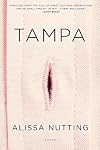
The subject matter of this book is difficult and distasteful. Yet I was fascinated enough to read on. I was compelled, a bit like the terrible protagonist, to go to the end of the journey with her, to find out what will happen, whether she will ever get caught, or pay the price of her depravity.
Celeste lives a wealthy lifestyle with a good-looking and rich husband. She has a mansion of a house and an expensive sports-car. She is beautiful, and has everything she needs, or does show more she?
Unfortunately for her, she has a ravenous sexual appetite, for underage teenage boys. When the fantasies are no longer enough, she starts her pursuit of her victims in earnest. She takes a job as a teacher, and everything she does in the classroom and in her life thereafter is a mere front to cater for her obscene lust.
Reading this mercifully short book, is akin to watching a horror movie, you are spellbound by the action, and want to close your eyes, and deny this is actually happening, even on screen, or in a story. One cannot help marvel at the risk Celeste takes, the lies she tells and her absolute lack of scruples in those "relationships". The eroticism of her encounters is more than counterbalanced with a cringe-factor. With each cringe-worthy experience that serves to satisfy her hunger, you are left wondering what she will do next, and the next idea is even more shocking. It is less about the kinkiness of the encounters and more about the self-serving sociopath behavior pattern that emerges. It is fascinating how the first-person narrative fully justifies it. You are gazing into the mind of a despicable pedophile, whose every thought and behavior is fully driven by her urges.
I am sure that the world is full of terrible out of control people, like child-molesters, murderers and other monsters. The brilliance of creating a character like Celeste, and making her pry on adolescents (not children) gives us a chance to look inside one monster, who initially hides herself very well. We recognize her as someone who cannot escape her proclivities, like an addict. And although Celeste's behavior breaks all moral and decency codes, deep down we know that the difference between her guilt and ours is the magnitude of compulsion and our ability to tame our wants and desires to social code. show less
Celeste lives a wealthy lifestyle with a good-looking and rich husband. She has a mansion of a house and an expensive sports-car. She is beautiful, and has everything she needs, or does show more she?
Unfortunately for her, she has a ravenous sexual appetite, for underage teenage boys. When the fantasies are no longer enough, she starts her pursuit of her victims in earnest. She takes a job as a teacher, and everything she does in the classroom and in her life thereafter is a mere front to cater for her obscene lust.
Reading this mercifully short book, is akin to watching a horror movie, you are spellbound by the action, and want to close your eyes, and deny this is actually happening, even on screen, or in a story. One cannot help marvel at the risk Celeste takes, the lies she tells and her absolute lack of scruples in those "relationships". The eroticism of her encounters is more than counterbalanced with a cringe-factor. With each cringe-worthy experience that serves to satisfy her hunger, you are left wondering what she will do next, and the next idea is even more shocking. It is less about the kinkiness of the encounters and more about the self-serving sociopath behavior pattern that emerges. It is fascinating how the first-person narrative fully justifies it. You are gazing into the mind of a despicable pedophile, whose every thought and behavior is fully driven by her urges.
I am sure that the world is full of terrible out of control people, like child-molesters, murderers and other monsters. The brilliance of creating a character like Celeste, and making her pry on adolescents (not children) gives us a chance to look inside one monster, who initially hides herself very well. We recognize her as someone who cannot escape her proclivities, like an addict. And although Celeste's behavior breaks all moral and decency codes, deep down we know that the difference between her guilt and ours is the magnitude of compulsion and our ability to tame our wants and desires to social code. show less
Before I begin discussing this book in earnest, here is a brief synopsis: Celeste Price, who is definitely a stand-in for the real life hebephile Debra Lafave, is sexually attracted only to fourteen-year-old boys, preferably before they start puberty. This is especially problematic because she is married to an older man and has just begun a job teaching 8th grade English. Celeste is in her early 20s, quite attractive, and a complete sociopath, wearing her mask of sanity and passing muster show more with other adults but engaging in risky behaviors, like very public masturbation. Preying on the children in her classrooms, she soon has an adolescent boy in her grasp. I don’t think it is a spoiler to reveal that Celeste eventually is hoist by her own petard (or rather busted out because her lusts make her sloppy) and comes to a very bad end because that should pretty much go without saying. In a sense, it doesn’t matter how this book ends because the reason to read this book is to get a good look at the inner workings of a sociopath.
I feel very much like this book hits a discordant note, but it also occurs to me that I feel this way because Nutting got Celeste absolutely right. She nailed Celeste. And that is why the book was fascinating, forcing me to read it in two sittings, and left me feeling empty and disturbed. Celeste has no self-awareness beyond acknowledging her anti-social sexual orientation and the way she appears to others. She is an empty shell and she does not care. She can fine tune her behaviors to fit any situation and is a canny observer of people, but she only observes people in so far as they can benefit her in some manner. In this regard, she is an apex predator. She reads very accurately those around her, devouring them when it suits her. She is shallow and her sexual needs render her ridiculous at times, but her shallowness is a marvel and no one else sees how ridiculous she is – only the reader is privy to the borderline idiocy that propels Celeste into action.
And that’s the hell of it, you know. How many more times can we read books wherein the major message is that evil is banal? Or that the monsters in our midst are generally pretty trivial people? I think that was part of the discordant note this book hit with me – we’ve read this story before and before and will read it again and again.
Yet this book was so compulsively readable because Nutting, rather audaciously, does not try to humanize Celeste. At no point does the reader (well, this reader, at least) relate to Celeste because she is a fucking sociopath. Her lust for boys is never explained on any level that could allow the reader to understand Celeste. This isn’t Lolita. If you want a Humbert Humbert-style scene of reflection wherein Celeste understands the ruin she caused in two boys, you won’t get it. Nor will you have much connection to either of the boys Celeste molests. The book is best read as a look at sociopathy and as, as grotesque as it may sound, a reasonably funny book. But this isn’t dark humor in the vein of Nabokov – this is campy Nicole Kidman in To Die For, not solemn and confused Cate Blanchett in Notes on a Scandal.
You can read my entire discussion here: http://ireadoddbooks.com/tampa-by-alissa-nutting/ show less
I feel very much like this book hits a discordant note, but it also occurs to me that I feel this way because Nutting got Celeste absolutely right. She nailed Celeste. And that is why the book was fascinating, forcing me to read it in two sittings, and left me feeling empty and disturbed. Celeste has no self-awareness beyond acknowledging her anti-social sexual orientation and the way she appears to others. She is an empty shell and she does not care. She can fine tune her behaviors to fit any situation and is a canny observer of people, but she only observes people in so far as they can benefit her in some manner. In this regard, she is an apex predator. She reads very accurately those around her, devouring them when it suits her. She is shallow and her sexual needs render her ridiculous at times, but her shallowness is a marvel and no one else sees how ridiculous she is – only the reader is privy to the borderline idiocy that propels Celeste into action.
And that’s the hell of it, you know. How many more times can we read books wherein the major message is that evil is banal? Or that the monsters in our midst are generally pretty trivial people? I think that was part of the discordant note this book hit with me – we’ve read this story before and before and will read it again and again.
Yet this book was so compulsively readable because Nutting, rather audaciously, does not try to humanize Celeste. At no point does the reader (well, this reader, at least) relate to Celeste because she is a fucking sociopath. Her lust for boys is never explained on any level that could allow the reader to understand Celeste. This isn’t Lolita. If you want a Humbert Humbert-style scene of reflection wherein Celeste understands the ruin she caused in two boys, you won’t get it. Nor will you have much connection to either of the boys Celeste molests. The book is best read as a look at sociopathy and as, as grotesque as it may sound, a reasonably funny book. But this isn’t dark humor in the vein of Nabokov – this is campy Nicole Kidman in To Die For, not solemn and confused Cate Blanchett in Notes on a Scandal.
You can read my entire discussion here: http://ireadoddbooks.com/tampa-by-alissa-nutting/ show less
Lists
Awards


You May Also Like


Associated Authors
Statistics
- Works
- 7
- Also by
- 9
- Members
- 2,049
- Popularity
- #12,556
- Rating
- 3.5
- Reviews
- 115
- ISBNs
- 45
- Languages
- 9