
Emily R. Austin
Author of Everyone in This Room Will Someday Be Dead
About the Author
Works by Emily R. Austin
Associated Works
Tagged
Common Knowledge
- Birthdate
- 1989-11-10
- Gender
- female
- Nationality
- Canada
- Associated Place (for map)
- Canada
Members
Reviews
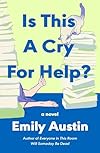
Thanks Atria/NetGalley for the gifted DRC book.
The death of her ex sends Darcy into a mental breakdown, spiraling in regret and guilt. After taking a medical leave, she returns to her librarian job to find protests, unrest, calls for book bans, and questioning of DEI programs.
Is This a Cry for Help? explored mental health, grief, queer life, love, challenges of providing communities with library services, bigotry, censorship, and the power of libraries.
Austin’s compelling characters show more written within realistic situations had me hooked from the beginning. The way she presented the internal monologue of Darcy was so perfect in conveying her anxieties and emotions. The repetition and obsession really put me in her head, giving an unsettled feeling throughout.
I loved seeing Darcy explore her identity, what sexuality means to her, how societal expectations shaped her life. There’s a lot of social commentary, some of which felt awkward as it came off a bit heavy handed. Nonetheless, this book tackled so many important topics in a caring way.
Libraries are integral parts of communities. Censorship and anti-DEI are so harmful. This book is a heartwarming queer love letter to libraries. Another read by Austin that I loved! show less
The death of her ex sends Darcy into a mental breakdown, spiraling in regret and guilt. After taking a medical leave, she returns to her librarian job to find protests, unrest, calls for book bans, and questioning of DEI programs.
Is This a Cry for Help? explored mental health, grief, queer life, love, challenges of providing communities with library services, bigotry, censorship, and the power of libraries.
Austin’s compelling characters show more written within realistic situations had me hooked from the beginning. The way she presented the internal monologue of Darcy was so perfect in conveying her anxieties and emotions. The repetition and obsession really put me in her head, giving an unsettled feeling throughout.
I loved seeing Darcy explore her identity, what sexuality means to her, how societal expectations shaped her life. There’s a lot of social commentary, some of which felt awkward as it came off a bit heavy handed. Nonetheless, this book tackled so many important topics in a caring way.
Libraries are integral parts of communities. Censorship and anti-DEI are so harmful. This book is a heartwarming queer love letter to libraries. Another read by Austin that I loved! show less

Enid lives alone. She works at the Space Agency, has one good friend at work, and looks in on her mom, who goes through depressive episodes. She dates women, but has never been in a serious relationship. She listens to true crime podcasts almost obsessively. She has a phobia of bald men, and someone has been sneaking into her apartment when she's away. Naturally, this freaks her out, but others in her life seem less concerned, even when she gets a doorbell with a camera and app so she can show more prove it. Is her new (bald) neighbor the culprit? Meanwhile, a new relationship with a woman named Polly seems to be turning into something serious, but Enid fears that it will all fall apart when Polly realizes that she (Enid) is actually a terrible person.
This was... a lot. I think I liked it, but also, reading about people feeling anxious makes me feel anxious. That's a me problem, not a book problem, but if you have the same reaction, it's something to keep in mind. This reminded me in some ways of Eleanor Oliphant is Completely Fine, and I would definitely recommend it to readers who enjoyed that book. show less
This was... a lot. I think I liked it, but also, reading about people feeling anxious makes me feel anxious. That's a me problem, not a book problem, but if you have the same reaction, it's something to keep in mind. This reminded me in some ways of Eleanor Oliphant is Completely Fine, and I would definitely recommend it to readers who enjoyed that book. show less

I'm becoming a big Emily Austin fan! This book was a really intimate, very funny, and emotionally affecting portrait of one woman and her very complicated grief for someone with whom she had a very complex, foundational relationship. Mourning the person—a significantly older, singularly male ex—cannot really be extricated from mourning the relationship, and, as a lesbian, also falling somewhere between mourning the fact that the relationship ever happened and mourning the entire life and show more future that that relationship implied. Add in some general neurodivergence, and a mental breakdown is not surprising. What was surprising was how deftly Emily Austin weaves the heartbreak and the humor of this story.
All of this has as its backdrop a library and its patrons and employees, and a maybe too-timely story about right wing attacks on libraries and inclusion. It's depressing, but it seems to me like this part of the story ends much more happily than these things have been ending in libraries in real life, lately. It's grim out there for librarians, everybody. Get involved and support your local library! show less
All of this has as its backdrop a library and its patrons and employees, and a maybe too-timely story about right wing attacks on libraries and inclusion. It's depressing, but it seems to me like this part of the story ends much more happily than these things have been ending in libraries in real life, lately. It's grim out there for librarians, everybody. Get involved and support your local library! show less
Rating: 4* of five by the skin of its teeth
The Publisher Says: Emily Austin, the bestselling “queen of darkly quirky, endearingly flawed heroines” (Sarah Haywood, author of The Cactus), returns with a luminous new novel following a librarian who comes back to work after a mental breakdown only to confront book-banning crusaders in an empowering story of grief, love, and the power of libraries.
Darcy’s life turned out better than she could have ever imagined. She is a librarian at the show more local branch, while her wife Joy runs a book binding service. Between the two of them, there is no more room on their shelves with their ample book collections, various knickknacks and bobbles, and dried bouquets. Rounding out their ideal life is two cats and a sun-soaked house by the lake.
But when Darcy receives the news that her ex-boyfriend, Ben, has passed away, she spirals into a pit of guilt and regret, resulting in a mental breakdown and medical leave from the library. When she returns to work, she is met by unrest in her community, and protests surrounding intellectual freedom, resulting in a call for book bans and a second look at the branch’s upcoming DEI programs.
Through the support of her community, colleagues, and the personal growth that results from examining her previous relationships, Darcy comes into her own agency and the truest version of herself. Is This a Cry for Help? not only offers a moving portrait of queer life after coming of age but also powerfully explores questions about sexuality, community, and the importance of libraries.
I RECEIVED A DRC FROM THE PUBLISHER VIA NETGALLEY. THANK YOU.
My Review: Grief is a hugely powerful, astoundingly complex, and very misunderstood emotional state. It is often portrayed as something one "gets over" it "moves on" from, but it isn't. It's your bass thrum throughout life when the loss you're grieving is deep enough; otherwise mourning, the act of displaying grief, will poultice the poison out effectively.
Darcy is living in a new world defined by grief. It blindsides her, happily married as she is to the Dickensianly yclept Joy. The grief that blindsided her is for Ben, the last man in her romantic life, at his early and unexpected death. It's the end of some part of her that never developed, that she wasn't pining after; as I've got cause to know from my own life that does not matter a bit to the emotional core. When you've once been in love you are always somewhere in your being connected. Plus she really hurt Ben as she was leaving him. Add to this Darcy's many pulls and demands as an involved, community-building librarian involved in a PR debacle. She had an emotional collapse—been there, Darcy—as a straw too many got loaded on her people-pleasing back.
As soon as she returns to work, Author Austin piles on some very relatable First-Amendment challenges for Darcy to manage: a library patron accesses porn on the library's computers. This is part of the protected access all citizens share, it was done within an appropriately restricted area, and yet other patrons complaining leads to lunatic, high-control (ie fascist) nutjobs mounting a campaign to shut down, censor, restrict lots more than just online porn viewing.
Here's where I got a bit...done...with the story. I'm down with the community-building librarian facing off against those in the community who want to control others' behavior. I'm delighted by a lesbian coping with her unhappy sense of having unnecessarily hurt a man in the process of self-discovery. I'm thrilled by Darcy being in a loving, supportive partnership that enables her to interrogate her compulsion to please everyone to her own detriment (as women are trained to do. But all at the same time? Yes, I'm aware that Life does not have handy-dandy pause buttons on the events that one's required to deal with. Fiction does have that function. It's detrimental to a story's legibility as an emotional journey to lard in more and more and more in only three-hundred-ish pages. There a reason Jean-Cristophe and Middlemarch and War and Peace took skatey-eight skabillion pages to tell their stories. Readers need time to consolidate their emotional responses into their factual learning of plot events.
More breathing room, please. And get rid of Kyle the c-a-t.
I'm not sorry I read the story, but I wouldn't read it again despite my warm, approving glow at the ending. show less
The Publisher Says: Emily Austin, the bestselling “queen of darkly quirky, endearingly flawed heroines” (Sarah Haywood, author of The Cactus), returns with a luminous new novel following a librarian who comes back to work after a mental breakdown only to confront book-banning crusaders in an empowering story of grief, love, and the power of libraries.
Darcy’s life turned out better than she could have ever imagined. She is a librarian at the show more local branch, while her wife Joy runs a book binding service. Between the two of them, there is no more room on their shelves with their ample book collections, various knickknacks and bobbles, and dried bouquets. Rounding out their ideal life is two cats and a sun-soaked house by the lake.
But when Darcy receives the news that her ex-boyfriend, Ben, has passed away, she spirals into a pit of guilt and regret, resulting in a mental breakdown and medical leave from the library. When she returns to work, she is met by unrest in her community, and protests surrounding intellectual freedom, resulting in a call for book bans and a second look at the branch’s upcoming DEI programs.
Through the support of her community, colleagues, and the personal growth that results from examining her previous relationships, Darcy comes into her own agency and the truest version of herself. Is This a Cry for Help? not only offers a moving portrait of queer life after coming of age but also powerfully explores questions about sexuality, community, and the importance of libraries.
I RECEIVED A DRC FROM THE PUBLISHER VIA NETGALLEY. THANK YOU.
My Review: Grief is a hugely powerful, astoundingly complex, and very misunderstood emotional state. It is often portrayed as something one "gets over" it "moves on" from, but it isn't. It's your bass thrum throughout life when the loss you're grieving is deep enough; otherwise mourning, the act of displaying grief, will poultice the poison out effectively.
Darcy is living in a new world defined by grief. It blindsides her, happily married as she is to the Dickensianly yclept Joy. The grief that blindsided her is for Ben, the last man in her romantic life, at his early and unexpected death. It's the end of some part of her that never developed, that she wasn't pining after; as I've got cause to know from my own life that does not matter a bit to the emotional core. When you've once been in love you are always somewhere in your being connected. Plus she really hurt Ben as she was leaving him. Add to this Darcy's many pulls and demands as an involved, community-building librarian involved in a PR debacle. She had an emotional collapse—been there, Darcy—as a straw too many got loaded on her people-pleasing back.
As soon as she returns to work, Author Austin piles on some very relatable First-Amendment challenges for Darcy to manage: a library patron accesses porn on the library's computers. This is part of the protected access all citizens share, it was done within an appropriately restricted area, and yet other patrons complaining leads to lunatic, high-control (ie fascist) nutjobs mounting a campaign to shut down, censor, restrict lots more than just online porn viewing.
Here's where I got a bit...done...with the story. I'm down with the community-building librarian facing off against those in the community who want to control others' behavior. I'm delighted by a lesbian coping with her unhappy sense of having unnecessarily hurt a man in the process of self-discovery. I'm thrilled by Darcy being in a loving, supportive partnership that enables her to interrogate her compulsion to please everyone to her own detriment (as women are trained to do. But all at the same time? Yes, I'm aware that Life does not have handy-dandy pause buttons on the events that one's required to deal with. Fiction does have that function. It's detrimental to a story's legibility as an emotional journey to lard in more and more and more in only three-hundred-ish pages. There a reason Jean-Cristophe and Middlemarch and War and Peace took skatey-eight skabillion pages to tell their stories. Readers need time to consolidate their emotional responses into their factual learning of plot events.
More breathing room, please. And get rid of Kyle the c-a-t.
I'm not sorry I read the story, but I wouldn't read it again despite my warm, approving glow at the ending. show less
Lists
Awards


You May Also Like


Associated Authors
Statistics
- Works
- 7
- Also by
- 1
- Members
- 2,166
- Popularity
- #11,859
- Rating
- 3.9
- Reviews
- 99
- ISBNs
- 61
- Languages
- 2