

Janelle Monáe
Author of The Memory Librarian and Other Stories of Dirty Computer
About the Author
Image credit: By NASA/Bill Ingalls - Public Domain
Works by Janelle Monáe
Metropolis, Suite I : The Chase 2 copies
"Tightrope" 1 copy
"Dance Apocalyptic" 1 copy
The Electric Lady 1 copy
"Make Me Feel" 1 copy
Associated Works
Dirty Computer [2018 short film] — Actor — 3 copies
Tagged
Common Knowledge
- Canonical name
- Monáe, Janelle
- Legal name
- Robinson, Janelle Monáe
- Birthdate
- 1985-12-01
- Gender
- non-binary
- Occupations
- actor
singer
songwriter
model - Nationality
- USA
- Birthplace
- Kansas City, Kansas, USA
- Places of residence
- Atlanta, Georgia, USA
- Associated Place (for map)
- USA
Members
Reviews
https://fromtheheartofeurope.eu/the-memory-librarian-ed-janelle-monae/
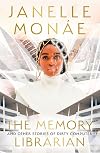
Five stories set in the world of Monáe’s Dirty Computer, about women caught up in the near-future totalitarian state of New Dawn, where those who don’t fit in, especially in terms of gender and sexuality, face memory wiping by the powerful state. It’s rooted in her Hugo finalist album and film from a few years back.
All five stories are billed as being co-written by Monáe and a series of other writers. They all take show more the fictional society in new and slightly different directions; my favourite was the third, “Timebox”, co-written with Chicago activist Eve L. Ewing, in which two women discover a room in their apartment which sits outside time, and react to it very differently. But these are all good and thought-provoking, and recommended. show less
Five stories set in the world of Monáe’s Dirty Computer, about women caught up in the near-future totalitarian state of New Dawn, where those who don’t fit in, especially in terms of gender and sexuality, face memory wiping by the powerful state. It’s rooted in her Hugo finalist album and film from a few years back.
All five stories are billed as being co-written by Monáe and a series of other writers. They all take show more the fictional society in new and slightly different directions; my favourite was the third, “Timebox”, co-written with Chicago activist Eve L. Ewing, in which two women discover a room in their apartment which sits outside time, and react to it very differently. But these are all good and thought-provoking, and recommended. show less
Musician, actor, and fashion icon Janelle Monáe adds author to her many skills with this collection of stories rooted in the dystopian future world previously explored in her music. Each story is co-written with another talented Black author. The stories are set in a near-future authoritarian state called New Dawn where people live under constant surveillance, have their memories harvested, and those who don't conform - especially LGBTQ people and people of color - are classified as "Dirty show more Computers."
These stories include that of Seshet the memory librarian, a high ranking official in New Dawn, who begins to explore life on the "wrong side of town" with a new transgender partner. A commune of women who've found refuge from New Dawn at a place called Pynk Hotel discover a traitor in their midst. A lesbian couple discover a room in their house outside of time with each responding to it differently. And a family are able to travel one by one into a future where they find they've been liberated giving them hope to make it a reality.
It's an interesting collection of sci-fi/Afrofuturist stories that very much parallels our real world struggles. The stories can be didactic in their messaging but honestly sometimes need to be told bluntly. While this type of fiction is not typically something I would enjoy - and I'll confess that some elements went over my head - I am glad that I read this book and would recommend it to people who like this genre and fans of Monáe. show less
These stories include that of Seshet the memory librarian, a high ranking official in New Dawn, who begins to explore life on the "wrong side of town" with a new transgender partner. A commune of women who've found refuge from New Dawn at a place called Pynk Hotel discover a traitor in their midst. A lesbian couple discover a room in their house outside of time with each responding to it differently. And a family are able to travel one by one into a future where they find they've been liberated giving them hope to make it a reality.
It's an interesting collection of sci-fi/Afrofuturist stories that very much parallels our real world struggles. The stories can be didactic in their messaging but honestly sometimes need to be told bluntly. While this type of fiction is not typically something I would enjoy - and I'll confess that some elements went over my head - I am glad that I read this book and would recommend it to people who like this genre and fans of Monáe. show less

Janelle Monáe’s The Memory Librarian and Other Stories of Dirty Computer features five short stories that Monáe wrote in collaboration with Yohanca Delgado, Eve L. Ewing, Alaya Dawn Johnson, Danny Lore, and Sheree Renée Thomas. The stories are inspired by Monáe’s 2018 album, Dirty Computer, and the short film of the same name. They focus on a futuristic totalitarian society – called New Dawn – that compels its citizens to think and act like it wants, using technology to erase show more memories, reprogram individuals, and quash divergence, specifically in gender expression. There is also an element of white technocratic supremacy underpinning everything New Dawn does. The first story, titled “The Memory Librarian” and which Monáe co-wrote with Johnson, focuses on a queer black woman working for New Dawn as a librarian who deletes and manipulates others’ memories. When she learns that her lover is rebelling against these controls, the librarian begins to question her role in New Dawn’s agenda. “Nevermind,” co-written with Lore, focuses on the Pynk Hotel, a refuge for women and fem-aligned people who have escaped from New Dawn and want to be free from New Dawn’s gender controls. Monáe co-wrote “Timebox” with Ewing, focusing on two women trying to make a life together despite their different backgrounds. Raven wants to feel like she isn’t always struggling to keep up and having to budget her time in advance; Akilah is an artist who thinks about community solutions without noticing how Raven needs individual support. They find that the closet in their apartment exists outside of the normal flow of time, but their different ideas on how to use it cause further conflict between them. In “Save Changes,” co-written with Delgado, two sisters take care of their mother, who was reprogrammed by New Dawn and lives under house arrest, showing symptoms of senility following the reprogramming. Amber tries to play things safe, but her sister Larry wants to find ways to live free. Their father gave Amber a pendant that will supposedly allow her to travel back in time, but she can only use it once and won’t know how far back she can go until she uses it. Finally, in Monáe and Thomas’ “Timebox Altar(ed),” a group of children live near the ghost town of Freewheel. They go wandering in the woods, meet an old woman named Mx. Tangee, and construct a fort that allows them to view the future they can create if they enter it with intention.
Monáe’s work touches on themes that are at once current and ongoing in much of dystopian science-fiction, specifically the concept of controlling memories or reprogramming people. While books like Yevgeny Zamyatin’s We, George Orwell’s 1984, and Lowis Lowry’s The Giver all focused on similar ideas, Monáe’s work feels particularly prescient as states such as Texas and Florida seek to control what people learn, which books they can read, and whose stories are told. This similarly evokes Philip K. Dick’s focus on memory such as in his novel, Do Androids Dream of Electric Sheep? Like other dystopian science-fiction stories, Monáe’s characters often have names that blend generic identities with numbers, such as Jane 57821 in “Nevermind,” while others take back their power by naming themselves or demonstrate that they live outside of New Dawn’s controls by having their family names intact. This resembles Orwell or even George Lucas’s first film, THX 1138. Monáe’s focus on the intersectionality of race and gender – and how a totalitarian state would target both – highlights the current battles in which conservatives seek to legislate away people whose race or gender does not align with their definition of America. Recent authors with similar focuses include Tochi Onyebuchi, whose 2022 novel Goliath touches on the roles of the surveillance state and which groups are left behind during technological “advancement.” One does not need to have listened to Monáe’s Dirty Computer album or watched her 2018 film to appreciate this short story collection, but the three works do go hand-in-hand to explore these themes and deepen the reader/listener/viewer’s appreciation of the others. show less
Monáe’s work touches on themes that are at once current and ongoing in much of dystopian science-fiction, specifically the concept of controlling memories or reprogramming people. While books like Yevgeny Zamyatin’s We, George Orwell’s 1984, and Lowis Lowry’s The Giver all focused on similar ideas, Monáe’s work feels particularly prescient as states such as Texas and Florida seek to control what people learn, which books they can read, and whose stories are told. This similarly evokes Philip K. Dick’s focus on memory such as in his novel, Do Androids Dream of Electric Sheep? Like other dystopian science-fiction stories, Monáe’s characters often have names that blend generic identities with numbers, such as Jane 57821 in “Nevermind,” while others take back their power by naming themselves or demonstrate that they live outside of New Dawn’s controls by having their family names intact. This resembles Orwell or even George Lucas’s first film, THX 1138. Monáe’s focus on the intersectionality of race and gender – and how a totalitarian state would target both – highlights the current battles in which conservatives seek to legislate away people whose race or gender does not align with their definition of America. Recent authors with similar focuses include Tochi Onyebuchi, whose 2022 novel Goliath touches on the roles of the surveillance state and which groups are left behind during technological “advancement.” One does not need to have listened to Monáe’s Dirty Computer album or watched her 2018 film to appreciate this short story collection, but the three works do go hand-in-hand to explore these themes and deepen the reader/listener/viewer’s appreciation of the others. show less
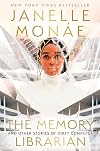
I’ve been wanting to read this one for a while, and though these stories were sometimes too on the nose, the collection didn't disappoint! I love Janelle Monáe—as well as a few of the writers who assisted them with these five short stories, so there would have to be some major issues for me to dislike this.
Content Warnings (I didn’t go story-by-story, sorry):
- homophobia
- racism
- transphobia
Each of these five stories take place in the world of Janelle Monáe’s album and short film, show more both titled Dirty Computer, and expands upon their world and characters. They're all works of “Afrofuturism,” a genre whose term was first coined by the critic Mark Dery to mean "[s]peculative fiction that treats African-American themes and addresses African-American concerns in the context of twentieth century techno-culture—and, more generally, African-American signification that appropriates images of technology and a prosthetically enhanced future" (from Flame Wars: The Discourse of Cyberculture). In Dirty Computer, the future is controlled by a fascist regime in which memories can be controlled and erased. Then a woman named Jane 57821 escapes.
1. The Memory librarian:
First off, I have to say that I was ecstatic when I found out that Alaya Dawn Johnson helped Janelle Monáe write this. Her style and influence is immediately and beautifully apparent. This short story was tied as my favorite (along with "Save Changes"), although the language of this first work is impossible to surpass. It's gorgeous and lyrical and almost a little surreal—but it can also dense and vague at times, depending on your mood or mindset at the time of reading!
In this work, the protagonist is actually a "memory librarian," a high-ranking government worker who oppresses the people she supposedly serves, despite being Black. But her character is a lot more complicated than she first seems, and I love the look into the different uses and problems and temptations that arise when one has the power to control and delete memories. The concept is a bit over complicated, but it's fascinating and the language keeps me glued to the pages. The relationships, too; my favorite relationship in the entire collection is a platonic one between Seshet and her clerk, Jordan.
2. Nevermind (parts 1 and 2):
(written with Danny Lore)
Nevermind is an almost immediate continuation of Monáe's short film. Jane lives in the Pynk Hotel and helps protect it from the fascist New Dawn government. We also meet a non-binary character named Neer, an engineer specializing in repair and security. New Dawn has sometimes come close to them before, but in this story the threat is much more ominous and might come from inside the hotel itself.
The change of author is instantly apparent: the style, tone, and characterizations are so different from the first work. I hate to say it, but this is my least favorite story in the collectione The writing is the main culprit. Exposition and descriptions of the Pynk Hotel are so awkwardly done, and the authors continually describe how safe and happy the community is by telling us what it's not—and in only few instances do they show any of this.
There is also an emphasis on nonviolence, which strikes me as ridiculous when these people are hiding from a totalitarian, violent, and fascist government who will not hesitate to use violent measures against them. None of these people have any weapons or know how to use them. This is, of course, subjective, but even though I agree with the story's main message (transphobia = bad), I wish the message was delivered more organically through storytelling and not preached to us.
3. Timebox:
(written with Eve L. Ewing)
This was a fantastic story, and I don't have much to say. A young couple moves into their new apartment, and they find that a small storage space in their kitchen has the ability to stop time indefinitely when a single person is inside. The story explores that concept and the temptations that such a space could reveal.
I adore the characters in this one, their interaction, and the questions that this story brings up. The only thing I'd have to say is that I don't really see how it fits into the same universe as the others.
4. Save Changes:
(written with Yohanca Delgado)
This story explores the fate of one of the people in Jane's initial group that didn't manage to escape with them, a woman who was caught and "Cleansed" by New Dawn. Mostly, though, it deals with the effect that cleansing had on the woman's family. It's a interesting story, but I'm still not sure how I feel about the way that it handles its comparison to mental illness. However, overall I feel like it's one of the most solid works of the collection, it's tied as my favorite, and it has the best line(s):
"'but isn't the world mapped out already? Do we even need new maps anymore?'
'Do you really think maps are permanent?'"
5. Timebox Altar[ed]:
(written with Sheree Renée Thomas)
A group of children stumble upon a mysterious statue with four figures, each facing one of the four cardinal directions. After making it their own by adding trash or discarded metal or even artwork, they realize with the help of a stranger that it's a gateway to showing them their future (or perhaps their future dreams).
This is a very touching story that takes place in the outskirts of New Dawn, where people struggle to get by and where it's even harder to have and keep dreams. Although the characters are vivid and lovely and bright, the storytelling almost speaks down to them instead of from their eyes (which is a matter of taste, so this one just doesn't work for me). It flows a little inorganically, too, with the children just happening to know what to do and when to do it, which is something that gets on my nerves. Again, just a subjective thing. It is, however, a very lovely way to end the collection.
I love that each story in this collection tries to speak from a very different place in this universe, whether that be a different location (within the government system itself, the outskirts, a random apartment building, somewhere outside the entire system, etc.), a different class, or even a different gender within womanhood.
Every story but one ends on a hopeful note; I noticed that this collection is generally saturated with similar ideas of LGBT freedom—that being loud parties, drugs, drinking, polyamory, lots and lots of art, etc. And a distinct lack of self defense. There is a lot of talk about community and support, but we see no examples of trauma bonding, of nonverbal folk or mentally ill people in the aftermath of New Dawn's violence. I think Janelle Monáe really leans on her own experience, but I just wish there's something to balance all of the songwriting and painting, etc.
I did really enjoy this collection, and it was fascinating to see what each guest author brought to their respective stories. It was even more fascinating to see how their styles changed the flow and prose of the works. I look forward to seeing what else Janelle Monáe does! Truly a multitalent. show less
Content Warnings (I didn’t go story-by-story, sorry):
- homophobia
- racism
- transphobia
Each of these five stories take place in the world of Janelle Monáe’s album and short film, show more both titled Dirty Computer, and expands upon their world and characters. They're all works of “Afrofuturism,” a genre whose term was first coined by the critic Mark Dery to mean "[s]peculative fiction that treats African-American themes and addresses African-American concerns in the context of twentieth century techno-culture—and, more generally, African-American signification that appropriates images of technology and a prosthetically enhanced future" (from Flame Wars: The Discourse of Cyberculture). In Dirty Computer, the future is controlled by a fascist regime in which memories can be controlled and erased. Then a woman named Jane 57821 escapes.
1. The Memory librarian:
First off, I have to say that I was ecstatic when I found out that Alaya Dawn Johnson helped Janelle Monáe write this. Her style and influence is immediately and beautifully apparent. This short story was tied as my favorite (along with "Save Changes"), although the language of this first work is impossible to surpass. It's gorgeous and lyrical and almost a little surreal—but it can also dense and vague at times, depending on your mood or mindset at the time of reading!
In this work, the protagonist is actually a "memory librarian," a high-ranking government worker who oppresses the people she supposedly serves, despite being Black. But her character is a lot more complicated than she first seems, and I love the look into the different uses and problems and temptations that arise when one has the power to control and delete memories. The concept is a bit over complicated, but it's fascinating and the language keeps me glued to the pages. The relationships, too; my favorite relationship in the entire collection is a platonic one between Seshet and her clerk, Jordan.
2. Nevermind (parts 1 and 2):
(written with Danny Lore)
Nevermind is an almost immediate continuation of Monáe's short film. Jane lives in the Pynk Hotel and helps protect it from the fascist New Dawn government. We also meet a non-binary character named Neer, an engineer specializing in repair and security. New Dawn has sometimes come close to them before, but in this story the threat is much more ominous and might come from inside the hotel itself.
The change of author is instantly apparent: the style, tone, and characterizations are so different from the first work. I hate to say it, but this is my least favorite story in the collectione The writing is the main culprit. Exposition and descriptions of the Pynk Hotel are so awkwardly done, and the authors continually describe how safe and happy the community is by telling us what it's not—and in only few instances do they show any of this.
There is also an emphasis on nonviolence, which strikes me as ridiculous when these people are hiding from a totalitarian, violent, and fascist government who will not hesitate to use violent measures against them. None of these people have any weapons or know how to use them. This is, of course, subjective, but even though I agree with the story's main message (transphobia = bad), I wish the message was delivered more organically through storytelling and not preached to us.
3. Timebox:
(written with Eve L. Ewing)
This was a fantastic story, and I don't have much to say. A young couple moves into their new apartment, and they find that a small storage space in their kitchen has the ability to stop time indefinitely when a single person is inside. The story explores that concept and the temptations that such a space could reveal.
I adore the characters in this one, their interaction, and the questions that this story brings up. The only thing I'd have to say is that I don't really see how it fits into the same universe as the others.
4. Save Changes:
(written with Yohanca Delgado)
This story explores the fate of one of the people in Jane's initial group that didn't manage to escape with them, a woman who was caught and "Cleansed" by New Dawn. Mostly, though, it deals with the effect that cleansing had on the woman's family. It's a interesting story, but I'm still not sure how I feel about the way that it handles its comparison to mental illness. However, overall I feel like it's one of the most solid works of the collection, it's tied as my favorite, and it has the best line(s):
"'but isn't the world mapped out already? Do we even need new maps anymore?'
'Do you really think maps are permanent?'"
5. Timebox Altar[ed]:
(written with Sheree Renée Thomas)
A group of children stumble upon a mysterious statue with four figures, each facing one of the four cardinal directions. After making it their own by adding trash or discarded metal or even artwork, they realize with the help of a stranger that it's a gateway to showing them their future (or perhaps their future dreams).
This is a very touching story that takes place in the outskirts of New Dawn, where people struggle to get by and where it's even harder to have and keep dreams. Although the characters are vivid and lovely and bright, the storytelling almost speaks down to them instead of from their eyes (which is a matter of taste, so this one just doesn't work for me). It flows a little inorganically, too, with the children just happening to know what to do and when to do it, which is something that gets on my nerves. Again, just a subjective thing. It is, however, a very lovely way to end the collection.
I love that each story in this collection tries to speak from a very different place in this universe, whether that be a different location (within the government system itself, the outskirts, a random apartment building, somewhere outside the entire system, etc.), a different class, or even a different gender within womanhood.
Every story but one ends on a hopeful note; I noticed that this collection is generally saturated with similar ideas of LGBT freedom—that being loud parties, drugs, drinking, polyamory, lots and lots of art, etc. And a distinct lack of self defense. There is a lot of talk about community and support, but we see no examples of trauma bonding, of nonverbal folk or mentally ill people in the aftermath of New Dawn's violence. I think Janelle Monáe really leans on her own experience, but I just wish there's something to balance all of the songwriting and painting, etc.
I did really enjoy this collection, and it was fascinating to see what each guest author brought to their respective stories. It was even more fascinating to see how their styles changed the flow and prose of the works. I look forward to seeing what else Janelle Monáe does! Truly a multitalent. show less
Lists
Awards


You May Also Like


Associated Authors
Statistics
- Works
- 16
- Also by
- 23
- Members
- 779
- Popularity
- #32,679
- Rating
- 3.9
- Reviews
- 13
- ISBNs
- 22
- Languages
- 1
- Favorited
- 1