
Tochi Onyebuchi
Author of Riot Baby
About the Author
Image credit: Tochi Onyebuchi at BookExpo at the Javits Center in New York City, May 2019. By Rhododendrites - Own work, CC BY-SA 4.0, https://commons.wikimedia.org/w/index.php?curid=79387617
Series
Works by Tochi Onyebuchi
Associated Works
Black Enough: Stories of Being Young and Black in America (2019) — Contributor — 646 copies, 15 reviews
A Universe of Wishes: A We Need Diverse Books Anthology (2020) — Contributor — 265 copies, 5 reviews
That Way Madness Lies: 15 of Shakespeare's Most Notable Works Reimagined (2021) — Contributor — 154 copies, 5 reviews
The Year's Best Science Fiction Vol. 2: The Saga Anthology of Science Fiction 2021 (2021) — Contributor — 58 copies
Uncanny Magazine Issue 24: September/October 2018 (Disabled People Destroy Science Fiction) (2018) — Contributor — 52 copies
The Apex Book of World SF: Volume 5 (Apex World of Speculative Fiction) (2018) — Contributor — 45 copies, 9 reviews
Uncanny Magazine Issue 30: September/October 2019 (Disabled People Destroy Fantasy) (2019) — Contributor; Interviewee, some editions — 22 copies, 4 reviews
Asimov's Science Fiction: Vol. 47, No. 1 & 2 [January/February 2023] — Contributor — 5 copies, 2 reviews
Tagged
Common Knowledge
- Birthdate
- 1987-10-04
- Gender
- male
- Education
- Columbia Law School (JD)
Tisch School of the Arts, New York University (MFA|Dramatic Writing)
Yale College (AB|Political Science) - Agent
- Curtis Brown, Ltd.
- Nationality
- USA
- Birthplace
- Northampton, Massachusetts, USA
- Places of residence
- New Haven, Connecticut, USA
- Map Location
- Connecticut, USA
Members
Reviews
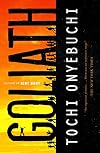
Told in first, second, and third person points of view through fictional newspaper articles and diary entries and narratives, this dystopic novel is set in the 2050s. In what appears to be a parallel of white flight following the 1960s race riots, people with the means and privilege are departing Earth for the first American suburban space colony after a viral plague provokes a great political divide. Those left behind in the radiation-poisoned, resource-depleted American wasteland salvage show more what they can from the collapsing infrastructure, scratching out a living as their homes and neighborhoods are being dismantled to send to the colonies. Mr. Onyebuchi’s novel is a tapestry woven from the strands of structural inequality, racism, classism, poverty, and privilege; by no means a pretty book, but certainly a thought-provoking one. show less
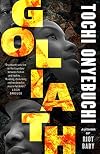
https://fromtheheartofeurope.eu/goliath-by-tochi-onyebuchi/
In America a few decades from now, white folks have mostly left the poisoned, plague-ridden land to live the high life in space, with people of colour left to scrabble around in the ruins. But there is a lot more to it than that enraging situation (not too different from where we are now); Onyebuchi plays with Biblical tropes, the dynamics of religion, of white folks unwittingly making things worse, sexuality and acceptance, all in show more rich prose which jumps along its own timeline without ever losing the run of itself. Recommended. show less
In America a few decades from now, white folks have mostly left the poisoned, plague-ridden land to live the high life in space, with people of colour left to scrabble around in the ruins. But there is a lot more to it than that enraging situation (not too different from where we are now); Onyebuchi plays with Biblical tropes, the dynamics of religion, of white folks unwittingly making things worse, sexuality and acceptance, all in show more rich prose which jumps along its own timeline without ever losing the run of itself. Recommended. show less
Tochi Onyebuchi’s Goliath: A Novel extrapolates from the current world in which racial justice movements, climate change, and a global pandemic dominate the news while very little tangible progress occurs due to an economy and political system structured to benefit the wealthy and corporations. Onyebuchi’s depiction of the future reflects the current political-economic divide. He writes, “Even though distinctions of Northerner and Southerner have long since become irrelevant, the same show more fault line haunts this dilemma as has haunted the country since its founding, and it is everything from willful blindness to malicious intent that keeps discussion away from the demographics” (pg. 189). Drawing upon the lessons of the coronavirus pandemic, Onyebuchi writes, “America’s somehow the only country that could not only fuck up response to a global viral pandemic, but keep fucking it up, and you also got all the race laundry out in the open like that, and, granted, it’s stuff anybody with a brain and half a conscience knows about, but not it’s all happening out loud” (pg. 208). Onyebuchi concludes, “…If they all put their hands to the wall of this country’s history, one would find a single, uninterrupted bloodsmear, inclined inexorably toward oblivion” (pg. 303). His novel is science-fiction doing what it does best, holding a mirror up to the present time and using allegory to force the reader to confront their own reality. A must-read. show less
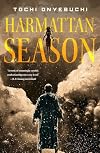
Between late November and March, the cool and dry harmattan winds brings dust storms from the Sahara desert over West Africa, covering everything with a fine, troublesome layer of sand. For the locals, the harmattan is "...indiscriminate. It hurts as much as it helps..." - obscuring things, but carrying away sounds, smells, heat. Tochi Onyebuchi's novel is both, named after, and set during this season. His protagonist, Boubacar, lives in a West African city colonised by the French. He used show more to be a soldier for the occupying forces, but is now a private detective, specialising in finding missing people. The story begins when Boubacar, in his meagre apartment, opens the door to a young woman who is bleeding from a stomach wound, and begging for his help. He hides her, but when the police who are searching for her leave, she's vanished. A few days later, walking through a public square, she's found dead, floating in the air, seemingly suspended by her own blood. Onyebuchi couples a classic hardboiled noir opening with a fantastical twist: Boubacar also knows how to float in the air momentarily, weightless, although it doesn't seem to prevent him from being periodically beaten up by people who are searching for this girl.
Boubacar's friend and fellow ex-soldier Moussa, now a police officer for the French colonial government, asks him to investigate, as the young girl killed was one of seven more victims. As a deux-foi, half French, half Dugulen, he can walk between both worlds while fitting into neither, letting him follow trails that official sources cannot, between the French quarter and the places where the Dugulen live. There's political unrest: the French holding down rebellion violently, while factions of the Dugulen are divided between violent uprising and civil disobedience. The investigation is not without risk for Boubacar himself: demands for a truth and reconciliation commission might lead to an examination of what he and his fellows did as soldiers for the colonial government, a past that Boubacar isn't proud of, and one that he might have to expiate.
I think that Onyebuchi has created a really interesting and atmospheric novel. Despite the fact that his novel throws you right into the story, and his use of a mix of French, several West African languages and English, you can easily grasp context. I take that as evidence of his skill as a writer. I enjoyed how he took a very traditional hardboiled setup and placed in an anticolonial context, and many smaller characters (an enterprising street urchin who helps out Boubacar, a cafe owner he has a passion for) are drawn out precisely and memorably. I will say that the big weakness of this novel is the plot, which meanders a bit and draws to a somewhat abrupt end. But the world-building, and the balance between fantasy and noir is so enjoyable that I didn't mind this as much as I thought I would. I was carried into the world he created and fascinated while I was there. show less
Boubacar's friend and fellow ex-soldier Moussa, now a police officer for the French colonial government, asks him to investigate, as the young girl killed was one of seven more victims. As a deux-foi, half French, half Dugulen, he can walk between both worlds while fitting into neither, letting him follow trails that official sources cannot, between the French quarter and the places where the Dugulen live. There's political unrest: the French holding down rebellion violently, while factions of the Dugulen are divided between violent uprising and civil disobedience. The investigation is not without risk for Boubacar himself: demands for a truth and reconciliation commission might lead to an examination of what he and his fellows did as soldiers for the colonial government, a past that Boubacar isn't proud of, and one that he might have to expiate.
I think that Onyebuchi has created a really interesting and atmospheric novel. Despite the fact that his novel throws you right into the story, and his use of a mix of French, several West African languages and English, you can easily grasp context. I take that as evidence of his skill as a writer. I enjoyed how he took a very traditional hardboiled setup and placed in an anticolonial context, and many smaller characters (an enterprising street urchin who helps out Boubacar, a cafe owner he has a passion for) are drawn out precisely and memorably. I will say that the big weakness of this novel is the plot, which meanders a bit and draws to a somewhat abrupt end. But the world-building, and the balance between fantasy and noir is so enjoyable that I didn't mind this as much as I thought I would. I was carried into the world he created and fascinated while I was there. show less
Lists
Awards


You May Also Like


Associated Authors
Statistics
- Works
- 41
- Also by
- 20
- Members
- 2,832
- Popularity
- #9,053
- Rating
- 3.8
- Reviews
- 88
- ISBNs
- 77
- Languages
- 4
- Favorited
- 1
