
Natascha Kampusch
Author of 3,096 Days
About the Author
Image credit: Die österreichische Autorin Natascha Kampusch auf der Wiener Buchmesse 2019. By Bwag - Own work, CC BY-SA 4.0, https://commons.wikimedia.org/w/index.php?curid=83817578
Works by Natascha Kampusch
Tagged
Common Knowledge
- Canonical name
- Kampusch, Natascha
- Legal name
- Kampusch, Natascha Maria
- Birthdate
- 1988-02-17
- Gender
- female
- Relationships
- Sirny-Kampusch, Brigitta (Mutter)
- Nationality
- Austria
- Birthplace
- Vienna, Austria
- Associated Place (for map)
- Vienna, Austria
Members
Reviews
3,096 Days in Captivity: The True Story of My Abduction, Eight Years of Enslavement, and Escape by Natascha Kampusch
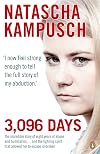
A riveting audiobook chronicling the 8 years of captivity of a girl in Austria abducted at age 10. The main thread of the story involved her psychological survival, day after day, year after year. I knew she escaped at some point, but the question of how and where kept me engrossed.
One way she held on to her sanity was by keeping a calendar and a diary, and even forgiving her captor. Sounds strange, but forgiveness was one way of looking down on this pathetic man and seeing herself as show more stronger.
She rejects the idea of Stockholm Syndrome. Though she saw the world as surreal at times, she never completely lost touch with reality or became a zombie. She always knew her situation, her real name, and her promise to escape when she turned 18. She was deeply wounded but not broken.
After her escape, many people sent her love and support. But many others were critical and nasty, wounding her further. (Welcome back to the real world, Natascha!)
An entrancing psychological read and highly recommended! show less
One way she held on to her sanity was by keeping a calendar and a diary, and even forgiving her captor. Sounds strange, but forgiveness was one way of looking down on this pathetic man and seeing herself as show more stronger.
She rejects the idea of Stockholm Syndrome. Though she saw the world as surreal at times, she never completely lost touch with reality or became a zombie. She always knew her situation, her real name, and her promise to escape when she turned 18. She was deeply wounded but not broken.
After her escape, many people sent her love and support. But many others were critical and nasty, wounding her further. (Welcome back to the real world, Natascha!)
An entrancing psychological read and highly recommended! show less

In march of 1998 the ten year old Natascha disappears on her way to school in a suburb to Vienna. The search is intense for a couple of months, after which the girl is presumed dead. But Natascha is alive, kept prisoner in a five square meter room in a sound isolated basement behind two thick concrete doors and a hidden corridor. Her abductor is Wolfgang Priklopil, a young man suffering from severe paranoid schizophrenia. Eight years later Natascha manages to escape, upon which Priklopil show more promptly kills himself. Her fate becomes a ruthless media craze, and she is more or less forced under ground again. This book is her own account of the years in imprisonment.
This is a quick, gruesome and deeply fascinating read. Natascha describes the years in Priklopil’s basement without sentiment, and with an impressive amount of analysis. She describes in horrid detail how her “role” changed over time from pampered child to work slave to “wife”, the violence, the terror, the psychological torture – food, sleep and light deprivation, altering of reality, manipulation of memory. But also more complex aspects: how Natascha managed to keep some feeling of superiority towards her prisoner over all the years and how high the threshold to escape actually was.
Perhaps most interesting is her description of the evolving, complicated relationship to Priklopil. She sharply denounces the idea of Stockholm Syndrome, meaning that such a label takes away her right to interpret her experience. She talks about how Priklopil was the only person she met for eight years, and that despite the violence and terror, there was also a mutuality there that was necessary for her survival. And there were “good times” too. In the end, after her release, this unwillingness to talk about absolute evil, the victim refusing to play the role of victim, is what the media has a hard time handling, and she faces some rather appalling aggressiveness as a result.
A strong young woman with a unique story – and a book that won’t make you feel like a dirty scavenger for reading it. Recommended. show less
This is a quick, gruesome and deeply fascinating read. Natascha describes the years in Priklopil’s basement without sentiment, and with an impressive amount of analysis. She describes in horrid detail how her “role” changed over time from pampered child to work slave to “wife”, the violence, the terror, the psychological torture – food, sleep and light deprivation, altering of reality, manipulation of memory. But also more complex aspects: how Natascha managed to keep some feeling of superiority towards her prisoner over all the years and how high the threshold to escape actually was.
Perhaps most interesting is her description of the evolving, complicated relationship to Priklopil. She sharply denounces the idea of Stockholm Syndrome, meaning that such a label takes away her right to interpret her experience. She talks about how Priklopil was the only person she met for eight years, and that despite the violence and terror, there was also a mutuality there that was necessary for her survival. And there were “good times” too. In the end, after her release, this unwillingness to talk about absolute evil, the victim refusing to play the role of victim, is what the media has a hard time handling, and she faces some rather appalling aggressiveness as a result.
A strong young woman with a unique story – and a book that won’t make you feel like a dirty scavenger for reading it. Recommended. show less
I chose this book from a pile at the monthly Beijing Bookswap because there was little else that grabbed me and I was short of time. Not at all my usual type of book, I suspected it would be another of the growing genre of misery memoirs and I was quite prepared to abandon reading if it didn't grab me. However, I found that right from the beginning of the bookNatascha's strong personality was evident, and she told her story clearly with a remarkably unemotional style. I was struck by how, show more only a few years after her ordeal ended she was able to look back so dispassionately, and analyse both her childhood self and her abductor with such mature clarity. Although I realise she had help writing this book I thought her real voice came through clearly, and she is an impressive young woman - not a victim, a survivor. This book will certainly add to the understanding of how human beings cope with solitary confinement, sensory deprivation and psychological trauma. I wish her well in the rest of her life. show less

An incredible memoir of survival. Mrs.Kampusch details her years spent in captivity and explains how she finally managed to break free. She has a lot of insight into the psychological aspects of her experience and she never portraits herself as a victim. Nevertheless it is heartbreaking to imagine a young child locked in a basement by some crazy man. This is a story that will stay with me for a while.
You May Also Like


Statistics
- Works
- 3
- Members
- 640
- Popularity
- #39,394
- Rating
- 3.7
- Reviews
- 28
- ISBNs
- 71
- Languages
- 15
- Favorited
- 1
