
Lynn Cullen
Author of Mrs. Poe
About the Author
Lynn Cullen is the author of numerous children's books and young adult novels including The Backyard Ghost, The Mightiest Heart, and I Am Rembrandt's Daughter, which was an ALA Best Book of 2008. The Creation of Eve is her first work for adults. (Bowker Author Biography)
Series
Works by Lynn Cullen
Associated Works
The Raven — Contributor — 7 copies
Tagged
Common Knowledge
- Canonical name
- Cullen, Lynn
- Other names
- July 11 (per Facebook page)
- Birthdate
- 20th century
- Gender
- female
- Education
- Indiana University, Bloomington
- Awards and honors
- 1999 Georgia Author of the Year
- Short biography
- An avid traveler and self-taught historian, Lynn Cullen grew up in Fort Wayne, Indiana, where she spent much of her childhood combing the public library for biographies and roaming the riverbank near where the legendary pioneer, Johnny Appleseed, planted a grove of apple trees. She now lives in Atlanta, Georgia, with her husband, Michael, and three daughters, and is intrigued that artifacts from the Civil War have been unearthed in her backyard.
- Nationality
- USA
- Places of residence
- Atlanta, Georgia, USA
Fort Wayne, Indiana, USA - Associated Place (for map)
- USA
Members
Reviews
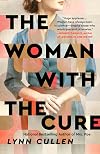
A great book that is so very timely, both in its subject matter (the search for the cure for polio) and for its actual writing. Cullen says at the very end of this book that she began it the day that Chinese scientists announced an outbreak of a new, respiratory-centered virus, and only found the coincidence months later.
The book centers on the life of Dorothy Horstman, daughter of German immigrants, who earns her college degree in science because she uses her first two initials. Barely show more allowed even a fellowship appointment in the 1940's, she has become drawn into fighting the horrors of polio and its attack on the nervous system. And the way it robs people of all ages of their full lives.
Dr. Horstman is competing not just with a narrow-minded group of colleagues, but also the famous Jonas Salk and Albert Sabin, the former of whom is credited with finding the cure. Except he didn't. And his race to get the grant resulted in rushed inoculations with the dead, not the live, virus, combined with shoddy work at the laboratory. Both of these mistakes resulted in another mass outbreak of polio, though they also brought about stricter controls on labs that manufacture vaccines.
The great thing about this book is the way in which I felt drawn into the race, into rooting for Dorothy and her successes, the deft way in which she handles both the egos and the medicine, and her compassion for those doomed to live their entire lives in an iron lung.
One aspect that seemed a little forced was the way in which other noted women who worked around polio patients were introduced to the story, and then shuffled to the side. Granted, this is Dorothy's story, but a bit more interaction or fleshing out of the Australian nurse Sister Elizabeth Kenny, who placed hot, wet wool on patients' limbs, or Barbara Johnson, the research assistant who developed polio due to interacting with the live virus in her work, would have helped the larger story.
Still, this is a timely story that needs to be told, in the way that Lynn Cullen has made women's histories come back from obscurity with her books. show less
The book centers on the life of Dorothy Horstman, daughter of German immigrants, who earns her college degree in science because she uses her first two initials. Barely show more allowed even a fellowship appointment in the 1940's, she has become drawn into fighting the horrors of polio and its attack on the nervous system. And the way it robs people of all ages of their full lives.
Dr. Horstman is competing not just with a narrow-minded group of colleagues, but also the famous Jonas Salk and Albert Sabin, the former of whom is credited with finding the cure. Except he didn't. And his race to get the grant resulted in rushed inoculations with the dead, not the live, virus, combined with shoddy work at the laboratory. Both of these mistakes resulted in another mass outbreak of polio, though they also brought about stricter controls on labs that manufacture vaccines.
The great thing about this book is the way in which I felt drawn into the race, into rooting for Dorothy and her successes, the deft way in which she handles both the egos and the medicine, and her compassion for those doomed to live their entire lives in an iron lung.
One aspect that seemed a little forced was the way in which other noted women who worked around polio patients were introduced to the story, and then shuffled to the side. Granted, this is Dorothy's story, but a bit more interaction or fleshing out of the Australian nurse Sister Elizabeth Kenny, who placed hot, wet wool on patients' limbs, or Barbara Johnson, the research assistant who developed polio due to interacting with the live virus in her work, would have helped the larger story.
Still, this is a timely story that needs to be told, in the way that Lynn Cullen has made women's histories come back from obscurity with her books. show less

Growing up amidst the Welsh mountains of Snowdonia, Prince Llywelyn was the luckiest boy alive, with every advantage and blessing, including the greatest one of all: the love and loyalty of his dog, Gelert. Constant companions, the two grew up together, and were inseparable, until Llywelyn married and his new wife did not care for Gelert. Pushed further and further away from his best friend, Gelert eventually found himself attacked by the one he loved most in all the world, when Llywelyn show more mistakenly thought that the faithful dog had attacked his infant son. Realizing his mistake too late—in fact, Gelert had defended the baby from a wolf attack—Llywelyn searched the forests for his friend, never finding him until the day he was attacked by a wolf himself, and his mighty friend came to his rescue...
The fabulously talented artist and illustrator Laurel Long, who has worked on such gorgeous picture books as The Lady and the Lion and The Magic Nesting Doll (both done with Jacqueline K. Ogburn), as well as her own The Twelve Days of Christmas, made her debut here, in Lynn Cullen's retelling of a traditional Welsh folktale. I have loved The Mightiest Heart since its first publication in 1998, and once owned a copy of my own, now lost in a flood. I'm not sure why I haven't reviewed it before, but decided to do so after reading another folkloric retelling from Cullen, Godiva. In any case, this is just a gorgeous book, pairing a heartbreaking but intensely involving narrative with breathtakingly beautiful illustrations. I always have a lump in my throat when I think of Gelert wandering lonely in the wilderness, driven off by the one who should have most protected him. I appreciated the afterword here, giving more information about the tale—this is a fairly benign retelling, as in most versions Gelert is slain by Llywelyn before he discovers his mistake—and the real-life Prince Llywelyn, and the real-world grave of Gelert, for whom the Welsh town of Beddgelert ("grave of Gelert") is named. Recommended to folklore enthusiasts, to those seeking Welsh stories, and to anyone who appreciates beautiful picture book art. show less
The fabulously talented artist and illustrator Laurel Long, who has worked on such gorgeous picture books as The Lady and the Lion and The Magic Nesting Doll (both done with Jacqueline K. Ogburn), as well as her own The Twelve Days of Christmas, made her debut here, in Lynn Cullen's retelling of a traditional Welsh folktale. I have loved The Mightiest Heart since its first publication in 1998, and once owned a copy of my own, now lost in a flood. I'm not sure why I haven't reviewed it before, but decided to do so after reading another folkloric retelling from Cullen, Godiva. In any case, this is just a gorgeous book, pairing a heartbreaking but intensely involving narrative with breathtakingly beautiful illustrations. I always have a lump in my throat when I think of Gelert wandering lonely in the wilderness, driven off by the one who should have most protected him. I appreciated the afterword here, giving more information about the tale—this is a fairly benign retelling, as in most versions Gelert is slain by Llywelyn before he discovers his mistake—and the real-life Prince Llywelyn, and the real-world grave of Gelert, for whom the Welsh town of Beddgelert ("grave of Gelert") is named. Recommended to folklore enthusiasts, to those seeking Welsh stories, and to anyone who appreciates beautiful picture book art. show less
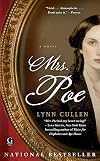
I was initially disappointed in this one, but the more I thought about it, the more I realized how much I enjoyed it.
To get my initial thorn out of the way: I wanted the main character, Fanny Osgood, to be more Scarlett O'Hara and less Melanie Wilkes. Once, in a scene involving Fanny, at the height of decorum, I thought of the quote by Scarlett about Melanie, "...silly little fool who can't open her mouth except to say 'yes' or 'no' and raise a passel of mealy-mouthed brats just like her."
show more However, I realize after reflecting on the story, characters, and writing that I was completely wrong. Fanny is acting exactly how she was raised, to be respectful, kind, and acquiescing. The fact that Virginia is emboldened in both word and deed is eventually explained by Poe by explaining that she stayed as a child.
The tension between Poe and Fanny was evident, as was Virginia's increasing awareness of their relationship. While I admit that I did want Fanny to be a little more free to allow herself these illicit feelings, the time and culture did not permit that she act on her feelings. Her concern for Virginia was yet another testament to her character.
And speaking of characters! What a wonderfully colorful collection of REAL historical figures in this story! When historical fiction drives a reader to do more reading and research, there is no greater compliment to an author. I loved reading about Griswold's penchant for hand adornments, Fuller's growing friendship and trust with Fanny, Bartlett's interest in Southern colloquialisms, and Ellet's drive to ruin anyone who wronged her.
The fact that these were real people has driven me straight to historical references to learn more.
All-in-all, when my friend Kerri recommended this book to me, she did me a favor!
Recommended. show less
To get my initial thorn out of the way: I wanted the main character, Fanny Osgood, to be more Scarlett O'Hara and less Melanie Wilkes. Once, in a scene involving Fanny, at the height of decorum, I thought of the quote by Scarlett about Melanie, "...silly little fool who can't open her mouth except to say 'yes' or 'no' and raise a passel of mealy-mouthed brats just like her."
show more However, I realize after reflecting on the story, characters, and writing that I was completely wrong. Fanny is acting exactly how she was raised, to be respectful, kind, and acquiescing. The fact that Virginia is emboldened in both word and deed is eventually explained by Poe by explaining that she stayed as a child.
The tension between Poe and Fanny was evident, as was Virginia's increasing awareness of their relationship. While I admit that I did want Fanny to be a little more free to allow herself these illicit feelings, the time and culture did not permit that she act on her feelings. Her concern for Virginia was yet another testament to her character.
And speaking of characters! What a wonderfully colorful collection of REAL historical figures in this story! When historical fiction drives a reader to do more reading and research, there is no greater compliment to an author. I loved reading about Griswold's penchant for hand adornments, Fuller's growing friendship and trust with Fanny, Bartlett's interest in Southern colloquialisms, and Ellet's drive to ruin anyone who wronged her.
The fact that these were real people has driven me straight to historical references to learn more.
All-in-all, when my friend Kerri recommended this book to me, she did me a favor!
Recommended. show less

Charlotte, James and Baby John get up to all sorts of tricks in this amusing work of picture book historical fiction, based upon the 1796 visits of George Washington to the famous Philadelphia painter Stuart Gilbert, in order to have his portrait painted. The story is told through the letters of young Charlotte to Mr. Washington, as she apologizes for her and her brothers' various misdeeds, promises to copy out and learn the rules of civility sent to them by that great man, and urges him to show more smile for his portrait. The book concludes with an afterword setting out the history behind the story...
Dear Mr. Washington is the third picture book I have read from author Lynn Cullen, and is something of a departure, as the previous two (Godiva and The Mightiest Heart) were folkloric retellings. I approached it with some curiosity, recognizing illustrator Nancy Carpenter's work as well, as I have read a number of her books. In any case, I found this one quite entertaining, appreciating the madcap antics of the Gilbert children, described in Charlotte's letters and expanded upon in the artwork. I liked the way those letters incorporated some of the rules of etiquette to be found in Rules of Civility & Decent Behavior in Company and Conversation, purportedly given by Washington to the children in the story here. I recall reading in the Chernow biography of Washington how he, unlike so many of his peers, was largely self-educated, and how carefully he studied issues of manners and etiquette, copying out 110 rules of conduct by the time he was sixteen, as part of his campaign to better himself. Given that this is so, the inclusion here of some of these rules should be very enlightening for young people, I think, giving them an insight both into the mores of the time, and into a text important to the development of our first president's character. All in all, this was an entertaining and educational book, one featuring an. engaging epistolary narrative and expressive artwork that captures the humor of the story. Recommended to young history lovers, and to anyone searching for books about George Washington for children. This could be paired nicely with a good picture book about his life more generally. show less
Dear Mr. Washington is the third picture book I have read from author Lynn Cullen, and is something of a departure, as the previous two (Godiva and The Mightiest Heart) were folkloric retellings. I approached it with some curiosity, recognizing illustrator Nancy Carpenter's work as well, as I have read a number of her books. In any case, I found this one quite entertaining, appreciating the madcap antics of the Gilbert children, described in Charlotte's letters and expanded upon in the artwork. I liked the way those letters incorporated some of the rules of etiquette to be found in Rules of Civility & Decent Behavior in Company and Conversation, purportedly given by Washington to the children in the story here. I recall reading in the Chernow biography of Washington how he, unlike so many of his peers, was largely self-educated, and how carefully he studied issues of manners and etiquette, copying out 110 rules of conduct by the time he was sixteen, as part of his campaign to better himself. Given that this is so, the inclusion here of some of these rules should be very enlightening for young people, I think, giving them an insight both into the mores of the time, and into a text important to the development of our first president's character. All in all, this was an entertaining and educational book, one featuring an. engaging epistolary narrative and expressive artwork that captures the humor of the story. Recommended to young history lovers, and to anyone searching for books about George Washington for children. This could be paired nicely with a good picture book about his life more generally. show less
Lists
Awards


You May Also Like


Associated Authors
Statistics
- Works
- 27
- Also by
- 1
- Members
- 2,783
- Popularity
- #9,233
- Rating
- 3.7
- Reviews
- 208
- ISBNs
- 108
- Languages
- 5
- Favorited
- 3
