
Malika Oufkir
Author of Stolen Lives: Twenty Years in a Desert Jail
About the Author
Image credit: Photo by Larry D. Moore, 2006 (Wikimedia Commons)
Works by Malika Oufkir
السجينة 1 copy
Associated Works
Tagged
Common Knowledge
- Birthdate
- 1953-04-02
- Gender
- female
- Occupations
- autobiographer
- Short biography
- After her father, chief of Morocco's armed forces, was executed in 1972 for attempting to assassinate the king, Malika Oufkir and her mother and siblings were arrested and imprisoned for many years under harsh conditions. They were finally released in 1991. She emigrated to France, wrote a bestselling book about her experiences, and became an advocate for the rights of political prisoners.
- Nationality
- Morocco
- Birthplace
- Marrakech, Morocco
- Places of residence
- Morocco
Paris, France
Miami, Florida, USA - Associated Place (for map)
- Morocco
Members
Reviews
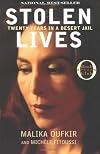
Intriguing as books about long stints in prison are, I normally avoid them as I feel I've had my fill of those kind of trauma books. But the blurb on the back cover of this book piqued my interest when I came across it on a hotel 'borrow / take' bookshelf, and it turned out to be fascinating, haunting and thought-provoking in equal measure because of the unique background of the story teller.
Malika Oufkir led a very privileged life in Morocco. Born to a wealthy heiress who thought nothing of show more selling an apartment block to fund a new couture collection, and a powerful army general who was the king's closest aide, the king demanded that her parents let him adopt her at the age of 5 to become a companion to his own daughter of the same age.
For 11 years she lived inside the king's world, and her account of this closed world of concubines, palaces the size of cities, and extreme opulence was utterly fascinating. This on it's own would have been enough to fill a novel, but when her father led a failed military coup in 1972 and was executed, she and her mother and 6 siblings plus 2 members of staff were banished, becoming part of the network of 'disappeared' political prisoners.
This book is a moving account of the 20 year imprisonment of the family in various desert prisons, where they are held in horrifying conditions whilst the regime waits for them to eventually die. How this imprisonment comes to an end is the stuff of Hollywood movies (no spoilers), yet for the family their ordeal can never truly be in the past. After 20 years they came out of prison as adults in their 20s and 30s, yet essentially they were still locked in the mental age they were when they were taken, not having had the opportunity to mature in the way normal adults do, yet enduring way beyond what most people ever have to face.
Traumatic as the family's story is, this is an amazing story of resilience, hope and courage. The setting in Morocco was fascinating, the insight into the royal lives enthralling, and the plot more extraordinary than anything fictional.
I couldn't put it down - 5 stars. show less
Malika Oufkir led a very privileged life in Morocco. Born to a wealthy heiress who thought nothing of show more selling an apartment block to fund a new couture collection, and a powerful army general who was the king's closest aide, the king demanded that her parents let him adopt her at the age of 5 to become a companion to his own daughter of the same age.
For 11 years she lived inside the king's world, and her account of this closed world of concubines, palaces the size of cities, and extreme opulence was utterly fascinating. This on it's own would have been enough to fill a novel, but when her father led a failed military coup in 1972 and was executed, she and her mother and 6 siblings plus 2 members of staff were banished, becoming part of the network of 'disappeared' political prisoners.
This book is a moving account of the 20 year imprisonment of the family in various desert prisons, where they are held in horrifying conditions whilst the regime waits for them to eventually die. How this imprisonment comes to an end is the stuff of Hollywood movies (no spoilers), yet for the family their ordeal can never truly be in the past. After 20 years they came out of prison as adults in their 20s and 30s, yet essentially they were still locked in the mental age they were when they were taken, not having had the opportunity to mature in the way normal adults do, yet enduring way beyond what most people ever have to face.
Traumatic as the family's story is, this is an amazing story of resilience, hope and courage. The setting in Morocco was fascinating, the insight into the royal lives enthralling, and the plot more extraordinary than anything fictional.
I couldn't put it down - 5 stars. show less
This is a terrible story. But you say "hey lady, you gave this 5 stars". I say, not terribly written, it's certainly interesting and draws us into a different culture, a different time. What is terrible is how humans treat other humans. And that is what is terrible about this story. My heart was broken on multiple occasions while reading this. I think I cried from start to finish. What people suffer, that is heart breaking. What children suffer is even more heart breaking. The fact that this show more is a true story. That this women lived this story is the most heart breaking of all. And yes you should read it. Heart break is a good thing. show less
I registered this book at BookCrossing.com!
http://www.BookCrossing.com/journal/14429509
Malika Oufkir, her siblings and mother are imprisoned in Morocco for about 20 years for crimes committed by their father, who was executed. This is the story as Malika tells it, with the help of writer Michele Fitoussi.
The tale begins with Malika's childhood. Her father holds a high position in the government, is friends with the king. when the king wants to "adopt" Malika as a small child, her parents show more really can't say no. Apparently this kind of arrangement was not uncommon at the time: Malika remains the child of her parents but sees them only rarely. Nevertheless, she is connected to them, particularly to her mother.
Living in the various palaces through her childhood, Malika is guarded, unable to move freely. She is thus already in a prison of sorts.
When she is a young woman of 19 her father takes part in some kind of attempted coup. It fails and he is executed. The family is then restricted and soon taken to prison. They spend 20 years in various prisons, some of which allow access to relatives and provision of decent food, and unfortunately one of which is horrifyingly cruel. It is from this worst prison that the family manages to escape, through a tunnel meticulously planned and dug with tiny instruments.
I'm not giving anything away here; the dust jacket contains this information.
Clearly it's an amazing story, for a rich, pampered family to fall on such hard times and to find the strength to endure and escape. I only wish it were told better. I do not know where the problem originates - with the writer or with Malika - but the narration is flat and leaves us hanging time after time. I feel it would have been a better book if more of the details were finished - many stories just peter out - and if some of Malika's relatives were fleshed out more, as they seem to appear out of nowhere, with offhand references to how important they had been in the past. I would also have liked more detail on how the family dealt with things like the condition of their teeth after the years of neglect and lack of adequate nutrition, which are mentioned only briefly. I think such information would help us grasp better what it felt like to be in this situation, from beginning to end.
I felt that Malika tends to glorify her role here. She probably was important in the development of the escape plan and much else that helped the family hold together, yet she repeatedly tells us how great she was.
It's an important book for the story it tells. I only wish someone else had written it.
Merged review:
I registered this book at BookCrossing.com!
http://www.BookCrossing.com/journal/14429509
Malika Oufkir, her siblings and mother are imprisoned in Morocco for about 20 years for crimes committed by their father, who was executed. This is the story as Malika tells it, with the help of writer Michele Fitoussi.
The tale begins with Malika's childhood. Her father holds a high position in the government, is friends with the king. when the king wants to "adopt" Malika as a small child, her parents really can't say no. Apparently this kind of arrangement was not uncommon at the time: Malika remains the child of her parents but sees them only rarely. Nevertheless, she is connected to them, particularly to her mother.
Living in the various palaces through her childhood, Malika is guarded, unable to move freely. She is thus already in a prison of sorts.
When she is a young woman of 19 her father takes part in some kind of attempted coup. It fails and he is executed. The family is then restricted and soon taken to prison. They spend 20 years in various prisons, some of which allow access to relatives and provision of decent food, and unfortunately one of which is horrifyingly cruel. It is from this worst prison that the family manages to escape, through a tunnel meticulously planned and dug with tiny instruments.
I'm not giving anything away here; the dust jacket contains this information.
Clearly it's an amazing story, for a rich, pampered family to fall on such hard times and to find the strength to endure and escape. I only wish it were told better. I do not know where the problem originates - with the writer or with Malika - but the narration is flat and leaves us hanging time after time. I feel it would have been a better book if more of the details were finished - many stories just peter out - and if some of Malika's relatives were fleshed out more, as they seem to appear out of nowhere, with offhand references to how important they had been in the past. I would also have liked more detail on how the family dealt with things like the condition of their teeth after the years of neglect and lack of adequate nutrition, which are mentioned only briefly. I think such information would help us grasp better what it felt like to be in this situation, from beginning to end.
I felt that Malika tends to glorify her role here. She probably was important in the development of the escape plan and much else that helped the family hold together, yet she repeatedly tells us how great she was.
It's an important book for the story it tells. I only wish someone else had written it. show less
http://www.BookCrossing.com/journal/14429509
Malika Oufkir, her siblings and mother are imprisoned in Morocco for about 20 years for crimes committed by their father, who was executed. This is the story as Malika tells it, with the help of writer Michele Fitoussi.
The tale begins with Malika's childhood. Her father holds a high position in the government, is friends with the king. when the king wants to "adopt" Malika as a small child, her parents show more really can't say no. Apparently this kind of arrangement was not uncommon at the time: Malika remains the child of her parents but sees them only rarely. Nevertheless, she is connected to them, particularly to her mother.
Living in the various palaces through her childhood, Malika is guarded, unable to move freely. She is thus already in a prison of sorts.
When she is a young woman of 19 her father takes part in some kind of attempted coup. It fails and he is executed. The family is then restricted and soon taken to prison. They spend 20 years in various prisons, some of which allow access to relatives and provision of decent food, and unfortunately one of which is horrifyingly cruel. It is from this worst prison that the family manages to escape, through a tunnel meticulously planned and dug with tiny instruments.
I'm not giving anything away here; the dust jacket contains this information.
Clearly it's an amazing story, for a rich, pampered family to fall on such hard times and to find the strength to endure and escape. I only wish it were told better. I do not know where the problem originates - with the writer or with Malika - but the narration is flat and leaves us hanging time after time. I feel it would have been a better book if more of the details were finished - many stories just peter out - and if some of Malika's relatives were fleshed out more, as they seem to appear out of nowhere, with offhand references to how important they had been in the past. I would also have liked more detail on how the family dealt with things like the condition of their teeth after the years of neglect and lack of adequate nutrition, which are mentioned only briefly. I think such information would help us grasp better what it felt like to be in this situation, from beginning to end.
I felt that Malika tends to glorify her role here. She probably was important in the development of the escape plan and much else that helped the family hold together, yet she repeatedly tells us how great she was.
It's an important book for the story it tells. I only wish someone else had written it.
Merged review:
I registered this book at BookCrossing.com!
http://www.BookCrossing.com/journal/14429509
Malika Oufkir, her siblings and mother are imprisoned in Morocco for about 20 years for crimes committed by their father, who was executed. This is the story as Malika tells it, with the help of writer Michele Fitoussi.
The tale begins with Malika's childhood. Her father holds a high position in the government, is friends with the king. when the king wants to "adopt" Malika as a small child, her parents really can't say no. Apparently this kind of arrangement was not uncommon at the time: Malika remains the child of her parents but sees them only rarely. Nevertheless, she is connected to them, particularly to her mother.
Living in the various palaces through her childhood, Malika is guarded, unable to move freely. She is thus already in a prison of sorts.
When she is a young woman of 19 her father takes part in some kind of attempted coup. It fails and he is executed. The family is then restricted and soon taken to prison. They spend 20 years in various prisons, some of which allow access to relatives and provision of decent food, and unfortunately one of which is horrifyingly cruel. It is from this worst prison that the family manages to escape, through a tunnel meticulously planned and dug with tiny instruments.
I'm not giving anything away here; the dust jacket contains this information.
Clearly it's an amazing story, for a rich, pampered family to fall on such hard times and to find the strength to endure and escape. I only wish it were told better. I do not know where the problem originates - with the writer or with Malika - but the narration is flat and leaves us hanging time after time. I feel it would have been a better book if more of the details were finished - many stories just peter out - and if some of Malika's relatives were fleshed out more, as they seem to appear out of nowhere, with offhand references to how important they had been in the past. I would also have liked more detail on how the family dealt with things like the condition of their teeth after the years of neglect and lack of adequate nutrition, which are mentioned only briefly. I think such information would help us grasp better what it felt like to be in this situation, from beginning to end.
I felt that Malika tends to glorify her role here. She probably was important in the development of the escape plan and much else that helped the family hold together, yet she repeatedly tells us how great she was.
It's an important book for the story it tells. I only wish someone else had written it. show less
In 1972, Moroccan defense minister General Mohamed Oufkir staged a failed coup d'etat against King Hassan II. Oufkir was reported to have committed suicide, but was found with five bullet wounds. In retaliation for the coup, his entire family was imprisoned: Oufkir's wife, Fatima, and his children Malika, Raouf, Soukaina, Maria, Myriam, and Abdellatif. A cousin, Achoura, and a close family friend, Halima, joined them. Malika Oufkir was 17 years old; her brother Abdellatif was only 3.
Malika show more had been adopted at age 5 by King Mohammed V, to serve as a playmate for his daughter. After King Mohammed's death Hassan came into power, and continued to treat Malika like a member of his own family. However, she was completely separated from her family of origin and had only recently rejoined them when the coup attempt took place. The first part of this memoir vividly describes the opulence and luxury of Moroccan court life, which of course was in sharp contrast to prison conditions. Over a 20-year period, Malika and her family were kept in three different places, with markedly different conditions and privileges. Initially they were able to spend their days together, later they were transported to a harsher environment and placed into cells either alone or with 1-2 other family members. They spent 10 years without direct face-to-face contact, and yet devised ways to communicate and support each other in maintaining their will to live. Their mental and physical strength is both amazing and inspiring.
Oufkir's story is a shocking one, and yet is just one example of people who "disappeared" during King Hassan II's reign. I am embarrassed to admit that even though I came of age in the 1970s, and was nearly 30 by the time the Oufkirs gained their freedom, I knew nothing of the human rights violations in Morocco. Stolen Lives was a compelling and enlightening read. show less
Malika show more had been adopted at age 5 by King Mohammed V, to serve as a playmate for his daughter. After King Mohammed's death Hassan came into power, and continued to treat Malika like a member of his own family. However, she was completely separated from her family of origin and had only recently rejoined them when the coup attempt took place. The first part of this memoir vividly describes the opulence and luxury of Moroccan court life, which of course was in sharp contrast to prison conditions. Over a 20-year period, Malika and her family were kept in three different places, with markedly different conditions and privileges. Initially they were able to spend their days together, later they were transported to a harsher environment and placed into cells either alone or with 1-2 other family members. They spent 10 years without direct face-to-face contact, and yet devised ways to communicate and support each other in maintaining their will to live. Their mental and physical strength is both amazing and inspiring.
Oufkir's story is a shocking one, and yet is just one example of people who "disappeared" during King Hassan II's reign. I am embarrassed to admit that even though I came of age in the 1970s, and was nearly 30 by the time the Oufkirs gained their freedom, I knew nothing of the human rights violations in Morocco. Stolen Lives was a compelling and enlightening read. show less
Lists
Awards


You May Also Like


Associated Authors
Statistics
- Works
- 4
- Also by
- 1
- Members
- 2,360
- Popularity
- #10,873
- Rating
- 3.7
- Reviews
- 54
- ISBNs
- 65
- Languages
- 13
