
Thomas Elsaesser (1943–2019)
Author of BFI Film Classics : Metropolis
About the Author
Thomas Elsaesser is Emeritus Professor at the University of Amsterdam, The Netherlands, and since 2013 Visiting Professor at Columbia University. USA. European Cinema and Continental Philosophy further develops Elsaesser's approach to national and auteur cinema begun with Fassbinder's Germany: show more History Identity Subject (1996), continued with European Cinema: Face to Face with Hollywood (2005) and given a theoretical turn in Film Theory: An introduction through the Senses (2010). show less
Image credit: http://home.hum.uva.nl/oz/elsaesser/
Works by Thomas Elsaesser
Fassbinder's Germany: History, Identity, Subject (Amsterdam University Press - Film Culture in Transition) (1996) 38 copies
The Last Great American Picture Show: New Hollywood Cinema in the 1970s (Film Culture in Transition) (1995) 34 copies
European Cinema: Face to Face with Hollywood (Amsterdam University Press - Film Culture in Transition) (2005) 26 copies, 1 review
Harun Farocki: Working the Sight-lines (Amsterdam University Press - Film Culture in Transition) (2004) 11 copies
Film History as Media Archaeology: Tracking Digital Cinema (Film Culture in Transition) (2016) 5 copies
European Cinema and Continental Philosophy: Film As Thought Experiment (Thinking Cinema) (2018) 4 copies
Ultrafast phenomena XII : proceedings of the 12th international conference, Charleston, SC, USA, July 9-13, 2000 (2012) 3 copies
Ultrafast phenomena XI : proceedings of the 11th International Conference, Garmisch-Partenkirchen, Germany, July 12-17,1998 (2012) 2 copies
Hollywood heute. Geschichte, Gender und Nation im postklassischen Kino (Deep Focus 1) (2009) 2 copies
Associated Works
Nosferatu: A Symphony of Horror [1922 film] (1922) — Contributor, some editions — 294 copies, 5 reviews
Tagged
Common Knowledge
- Canonical name
- Elsaesser, Thomas
- Legal name
- Elsaesser, Thomas Peter
- Birthdate
- 1943-06-22
- Date of death
- 2019-12-04
- Gender
- male
- Education
- University of Sussex (BA | English literature)
Ruprecht-Karl University, Heidelberg (English and German Literature )
Sorbonne University - Occupations
- film critic
professor
editor
film historian
senior lecturer (English and American Studies, University of East Anglia) - Organizations
- University of Amsterdam
University of Bergen
Brighton Film Review
University of East Anglia - Awards and honors
- Corresponding Fellow of the British Academy
- Nationality
- Germany (birth)
- Birthplace
- Charlottenburg, Berlin, Germany
- Places of residence
- England, UK
Norway
Netherlands
Mannheim, Germany - Place of death
- Beijing, China
Peking, China
Members
Reviews
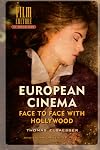
Has European cinema, in the age of globalization, lost contact not only with the world at large, but with its own audiences? Between the thriving festival circuit and the obligatory late-night television slot, is there still a public or a public sphere for European films? Can the cinema be the appropriate medium for a multicultural Europe and its migrating multitudes? Is there a division of representational labor, with Hollywood providing stars and spectacle, the Asian countries exotic color show more and choreographed action, and Europe a sense of history, place and memory?
This collection of essays by an acclaimed film scholar examines how independent filmmaking in Europe has been reinventing itself since the 1990s, faced by renewed competition from Hollywood and the challenges posed to national cinemas by the fall of the Wall in 1989. Elsaesser reassesses the debates and presents a broader framework for understanding the forces at work since the 1960s. These include the interface of "world cinema" and the rise of Asian cinemas, the importance of the international film festival circuit, the role of television, and the changing aesthetics of auteur cinema. New audiences have different allegiances, and new technologies enable networks to reshape identities, but European cinema still has an important function in setting critical and creative agendas, even as its economic and institutional bases are in transition. show less
This collection of essays by an acclaimed film scholar examines how independent filmmaking in Europe has been reinventing itself since the 1990s, faced by renewed competition from Hollywood and the challenges posed to national cinemas by the fall of the Wall in 1989. Elsaesser reassesses the debates and presents a broader framework for understanding the forces at work since the 1960s. These include the interface of "world cinema" and the rise of Asian cinemas, the importance of the international film festival circuit, the role of television, and the changing aesthetics of auteur cinema. New audiences have different allegiances, and new technologies enable networks to reshape identities, but European cinema still has an important function in setting critical and creative agendas, even as its economic and institutional bases are in transition. show less
How should the student set about exploring contemporary American cinema? This book takes an innovative approach to film analysis: each chapter examines the assumptions behind one traditional theory of film, distils a method of analysis from it, and then analyses a contemporary American movie.
It then goes beyond the traditional theory by analysing the same movie using a more current theory and method.
Traditional theories featured include mise-en-scene criticism, auteurism, structural show more analysis, narratology, studies of realism, psychoanalysis and feminism. More current theories include new and post-Lacanian approaches to subjectivity, cognitivism, computerized statistical style analysis, thephilosophy of modal logic, new media theory and deconstruction. Films analysed include Chinatown, Die Hard, The Silence of the Lambs, Jurassic Park, The Lost World, Back to the Future, Lost Highway, plus two European imitations of American filmmaking, The English Patient and The Fifth Element.
All students of film and popular culture will find this book the ideal preparation for writing clear, well-structured, detailed analyses of their favourite American movies. show less
It then goes beyond the traditional theory by analysing the same movie using a more current theory and method.
Traditional theories featured include mise-en-scene criticism, auteurism, structural show more analysis, narratology, studies of realism, psychoanalysis and feminism. More current theories include new and post-Lacanian approaches to subjectivity, cognitivism, computerized statistical style analysis, thephilosophy of modal logic, new media theory and deconstruction. Films analysed include Chinatown, Die Hard, The Silence of the Lambs, Jurassic Park, The Lost World, Back to the Future, Lost Highway, plus two European imitations of American filmmaking, The English Patient and The Fifth Element.
All students of film and popular culture will find this book the ideal preparation for writing clear, well-structured, detailed analyses of their favourite American movies. show less
How should the student set about analysing contemporary American cinema?
This book takes an innovative approach to film analysis: each chapter
examines the assumptions behind one traditional theory of film, distils a
method of analysis from it, and then analyses a contemporary American
movie. It then goes beyond the traditional theory by analysing the same
movie using a more current theory and method.
Traditional
theories featured include mise en scene criticism, auteurism,
structural show more analysis, narratology, studies of realism, psychoanalysis,
and feminism. More current theories include new and post-Lacanian
approaches to subjectivity, cognitivism, computerised statistical style
analysis, the philosophy of modal logic, new media theory, and
deconstruction. Films analysed include Chinatown, Die Hard, The Silence
of the Lambs, Jurassic Park, The Lost World, Back to the Future, Lost
Highway, plus two European imitations of American filmmaking, The
English Patient and The Fifth Element. All students of film and popular
culture will find this book ideal preparation for writing clear,
well-structured, detailed analysis of their favourite American movies. show less
This book takes an innovative approach to film analysis: each chapter
examines the assumptions behind one traditional theory of film, distils a
method of analysis from it, and then analyses a contemporary American
movie. It then goes beyond the traditional theory by analysing the same
movie using a more current theory and method.
Traditional
theories featured include mise en scene criticism, auteurism,
structural show more analysis, narratology, studies of realism, psychoanalysis,
and feminism. More current theories include new and post-Lacanian
approaches to subjectivity, cognitivism, computerised statistical style
analysis, the philosophy of modal logic, new media theory, and
deconstruction. Films analysed include Chinatown, Die Hard, The Silence
of the Lambs, Jurassic Park, The Lost World, Back to the Future, Lost
Highway, plus two European imitations of American filmmaking, The
English Patient and The Fifth Element. All students of film and popular
culture will find this book ideal preparation for writing clear,
well-structured, detailed analysis of their favourite American movies. show less
Lists
Awards


You May Also Like


Associated Authors
Statistics
- Works
- 35
- Also by
- 3
- Members
- 521
- Popularity
- #47,686
- Rating
- 4.1
- Reviews
- 3
- ISBNs
- 112
- Languages
- 12