

J. M. Fenster
Author of Parish Priest: Father Michael McGivney and American Catholicism
About the Author
Julie M. Fenster is a columnist for American Heritage and a contributor to the New York Times. She lives in New York City and DeWitt, New York
Works by J. M. Fenster
Parish Priest: Father Michael McGivney and American Catholicism (2006) — Author — 420 copies, 4 reviews
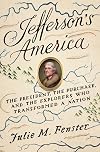
Jefferson's America: The President, the Purchase, and the Explorers Who Transformed a Nation (2016) 201 copies, 45 reviews
Mavericks, Miracles, and Medicine: The Pioneers Who Risked Their Lives to Bring Medicine into the Modern Age (2003) 75 copies
Race of the Century: The Heroic True Story of the 1908 New York to Paris Auto Race (2005) 74 copies, 2 reviews
Tagged
Common Knowledge
- Birthdate
- 1957-11-20
- Gender
- female
- Education
- Colgate University
- Occupations
- writer
- Organizations
- American Heritage
- Agent
- Joelle Delbourgo
- Nationality
- USA
- Places of residence
- New York, USA
- Associated Place (for map)
- New York, USA
Members
Reviews
Jefferson's America: The President, the Purchase, and the Explorers Who Transformed a Nation by Julie M. Fenster
Of the Founding Fathers, it may be said that Thomas Jefferson is NOT my favorite.
If Franklin is the Founder you want to have a beer with Jefferson is the Founder you never want to turn your back on. Coward, liar, hypocrite, blackmailer - the list goes on.
But for one thing you have to forgive him all the rest.
"Jefferson's America" is the story of the Purchase - how America went to Europe hoping to buy a toehold in New Orleans (From the Spanish) and came home after buying half a continent show more (From the French) instead.
As an Anti-Federalist (Republican) Jefferson's stated view was that the Chief Magistrate did not have the authority to buy land that could become "new states". Another of his stated views was that the thirteen colonies had enough to do without taking on the new lands to the strange and dangerous West.
But only a fool would pass up a deal like this - and Jefferson was nobodies fool.
And suddenly "American" comes to mean not pseudo-Brits in knee-britches and periwigs but rough "Western" men in buckskins and furs. Men like Clark - and Zebulon Pike (Merriweather Lewis was an afterthought) - who were not planters and smallholders but explorers and adventurers -- and even naturalists.
The book is full of illuminating details and fine character studies. Lots of stuff here you didn't get in High School Social Studies. It wasn't quite as easy and straightforward as hiring Donna Reed and buying a couple of boats and setting out.
There have been other books about the Purchase but this one puts you down on the water with Clark and his men and really makes you see it. And the author reminds you that others besides Lewis and Clark did the work of discovery -- and that Jefferson was pretty good at keeping things moving in the right ways.
The author is a reliable guide on this voyage. The book is recommended. show less
If Franklin is the Founder you want to have a beer with Jefferson is the Founder you never want to turn your back on. Coward, liar, hypocrite, blackmailer - the list goes on.
But for one thing you have to forgive him all the rest.
"Jefferson's America" is the story of the Purchase - how America went to Europe hoping to buy a toehold in New Orleans (From the Spanish) and came home after buying half a continent show more (From the French) instead.
As an Anti-Federalist (Republican) Jefferson's stated view was that the Chief Magistrate did not have the authority to buy land that could become "new states". Another of his stated views was that the thirteen colonies had enough to do without taking on the new lands to the strange and dangerous West.
But only a fool would pass up a deal like this - and Jefferson was nobodies fool.
And suddenly "American" comes to mean not pseudo-Brits in knee-britches and periwigs but rough "Western" men in buckskins and furs. Men like Clark - and Zebulon Pike (Merriweather Lewis was an afterthought) - who were not planters and smallholders but explorers and adventurers -- and even naturalists.
The book is full of illuminating details and fine character studies. Lots of stuff here you didn't get in High School Social Studies. It wasn't quite as easy and straightforward as hiring Donna Reed and buying a couple of boats and setting out.
There have been other books about the Purchase but this one puts you down on the water with Clark and his men and really makes you see it. And the author reminds you that others besides Lewis and Clark did the work of discovery -- and that Jefferson was pretty good at keeping things moving in the right ways.
The author is a reliable guide on this voyage. The book is recommended. show less
 This review was written for LibraryThing Early Reviewers.
Jefferson's America: The President, the Purchase, and the Explorers Who Transformed a Nation by Julie M. Fenster
Why was history so boring during my school days? I find it fascinating today. Fenster really brought it home to me. This is not a book consisting of one name dropped after another, but a book putting flesh around names we either never heard of previously or which we heard plenty about--over and over and over, with so much boring detail we thought we should scream!
It is nice, too, to read a book that doesn't dwell on his [Jefferson's] outrunning the constable, but that neither fully show more sugarcoats his schemes.
In my history classes we read all about Jefferson's coup in the Louisiana Purchase. It doubled the size of our nation for the the cost was $15 million dollars (even in those days, it was a steal), and never a shot fired. Perhaps so, but the explorers who were sent to map the new territory had a heck of a time gaining access to the territory for which they had paid France. Treaties are only as good as a handshake, it seems, and not every hand was shook :-).
The Spanish (at least in my American history classes) were never particularly highlighted as a player in the colonization of North America, except on the west coast and on the Mexican/Texas border. But Fenster brings forth the reality that by the beginning of the nineteenth c. they were losing the will and power to keep the territories they had claimed.
Of course I knew Pike's Peak was named some guy named Pike. I think I thought he was the first to claim the summit. The Red River? Thomas Freeman? Peter Custis? This book filled in some fairly large gaps in my education.
This book is well worth the read, and I hope some secondary school history teachers will use it in their classrooms. show less
It is nice, too, to read a book that doesn't dwell on his [Jefferson's] outrunning the constable, but that neither fully show more sugarcoats his schemes.
In my history classes we read all about Jefferson's coup in the Louisiana Purchase. It doubled the size of our nation for the the cost was $15 million dollars (even in those days, it was a steal), and never a shot fired. Perhaps so, but the explorers who were sent to map the new territory had a heck of a time gaining access to the territory for which they had paid France. Treaties are only as good as a handshake, it seems, and not every hand was shook :-).
The Spanish (at least in my American history classes) were never particularly highlighted as a player in the colonization of North America, except on the west coast and on the Mexican/Texas border. But Fenster brings forth the reality that by the beginning of the nineteenth c. they were losing the will and power to keep the territories they had claimed.
Of course I knew Pike's Peak was named some guy named Pike. I think I thought he was the first to claim the summit. The Red River? Thomas Freeman? Peter Custis? This book filled in some fairly large gaps in my education.
This book is well worth the read, and I hope some secondary school history teachers will use it in their classrooms. show less
This review was written for LibraryThing Early Reviewers.Jefferson's America: The President, the Purchase, and the Explorers Who Transformed a Nation by Julie M. Fenster
As a fan of narrative non-fiction, Julie Fenster’s book on the early explorers of America’s western territories did not disappoint. The book goes well beyond a discussion of the story with which we are most familiar, that of Jefferson’s decision to send Lewis and Clark to explore the portion of the Louisiana Purchase that would lead to a water route to the Pacific Ocean. She relates that part of the story with excellent storytelling and enriching detail—describing Lewis being chased show more into a river by a grizzly bear, or the affection Clark developed for “Pompie,” Sacagawea’s child—however, she gives equal time to the lesser-known explorations of Dunbar and Hunter on the Ouachita River, Freeman’s dangerous venture on the Red River, and Zebulon Pike’s exploration to the source of the Mississippi, and then a second expedition to the west by Pike to find the source of the Arkansas and Red Rivers. Pike’s unbending determination to keep going in the face of any hardship or adversity is particularly fascinating reading. Fenster does a good job of tying together the various expeditions and Jefferson’s intended political or diplomatic use of them in the days when the French, Spanish, and British still had an influential role to play in the Americas.
There is a great deal of switching back and forth between the various stories in Fenster’s text which can make timelines or other elements of context a bit blurred. Some may find this distracting or confusing, but others may find it aids understanding of the “big picture” vision Jefferson had as disparate factors were at play to threaten American expansion into the region. Each of the expeditions covered could be a book by itself, but for someone wishing to have an overall understanding of Jefferson’s goals for exploration and settlement of the lands of the Louisiana Purchase, this title is an excellent source. show less
There is a great deal of switching back and forth between the various stories in Fenster’s text which can make timelines or other elements of context a bit blurred. Some may find this distracting or confusing, but others may find it aids understanding of the “big picture” vision Jefferson had as disparate factors were at play to threaten American expansion into the region. Each of the expeditions covered could be a book by itself, but for someone wishing to have an overall understanding of Jefferson’s goals for exploration and settlement of the lands of the Louisiana Purchase, this title is an excellent source. show less
This review was written for LibraryThing Early Reviewers.Jefferson's America: The President, the Purchase, and the Explorers Who Transformed a Nation by Julie M. Fenster
Review of Jefferson's America: The President, the Purchase, and the Explorers Who Transformed a Nation. This book was an early reviewer selection.
I have always been fascinated by the exploits of Lewis and Clark and have read several books about these two American heroes. I had also, in related reading, encountered the names of other explorers that were part of the westward expansion following the Louisiana Purchase. I had not, however, encountered any books that concentrated on all of the show more varied efforts that President Jefferson's employed in order to expand his knowledge of this new land. It was very interesting to see all of these adventures laid out and put in the perspective of Jefferson's great plan. The focus of the book was how all of these explorative efforts, both large and small, fit together in the context of the times and it did a good job of merging cultural, diplomatic and political aspects into the story. I enjoyed reading this book and would recommend it to any U. S. History buff. show less
I have always been fascinated by the exploits of Lewis and Clark and have read several books about these two American heroes. I had also, in related reading, encountered the names of other explorers that were part of the westward expansion following the Louisiana Purchase. I had not, however, encountered any books that concentrated on all of the show more varied efforts that President Jefferson's employed in order to expand his knowledge of this new land. It was very interesting to see all of these adventures laid out and put in the perspective of Jefferson's great plan. The focus of the book was how all of these explorative efforts, both large and small, fit together in the context of the times and it did a good job of merging cultural, diplomatic and political aspects into the story. I enjoyed reading this book and would recommend it to any U. S. History buff. show less
This review was written for LibraryThing Early Reviewers.Awards

You May Also Like


Associated Authors
Statistics
- Works
- 15
- Members
- 1,167
- Popularity
- #22,033
- Rating
- 3.8
- Reviews
- 58
- ISBNs
- 54
