
About the Author
Roseanne Montillo holds an MFA from Emerson College in Massachusetts, where she teaches as a professor of literature. She is the author of The Lady and Her Monsters.
Image credit: Roseanne Montillo; Photo: Sears Portrait Studios
Works by Roseanne Montillo
The Lady and Her Monsters: A Tale of Dissections, Real-Life Dr. Frankensteins, and the Creation of Mary Shelley's Masterpiece (2013) 363 copies, 16 reviews
The Wilderness of Ruin: A Tale of Madness, Boston's Great Fire, and the Hunt for America's Youngest Serial Killer (2015) 242 copies, 18 reviews
Deliberate Cruelty: Truman Capote, the Millionaire's Wife, and the Murder of the Century (2022) 131 copies, 4 reviews
Atomic Women: The Untold Stories of the Scientists Who Helped Create the Nuclear Bomb (2020) 103 copies
Fire on the Track: Betty Robinson and the Triumph of the Early Olympic Women (2017) 56 copies, 4 reviews
Tagged
Common Knowledge
- Birthdate
- 20th century
- Gender
- female
- Education
- Emerson College (MFA)
- Occupations
- Professor of Literature, Emerson College
- Agent
- Rob Weisbach
- Nationality
- USA
- Associated Place (for map)
- USA
Members
Reviews
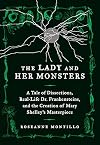
The book contains some interesting tidbits but the author doesn't note when she is straying from established fact into guesswork or hotly debated conclusions. This ultimately forces her readers to second-guess everything she writes, even when only some of her statements may actually be questionable.
There is also a lamentable dearth of photos and drawings; there are no photos or drawings of most of the people and places mentioned, even when their beauty is described or debated, and even Mary show more Shelley herself is only allowed one very small drawing (dissected frogs are allowed more drawings than the main subject of the book).
The author also either omits entirely, or only mentions in passing, what could be very interesting side-stories. One such example is her mentioning of the real Castle Frankenstein, which Mary Shelley may have visited early in her life, and of Baron Frankenstein once being at war with Vlad the Impaler, a story which she then unforgivably utterly ignores (though more information is available and is very interesting). How can any author ignore a chance to expand on a war between Frankenstein and Dracula?! Another example is her failure to even mention the memorial to Percy Shelley at University College, Oxford, donated by Mary Shelley, which includes a statue of his drowned corpse with, if I recall correctly, a domed ceiling of stars configured as they would have been the night of his death.
There is more to complain of. All in all, I am disappointed in what this book is compared with what it could have been. It's still interesting, but I have grave reservations recommending it. It's more of a starting point to your own research than a summary of what is available (and with many interesting bits omitted). show less
There is also a lamentable dearth of photos and drawings; there are no photos or drawings of most of the people and places mentioned, even when their beauty is described or debated, and even Mary show more Shelley herself is only allowed one very small drawing (dissected frogs are allowed more drawings than the main subject of the book).
The author also either omits entirely, or only mentions in passing, what could be very interesting side-stories. One such example is her mentioning of the real Castle Frankenstein, which Mary Shelley may have visited early in her life, and of Baron Frankenstein once being at war with Vlad the Impaler, a story which she then unforgivably utterly ignores (though more information is available and is very interesting). How can any author ignore a chance to expand on a war between Frankenstein and Dracula?! Another example is her failure to even mention the memorial to Percy Shelley at University College, Oxford, donated by Mary Shelley, which includes a statue of his drowned corpse with, if I recall correctly, a domed ceiling of stars configured as they would have been the night of his death.
There is more to complain of. All in all, I am disappointed in what this book is compared with what it could have been. It's still interesting, but I have grave reservations recommending it. It's more of a starting point to your own research than a summary of what is available (and with many interesting bits omitted). show less
The Wilderness of Ruin: A Tale of Madness, Fire, and the Hunt for America's Youngest Serial Killer by Roseanne Montillo
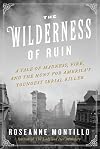
2.0 i guess?
The problem with this book is that there is not enough of a premise to support a book. The "hunt" for the boy torturer could probably fill a magazine feature (though to be worth reading, it would need to be better written than the material here), but it's not enough to fill a book. To take up the rest of the pages, the author tries, unconvincingly, to tie Jesse Pomeroy's story in with some information about what Oliver Wendall Holmes and Herman Melville were up to at around the show more same time. But it just doesn't work. These things aren't connected, no matter how much the writer tries to convince us that they are. I ended up frustrated by how loose the book was.
I think the writer was trying to emulate Devil in the White City, which is one of my favorite nonfiction books and probably my favorite true crime book. But through writing skills, exhaustive research, and a much tighter focus (on the creation of the Chicago World's Fair and H.H. Holmes), that book managed to be truly great. This one falls...far short of that. Not worth the read, imo, no matter how into true crime you are. show less
The problem with this book is that there is not enough of a premise to support a book. The "hunt" for the boy torturer could probably fill a magazine feature (though to be worth reading, it would need to be better written than the material here), but it's not enough to fill a book. To take up the rest of the pages, the author tries, unconvincingly, to tie Jesse Pomeroy's story in with some information about what Oliver Wendall Holmes and Herman Melville were up to at around the show more same time. But it just doesn't work. These things aren't connected, no matter how much the writer tries to convince us that they are. I ended up frustrated by how loose the book was.
I think the writer was trying to emulate Devil in the White City, which is one of my favorite nonfiction books and probably my favorite true crime book. But through writing skills, exhaustive research, and a much tighter focus (on the creation of the Chicago World's Fair and H.H. Holmes), that book managed to be truly great. This one falls...far short of that. Not worth the read, imo, no matter how into true crime you are. show less
Deliberate Cruelty: Truman Capote, the Millionaire's Wife, and the Murder of the Century by Roseanne Montillo
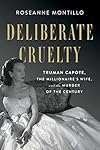
Ann Woodward was a glamorous socialite with an unhappy marriage and things only got more complicated when she shot her husband in the middle of the night, thinking he was a burglar. While she was never found guilty of murder, society shunned her and Ann struggled to rebuild her life over the next two decades. But when Truman Capote included her among the high society figures (his swans) featured in his uncompleted novel Answered Prayers, Ann couldn't bare the rehashing of her past and she show more took her own life. The drama of this book feels like a novel, but the tale of Capote and his swans is real enough. I enjoyed this book, complete with high society scandals, especially as it highlighted portions of the story I hadn't encountered previously. show less
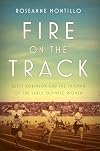
When you watch the Olympic games there are always those few events that you really enjoy watching. I've always admired runners, the sprinting events are just incredible to watch, and I've always wanted to know more about the sport as a whole, which is why I was so excited that I found Fire on the Track by Roseanne Montillo.
When I first started this book, I thought it was going to focus mostly on Elizabeth "Betty" Robinson, the first woman to win an Olympic gold medal, but Ms. Montillo went show more above and beyond, focusing not only on Ms. Robinson but numerous other Olympic women and the struggles that they faced not only during the 1928, 1932, and 1936 Olympics, but also in their personal lives.
Extremely well researched and written, the author takes you to a time where a woman's place was in the home. Women were not supposed to be athletes or even educated for that matter. Every woman was supposed to be content being a housewife and having a family, but this was a time of change in America. We had made it through World War I and were about to be thrusted into the throws of Great Depression. Everything was changing.
The first woman participated in the Olympic games in Paris in 1900, and even then, they were only allowed to participate in "safe" events like lawn tennis and golf. The 1928 games were the first Olympics that women were allowed to compete in the track and field event. This came with a lot of opposition because it was feared that women participating in track and field events would either deem them unattractive to men or actually turn them into men. After a struggle between the International Olympic Committee and the Fédération Sportive Féminine Internationale women were allowed equal entrance into the Olympics.
Fire on the Track gives a detailed background into many of the women athletes that competed in track and field. You get a clear picture of the events that took place and the people that were there to experience them. Some of the details are incredibly personal and graphic but it helps you gain an understanding of that individual and appreciate what all they had to overcome to compete at such a high level. They had to endure prejudice as well as family opposition, their own personal trials and tribulations, and personal demons on the road to the Olympics. All of these women paved the way for all female athletes today and I am honored to now know their story.
This was such an interesting biography and a subject I now find myself fascinated with, not only with women athletes in the Olympics, but the Olympics as a whole. It is extremely well written and with such incredible attention to detail that at times you find yourself getting lost in that world.
The book is divided into three sections: the 1928 Olympics in Amsterdam, the 1932 Olympics in Los Angeles, and finally the 1936 Olympics in Berlin. While I enjoyed the book as a whole the details of the 1936 games were the most intriguing to me, especially knowing what Hitler and the Nazi party were up to at that time, and seeing how much they kept covered up while hosting the games. It's sickening but it also gives you another dimension into this tumultuous time.
I highly recommend this wonderful resource and promise you will not be disappointed! show less
When I first started this book, I thought it was going to focus mostly on Elizabeth "Betty" Robinson, the first woman to win an Olympic gold medal, but Ms. Montillo went show more above and beyond, focusing not only on Ms. Robinson but numerous other Olympic women and the struggles that they faced not only during the 1928, 1932, and 1936 Olympics, but also in their personal lives.
Extremely well researched and written, the author takes you to a time where a woman's place was in the home. Women were not supposed to be athletes or even educated for that matter. Every woman was supposed to be content being a housewife and having a family, but this was a time of change in America. We had made it through World War I and were about to be thrusted into the throws of Great Depression. Everything was changing.
The first woman participated in the Olympic games in Paris in 1900, and even then, they were only allowed to participate in "safe" events like lawn tennis and golf. The 1928 games were the first Olympics that women were allowed to compete in the track and field event. This came with a lot of opposition because it was feared that women participating in track and field events would either deem them unattractive to men or actually turn them into men. After a struggle between the International Olympic Committee and the Fédération Sportive Féminine Internationale women were allowed equal entrance into the Olympics.
Fire on the Track gives a detailed background into many of the women athletes that competed in track and field. You get a clear picture of the events that took place and the people that were there to experience them. Some of the details are incredibly personal and graphic but it helps you gain an understanding of that individual and appreciate what all they had to overcome to compete at such a high level. They had to endure prejudice as well as family opposition, their own personal trials and tribulations, and personal demons on the road to the Olympics. All of these women paved the way for all female athletes today and I am honored to now know their story.
This was such an interesting biography and a subject I now find myself fascinated with, not only with women athletes in the Olympics, but the Olympics as a whole. It is extremely well written and with such incredible attention to detail that at times you find yourself getting lost in that world.
The book is divided into three sections: the 1928 Olympics in Amsterdam, the 1932 Olympics in Los Angeles, and finally the 1936 Olympics in Berlin. While I enjoyed the book as a whole the details of the 1936 games were the most intriguing to me, especially knowing what Hitler and the Nazi party were up to at that time, and seeing how much they kept covered up while hosting the games. It's sickening but it also gives you another dimension into this tumultuous time.
I highly recommend this wonderful resource and promise you will not be disappointed! show less
Lists
Awards


You May Also Like


Statistics
- Works
- 7
- Members
- 899
- Popularity
- #28,500
- Rating
- 3.4
- Reviews
- 42
- ISBNs
- 35
- Favorited
- 1