
Jeffrey Hatcher
Author of The Duchess [2008 film]
About the Author
Works by Jeffrey Hatcher
The Government Inspector 1 copy
What Corbin knew : a comedy 1 copy
Pierre 1 copy
Key Largo — Author — 1 copy
Government Inspector 1 copy
Associated Works
The MX Book of New Sherlock Holmes Stories - Part XXXI: 2022 Annual (1875-1887) (2022) — Foreword — 7 copies
The MX Book of New Sherlock Holmes Stories - XXXII: 2022 Annual (1888-1895) (2022) — Foreword — 5 copies
The MX Book of New Sherlock Holmes Stories - Part XXXIII: 2022 Annual (1896-1919) (2022) — Foreword — 5 copies
Tagged
Common Knowledge
- Birthdate
- 1957
- Gender
- male
- Education
- Denison University
- Occupations
- playwright
screenwriter - Nationality
- USA
- Associated Place (for map)
- USA
Members
Reviews
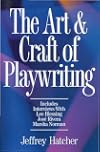
This book is a typical craft book, nothing particularly new or different. It was reading this book, however, that I finally figured out what is wrong with most writing craft books. They tend to make statements of "fact" that are "known" by everyone, but which they back up totally by anecdotal evidence, in some cases twisting the anecdotes mercilessly to make them fit the particular fact they are being used for. That being said, this wasn't a bad book, there were some interesting points made, show more and the exercises were solid. The best part, in my opinion, was the interview with Jose Rivera, who didn't pontificate about the "only" way to write a successful play (which Marsha Norman, unfortunately, did). Rivera did provide some pithy quotes that I will remember and utilize for a long time. show less

In the movie's present, Sherlock Holmes is 93 and World War II has recently ended. He has just returned from a trip to Japan to acquire jelly made from the prickly ash plant, which he hopes will help his rapidly failing memory. While tending his bees and living a generally quiet life, Holmes strikes up a friendship with Roger, his housekeeper's inquisitive and intelligent young son. It is Roger who helps Holmes remember more details about his last case, the one that prompted him to retire to show more the countryside.
Viewers get glimpses of Holmes's trip to Japan (his memory so bad that he wrote his host's name on one of his sleeve cuffs so that he wouldn't embarrass himself) and also his final case. In that case, Holmes investigated a woman whose husband was worried she was being used. She'd had two miscarriages, and the only thing that seemed to help her grief was the music lessons her husband encouraged her to take. However, she became obsessed with the music and seemed to think it allowed her to communicate with her dead children. Watson's version of the case indicated that it ended successfully, but Holmes knows that can't possibly be true. If it were, why would he have quit being a detective afterward?
This was a very slow movie, almost too slow for my tastes. It was extremely painful to see Holmes this way, constantly forgetting people's names, things he said he'd do, and more. Even worse, he knew he was forgetting things, and a part of him knew that his efforts to get around his problem weren't quite good enough. The prickly ash was him grasping at straws.
I guessed how Holmes's last case had gone well before it was revealed, so that part didn't really interest me much. In general, this movie wasn't so much a Sherlock Holmes mystery as it was a sentimental drama. I had gone into it hoping for more of a mystery, so this and the general slowness of it all was a bit of a disappointment. I enjoyed Holmes and Roger's budding friendship, but found myself wishing this had been an adaptation of Laurie R. King's The Beekeeper's Apprentice instead.
Near the end of the movie, things became so depressing that I found myself wishing I'd never started watching it at all. Holmes was a lonely old man who'd become estranged from Watson, his best friend, and who had outlived all the people from the original stories (Watson, Mrs. Hudson, and more). He'd gained a new friend in Roger, but Roger's mother was determined to find employment elsewhere, before Holmes either died or deteriorated to the point that she'd have to be his nurse in addition to his housekeeper. Then a thing happened that made me feel like I'd been kicked in the gut, it was so horrible on top of everything else.
The movie does end fairly happily, but for a while there it was deeply depressing. I don't think I could watch it again. It was decent, I suppose, if not exactly enjoyable, but I have a feeling it would be far too sentimental for most Holmes fans.
(Original review posted on A Library Girl's Familiar Diversions.) show less
Viewers get glimpses of Holmes's trip to Japan (his memory so bad that he wrote his host's name on one of his sleeve cuffs so that he wouldn't embarrass himself) and also his final case. In that case, Holmes investigated a woman whose husband was worried she was being used. She'd had two miscarriages, and the only thing that seemed to help her grief was the music lessons her husband encouraged her to take. However, she became obsessed with the music and seemed to think it allowed her to communicate with her dead children. Watson's version of the case indicated that it ended successfully, but Holmes knows that can't possibly be true. If it were, why would he have quit being a detective afterward?
This was a very slow movie, almost too slow for my tastes. It was extremely painful to see Holmes this way, constantly forgetting people's names, things he said he'd do, and more. Even worse, he knew he was forgetting things, and a part of him knew that his efforts to get around his problem weren't quite good enough. The prickly ash was him grasping at straws.
I guessed how Holmes's last case had gone well before it was revealed, so that part didn't really interest me much. In general, this movie wasn't so much a Sherlock Holmes mystery as it was a sentimental drama. I had gone into it hoping for more of a mystery, so this and the general slowness of it all was a bit of a disappointment. I enjoyed Holmes and Roger's budding friendship, but found myself wishing this had been an adaptation of Laurie R. King's The Beekeeper's Apprentice instead.
Near the end of the movie, things became so depressing that I found myself wishing I'd never started watching it at all. Holmes was a lonely old man who'd become estranged from Watson, his best friend, and who had outlived all the people from the original stories (Watson, Mrs. Hudson, and more). He'd gained a new friend in Roger, but Roger's mother was determined to find employment elsewhere, before Holmes either died or deteriorated to the point that she'd have to be his nurse in addition to his housekeeper. Then a thing happened that made me feel like I'd been kicked in the gut, it was so horrible on top of everything else.
The movie does end fairly happily, but for a while there it was deeply depressing. I don't think I could watch it again. It was decent, I suppose, if not exactly enjoyable, but I have a feeling it would be far too sentimental for most Holmes fans.
(Original review posted on A Library Girl's Familiar Diversions.) show less

Don't go into this film expecting a crime drama. It isn't. It's more about getting old and senile and fighting against that. And trying to come to terms with your regrets. It's a quiet film and rather sad but with an end of acceptance.

From the back cover: In the last decade of the twentieth century, a beautiful young woman in nineteenth century clothing is found floating on an iceberg in the middle of the North Atlantic. When rescued, she says only one word: Titanic. The woman, is taken to an isolated spot on the coast of Maine where an expert on the sinking of the liner, a mysterious individual in his own right, has arranged to interrogate her for six days. His goal: to crack her story, get her to confess she's a fake show more and reveal her true identity; his one clue: her enigmatic references to an unknown place called "Scotland Road".
I loved this very quick little play, a scant 48 pages in length, which reads IMO just like a thrilling short story! With only four characters, one stage setting, two acts, seven scenes and a playtime of 90 minutes (according to the playwright) this one really kept my attention. The stage directions included made this one very easy to visualize, along with the sparse props. Great characters and dialogue to engage an audience, even if they - like me - are not as a general rule fascinated with the story of the Titanic and its survivors.
If you enjoy the cat and mouse game of an interrogation, have a love for things that whiff of history and if you can lay your hands on a copy of this one, I suggest you do so. It is well worth the short one hour it will take to read it. show less
I loved this very quick little play, a scant 48 pages in length, which reads IMO just like a thrilling short story! With only four characters, one stage setting, two acts, seven scenes and a playtime of 90 minutes (according to the playwright) this one really kept my attention. The stage directions included made this one very easy to visualize, along with the sparse props. Great characters and dialogue to engage an audience, even if they - like me - are not as a general rule fascinated with the story of the Titanic and its survivors.
If you enjoy the cat and mouse game of an interrogation, have a love for things that whiff of history and if you can lay your hands on a copy of this one, I suggest you do so. It is well worth the short one hour it will take to read it. show less
Awards

You May Also Like


Associated Authors
Statistics
- Works
- 33
- Also by
- 5
- Members
- 944
- Popularity
- #27,222
- Rating
- 3.6
- Reviews
- 18
- ISBNs
- 42
- Languages
- 3