
Edward Steers, Jr.
Author of Blood on the Moon: The Assassination of Abraham Lincoln
About the Author
Edward Steers Jr., a recognized authority on the Lincoln assassination, is the author of several books, including Getting Right with Lincoln: Correcting Misconceptions about Our Greatest President, Blood on the Moon: The Assassination of Abraham Lincoln, and Lincoln Legends: Myths, Hoaxes, and show more Contabulations Associated with Our Greatest President. show less
Image credit: Ed Steers
Works by Edward Steers, Jr.
Lincoln Legends: Myths, Hoaxes, and Confabulations Associated with Our Greatest President (2007) 142 copies, 7 reviews
The Trial: The Assassination of President Lincoln and the Trial of the Conspirators (2003) 43 copies
The Lincoln Assassination Conspirators: Their Confinement and Execution, as Recorded in the Letterbook of John Frederick Hartranft (2009) 36 copies
Tagged
Common Knowledge
- Canonical name
- Steers, Edward, Jr.
- Gender
- male
- Education
- University of Pennsylvania (BS | Microbiology | 1959)
University of Pennsylvania (PhD | Molecular Genetics | 1963) - Occupations
- research scientist, NIH
author
Lincoln scholar - Nationality
- USA
- Places of residence
- Bethesda, Maryland, USA
Berkeley Springs, West Virginia, USA - Associated Place (for map)
- USA
Members
Reviews
Lincoln Legends: Myths, Hoaxes, and Confabulations Associated with Our Greatest President by Jr. Edward Steers
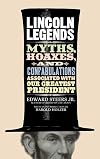
"Lincoln Legends: Myths, Hoaxes and Confabulations Associated With Our Greatest President" by Edward Steer Jr. is an excellent addition to any historian's collection of Civil War-related tomes and yet, at the same time, it is easily accessible by non-Lincoln scholars as well.
The sections deal with many different myths and hoaxes that seem to surround our 16th President. The book begins with the fraud that is the Lincoln cabin, the "alleged" birthplace of the President. Its legitimacy is show more called into question by its shady and questionable past and uncertain provenance.
In other chapters, the hoax surrounding fabricated love letters between Lincoln and Ann Rutledge is revealed, even with this hoax, the unsupported illusion that Ann was Lincoln's "one great love" (addressed in another chapter) still refuses to die. Of course, according to one misguided historian, Lincoln was actually gay (supported only by reading into a few statements what he wanted to see) another myth easily dispensed with.
From "lost" drafts of the Lincoln's "Gettysburg Address" to the shifting of authorship of the Bixby Letter, it certainly seems that interest in Lincoln and his writings hasn't diminished any in the last 150 years.
By far though, my favorite chapter was the "Noble American or Deceptive Doctor?" one about Doctor Samuel Mudd, the man who continues to be historically vilified for his role in helping John Wilkes Booth escape. In this chapter, Steers presents the case and proves BEYOND A SHADOW OF A DOUBT, that Doctor Mudd was a traitor and deserved his punishment (the continued actions of his descendents to clear his name not withstanding) and in the opinion of this reader, should have hanged with Mary Surratt, Lewis Powell, David Herold, and George Atzerodt, he got off easy.
"Lincoln Legends" is a fascinating and engaging read. I recommend it to one and all. show less
The sections deal with many different myths and hoaxes that seem to surround our 16th President. The book begins with the fraud that is the Lincoln cabin, the "alleged" birthplace of the President. Its legitimacy is show more called into question by its shady and questionable past and uncertain provenance.
In other chapters, the hoax surrounding fabricated love letters between Lincoln and Ann Rutledge is revealed, even with this hoax, the unsupported illusion that Ann was Lincoln's "one great love" (addressed in another chapter) still refuses to die. Of course, according to one misguided historian, Lincoln was actually gay (supported only by reading into a few statements what he wanted to see) another myth easily dispensed with.
From "lost" drafts of the Lincoln's "Gettysburg Address" to the shifting of authorship of the Bixby Letter, it certainly seems that interest in Lincoln and his writings hasn't diminished any in the last 150 years.
By far though, my favorite chapter was the "Noble American or Deceptive Doctor?" one about Doctor Samuel Mudd, the man who continues to be historically vilified for his role in helping John Wilkes Booth escape. In this chapter, Steers presents the case and proves BEYOND A SHADOW OF A DOUBT, that Doctor Mudd was a traitor and deserved his punishment (the continued actions of his descendents to clear his name not withstanding) and in the opinion of this reader, should have hanged with Mary Surratt, Lewis Powell, David Herold, and George Atzerodt, he got off easy.
"Lincoln Legends" is a fascinating and engaging read. I recommend it to one and all. show less
Lincoln Legends: Myths, Hoaxes, and Confabulations Associated with Our Greatest President by Jr. Edward Steers
"Lincoln Legends: Myths, Hoaxes and Confabulations Associated With Our Greatest President" by Edward Steer Jr. is an excellent addition to any historian's collection of Civil War-related tomes and yet, at the same time, it is easily accessible by non-Lincoln scholars as well.
The sections deal with many different myths and hoaxes that seem to surround our 16th President. The book begins with the fraud that is the Lincoln cabin, the "alleged" birthplace of the President. Its legitimacy is show more called into question by its shady and questionable past and uncertain provenance.
In other chapters, the hoax surrounding fabricated love letters between Lincoln and Ann Rutledge is revealed, even with this hoax, the unsupported illusion that Ann was Lincoln's "one great love" (addressed in another chapter) still refuses to die. Of course, according to one misguided historian, Lincoln was actually gay (supported only by reading into a few statements what he wanted to see) another myth easily dispensed with.
From "lost" drafts of the Lincoln's "Gettysburg Address" to the shifting of authorship of the Bixby Letter, it certainly seems that interest in Lincoln and his writings hasn't diminished any in the last 150 years.
By far though, my favorite chapter was the "Noble American or Deceptive Doctor?" one about Doctor Samuel Mudd, the man who continues to be historically vilified for his role in helping John Wilkes Booth escape. In this chapter, Steers presents the case and proves BEYOND A SHADOW OF A DOUBT, that Doctor Mudd was a traitor and deserved his punishment (the continued actions of his descendents to clear his name not withstanding) and in the opinion of this reader, should have hanged with Mary Surratt, Lewis Powell, David Herold, and George Atzerodt, he got off easy.
"Lincoln Legends" is a fascinating and engaging read. I recommend it to one and all. show less
The sections deal with many different myths and hoaxes that seem to surround our 16th President. The book begins with the fraud that is the Lincoln cabin, the "alleged" birthplace of the President. Its legitimacy is show more called into question by its shady and questionable past and uncertain provenance.
In other chapters, the hoax surrounding fabricated love letters between Lincoln and Ann Rutledge is revealed, even with this hoax, the unsupported illusion that Ann was Lincoln's "one great love" (addressed in another chapter) still refuses to die. Of course, according to one misguided historian, Lincoln was actually gay (supported only by reading into a few statements what he wanted to see) another myth easily dispensed with.
From "lost" drafts of the Lincoln's "Gettysburg Address" to the shifting of authorship of the Bixby Letter, it certainly seems that interest in Lincoln and his writings hasn't diminished any in the last 150 years.
By far though, my favorite chapter was the "Noble American or Deceptive Doctor?" one about Doctor Samuel Mudd, the man who continues to be historically vilified for his role in helping John Wilkes Booth escape. In this chapter, Steers presents the case and proves BEYOND A SHADOW OF A DOUBT, that Doctor Mudd was a traitor and deserved his punishment (the continued actions of his descendents to clear his name not withstanding) and in the opinion of this reader, should have hanged with Mary Surratt, Lewis Powell, David Herold, and George Atzerodt, he got off easy.
"Lincoln Legends" is a fascinating and engaging read. I recommend it to one and all. show less

An interesting book, with six interesting hoaxes, though some are better than others.
Ch. 1: A decent recapitulation of the Mark Hoffman case, with a focus on the "Oath of a Freeman," not his Mormon forgeries. Pretty good, though.
Ch. 2: The chapter focuses on some supposed transcripts of a conversation between Churchill and FDR that did not happen: they were a hoax. What is left undone is a thorough rebuttal of the conspiracy theory based on the facts that are facts. This is better done show more elsewhere.
Ch. 3: A nice retelling of the Hitler Diaries hoax.
Ch. 4: A skeptical account of the Shroud of Turin, with some evidence I haven't heard before. A Dr. McCrone says the "blood" isn't blood? I've always read that it is blood? The Catholic Church traced down the forger in the 1300s? Here the skeptic takes a Church document rather unskeptically. Most Shroud researchers believe that we have references to the shroud going back before it pops up in France. It is good to see an account of a Shroud skeptic, since most Shroud books are pro it being an authentic relic. Steers relies quite heavily on his foreword writer Nickell's work here.
Ch. 5: The Piltdown Man hoax is told here, with the blame falling squarely on Dawson, who probably forged other artifacts. Fine. But Steers seems to believe that the hoax was accepted for nationalistic reasons: Brits were racist jingos who wanted an "ancestor" of their own back in the human family tree. Steers doesn't seem to consider that scientists might have wanted a missing link because they wanted to prove Darwinistic evolution. Scientists (it is repeated again and again that Dawson was an amateur) can't have sinister motives, can they?
Ch. 6: Steers focuses on the missing pages from the John Wilkes Booth diary. This is Steers's area of expertise (he is a scholar of the Lincoln assassination) and he demolishes several conspiracy theories about Stanton and Booth, etc. He makes a good stab at showing that the pages were probably already torn from the diary when taken off Booth, not after it got to Stanton. (Though, to be fair, we know some pages were torn out for notes. But could some have been torn out after the diary got to Stanton? Sure. We have no way of proving that one way or the other.)
All-in-all, a good book. But it has the underlying aura trying to show that BELIEF is what contaminates right thinking. Perhaps I am trying too hard to dislike an aspect of this book, but something about it seemed condescending and I can't quite put a finger on it.
Images, notes, suggested readings. show less
Ch. 1: A decent recapitulation of the Mark Hoffman case, with a focus on the "Oath of a Freeman," not his Mormon forgeries. Pretty good, though.
Ch. 2: The chapter focuses on some supposed transcripts of a conversation between Churchill and FDR that did not happen: they were a hoax. What is left undone is a thorough rebuttal of the conspiracy theory based on the facts that are facts. This is better done show more elsewhere.
Ch. 3: A nice retelling of the Hitler Diaries hoax.
Ch. 4: A skeptical account of the Shroud of Turin, with some evidence I haven't heard before. A Dr. McCrone says the "blood" isn't blood? I've always read that it is blood? The Catholic Church traced down the forger in the 1300s? Here the skeptic takes a Church document rather unskeptically. Most Shroud researchers believe that we have references to the shroud going back before it pops up in France. It is good to see an account of a Shroud skeptic, since most Shroud books are pro it being an authentic relic. Steers relies quite heavily on his foreword writer Nickell's work here.
Ch. 5: The Piltdown Man hoax is told here, with the blame falling squarely on Dawson, who probably forged other artifacts. Fine. But Steers seems to believe that the hoax was accepted for nationalistic reasons: Brits were racist jingos who wanted an "ancestor" of their own back in the human family tree. Steers doesn't seem to consider that scientists might have wanted a missing link because they wanted to prove Darwinistic evolution. Scientists (it is repeated again and again that Dawson was an amateur) can't have sinister motives, can they?
Ch. 6: Steers focuses on the missing pages from the John Wilkes Booth diary. This is Steers's area of expertise (he is a scholar of the Lincoln assassination) and he demolishes several conspiracy theories about Stanton and Booth, etc. He makes a good stab at showing that the pages were probably already torn from the diary when taken off Booth, not after it got to Stanton. (Though, to be fair, we know some pages were torn out for notes. But could some have been torn out after the diary got to Stanton? Sure. We have no way of proving that one way or the other.)
All-in-all, a good book. But it has the underlying aura trying to show that BELIEF is what contaminates right thinking. Perhaps I am trying too hard to dislike an aspect of this book, but something about it seemed condescending and I can't quite put a finger on it.
Images, notes, suggested readings. show less
Lincoln Legends: Myths, Hoaxes, and Confabulations Associated with Our Greatest President by Jr. Edward Steers
"Lincoln Legends: Myths, Hoaxes and Confabulations Associated With Our Greatest President" by Edward Steer Jr. is an excellent addition to any historian's collection of Civil War-related tomes and yet, at the same time, it is easily accessible by non-Lincoln scholars as well.
The sections deal with many different myths and hoaxes that seem to surround our 16th President. The book begins with the fraud that is the Lincoln cabin, the "alleged" birthplace of the President. Its legitimacy is show more called into question by its shady and questionable past and uncertain provenance.
In other chapters, the hoax surrounding fabricated love letters between Lincoln and Ann Rutledge is revealed, even with this hoax, the unsupported illusion that Ann was Lincoln's "one great love" (addressed in another chapter) still refuses to die. Of course, according to one misguided historian, Lincoln was actually gay (supported only by reading into a few statements what he wanted to see) another myth easily dispensed with.
From "lost" drafts of the Lincoln's "Gettysburg Address" to the shifting of authorship of the Bixby Letter, it certainly seems that interest in Lincoln and his writings hasn't diminished any in the last 150 years.
By far though, my favorite chapter was the "Noble American or Deceptive Doctor?" one about Doctor Samuel Mudd, the man who continues to be historically vilified for his role in helping John Wilkes Booth escape. In this chapter, Steers presents the case and proves BEYOND A SHADOW OF A DOUBT, that Doctor Mudd was a traitor and deserved his punishment (the continued actions of his descendents to clear his name not withstanding) and in the opinion of this reader, should have hanged with Mary Surratt, Lewis Powell, David Herold, and George Atzerodt, he got off easy.
"Lincoln Legends" is a fascinating and engaging read. I recommend it to one and all. show less
The sections deal with many different myths and hoaxes that seem to surround our 16th President. The book begins with the fraud that is the Lincoln cabin, the "alleged" birthplace of the President. Its legitimacy is show more called into question by its shady and questionable past and uncertain provenance.
In other chapters, the hoax surrounding fabricated love letters between Lincoln and Ann Rutledge is revealed, even with this hoax, the unsupported illusion that Ann was Lincoln's "one great love" (addressed in another chapter) still refuses to die. Of course, according to one misguided historian, Lincoln was actually gay (supported only by reading into a few statements what he wanted to see) another myth easily dispensed with.
From "lost" drafts of the Lincoln's "Gettysburg Address" to the shifting of authorship of the Bixby Letter, it certainly seems that interest in Lincoln and his writings hasn't diminished any in the last 150 years.
By far though, my favorite chapter was the "Noble American or Deceptive Doctor?" one about Doctor Samuel Mudd, the man who continues to be historically vilified for his role in helping John Wilkes Booth escape. In this chapter, Steers presents the case and proves BEYOND A SHADOW OF A DOUBT, that Doctor Mudd was a traitor and deserved his punishment (the continued actions of his descendents to clear his name not withstanding) and in the opinion of this reader, should have hanged with Mary Surratt, Lewis Powell, David Herold, and George Atzerodt, he got off easy.
"Lincoln Legends" is a fascinating and engaging read. I recommend it to one and all. show less
You May Also Like


Associated Authors
Statistics
- Works
- 22
- Members
- 776
- Popularity
- #32,779
- Rating
- 4.0
- Reviews
- 11
- ISBNs
- 45