
Pablo Cartaya
Author of The Epic Fail of Arturo Zamora
About the Author
Image credit: via Amazon.com
Works by Pablo Cartaya
Tagged
Common Knowledge
- Gender
- male
Members
Reviews
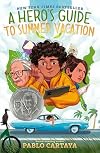
Gonzalo's dad died, and his busy mom ships him off to stay with his grumpy grandfather, a famous but reclusive author of popular children's fantasy novels...which Gonzalo has never read. But Alberto agrees to go on a book tour for his seventh and final book in the series and Gonzalo is going along, like it or not. As he begins to read his grandfather's books, he asks questions about his grandfather's past - living in Cuba, attempting to escape, and eventually arriving in America and making a show more life there. The two slowly open up to each other, and as they visit Alberto's friends across the country, Gonzalo gets a window into his life. It all culminates with Gonzalo's mom joining the road trip to Miami and some family reckoning and healing.
There's an interesting narrative structure, with a narrator pointing out all the hero's journey stages - until Gonzalo kicks the narrator out and takes over his own story.
A road trip novel is the perfect way to include cameos by characters from previous books, like Emilia (One Tiny Spark) and Marcus (Marcus Vega Doesn't Speak Spanish) - a sneaky treat for Cartaya's fans.
Quotes
I wouldn't wish fame on my worst enemy. Everyone knew my name for reasons that had nothing to do with me. (29)
"If you aren't open to change, you won't change anything." (32)
Sometimes I just want silence on the outside so I can quiet the noise on the inside. (100)
Sometimes I get upset when I shouldn't, and then other times, I don't get angry when I should. I haven't quite figured out when to do one or the other. (141)
Who gets to decide what something means - the creator of the art or the ones experiencing the creation? (178)
Nobody wants anyone to worry, but that's what we do. Not knowing causes worry too. (240) show less
There's an interesting narrative structure, with a narrator pointing out all the hero's journey stages - until Gonzalo kicks the narrator out and takes over his own story.
A road trip novel is the perfect way to include cameos by characters from previous books, like Emilia (One Tiny Spark) and Marcus (Marcus Vega Doesn't Speak Spanish) - a sneaky treat for Cartaya's fans.
Quotes
I wouldn't wish fame on my worst enemy. Everyone knew my name for reasons that had nothing to do with me. (29)
"If you aren't open to change, you won't change anything." (32)
Sometimes I just want silence on the outside so I can quiet the noise on the inside. (100)
Sometimes I get upset when I shouldn't, and then other times, I don't get angry when I should. I haven't quite figured out when to do one or the other. (141)
Who gets to decide what something means - the creator of the art or the ones experiencing the creation? (178)
Nobody wants anyone to worry, but that's what we do. Not knowing causes worry too. (240) show less
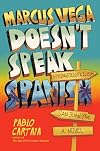
Really great story -- Marcus has a lot of heart, for all he feels alienated because of his intimidating size. I was deeply amused by his money making schemes in the school and loved the portrayal of his brother, Charlie. Charlie has down syndrome and is, like most of the people with down syndrome I have known, just an absolute character -- funny, adamant about the things he loves, unafraid to dance in the street and generally joyful to be around. Their trip to Puerto Rico leads to a great show more adventure, with more family and parts of the country being revealed each day, even though the ultimate meeting with his estranged father isn't what he expected at all. Makes me even sadder to think of the island's devastation, and I appreciate the ways in which Cartaya calls out the completely baffling reality of US territorial laws. show less
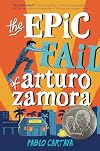
Thirteen-year-old Arturo Zamora is very family-centric, living in an apartment building with many of his extended family members and working at his family's restaurant next door. He knows everyone in the small neighborhood of Miami where he's grown up. That all changes one summer when first his mother's goddaughter moves into their apartment building for the summer (following the death of her own mother) and then a new business opens up next door to the Zamora's restaurant. But it isn't show more actually a new business -- it's a property developer who is bent on gentrifying the neighborhood, even if it requires bulldozing down the restaurant to do so. Arturo wants to do the best by his family, is determined not to let the property developer take down their restaurant without a fight, and he also starts having strange feelings for his mother's goddaughter -- she's not really family, right?
This was a very interesting and complex read. It was not complex in difficulty, but in the level of detail taken by author Cartaya. And yet, it does not feel bogged down by details and reads very smoothly. With the exception of the almost cartoonishly evil property developer, all of the characters feel realistic. Even minor characters who are described only by one or two main characteristics felt realistic. Arturo's world is peopled by immediate family, extended family, friends of family, friends, and families of friends. In other words, it feels like real life, where we all have a wide social network, not just the one or two friends often given to characters in books. Even though there are multiple storylines (Abuela being sick, the restaurant in peril, Arturo having romantic feelings for the first time, etc.), everything flows nicely and it never feels like one storyline is emphasized to the detriment of another.
Cartaya writes primarily in English with some Spanish words or phrases peppered throughout. He does not immediately translate these, but makes it mostly clear what is being said through the use of context clues. I think this is a good approach overall, although some kids might be intimidated by trying to read in a language they don't know. My one thought for improvement might have been a glossary at the end for kids who really want to make sure they caught every word, even if they don't know Spanish (or don't know Spanish well). The backmatter does include a number of recipes for Cuban-inspired culinary dishes that readers could try making on their own (with the help of an adult.) show less
This was a very interesting and complex read. It was not complex in difficulty, but in the level of detail taken by author Cartaya. And yet, it does not feel bogged down by details and reads very smoothly. With the exception of the almost cartoonishly evil property developer, all of the characters feel realistic. Even minor characters who are described only by one or two main characteristics felt realistic. Arturo's world is peopled by immediate family, extended family, friends of family, friends, and families of friends. In other words, it feels like real life, where we all have a wide social network, not just the one or two friends often given to characters in books. Even though there are multiple storylines (Abuela being sick, the restaurant in peril, Arturo having romantic feelings for the first time, etc.), everything flows nicely and it never feels like one storyline is emphasized to the detriment of another.
Cartaya writes primarily in English with some Spanish words or phrases peppered throughout. He does not immediately translate these, but makes it mostly clear what is being said through the use of context clues. I think this is a good approach overall, although some kids might be intimidated by trying to read in a language they don't know. My one thought for improvement might have been a glossary at the end for kids who really want to make sure they caught every word, even if they don't know Spanish (or don't know Spanish well). The backmatter does include a number of recipes for Cuban-inspired culinary dishes that readers could try making on their own (with the help of an adult.) show less
As expected, it wasn't much of an Epic Fail -- I have to admit that was one of my small disappointments in the book, that the Epic Fail was really almost nonexistent. In fact, the part that Arturo seemed to think was an epic fail was a total anticlimax.
However, it was a great book, and I get that the naming is meant to pull kids in. Wonderful centering on the importance of family and embracing family traditions -- I particularly love the cousins who aren't really cousins (chosen family is show more important!) Beautiful portrayal of a close relationship between Arturo and his Abuela. Cool José Martí tie-in (yay poetry and activism). Excellent message of activism and holding onto hope, even when you feel like big changes are inevitable. Hooray for food celebrations, and latinx culture and sections of dialogue in Spanish that aren't necessarily translated.
Set in Miami. There are a couple of chapters that are suddenly set in play-dialogue, which is a little unexpected, but does help move the pacing along. The first one was confusing, because I wasn't sure if it was meant to be a real scene or a dream sequence. There are bits in verse, in letters, and in tweet conversations, too -- nice format changes, keep readers on their toes. Very boy-crush romance focused, be warned (if you don't like romance in your book at all). Main characters seem like they are high twelves/low thirteens, so solidly middle grade.
Another small thing that confused me is that there's a persistent rosebush theme, and they are always referred to as floribunda bushes -- is this a cultural thing? a Miami thing? It took me a while to figure out that they were talking about rose bushes at all. There's also a weird moment when Carmen brings a floribunda to the restaurant and Arturo focuses on one white rose, but something about the writing makes it sound like there is one white rose on a bush that is otherwise not white roses, which would be incredibly weird, and probably I am overthinking this. Sorry, gardening nerd. show less
However, it was a great book, and I get that the naming is meant to pull kids in. Wonderful centering on the importance of family and embracing family traditions -- I particularly love the cousins who aren't really cousins (chosen family is show more important!) Beautiful portrayal of a close relationship between Arturo and his Abuela. Cool José Martí tie-in (yay poetry and activism). Excellent message of activism and holding onto hope, even when you feel like big changes are inevitable. Hooray for food celebrations, and latinx culture and sections of dialogue in Spanish that aren't necessarily translated.
Set in Miami. There are a couple of chapters that are suddenly set in play-dialogue, which is a little unexpected, but does help move the pacing along. The first one was confusing, because I wasn't sure if it was meant to be a real scene or a dream sequence. There are bits in verse, in letters, and in tweet conversations, too -- nice format changes, keep readers on their toes. Very boy-crush romance focused, be warned (if you don't like romance in your book at all). Main characters seem like they are high twelves/low thirteens, so solidly middle grade.
Another small thing that confused me is that there's a persistent rosebush theme, and they are always referred to as floribunda bushes -- is this a cultural thing? a Miami thing? It took me a while to figure out that they were talking about rose bushes at all. There's also a weird moment when Carmen brings a floribunda to the restaurant and Arturo focuses on one white rose, but something about the writing makes it sound like there is one white rose on a bush that is otherwise not white roses, which would be incredibly weird, and probably I am overthinking this. Sorry, gardening nerd. show less
Lists
Awards


You May Also Like


Associated Authors
Statistics
- Works
- 9
- Members
- 1,560
- Popularity
- #16,523
- Rating
- 3.8
- Reviews
- 44
- ISBNs
- 76
- Languages
- 2