
Gabrielle Wittkop (1920–2002)
Author of The Necrophiliac
About the Author
Works by Gabrielle Wittkop
Muertes ejemplares 1 copy
Serenissime Assassinat 1 copy
Associated Works
Tagged
Common Knowledge
- Canonical name
- Wittkop, Gabrielle
- Birthdate
- 1920-05-27
- Date of death
- 2002-12-22
- Gender
- female
- Occupations
- journalist
- Relationships
- Wittkop, Justus Franz (husband)
- Nationality
- France
Germany - Birthplace
- Nantes, Loire-Atlantique, Pays de la Loire, France
- Places of residence
- Nantes, Loire-Atlantique, Pays de la Loire, France
Frankfurt am Main, Germany - Place of death
- Frankfurt am Main, Germany
- Associated Place (for map)
- Frankfurt am Main, Germany
Members
Discussions
Gabrielle Wittkop in The Chapel of the Abyss (July 2021)
Reviews
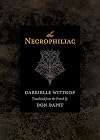
This book was beautiful, morbid, poetic, gross, and definitely not for the faint of heart. I went in completely blind. Because the synopsis compared this book to Poe and Baudelaire, I expected murder and a slow and subtly disturbing ambiance. I also assumed the title was a metaphor. I was mistaken. By the end of the second paragraph I was thoroughly shocked, and I paused to consider whether or not I wanted to continue reading. I did.
This author is kind of brilliant in my opinion. She show more imagines the life of a man who is a romantic, a bit of a poet, a perfectionist, refined (or at least considers himself to be), and is completely obsessed and sexually aroused by death. I have not read many books that have successfully woven together horrific acts with beauty, but this was by the far the best. If you can tolerate a highly descriptive dive into this subject, you should definitely read this book! show less
This author is kind of brilliant in my opinion. She show more imagines the life of a man who is a romantic, a bit of a poet, a perfectionist, refined (or at least considers himself to be), and is completely obsessed and sexually aroused by death. I have not read many books that have successfully woven together horrific acts with beauty, but this was by the far the best. If you can tolerate a highly descriptive dive into this subject, you should definitely read this book! show less
The Necrophiliac covers new ground for me. Though there are details in this book that lend themselves well to readers looking for a nasty wallow, this is, at its core, a romantic book about doomed love. Lucien, the narrator and diarist, is less interested in decay but it does not deter him. He is a romantic necrophile, genuinely drawn to specific dead people. He has no sexual or age preference, rather concentrating on specific people who are compelling to him. His relationships are, by the show more nature of his paraphilia, short term, and he mourns the loss of each romantic partner as their decay takes them away from him. He experiences a complete breakdown during his last affair and it feels very much like Lucien planned it that way, tiring of a life wherein those he loves will always be taken from him within days or weeks of discovering them.
In his diary, Lucien, who is a wealthy antiques dealer, describes in detail his love affairs with dead people. He has just enough charm and self-control to be able to move about in society without revealing his true nature, but he also seems to be creepy enough that his cleaning ladies remarked that he smelled like a vampire. Lucien is very expressive, and it was especially interesting how, for him, the dead had vastly different personalities. That sentence seemed odd to me as I typed it because my first impulse is to think that the dead have personalities. But they don’t, do they? We just imbue the corpse with the traits we knew it possessed when it was alive. A cadaver has no more personality than a chair. Lucien didn’t know most of the dead people he decides to have sex with. He doesn’t know what their living traits were. His specific sexual desire permits him to attribute what he believes are the individual motivations of the dead.
You don’t get an easy introduction to the ideas in this book, either. Right from the first words you are smacked with the foul reality and the interesting interpretations Lucien shares. The first page shows Lucien describing a little girl whose body he is inspecting (and how he obtained this body is not made clear but we will eventually learn the many ways Lucien courts the dead).
You can read my entire discussion here: http://ireadoddbooks.com/the-necrophiliac-by-gabrielle-wittkop/ show less
In his diary, Lucien, who is a wealthy antiques dealer, describes in detail his love affairs with dead people. He has just enough charm and self-control to be able to move about in society without revealing his true nature, but he also seems to be creepy enough that his cleaning ladies remarked that he smelled like a vampire. Lucien is very expressive, and it was especially interesting how, for him, the dead had vastly different personalities. That sentence seemed odd to me as I typed it because my first impulse is to think that the dead have personalities. But they don’t, do they? We just imbue the corpse with the traits we knew it possessed when it was alive. A cadaver has no more personality than a chair. Lucien didn’t know most of the dead people he decides to have sex with. He doesn’t know what their living traits were. His specific sexual desire permits him to attribute what he believes are the individual motivations of the dead.
You don’t get an easy introduction to the ideas in this book, either. Right from the first words you are smacked with the foul reality and the interesting interpretations Lucien shares. The first page shows Lucien describing a little girl whose body he is inspecting (and how he obtained this body is not made clear but we will eventually learn the many ways Lucien courts the dead).
You can read my entire discussion here: http://ireadoddbooks.com/the-necrophiliac-by-gabrielle-wittkop/ show less

Very short and quite good. The content is described in other reviews, and both story and Wittkop's telling of it are arresting. This could have been a lurid tale, or one overwhelmed by a narrator's moral agonising over his behaviour, but Lucien's narration is calm, spare, subtly humourous, and sometimes poetic. The style is so attractive that when I tried to begin a more conventional novel shortly after finishing this, I gave it up as an irritant: relative to this book, it seemed show more ridiculously wordy. Wittkop passes no overt judgement on Lucien though she gently implies through both his words and his actions the power of his fetish.
There is one rather colourful description at the book's beginning, but that aside I can't imagine a reader finding any of the incidents repugnant in a visceral way. A couple of aspects of the story were, though. intrusively out ot keeping: Whilst the origin of Lucien's inclinations is entirely plausible, the passage detailing it doesn't seem quite to fit in--perhaps because it's the only one taking us back to the distant past but more likely because the explanation feels forced--and I found it difficult to suspend disbelief so much as to accept without question Lucien's being able to dig up graves and take bodies home (via a lift, no less) to his apartment unobserved.
Overall, I'm left very eager to read more of Wittkop's books. show less
There is one rather colourful description at the book's beginning, but that aside I can't imagine a reader finding any of the incidents repugnant in a visceral way. A couple of aspects of the story were, though. intrusively out ot keeping: Whilst the origin of Lucien's inclinations is entirely plausible, the passage detailing it doesn't seem quite to fit in--perhaps because it's the only one taking us back to the distant past but more likely because the explanation feels forced--and I found it difficult to suspend disbelief so much as to accept without question Lucien's being able to dig up graves and take bodies home (via a lift, no less) to his apartment unobserved.
Overall, I'm left very eager to read more of Wittkop's books. show less
Was I ironic - behaving with the sort of irony that's nothing more than a bad coat of the shameful poor? Did I forget - to forget is to omit from feeling again, it's a folly of the soul and the body - did I then forget that I fall in love each time?
What an exquisite and yet thoroughly shocking read! Written as a series of journal entries in a confessional style, the reader is exposed to the mindset, the lust and the overpowering obsessive drive of a necrophiliac called Lucien. Lucien is a show more member of society - he runs the antiques store bequeathed to him by his father - and is a lover of the dead, regardless of sex or age. He is an individual who experiences an unusual level of enthusiasm at the prospect of visiting the catacombs of Naples, a vacation of sorts from his usual nocturnal cemetery activities in Paris. A cautious individual driven by a compulsion that he knows society cringes from and revolts against.
Wittkop writes to shock the reader. She hits the reader with graphic details right off the bat on page 1. Read that page and you will either quickly shut the book and walk away or you will venture further with a combined 'sinking gut' feeling caused by a combination of morbid fascination and trepidation of anticipated horrors to come. It would be very easy for some readers to just dismiss this book as a disgusting display of morbid exhibitionism but to do so would be to dismiss the exquisite prose it is written in:
Their fine powder odour is that of the bombyx. It seems to come from the heart of the earth, from the empire where the musky larvae trudge between the roots, where blades of mica gleam like frozen silver, there where the blood of future chrysanthemums wells up, among the dusty peat, the sulphureous mire. The smell of the dead is that of the return to the cosmos, that of the sublime alchemy. For nothing is as flawless as a corpse, and it becomes more and more so as time passes, until the final purity of this large ivory doll with its mute smile and its perpetually spread legs that is in each one of us.
To dismiss this book would be to dismiss the well presented character self examination where Lucien's obsession shows striking parallels to what we characterize as normal displays of love and the associated tenderness for a living being.
This novella is billed as being a cult classic in France in the 40 years since its original publication and I can see why. I am glad it wasn't a full length novel because I don't think I could have made my way to the end of it..... my whole body physically cringed numerous times while reading this and I don't think I could have handled much more, although I am at a loss as to what 'more' Wittkop could have brought to the story. A good part of me doesn't want to envision what might have been added. One thing for sure, this book will get you out of your comfort zone. show less
What an exquisite and yet thoroughly shocking read! Written as a series of journal entries in a confessional style, the reader is exposed to the mindset, the lust and the overpowering obsessive drive of a necrophiliac called Lucien. Lucien is a show more member of society - he runs the antiques store bequeathed to him by his father - and is a lover of the dead, regardless of sex or age. He is an individual who experiences an unusual level of enthusiasm at the prospect of visiting the catacombs of Naples, a vacation of sorts from his usual nocturnal cemetery activities in Paris. A cautious individual driven by a compulsion that he knows society cringes from and revolts against.
Wittkop writes to shock the reader. She hits the reader with graphic details right off the bat on page 1. Read that page and you will either quickly shut the book and walk away or you will venture further with a combined 'sinking gut' feeling caused by a combination of morbid fascination and trepidation of anticipated horrors to come. It would be very easy for some readers to just dismiss this book as a disgusting display of morbid exhibitionism but to do so would be to dismiss the exquisite prose it is written in:
Their fine powder odour is that of the bombyx. It seems to come from the heart of the earth, from the empire where the musky larvae trudge between the roots, where blades of mica gleam like frozen silver, there where the blood of future chrysanthemums wells up, among the dusty peat, the sulphureous mire. The smell of the dead is that of the return to the cosmos, that of the sublime alchemy. For nothing is as flawless as a corpse, and it becomes more and more so as time passes, until the final purity of this large ivory doll with its mute smile and its perpetually spread legs that is in each one of us.
To dismiss this book would be to dismiss the well presented character self examination where Lucien's obsession shows striking parallels to what we characterize as normal displays of love and the associated tenderness for a living being.
This novella is billed as being a cult classic in France in the 40 years since its original publication and I can see why. I am glad it wasn't a full length novel because I don't think I could have made my way to the end of it..... my whole body physically cringed numerous times while reading this and I don't think I could have handled much more, although I am at a loss as to what 'more' Wittkop could have brought to the story. A good part of me doesn't want to envision what might have been added. One thing for sure, this book will get you out of your comfort zone. show less
Lists
Awards


You May Also Like


Associated Authors
Statistics
- Works
- 21
- Also by
- 1
- Members
- 571
- Popularity
- #43,840
- Rating
- 3.9
- Reviews
- 14
- ISBNs
- 57
- Languages
- 9
- Favorited
- 5